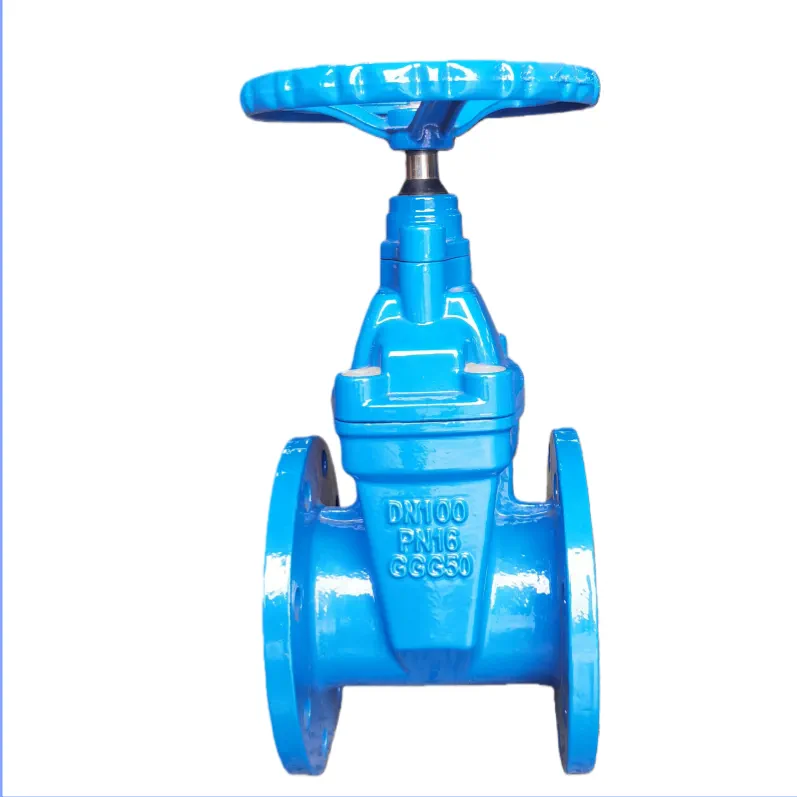
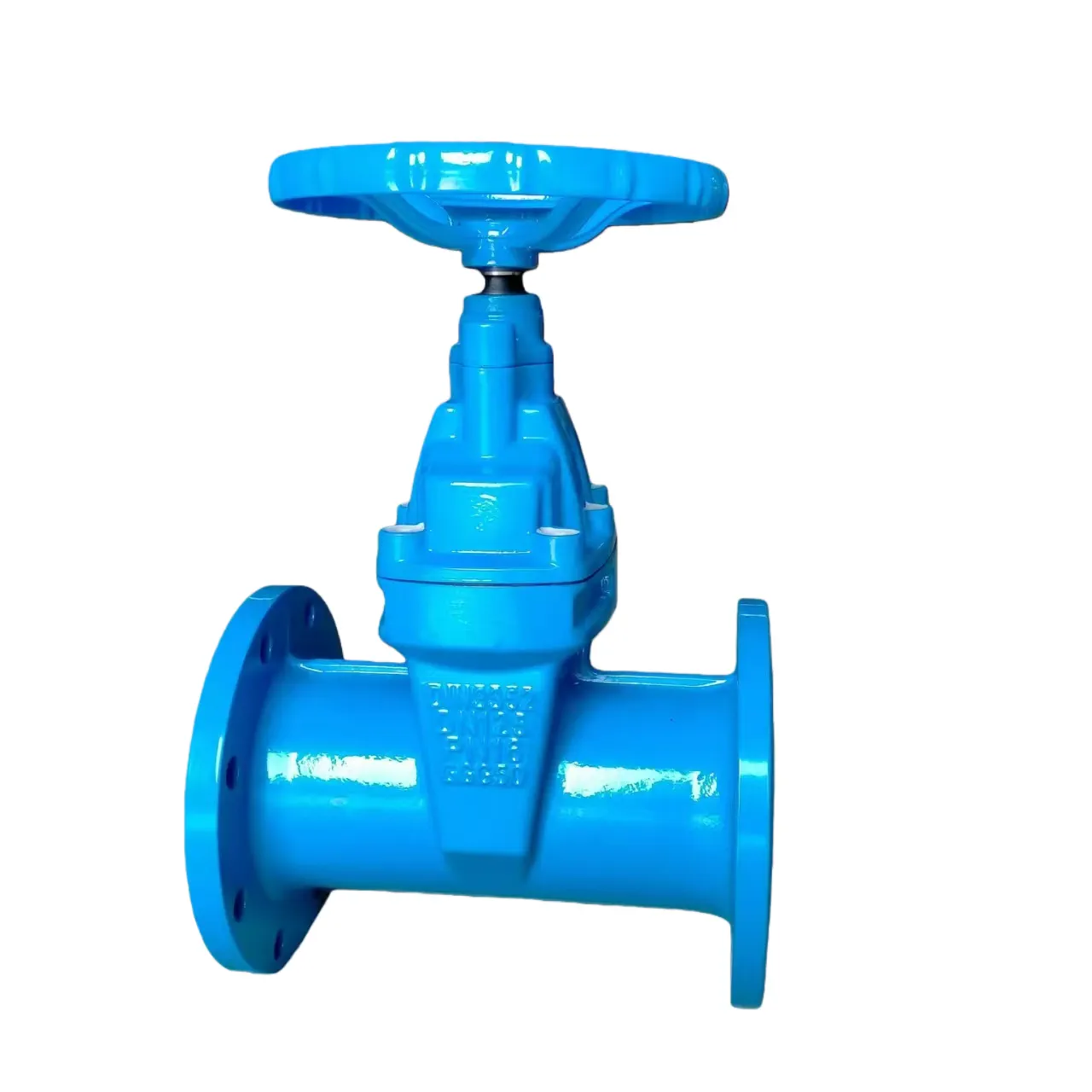
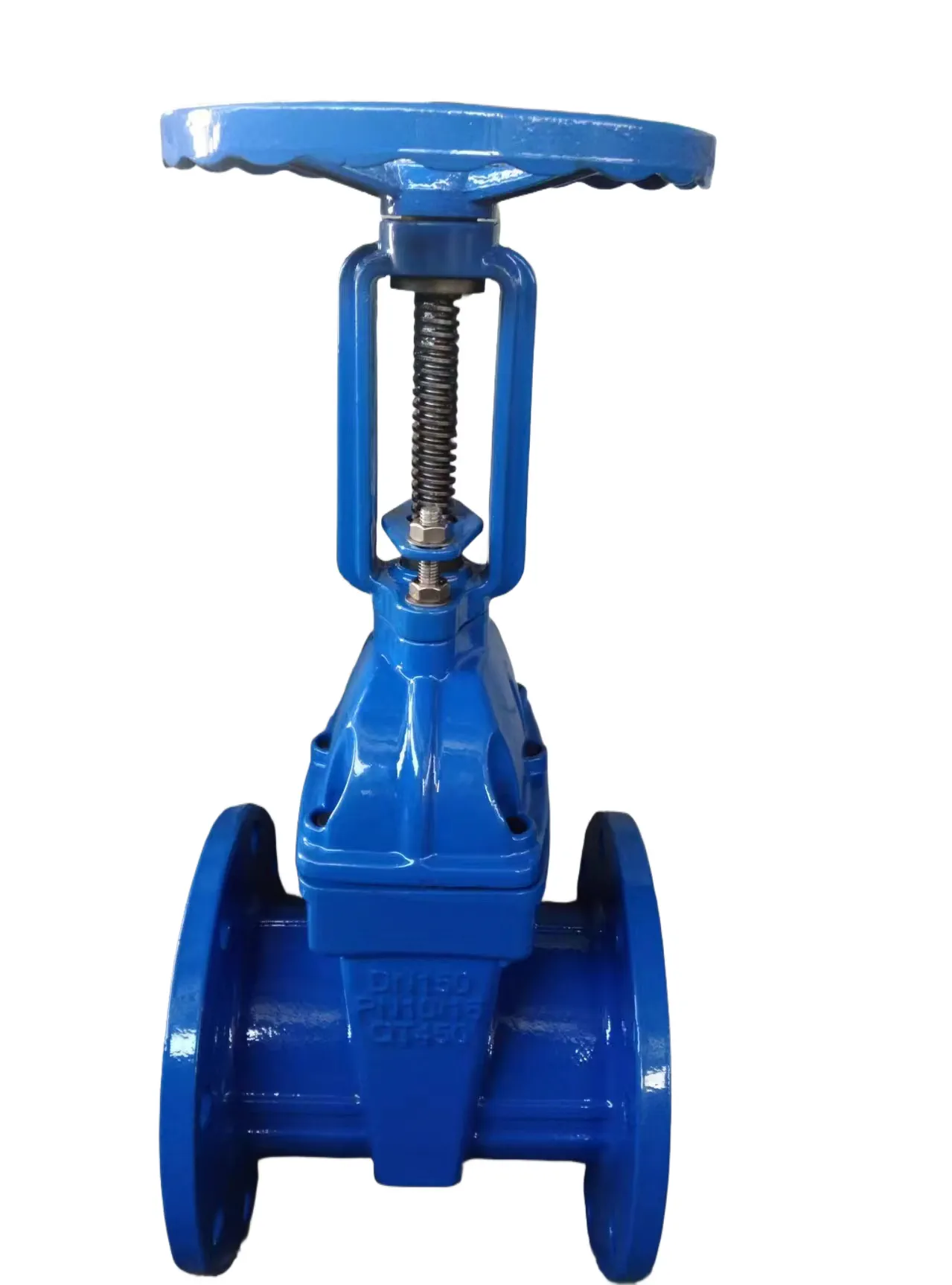
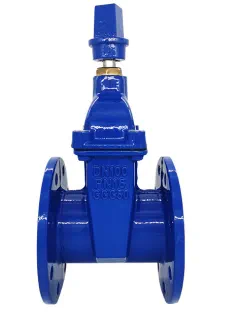
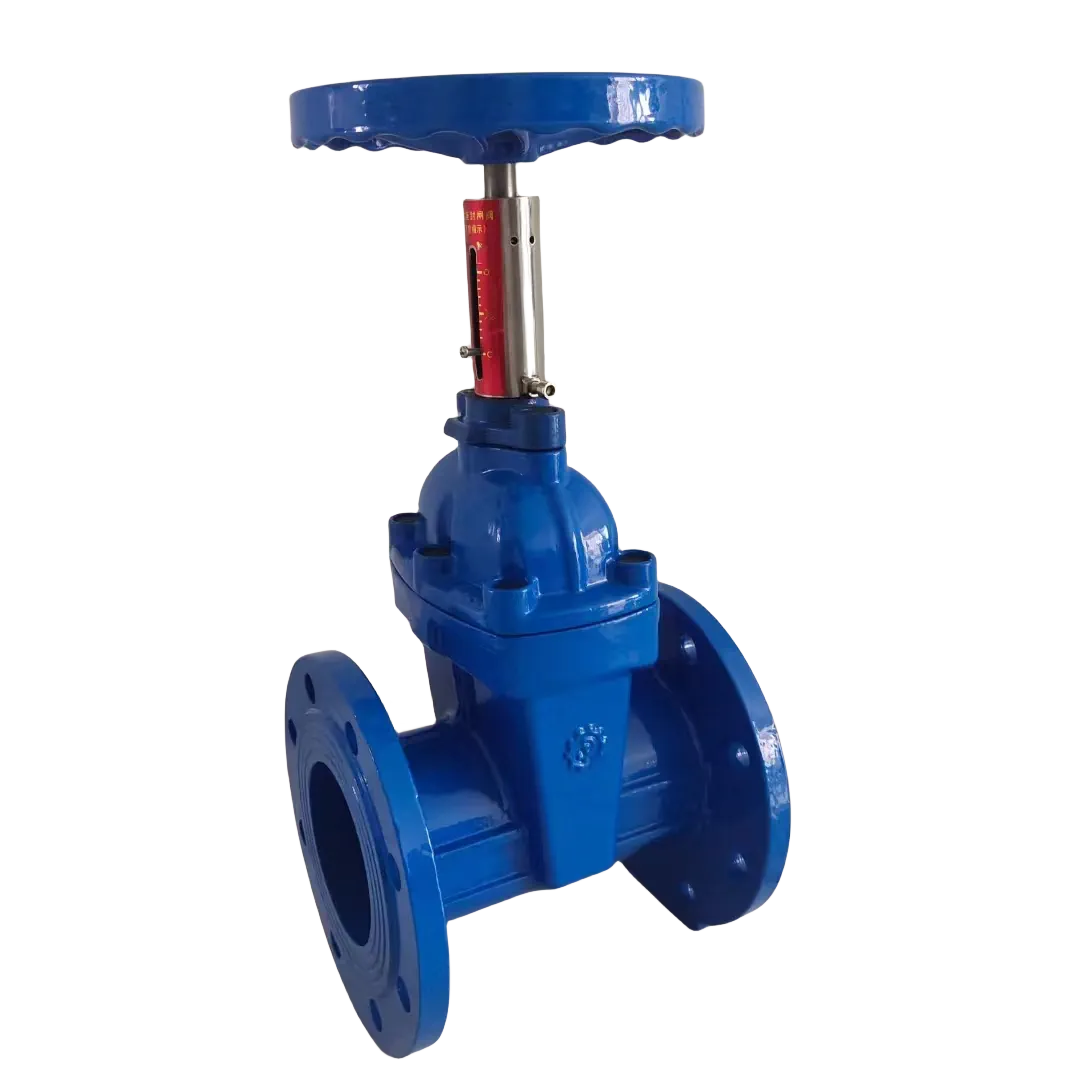
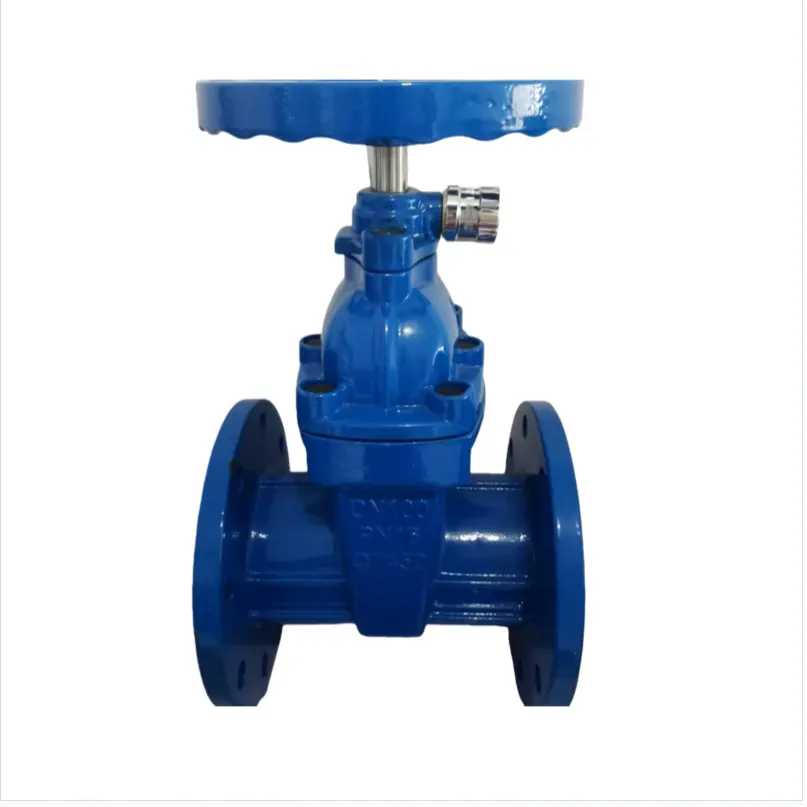
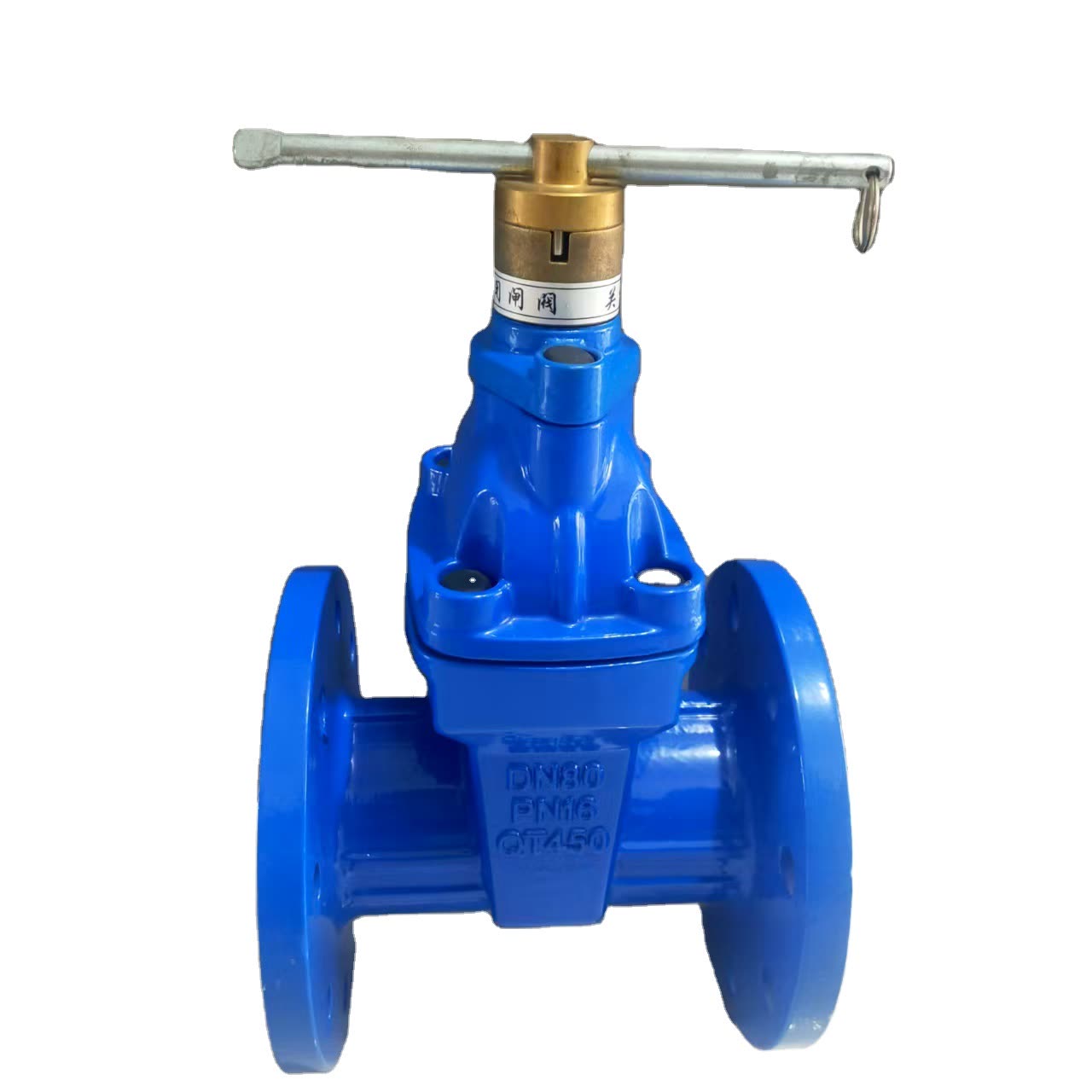
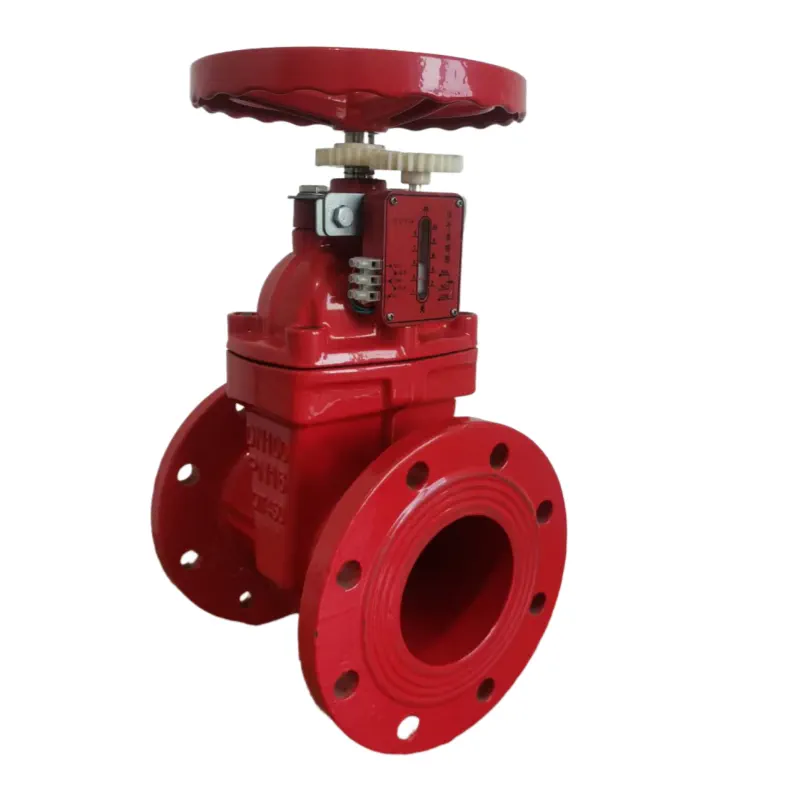
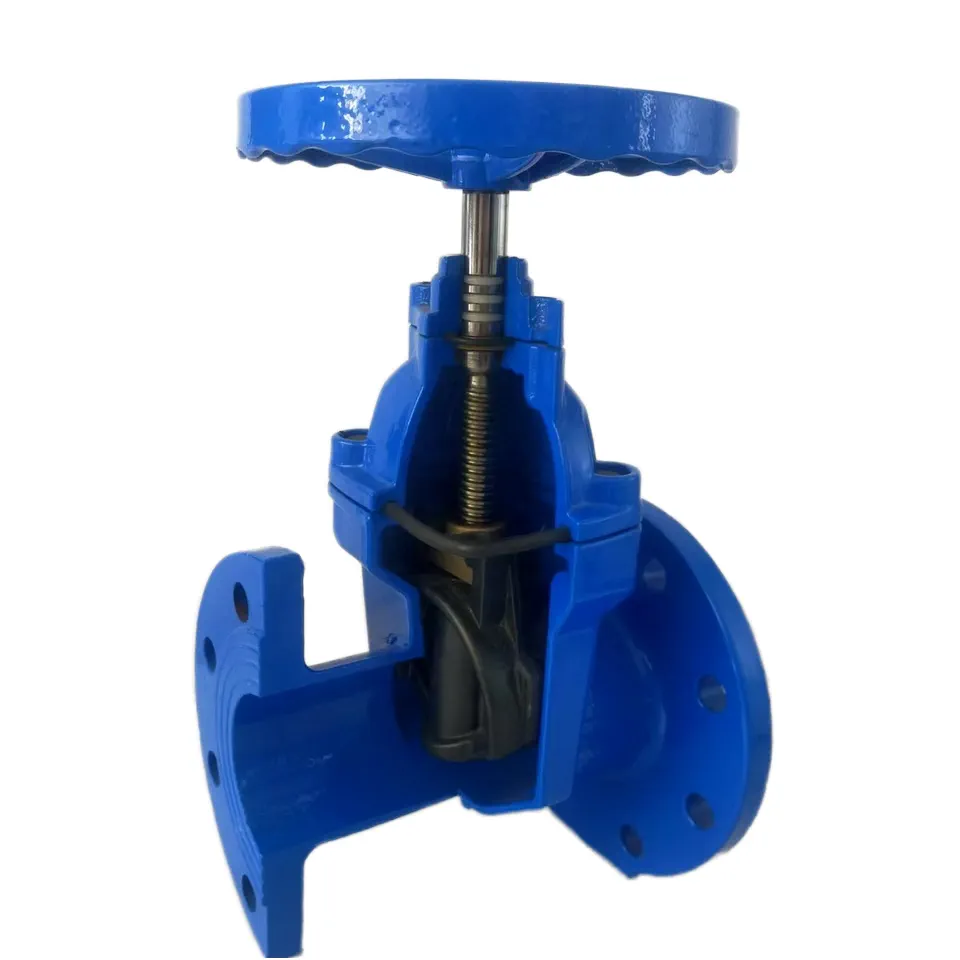
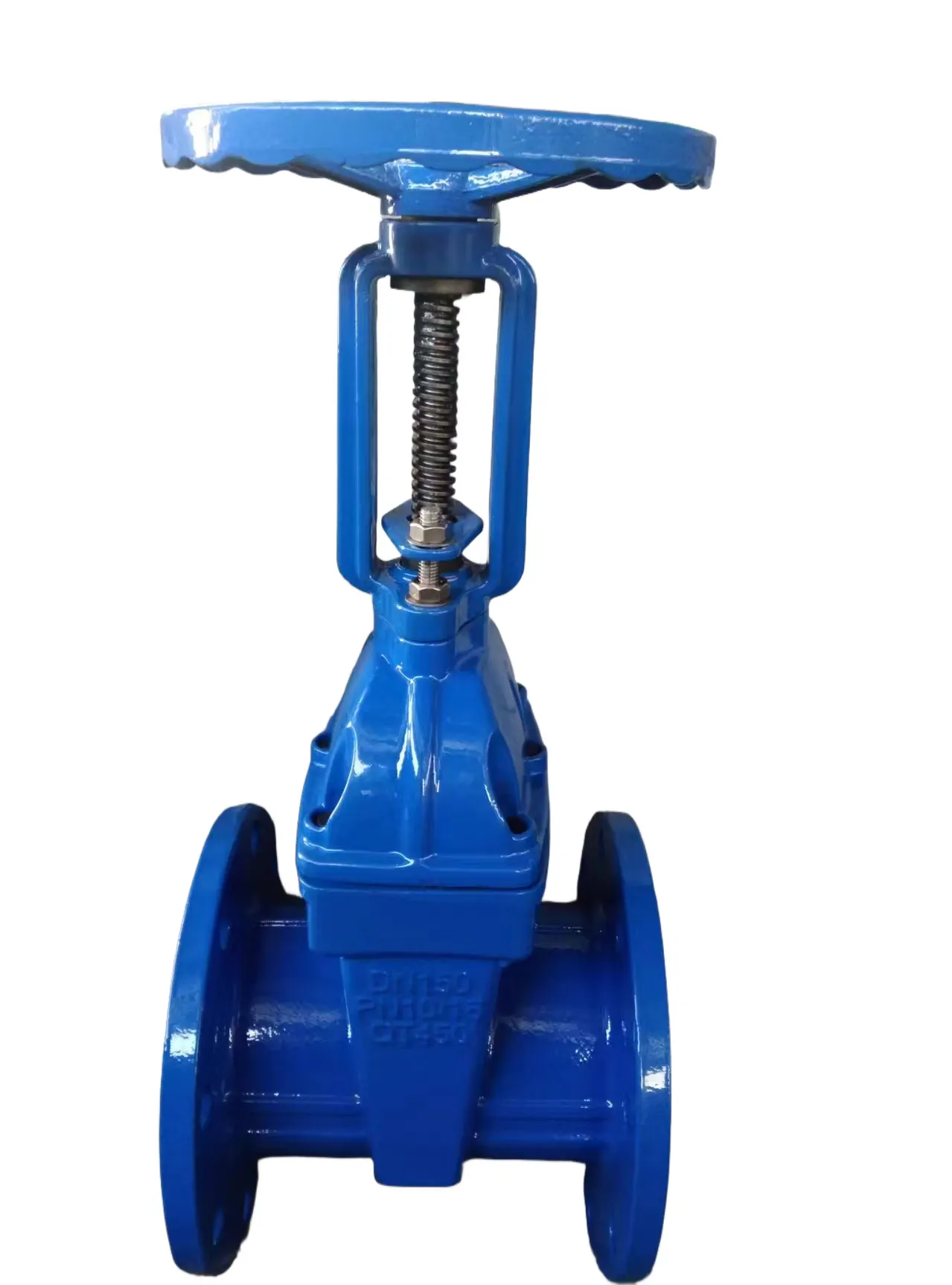
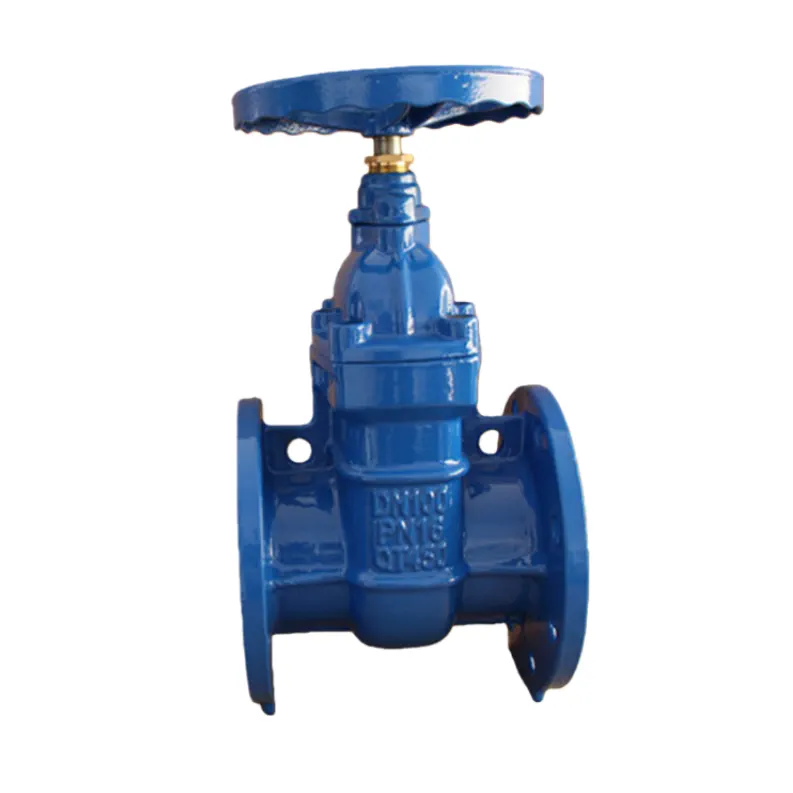
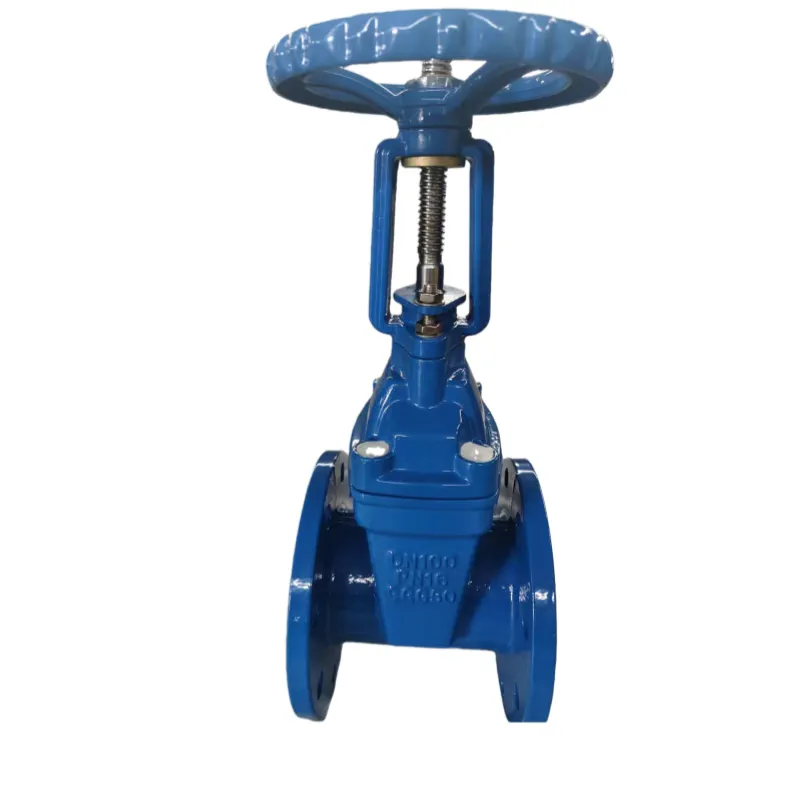
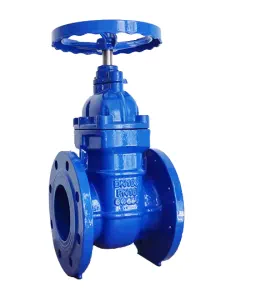
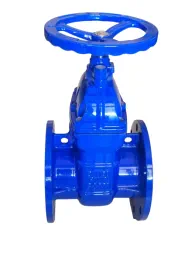
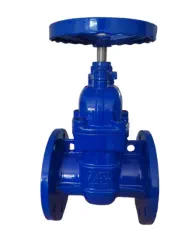
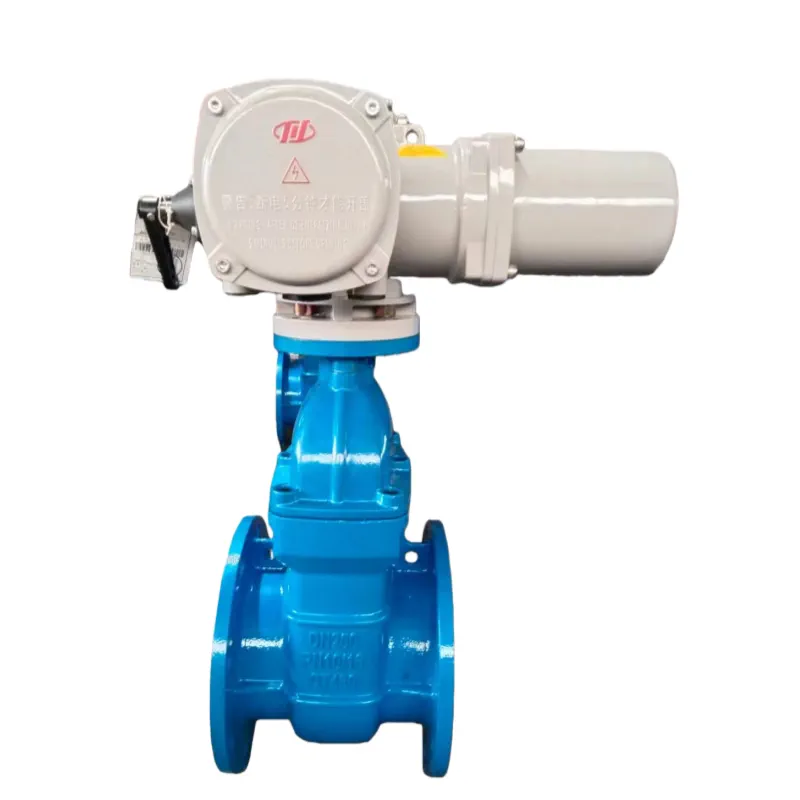
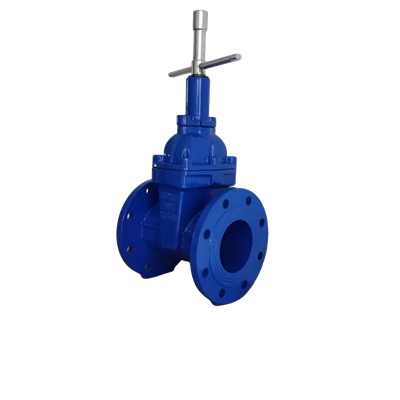
The same C509 / C515 body with a non-rising stem: the stem turns in place and the wedge travels, so nothing projects above the bonnet and the valve can be buried under a roadway with only a operating nut in a box. That is why NRS is the buried default and OS&Y the above-ground one — not a preference, a consequence of where the valve sits. Epoxy-coated ductile iron, EPDM wedge, 200 psi class, DN40–DN600. Buried valves need the box, the extension and the records: the valve nobody can find is the valve that gets replaced.
General Specifications
Size RangeDN40 – DN600
Pressure Rating200 psi class (ANSI Class 125 flanged)
Design StandardAWWA C509 / C515
End ConnectionDouble flanged
Flange DrillingANSI B16.1 Class 125
Stem TypeNon-rising stem (NRS)
OperationHandwheel (actuator on request)
ServiceWater and fire-protection mains (GCC municipal, US-standard projects)
Max. Working Temperature70 °C standard (EPDM) — NBR for 80 °C, FKM for up to 150 °C on request
Materials & Coating
Body / BonnetDuctile iron; duplex 2205 / 2507 available on request
WedgeDuctile iron, EPDM-encapsulated
StemStainless steel (grade per order)
SeatEPDM resilient
CoatingFusion-bonded epoxy
Design Features
ListingsUL / FM listed patterns available on request
Applications
GCC municipal water Fire mains US-standard projects
AWWA and BS are two acceptance languages, not two quality levels
A resilient-seated gate valve for waterworks is written to one of two families of document. The AWWA family states pressure as a psi class with ANSI flanges; the BS and EN family states pressure as PN with metric flanges. Both describe a ductile-iron, epoxy-coated, resilient-seated gate valve — and neither is the higher-quality one.
What differs is what the buyer and the supplier measure against, and the flange bolt pattern that has to mate with the pipe already in the ground. A valve cannot be ordered on one document and installed on the other pipe standard without an adapter, so the standard called out in the specification is the first thing to settle.
What the psi class tells you, and what it does not
In the AWWA family the rating is a class, not a PN number, and the two do not convert by arithmetic. A class that suits a municipal distribution main is not automatically a class that suits a pumping main with surge, so the pressure duty still has to be stated rather than inferred from the class.
The physical envelope is the same as the metric pattern: ductile-iron body, EPDM-encapsulated wedge, fusion-bonded epoxy inside and out, non-rising stem. The temperature envelope is also set by the elastomer, not by the standard — which is why the medium temperature belongs in the enquiry whichever family is being ordered.
Why GCC municipal projects keep specifying AWWA
Where the network was designed on US-standard drawings, the specification, the flange standard and the receiving inspector all follow AWWA, and substituting a metric valve means changing all three. That is a design decision at project level, not a purchasing decision at order level.
Fire-protection mains in the region often sit in the same specification, which is why a valve intended for a fire main may also need the listing the authority requires. If the project asks for it, say so in the enquiry — the listing is not something to discover after the valve is cast.
What to confirm before an AWWA gate valve order
- The document the project names, so the valve is quoted against it and not against a comparable metric valve
- Flange drilling and bolt pattern — this is the item that most often stops an installation
- Pressure class, and whether surge loads are part of the duty
- Size within the DN40–DN600 envelope; outside it needs confirming
- Media and temperature, since the elastomer is still the temperature limit
- Whether a fire-main listing is required, and which authority requires it
- Handwheel or actuator, and the control signal if actuated
Frequently asked
Is an AWWA valve better than a BS or EN one?
No. They are two documentation families for the same class of valve, with different flange systems and different acceptance language. The right one is the one the project specification names — substituting either way means changing flanges and inspectors.
Can the psi class be converted to PN?
They are different rating systems and are not converted arithmetically. State the class or the PN the project names; if the project gives both, quote against the one the acceptance test will use.
Why does the flange standard matter so much?
Because the valve has to bolt to the pipe that is already in the ground. An AWWA-pattern valve will not bolt to a metric flange without an adapter, and on a buried main that is a site problem, not a paperwork problem.
Is the stem non-rising on this pattern?
Yes — NRS is the standard arrangement for buried mains and chambers, with position read from the indicator. Where the operator needs to see travel, an OS&Y version is the answer, and it is a different SKU in this range.
Does it need a listing for fire-main service?
If the project specifies one, yes, and it should be stated in the enquiry. Not every AWWA-pattern valve carries a fire-main listing, and the listing is not something that can be added after the valve is cast.
What temperature can it take?
The elastomer sets it: EPDM to 70 °C as standard, NBR to 80 °C, FKM to 150 °C on request. The AWWA rating says nothing about temperature — that is a materials question.
Can it be supplied with an actuator?
Yes, handwheel is standard and actuator on request. The top flange changes with the actuation, so state the type and the control signal in the enquiry.
More from this series
Related guides