

Product Catalog
Mining Machinery & Wear Parts
Crusher and mill wear parts cast in manganese, high-chrome and alloy steel — made to drawing or to OEM dimensions.
Need the working principle before you pick a model? The engineering hub has interactive cross-section diagrams, selection tables and a 50 / 60 Hz pump affinity calculator.
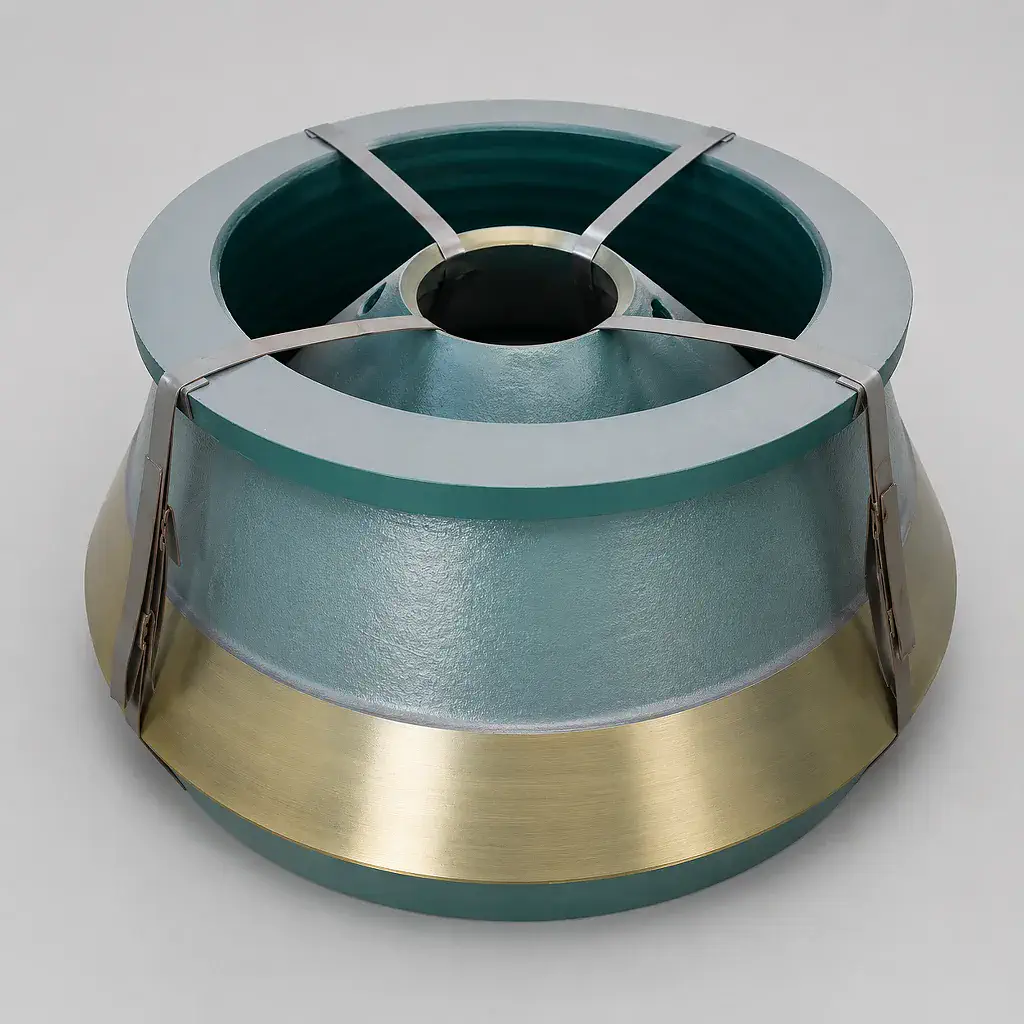
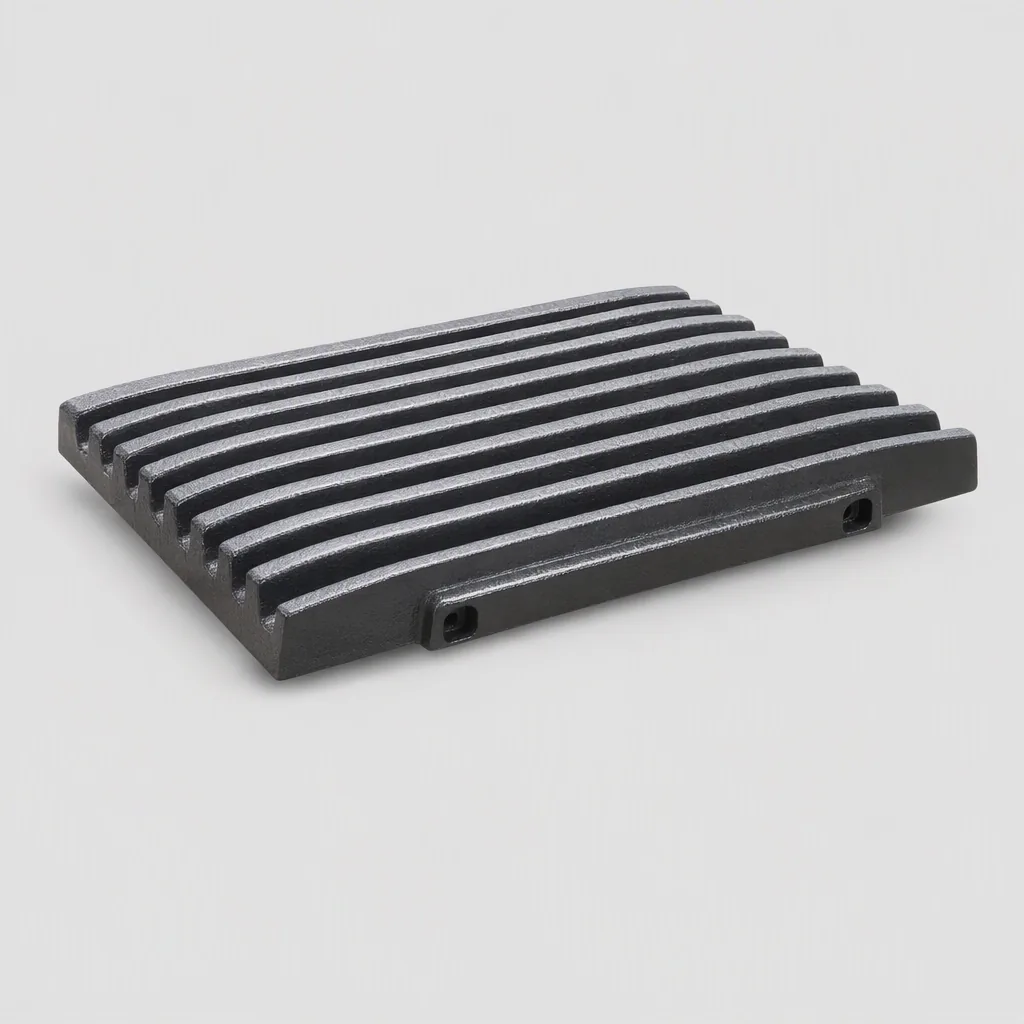
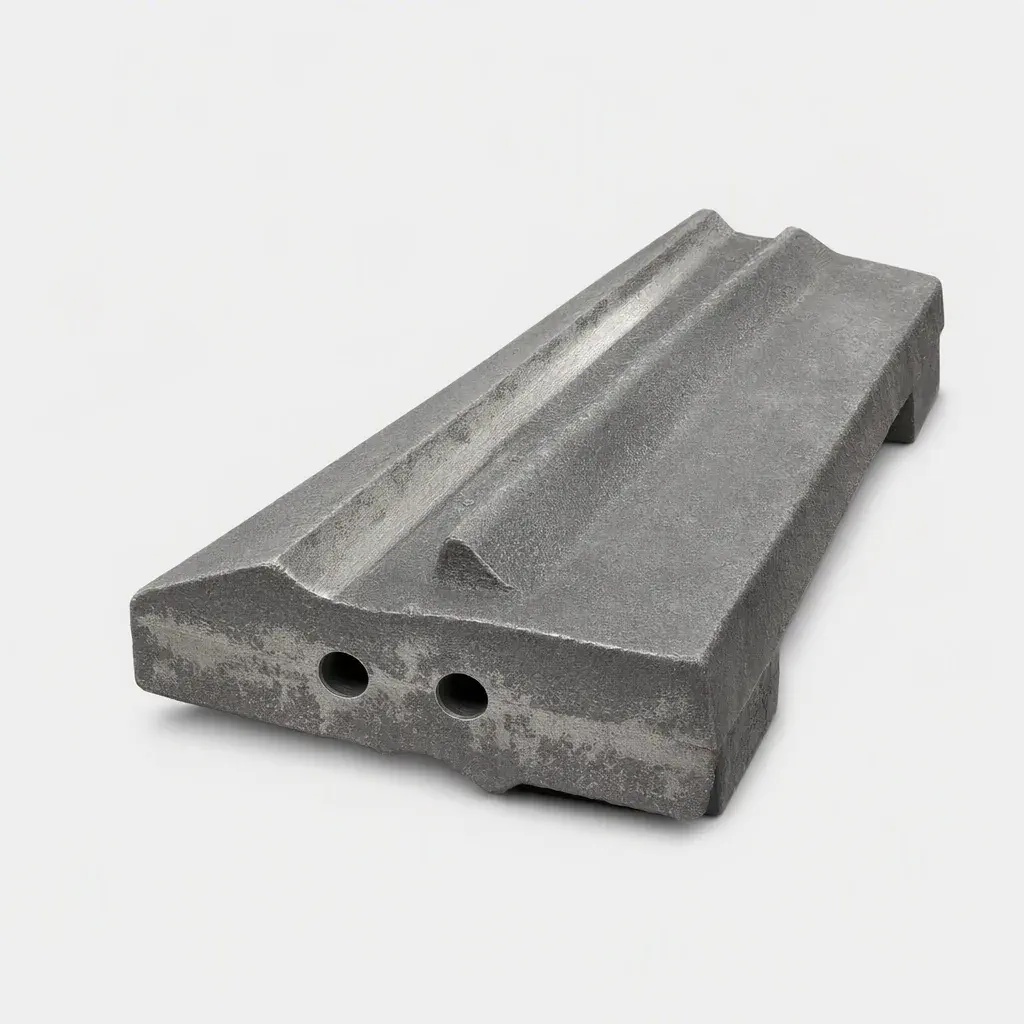
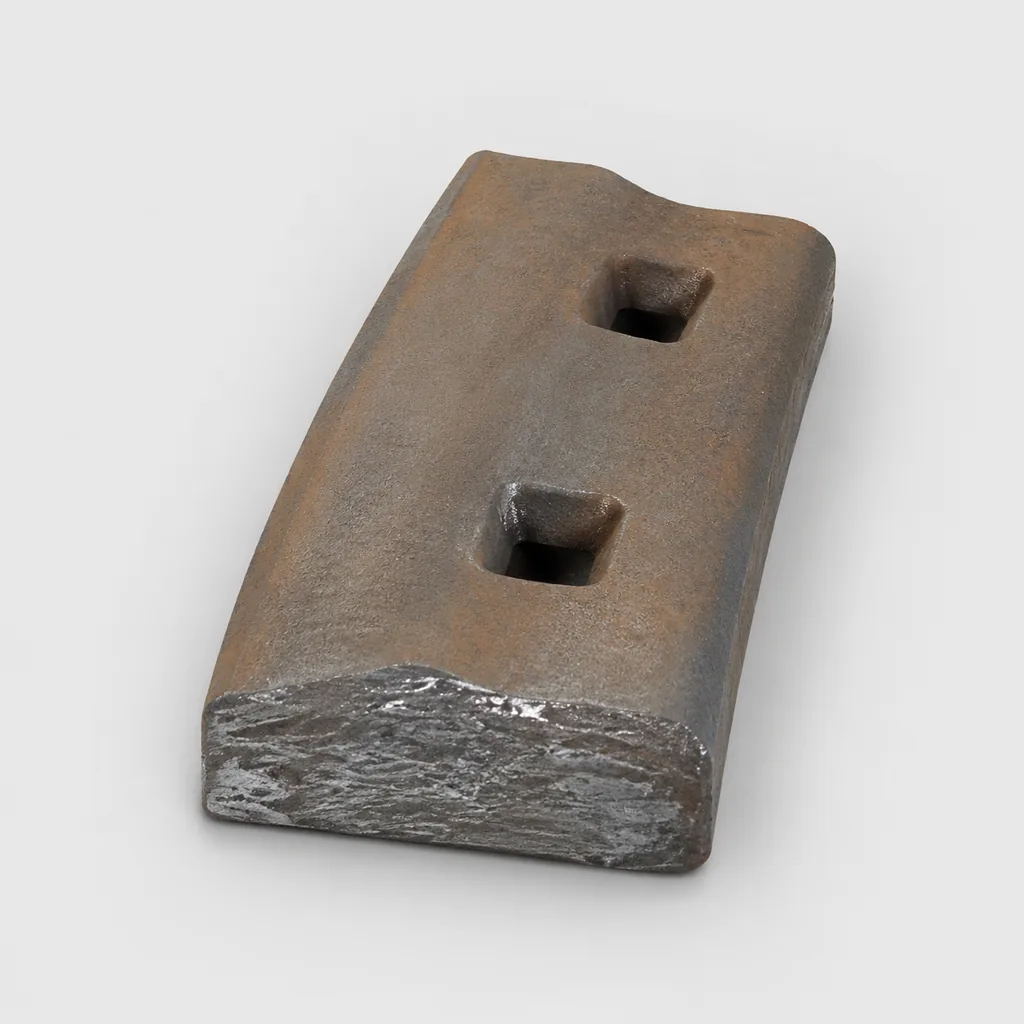
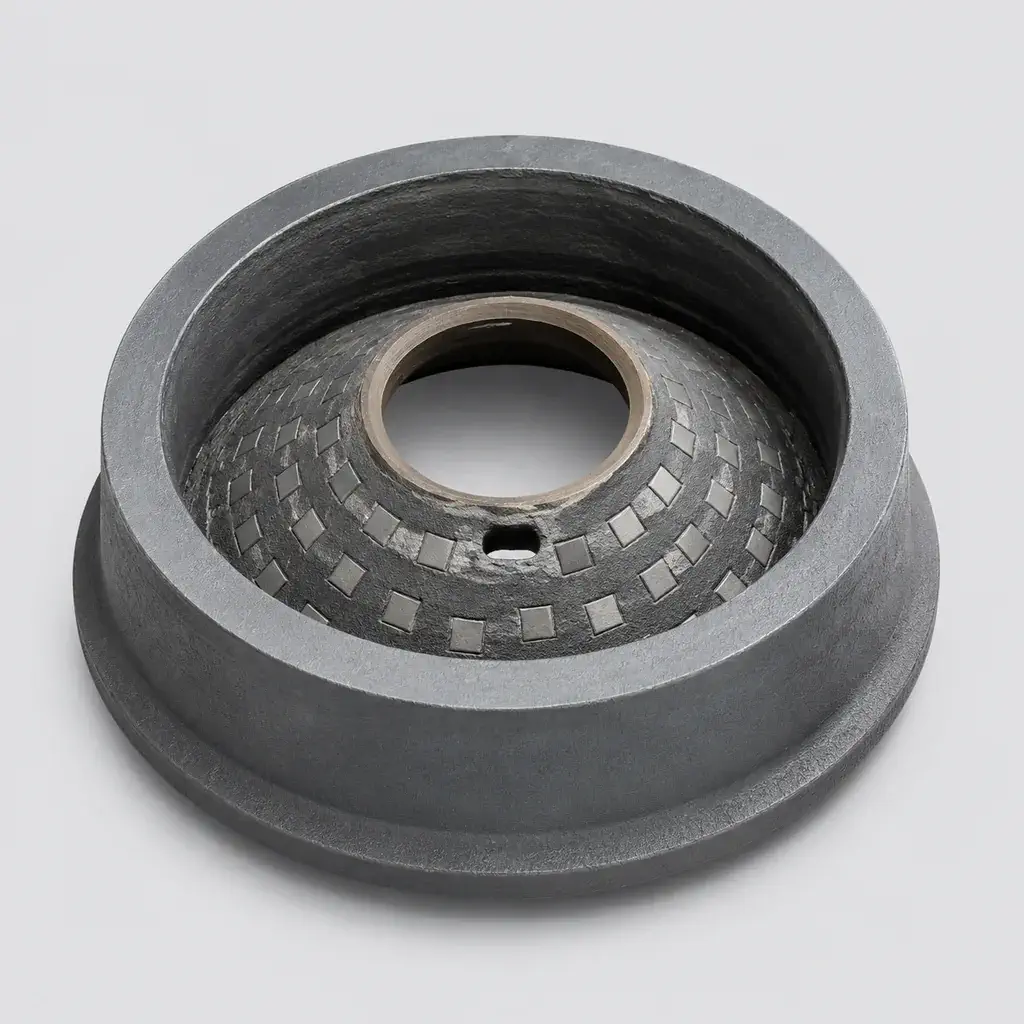
Start from the crushing stage, not the part name
A wear part is named after the machine it sits in, but it is selected by the stage it works in. Two plants running the same crusher model can need different parts because one is making railway ballast and the other is making sand. The table below is the order in which the decision usually runs.
| Stage | Equipment | What wears | What decides the choice |
|---|---|---|---|
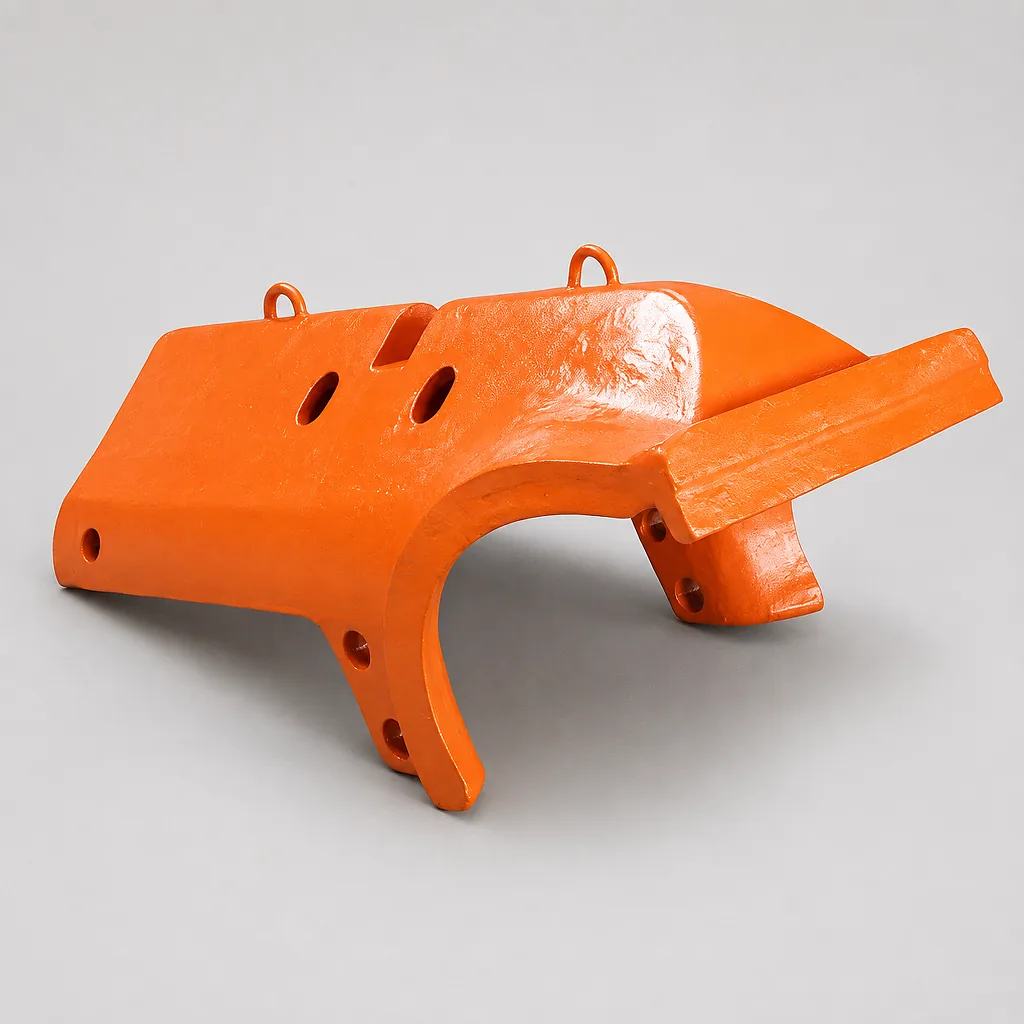
| Primary | Jaw crusher, gyratory crusher | Fixed and swing jaw plates, cheek plates, gyratory arm guards | Tooth profile and manganese grade, driven by feed size and abrasiveness |
| Secondary | Cone crusher | Mantles, concaves, bowl liners | Chamber profile, which sets product shape and power draw as much as wear life |
| Secondary / tertiary | Impact crusher | Blow bars, impact plates | The balance between abrasion and impact for that rotor |
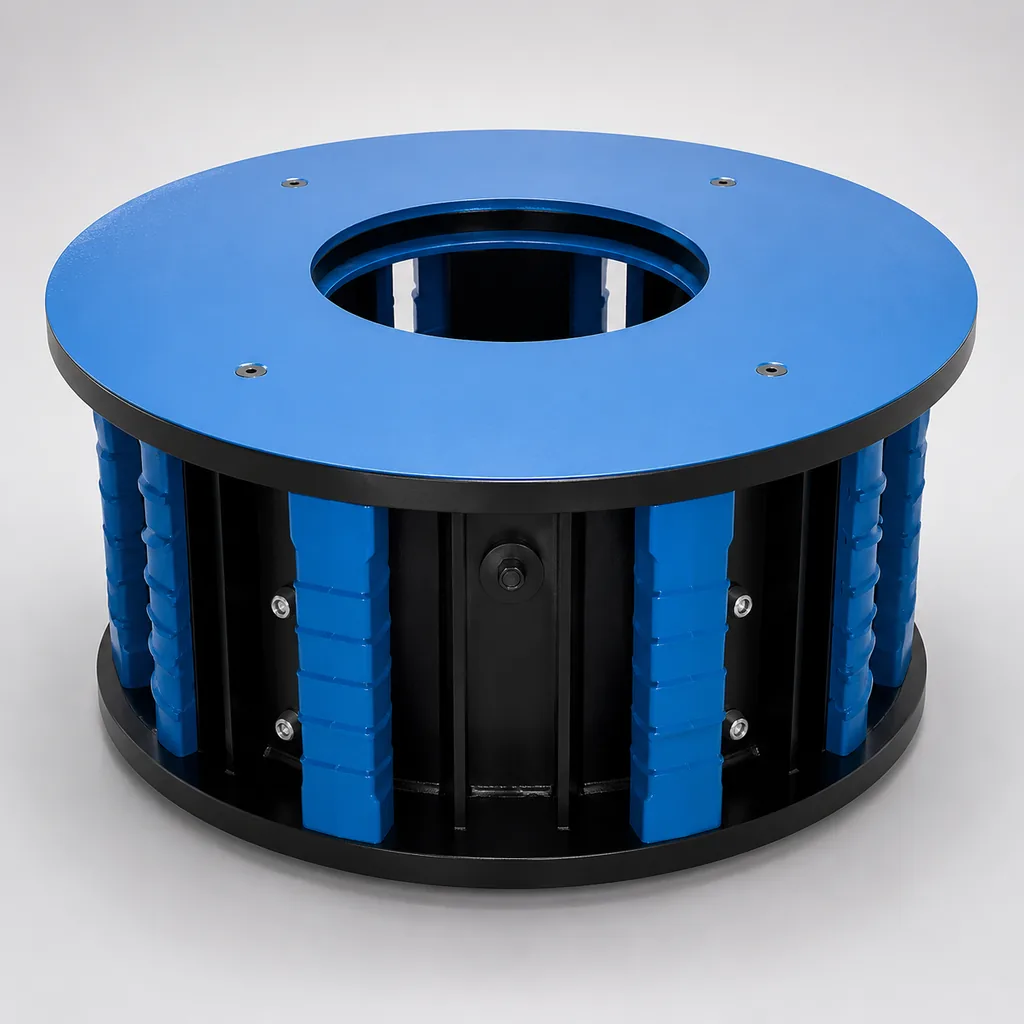
| Tertiary / sand | VSI crusher | Rotor and wear parts | Rotor design and feed grading |
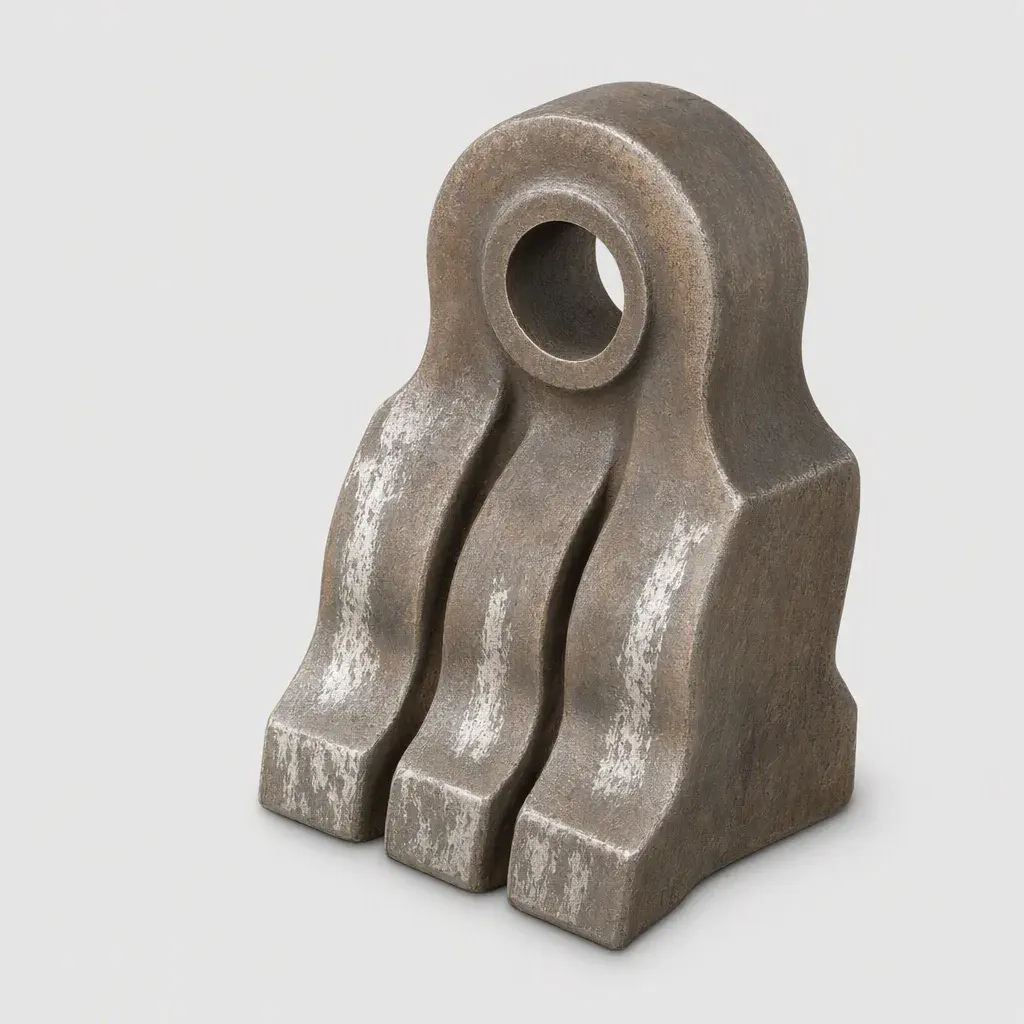
| Reduction | Hammer crusher | Hammers | Hammer weight and tip material against the feed |
| Grinding | Ball mill, SAG mill | Mill liners, grate and screen plates | Position in the mill and profile, made to drawing |
Name the wear mechanism before the material
Two jaw plates with identical dimensions can perform very differently, because feed material, feed size, moisture, fines content and discharge setting all change the wear mechanism. Sorting the duty into one of the four conditions below narrows the material question faster than any grade table.
- Hard, abrasive rock — granite, basalt, quartz-rich ore, hard aggregate: prioritize abrasion resistance and a stable wear profile
- Impact-heavy feed — large lumps, recycled concrete containing steel, mixed quarry feed: prioritize toughness and crack resistance
- Fine abrasive duty — sand-making, pump and feed systems: prioritize hard phases and resistance to surface wear
- Combined impact and abrasion — the condition in most real crushing circuits: the material has to balance hardness and toughness
Manganese work-hardens — which is why the grade alone is not the answer
Manganese steel work-hardens under impact: the surface becomes harder while the core stays tough. That property is why the same grade behaves differently in a jaw crusher and in a mill liner, and why a higher manganese content is not automatically a better part.
Mn13Cr2 and Mn18Cr2 are the usual manganese grades for jaw and cone wear parts. High-chrome cast iron is the usual answer where abrasion dominates and impact is controlled. Neither family is ranked against the other here: the wear mechanism from the previous section decides.
What a wear-part quotation needs from you
Serious wear-part sourcing begins with operating conditions, not with a part number. These are the items that decide whether a quotation is comparable to the last one you received.
- Feed material, feed size and moisture
- Crusher make and model, or the part drawing
- CSS or discharge setting
- Current service life, and how the previous part failed
- Which piece is needed — and, for jaw crushers, quantities for fixed jaw, swing jaw and cheek plates separately
- Whether the problem is premature cracking or gradual wear
Frequently asked
- Can a single worn piece be replaced instead of the set?
- Where the parts work as a pair or a set — fixed and swing jaw plates, a liner set in one chamber — a single new piece against worn neighbours changes the load distribution. Quantities are quoted per piece, so the plant can decide; the recommendation is to replace mating parts together.
- Does manganese steel get harder in service?
- Yes — manganese steel work-hardens under impact, so the surface hardens while the core stays tough. That is also why the same grade behaves differently between a jaw crusher and a mill liner, and why a higher manganese content is not automatically better.
- High-chrome or manganese — how is that decided?
- By the wear mechanism. Where abrasion dominates and impact is controlled, high-chrome is the usual answer. Where impact or tramp metal dominates, manganese is tougher. The four conditions listed above sort most enquiries without a materials table.
- Can parts be made without a drawing?
- A drawing is the controlling document for dimensions, fixing points and profile. Where none exists, verified site measurements and photographs can be submitted for engineering review — the result still depends on that review and on factory confirmation.
- Can parts be made to OEM dimensions?
- Yes. Supply is to OEM dimensions or made to your drawing, and the drawing stays the reference for fit and profile.
- What are the quantity and lead-time terms?
- Both are stated per item on the quotation rather than as a catalogue rule, because they differ between a single jaw plate and a full mill liner set. Ask for them in writing on the item you are comparing.
- How do I know a part needs replacing?
- Watch the working face rather than a fixed hour count: a profile that no longer holds, rounded or polished working edges, cracking around fixing points, or a throughput drop with unchanged settings. An hour-based schedule only holds while the duty stays the same.
- Is the part inspected before shipment?
- Inspection before shipment is part of the wear-part scope: dimensions against the drawing, and the surfaces that matter for fit. What the inspection covers for a specific order is agreed at quotation, so the report matches what was ordered.
Need wear parts matched to your crusher?
Send the crusher model, part number or drawing, material and required output in t/h. We return a wear-part selection proposal, the manufacturer's dimensional drawing for approval, and a quotation with deviations listed.
Or email us directly: sales@kingnatrading.com