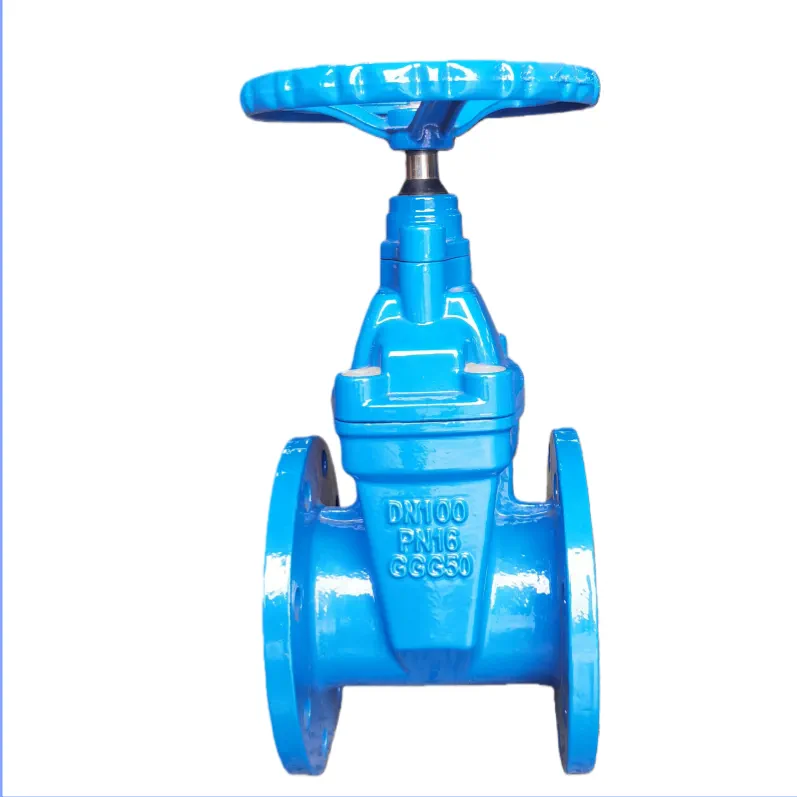
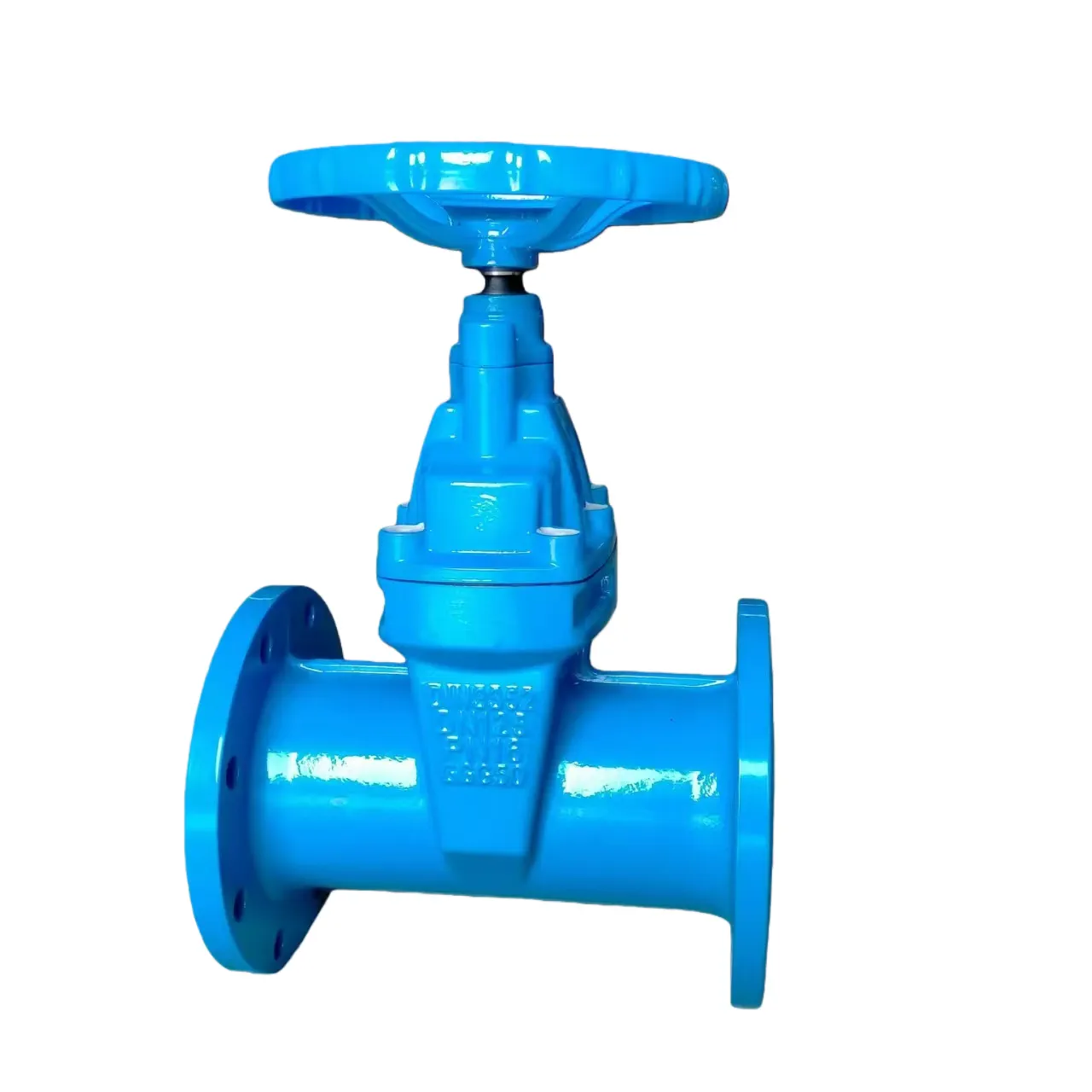
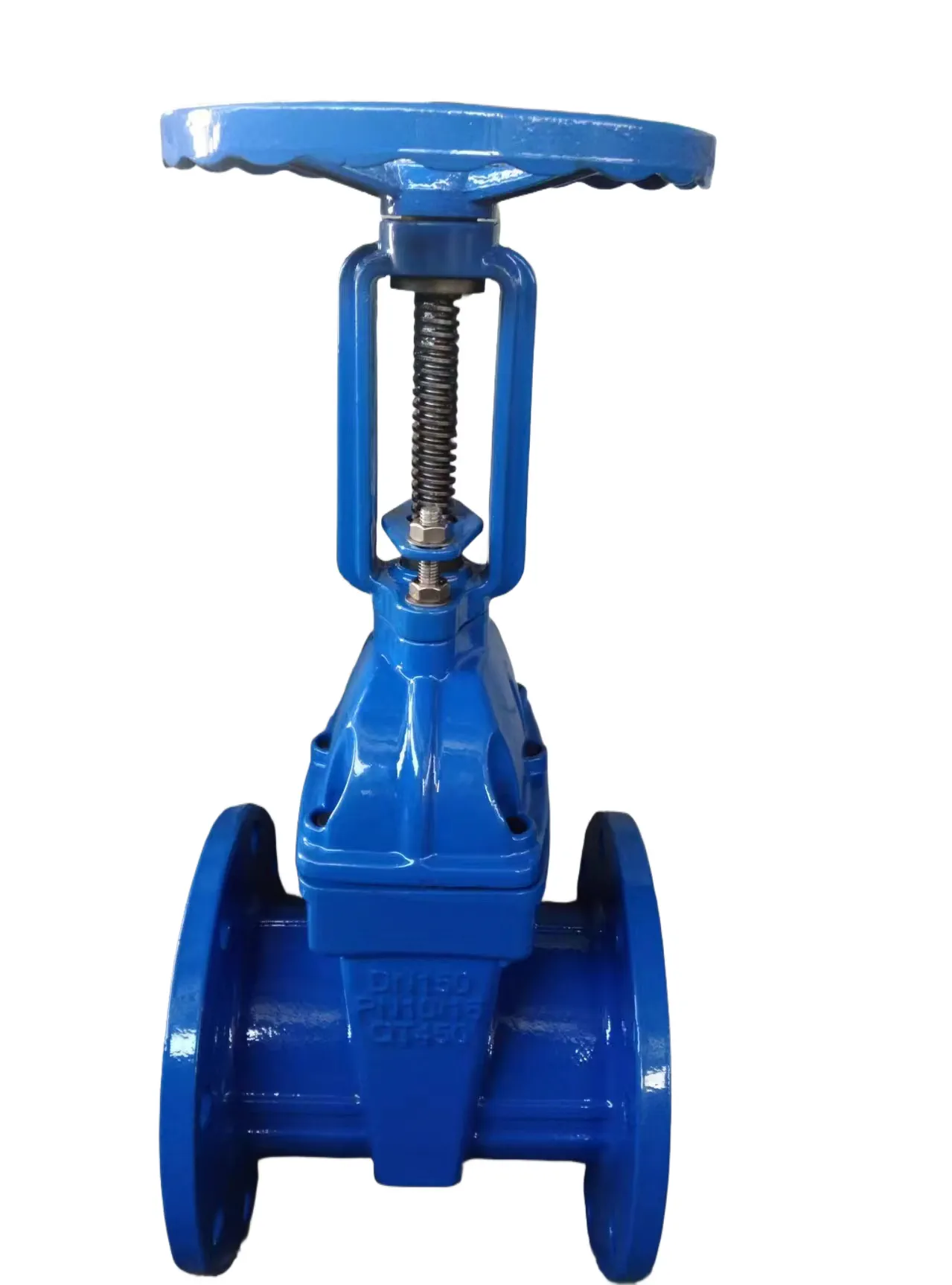
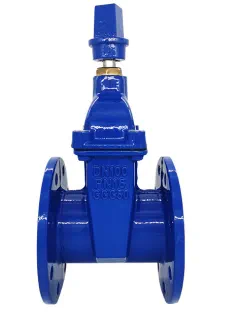
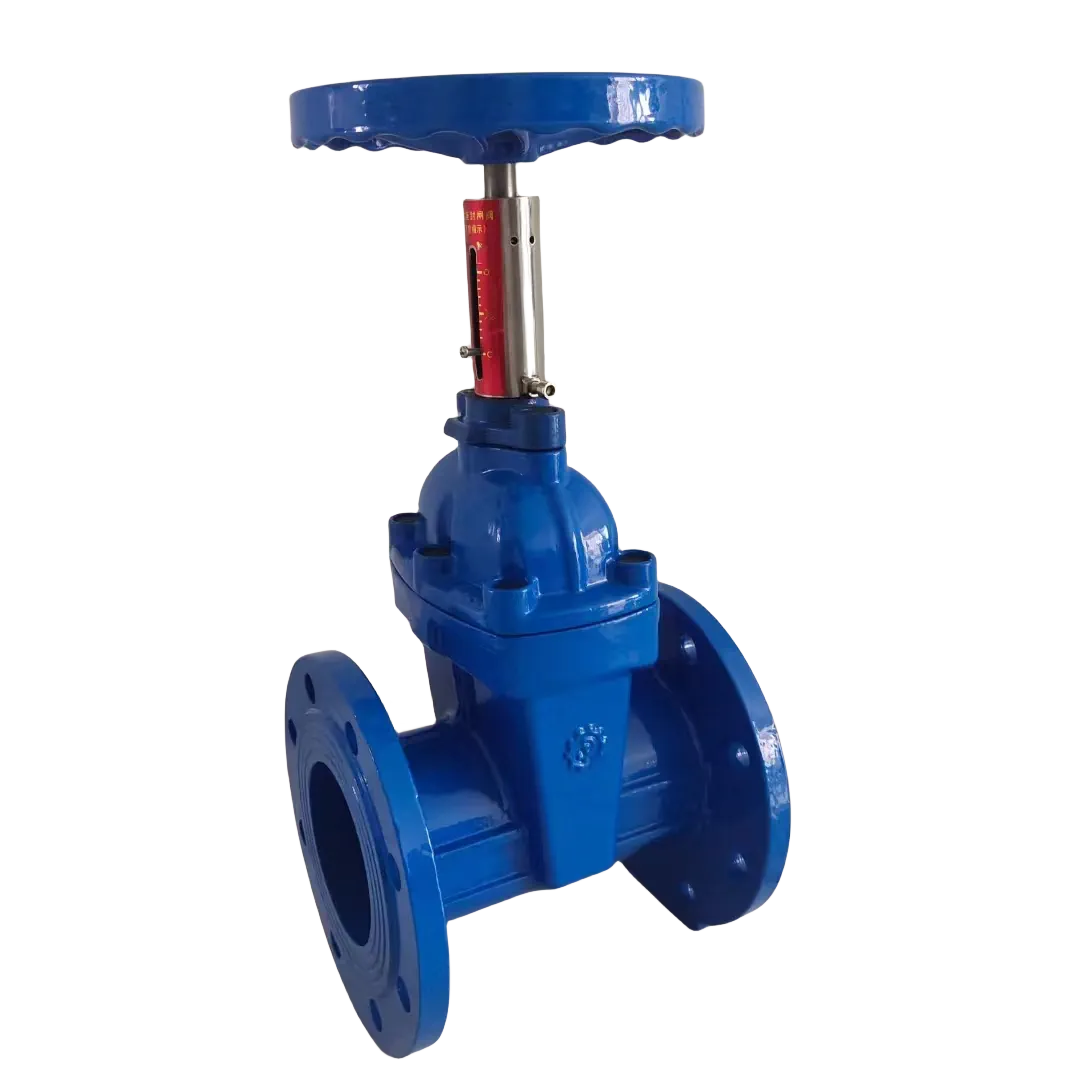
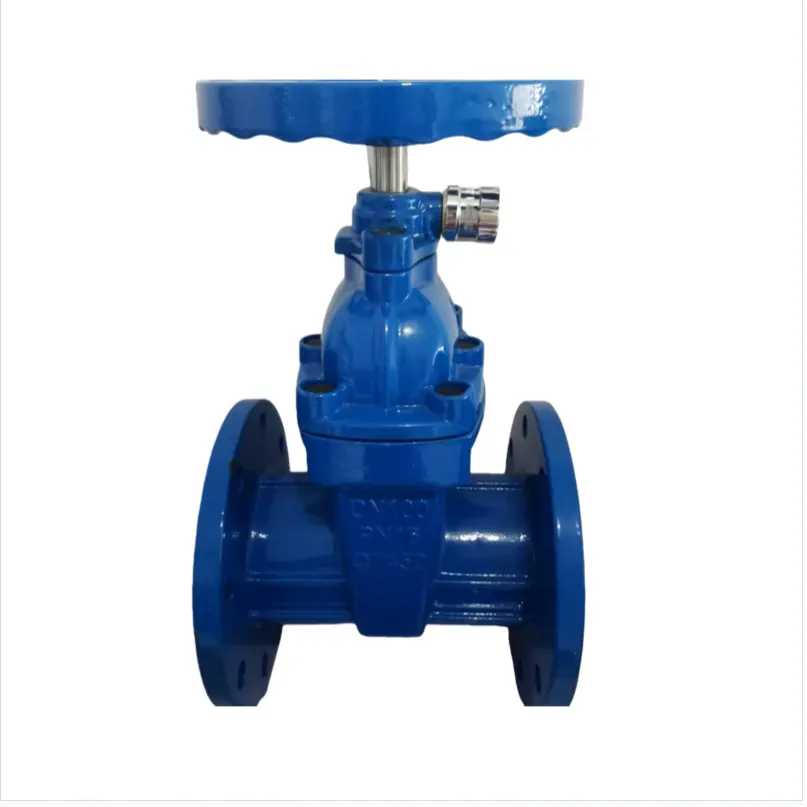
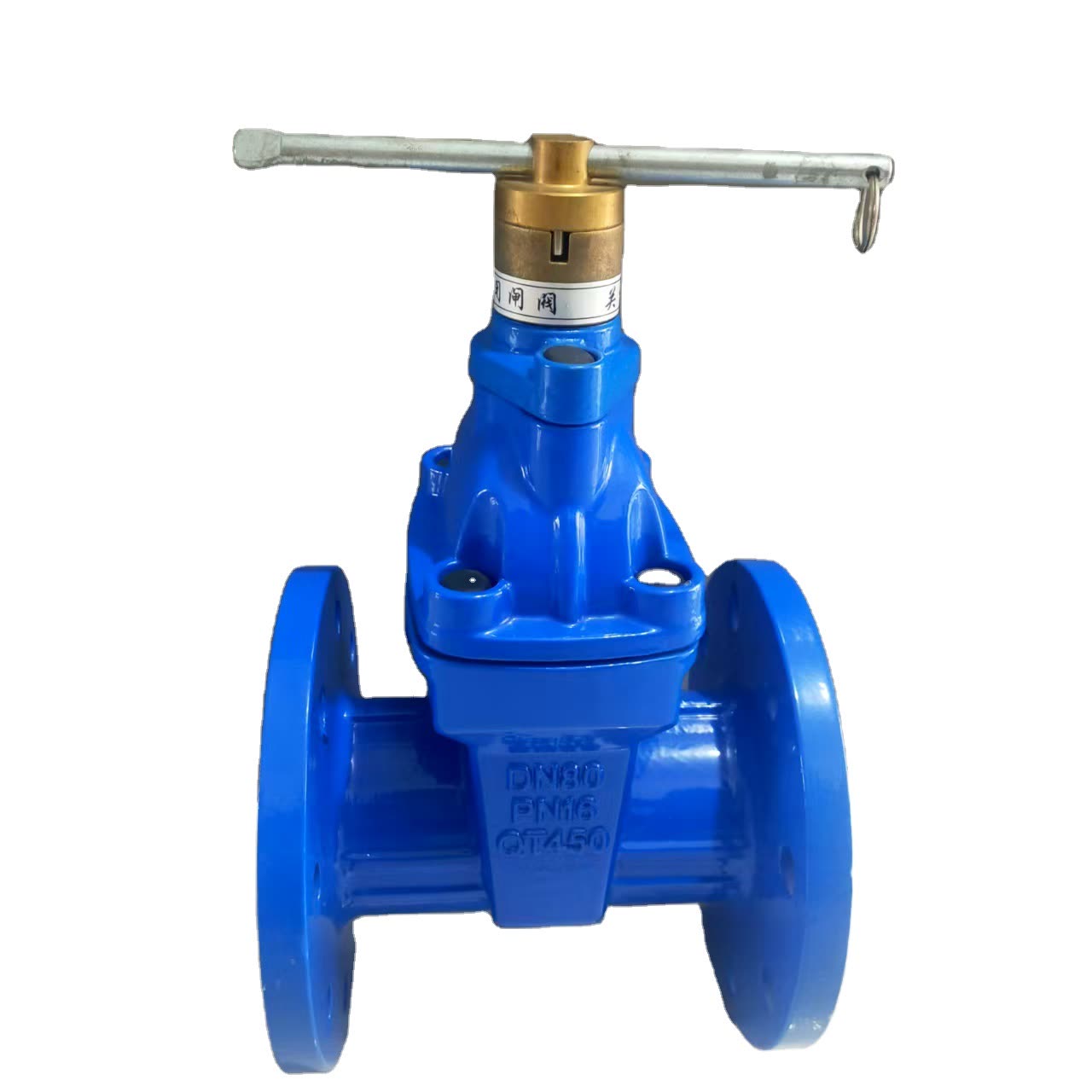
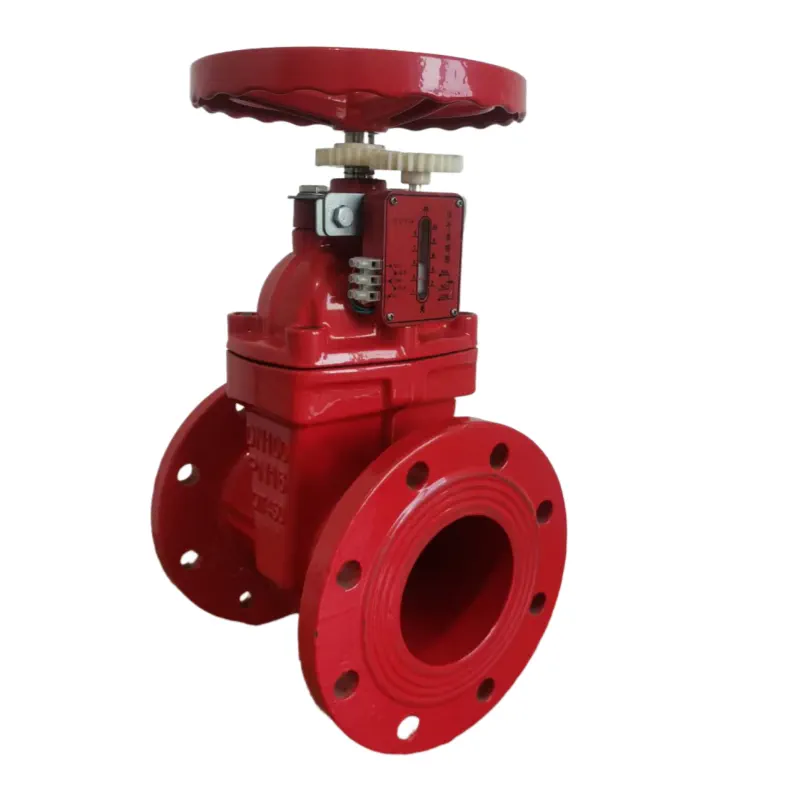
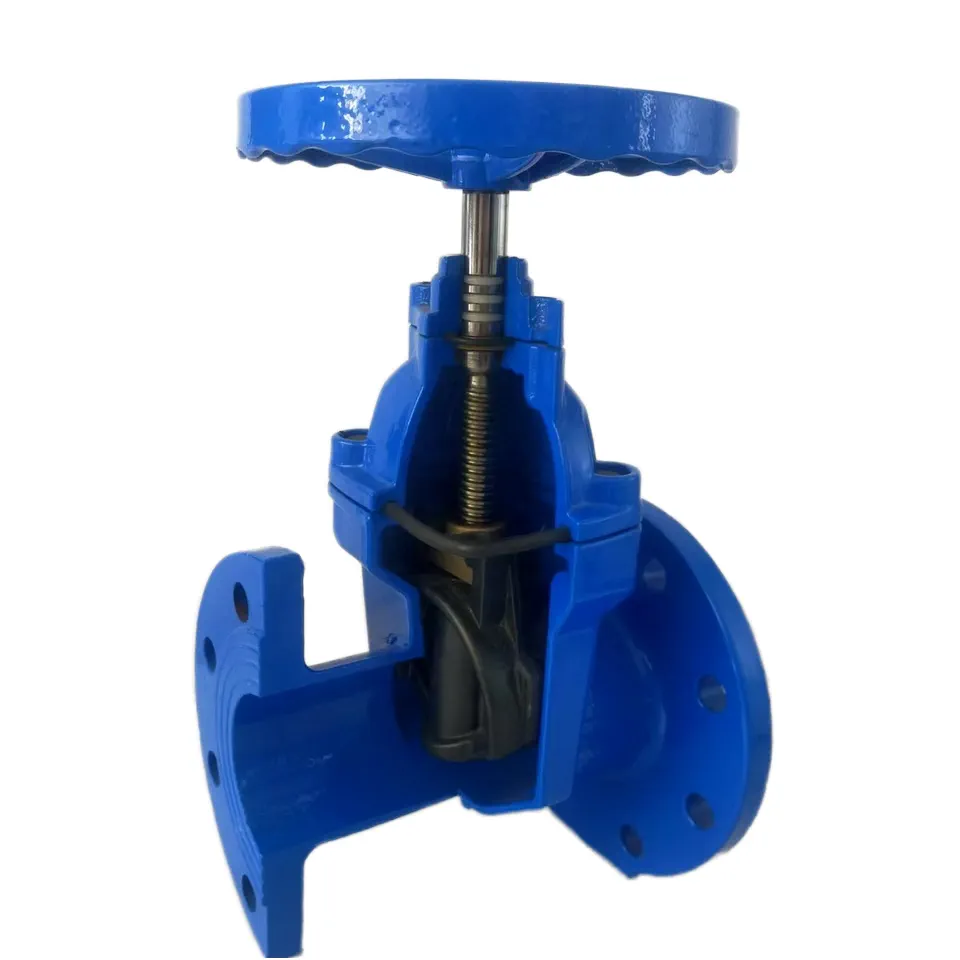
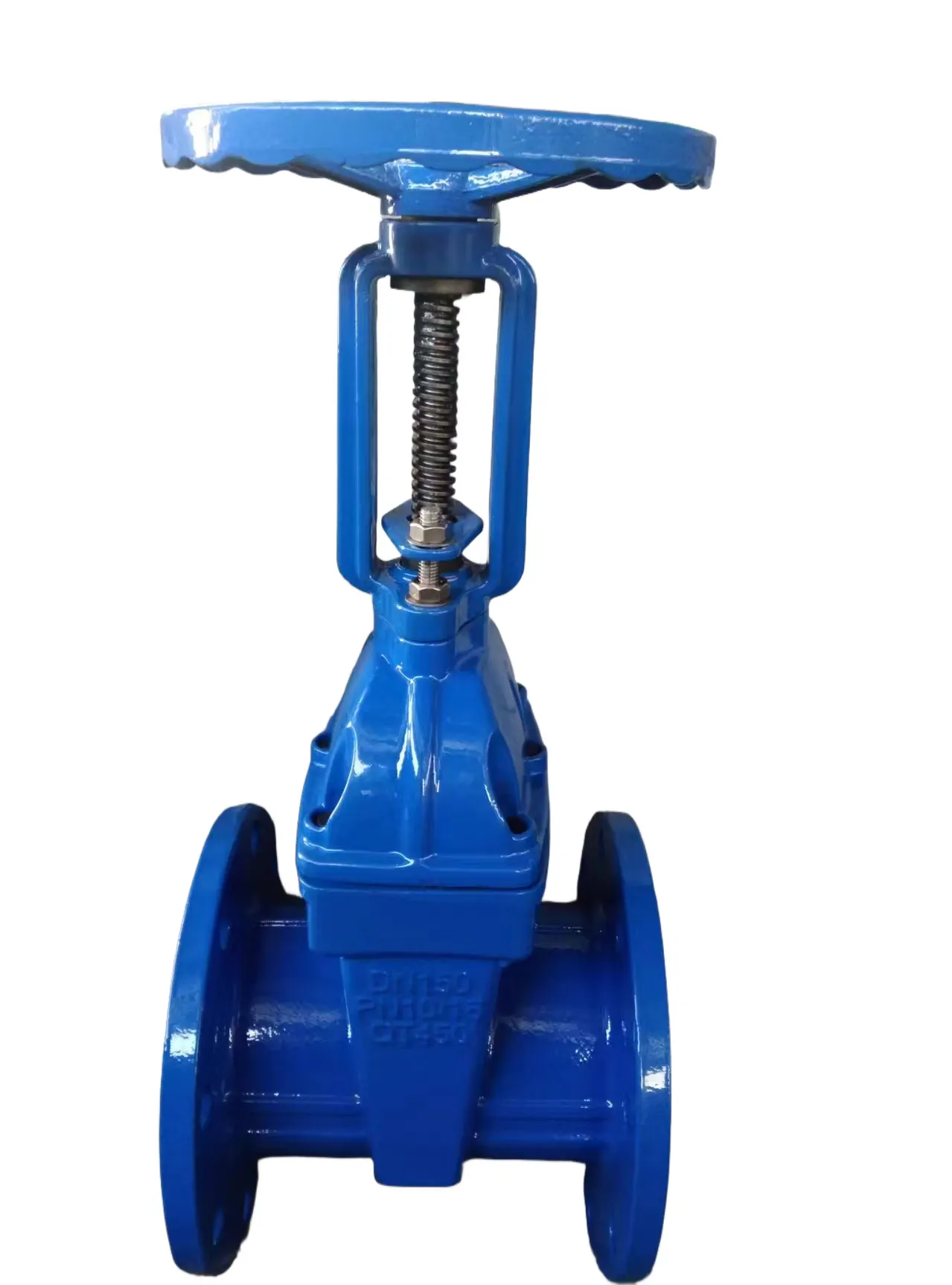
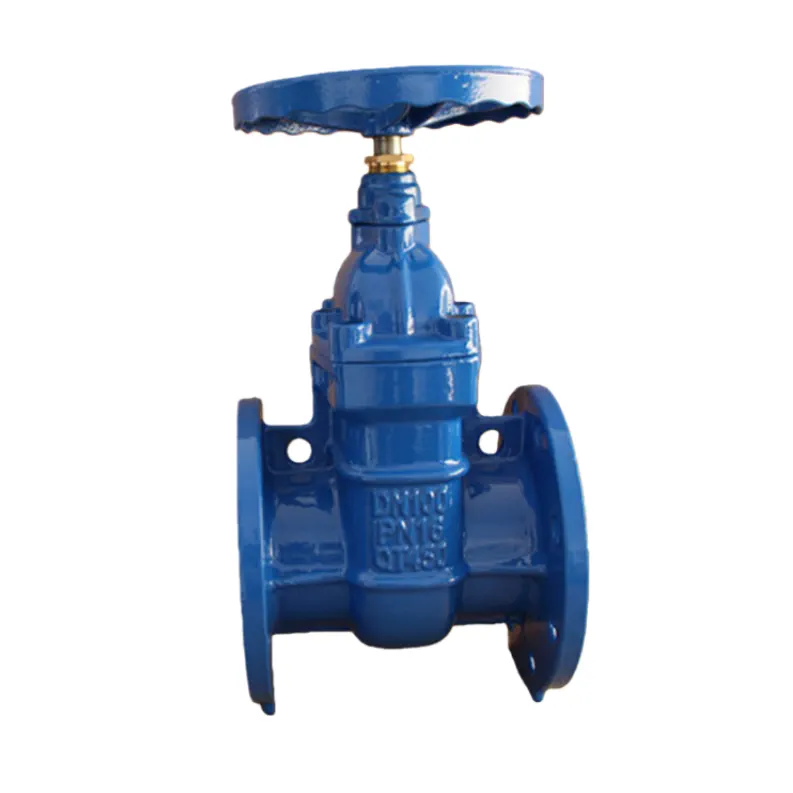
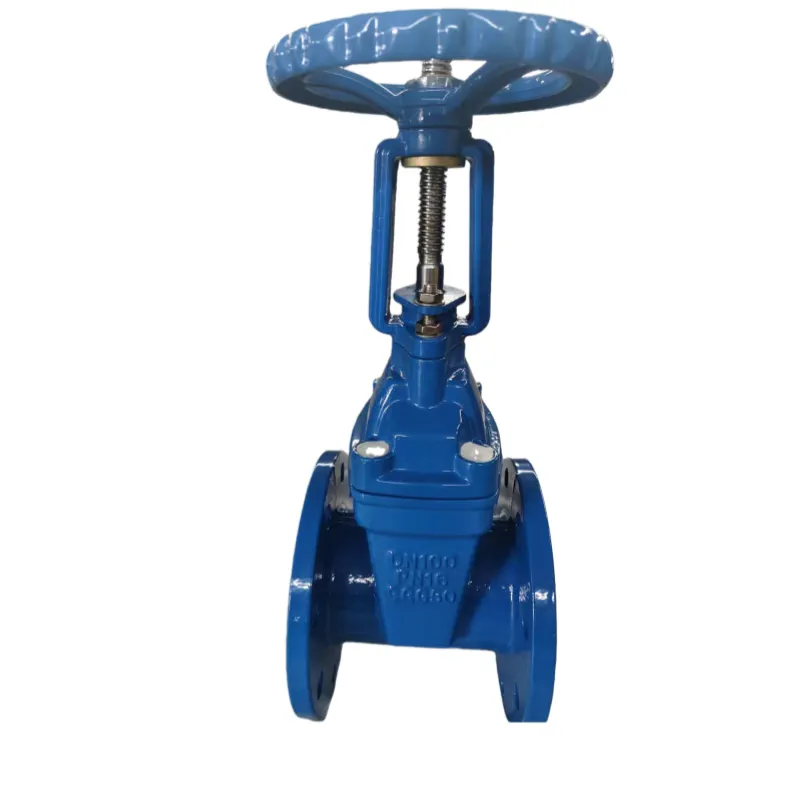
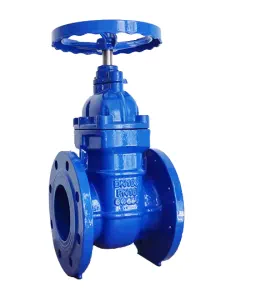
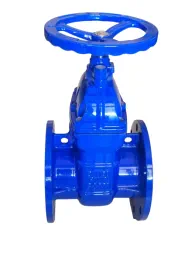
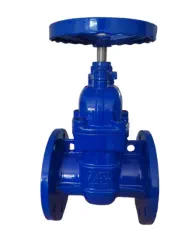
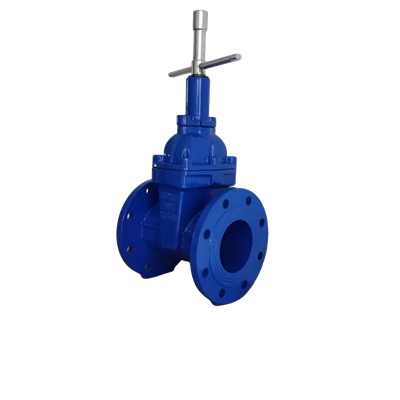
The general non-rising-stem resilient-seated gate: stem turns in place, wedge travels, nothing projects above the bonnet, so it is the build for buried mains and tight chambers. BS5163 / EN 1074-2, ductile iron QT450 (GGG40), fusion-bonded epoxy, fully EPDM-encapsulated wedge — the encapsulation is what keeps the iron out of the water and stops the electrolytic sticking that seizes old gates. DN40–DN600, PN10/16. This is the workhorse of a municipal network; the OS&Y version is the same valve fitted for above-ground indication.
General Specifications
Size RangeDN40 – DN600
Pressure RatingPN10 / PN16
Design StandardBS5163 / EN 1074-2
End ConnectionDouble flanged
Flange DrillingBS EN 1092-2 (DIN 2501) PN10 / PN16
Stem TypeNon-rising stem (NRS)
OperationHandwheel
MediaWater, potable water and neutral liquids
Max. Working Temperature70 °C standard (EPDM) — NBR for 80 °C, FKM for up to 150 °C on request
Materials & Coating
Body / BonnetDuctile iron QT450-10 (GGG40); duplex 2205 / 2507 available on request
WedgeDuctile iron core, fully EPDM-encapsulated
Stem SealingEPDM, potable-water grade
Body CoatingFusion-bonded epoxy, inside and out
Applications
Municipal water networks Potable water pipelines Irrigation projects Fire protection
What a resilient-seated NRS valve is for — and what it is not
This is the reference isolator for clean water mains and distribution lines: it stays fully open or fully shut, it is operated rarely, and it is normally buried or inside a chamber. Under those conditions the resilient seat gives the thing that matters most — a tight shut-off that does not need attention between operations.
It is not the valve for raw water carrying silt, for service above the elastomer temperature, or for a duty that needs to be throttled. In each of those cases the seat is the part that fails first, and the failure looks like a valve that has stopped sealing rather than a valve that was specified wrongly.
What the EPDM encapsulation actually does
The wedge is a ductile-iron core fully encapsulated in EPDM, so what presses against the body seat is rubber rather than metal. That is what produces a drip-tight closure without lapping or close-tolerance machining, and it is why the same valve body can be supplied for potable water with a potable-water-grade elastomer.
The trade is ageing. Rubber is the wear part in this design, not the iron. Temperature headroom is set by the elastomer: EPDM to 70 °C as standard, NBR to 80 °C, FKM to 150 °C on request. A resilient seat ordered for a medium above its elastomer rating will fail earlier than the order assumes, no matter how the valve is installed.
Why NRS, and what it costs
A non-rising stem keeps the stem inside the body, so the valve needs no clearance above it — which is what makes it right for buried mains and compact chambers. The cost is position: the operator cannot read open or shut from the stem, only from the indicator.
Where that cost matters, the same valve is supplied as OS&Y, with the stem rising outside the yoke so travel is visible. The choice follows the installation, not the water, and it is worth settling in the enquiry because it changes the valve that gets built.
What to confirm on a resilient-seated gate valve order
Six items decide the valve and its price. All of them are normally written in the project specification, so the enquiry is usually a matter of quoting against it rather than deciding it.
- Size and pressure rating — DN40–DN600 and PN10 / PN16 are the standard envelope; anything outside it needs confirming
- Medium and temperature, because the elastomer rating is the temperature limit
- Flange drilling, so the valve mates with the pipe the project is installing
- Buried or chamber installation, which fixes the stem type and the operating arrangement
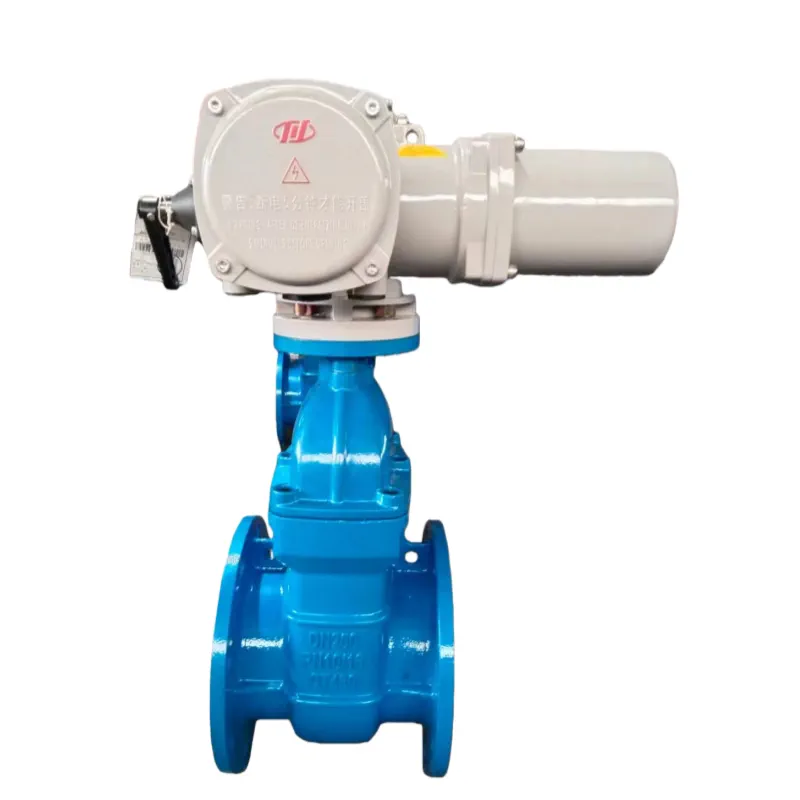
- Handwheel or actuator, and if actuated, the control signal
- Whether potable-water approval is required for the elastomer and coating
Frequently asked
What temperature can a resilient-seated valve actually take?
The elastomer sets it, not the iron: EPDM to 70 °C as standard, NBR to 80 °C, FKM to 150 °C on request. Ordering above the elastomer rating is the most common way a resilient seat fails early.
Can this valve be used on raw water or water carrying silt?
No — that is the metal-seated duty. Silt and solids abrade and lodge against the rubber, and the seat stops sealing. For raw water, silt-carrying mains and higher temperatures, the metal-seated BS 5163 pattern is the right valve.
Why is the stem non-rising, and when should it be OS&Y instead?
NRS keeps the stem inside the body so the valve needs no headroom — right for buried mains and chambers. Where the operator needs to see position, or the valve sits above ground, OS&Y is the same valve with the stem outside the yoke. The installation decides, not the water.
Does a resilient seat give a bubble-tight shut-off?
It gives a drip-tight closure, which is the normal acceptance criterion for this pattern. Bubble-tight is a higher requirement and is normally met with a metal seat at a higher pressure class. State the acceptance criterion in the enquiry so the two sides are measuring the same thing.
What body and trim materials are standard?
Ductile iron QT450-10 (GGG40) body and bonnet, with a ductile-iron wedge fully encapsulated in EPDM, and fusion-bonded epoxy coating inside and out. Potable-water-grade elastomer is available where the project requires it.
Can the valve be supplied with an actuator?
Yes, and it is common on chamber installations. The actuated version is quoted as such because the top flange and stem arrangement change. State the actuation type and the control signal with the enquiry.
What does the quotation cover on testing and documentation?
The test regime follows the standard the order is placed against, and what is tested plus the documentation supplied is written on the quotation for that order. That way the report you receive describes what was built, not a catalogue average.
More from this series
Related guides