

Choosing valves for a water treatment plant is less about picking a hero product than about matching each line's duty to the right valve type. Gate and butterfly valves carry most of the isolation work; check valves, air valves and control valves fill the roles around them. What follows maps the selection by duty across plant rooms, buried mains and the lines between them, and names the standards that govern each choice.
Where valves sit in a water treatment plant
A typical works moves water through four valve-dense zones. Intake and raw-water pumping needs dependable isolation around the pumps, plus check valves against reverse flow. The treatment train (flocculation, sedimentation, filtration) isolates each filter cell and trims backwash flows. Clear-water storage and high-lift pumping adds control duties for level and pressure. Distribution is buried-main territory: isolation valves at section points, air valves at high points.
The first three zones sit in plant rooms, where space is tight and operators want compact quarter-turn valves with visible position indication. The fourth is underground, and there the non-rising-stem resilient gate valve has been the default isolation device for decades.
Gate valves: isolation for plant rooms and buried mains
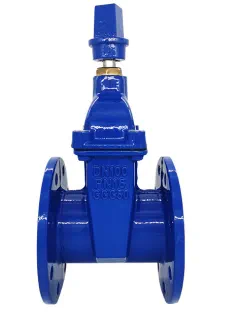
Resilient-seated gate valves are the default isolation valve in municipal water. An EPDM-encapsulated wedge seals against an epoxy-coated ductile-iron body, and the bore is essentially unobstructed when the valve is fully open. EN 1074-2:2000 defines what fit for purpose means here: seat tightness at leakage rate A for resilient seats, shell strength at 1.5 × PFA, seat testing at 1.1 × PFA, and design endurance of 250 operating cycles for manually operated valves or 2,500 for actuated ones.
Two stem arrangements cover most projects. A non-rising stem (NRS) keeps the bonnet compact for buried mains operated through a valve box and extension spindle. An outside screw and yoke (OS&Y) stem rises visibly as the valve opens, which is why plant rooms favour it where an operator must confirm position at a glance.
Within our range, the resilient series follows the common project standards: a Resilient Seated Gate Valve (NRS) to BS 5163 / EN 1074-2 in DN40–DN600, PN10/16; a DIN 3352 F4 (NRS) pattern for German-spec projects; and an AWWA resilient gate valve (NRS) in a 200 psi class to AWWA C509 / C515, with UL / FM listing options. For visible position, an OS&Y resilient gate valve and an AWWA OS&Y version carry the same duty with rising stems.
Metal-seated gates keep their place where soft seats cannot go: hot lines, steam-adjacent service and abrasive media. The listed metal-seated gate valve has metal-to-metal seating with pressure options of PN10 / PN16 / PN25, subject to factory confirmation for the selected size and configuration, and a DIN F4 metal-seated version is listed for media up to approximately 120 °C. Metal-to-metal seating tolerates temperature and grit that would damage an elastomer; confirm the allowable leakage rate of a specific valve against the applicable standard and its test documentation.
For direct-buried service, a Buried Gate Valve (MZ45X / MZ45T) combines full epoxy protection with a polywrap option and a gearbox with extension spindle for operation from ground level.
Butterfly valves: compact isolation and modulating duty
A butterfly valve earns its place on three counts: size, speed and controllability. The body is roughly as long as its flange faces. A quarter-turn operator closes it in seconds, and the disc holds intermediate positions, which a gate valve must never be asked to do. Backwash flow trimming and process-line balancing are natural butterfly duties.
The governing standards differ by market. In Europe, metallic butterfly valves are covered by EN 593; the 2017 edition is the version in widespread use, and the BSI catalogue lists BS EN 593:2026 as its replacement. EN 593 states that EN 1074-1:2000 and EN 1074-2:2000 apply alongside it for water supply applications, so a waterworks butterfly inherits the same fitness-for-purpose regime as a gate valve. In US-standard markets, ANSI/AWWA C504-23 covers rubber-seated butterfly valves from 3 in. through 72 in. for raw water, potable water, wastewater and reclaimed water, rated up to 250 psi steady-state working pressure.
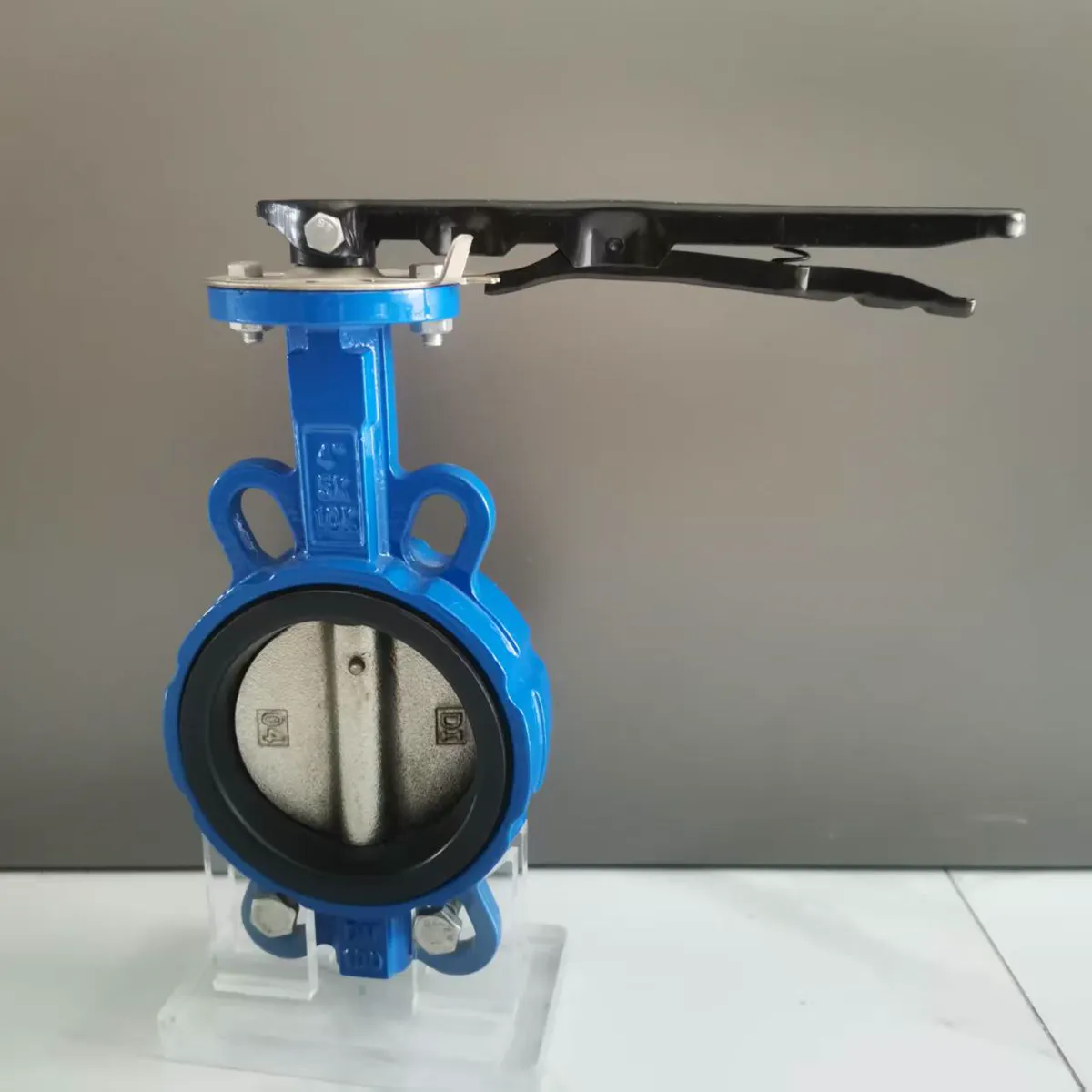
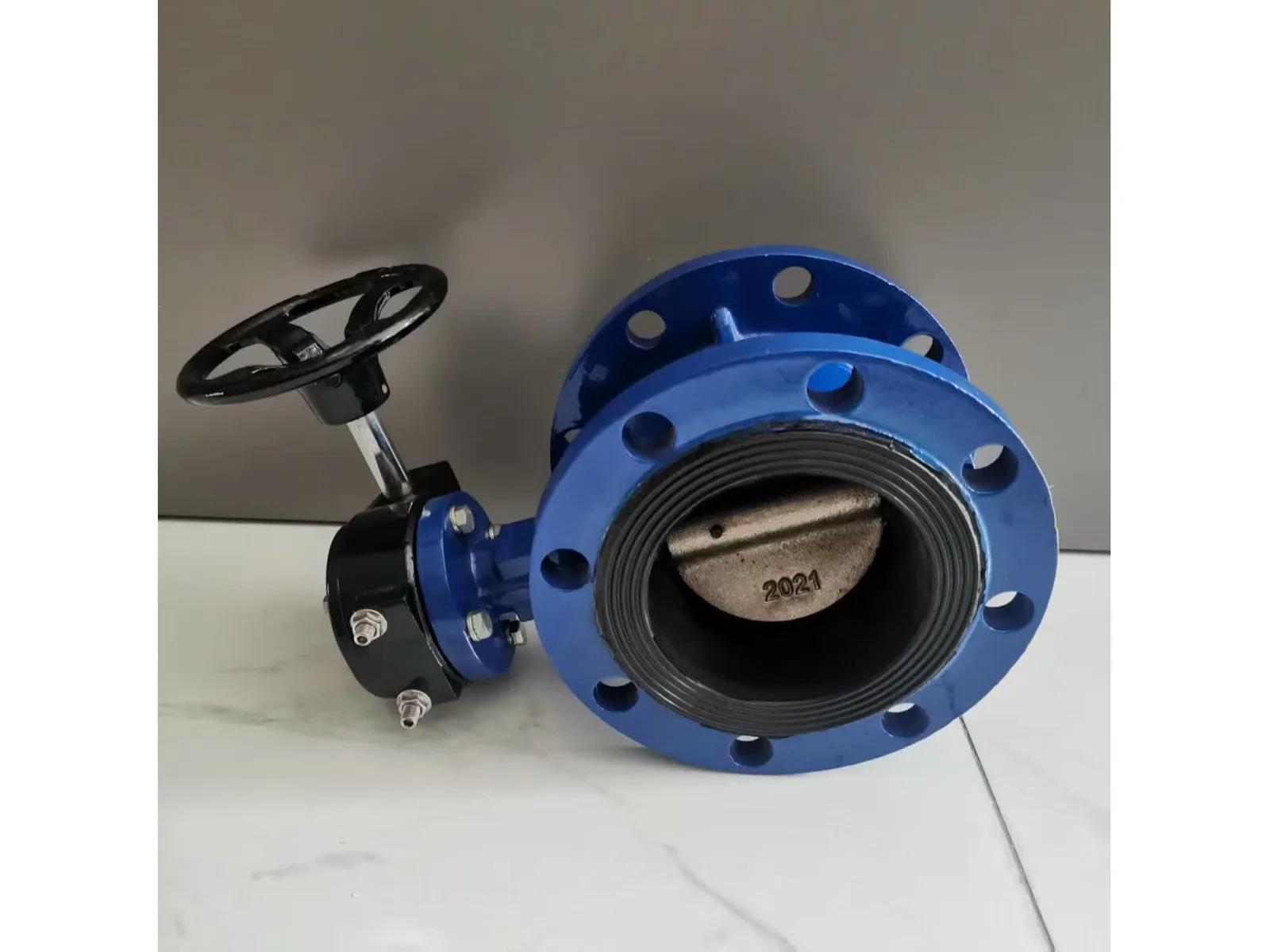
Within our range, the wafer butterfly valve with lever handle (D71X) in DN100 (4"), PN10/16 with an SS304 disc and EPDM seat suits compact isolation on plant pipework. The flanged butterfly valve with worm gear (D341X), also DN100 (4") PN10/16, uses a manual worm-gear operator. Size ranges and pressure classes shown on our product pages are the figures currently published; confirm ratings for a specific order with the factory.
Side by side: what each valve does best
Typical outcomes: buried distribution mains and transmission isolations go to resilient gate valves; plant-room isolation where space and operating speed matter goes to butterfly valves; any line that needs modulation gets a butterfly or a dedicated control valve.
| Selection question | Gate valve | Butterfly valve |
|---|---|---|
| Shut-off duty | Isolation only — full open or full closed | Isolation and throttling |
| Pressure loss (open) | Very low — full-bore path | Higher — disc remains in flow |
| Operating speed | Multi-turn, slower | Quarter-turn, fast |
| Face-to-face length | Long | Very short (wafer) or short (flanged) |
| Buried service with valve box | Proven (NRS + extension spindle) | Possible, less common |
| Visual position indication | OS&Y rising stem | Lever position or gear indicator |
| Relative weight at large sizes | Heavy body and bonnet | Light and compact |
Standards to specify
- EN 1074-1:2000 and EN 1074-2:2000 set the general and isolating-valve fitness requirements for water supply (EN 1074-2 amended by A1:2004): seat tightness rates A/B, shell testing at 1.5 × PFA, seat testing at 1.1 × PFA, endurance of 250 cycles manual / 2,500 actuated.
- EN 593 covers metallic butterfly valves. The 2017 edition is in widespread use, and the BSI catalogue lists BS EN 593:2026 as the superseding edition. For water supply it is applied together with EN 1074-1 and EN 1074-2.
- BS 5163-1:2004 is the UK waterworks gate valve code of practice, superseding BS 5163:1986.
- DIN 3352 was the German gate valve standard. Its F4/F5 pattern designations remain in common product naming, but the parts have been withdrawn and superseded by DIN EN 1171:2015 for cast iron gate valves.
- ANSI/AWWA C504-23 covers rubber-seated butterfly valves, 3–72 in., up to 250 psi, for potable, raw, wastewater and reclaimed water.
- AWWA C550 sets requirements for protective epoxy interior coatings for valves and hydrants; take the coating scope of a specific model from its datasheet.
Supporting valves around pumps and mains
Isolation is only part of the valve schedule. Check valves prevent reverse flow at pump discharge, and their closing characteristics must be matched to the pumping system: unsuitable closure can itself contribute to pressure surges. The listed Silent Check Valve (HC41X) is a spring-assisted silent check valve for water and HVAC service, and the Swing Check Valve (DIN F6) has a full-bore swing design and is listed for water and wastewater service.
Air valves belong at high points and on long ascending mains, where accumulated air throttles flow and rapid filling or draining can trigger surge events. This is a placement rule from waterworks practice rather than a property of any one model. The listed Double Orifice Air Valve (QB2) uses a double-orifice arrangement with a large and a small orifice, and the Combination Air Valve (CARX) is listed for bulk and continuous venting. Check vacuum-protection behaviour for a specific model in its documentation.
Control valves regulate what isolation valves merely stop. Where the plant or network needs regulation rather than open/close, pilot-operated diaphragm valves are the standard tool: the Pressure Reducing Valve (200X) is listed as a pressure-reducing valve for water service, the Remote Float Control Valve (100X) as a pilot-operated float control valve for potable and industrial water, and the Flow Control Valve (400X) as a flow-control valve for water service. Upstream of pumps and meters, Y-Type Strainers catch construction debris; the listed 304 stainless screen material is subject to factory confirmation.
Where actuation is specified, an Electric Gate Valve (Z945X / Z941X) provides SCADA-ready open/close with a manual handwheel override.
A practical selection checklist
1. Decide whether the line needs pure isolation (gate or butterfly) or modulation (butterfly or control valve). Never leave a gate valve throttled.
2. Match the valve to its location. Buried mains favour NRS resilient gates with extension spindles and polywrap; plant rooms favour OS&Y gates or compact butterfly valves.
3. State the project standard up front: BS 5163-1:2004, EN 1074-2:2000, DIN 3352 F4/F5 patterns or AWWA C509/C515 for gates; EN 593 or AWWA C504-23 for butterflies.
4. Check size and pressure against published ratings, then confirm order-specific ratings with the factory.
5. Match seat and body materials to the media: EPDM resilient seats for clean water, metal seating for hot or abrasive service, clog-tolerant check valve designs for wastewater.
6. Decide the operation method, manual, gearbox or electric. Endurance requirements differ under EN 1074-2: 250 cycles manual versus 2,500 actuated.
7. Allow for surge and air. Check valves at pump discharge and air valves at high points are cheaper than repairing a surge-damaged main.
Reference sources
- EN 1074-1:2000 — *Valves for water supply — Fitness for purpose requirements and appropriate verification tests — Part 1: General requirements*, CEN.
- EN 1074-2:2000 (with A1:2004) — *Valves for water supply — Fitness for purpose requirements and appropriate verification tests — Part 2: Isolating valves*, CEN / British Standards Institution.
- EN 593 — *Industrial valves — Metallic butterfly valves for general purposes*, CEN (2017 edition in widespread use; BSI catalogue lists BS EN 593:2026 as the superseding edition).
- BS 5163-1:2004 — *Valves for waterworks purposes — Predominantly key-operated cast iron gate valves — Code of practice*, British Standards Institution (supersedes BS 5163:1986).
- DIN EN 1171:2015 — *Industrial valves — Cast iron gate valves*, DIN (supersedes the withdrawn DIN 3352 parts).
- ANSI/AWWA C504-23 — *Rubber-Seated Butterfly Valves*, American Water Works Association, 2023.
- AWWA C550 — *Protective (Epoxy) Interior Coatings for Valves and Hydrants*, American Water Works Association.
- Product specifications as published on our product pages (sizes, materials, pressure classes, seating and standards for the valves referenced above).
Frequently Asked Questions
Related Products
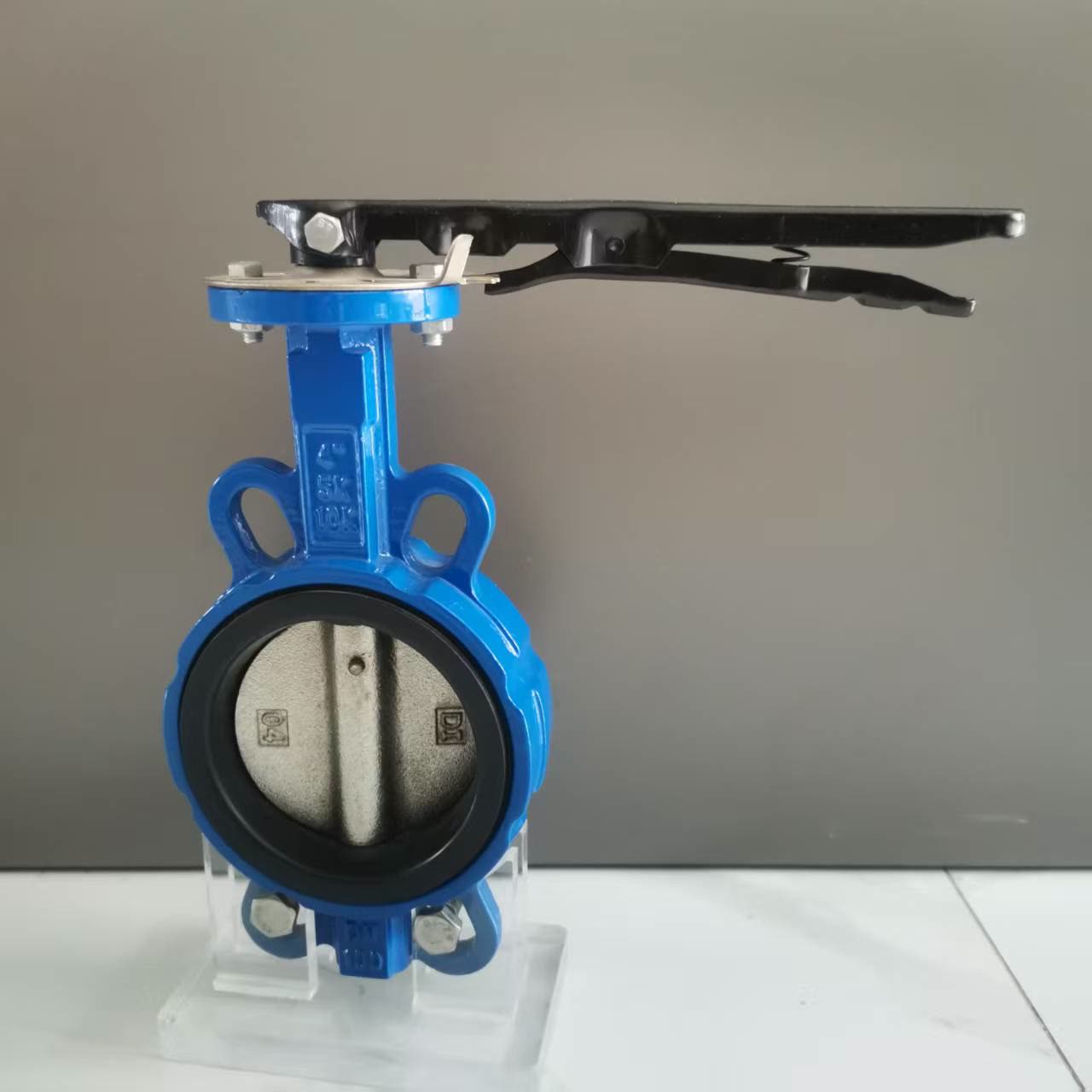
Wafer Butterfly Valve with Lever Handle (D71X)
D71X · DN50–600 · PN10/16
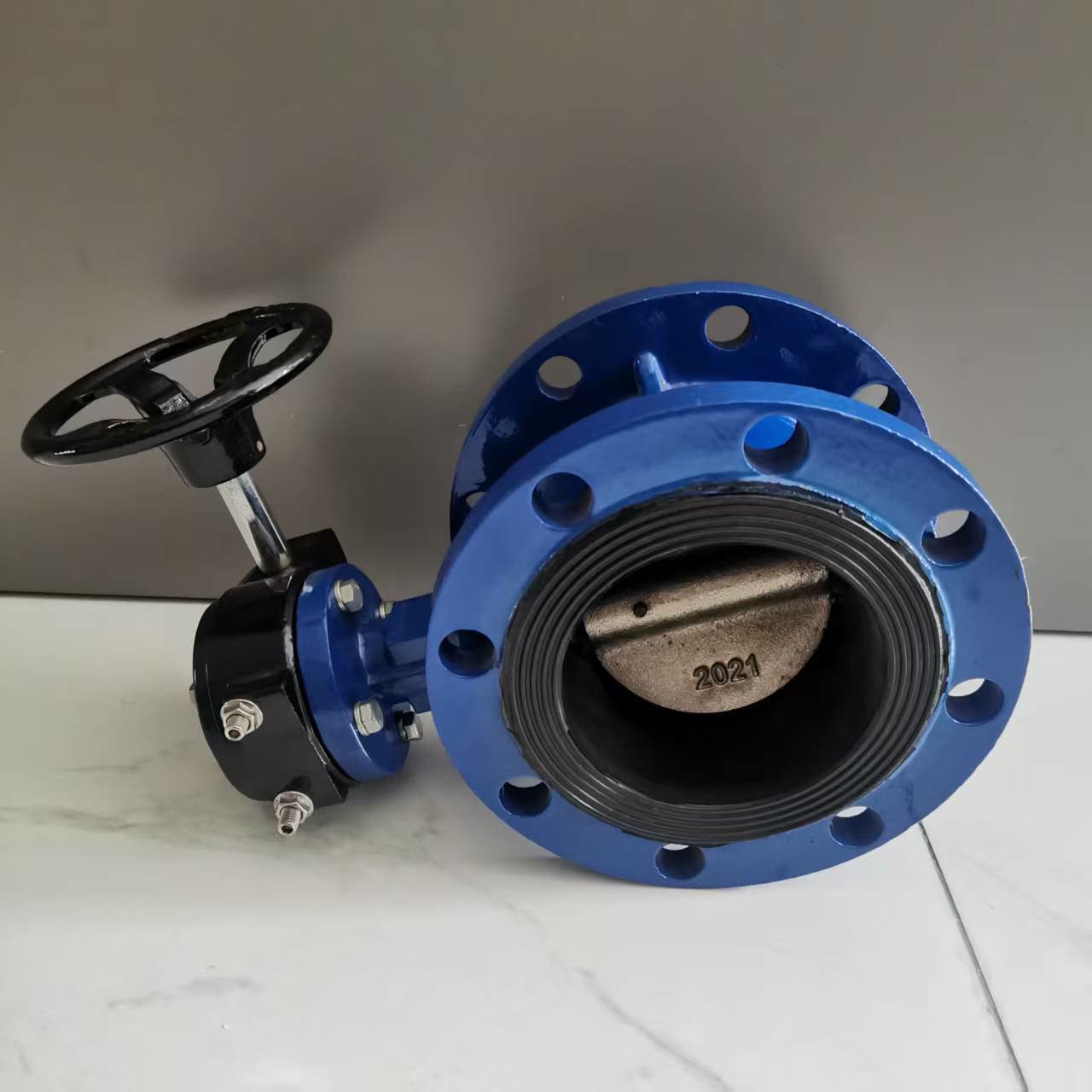
Flanged Butterfly Valve with Worm Gear (D341X)
D341X · DN50–1200 · PN10/16
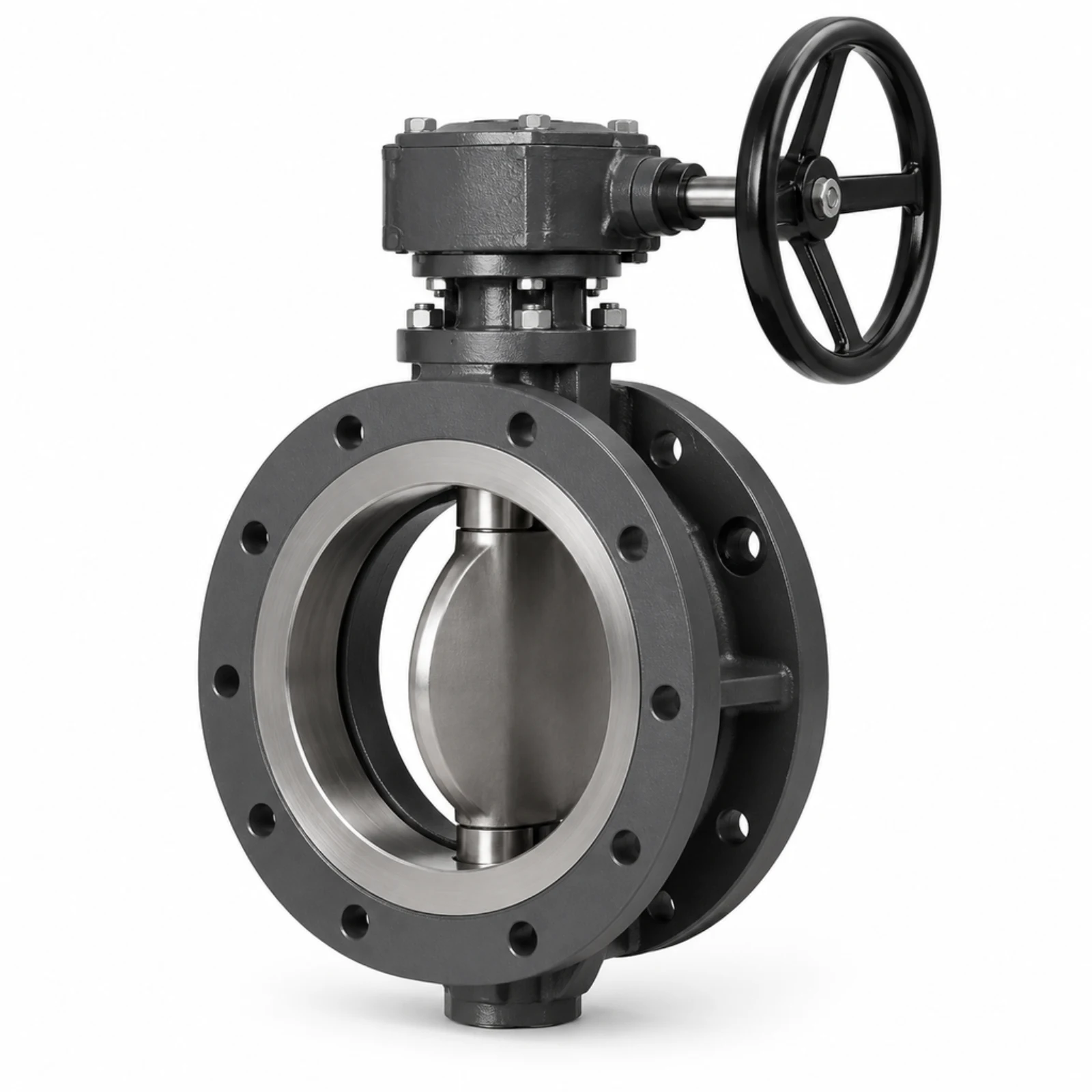
Triple-Offset Metal-Seated Butterfly Valve (D343H)
DN80 – DN2000 · PN10 – PN40 · up to 425 °C
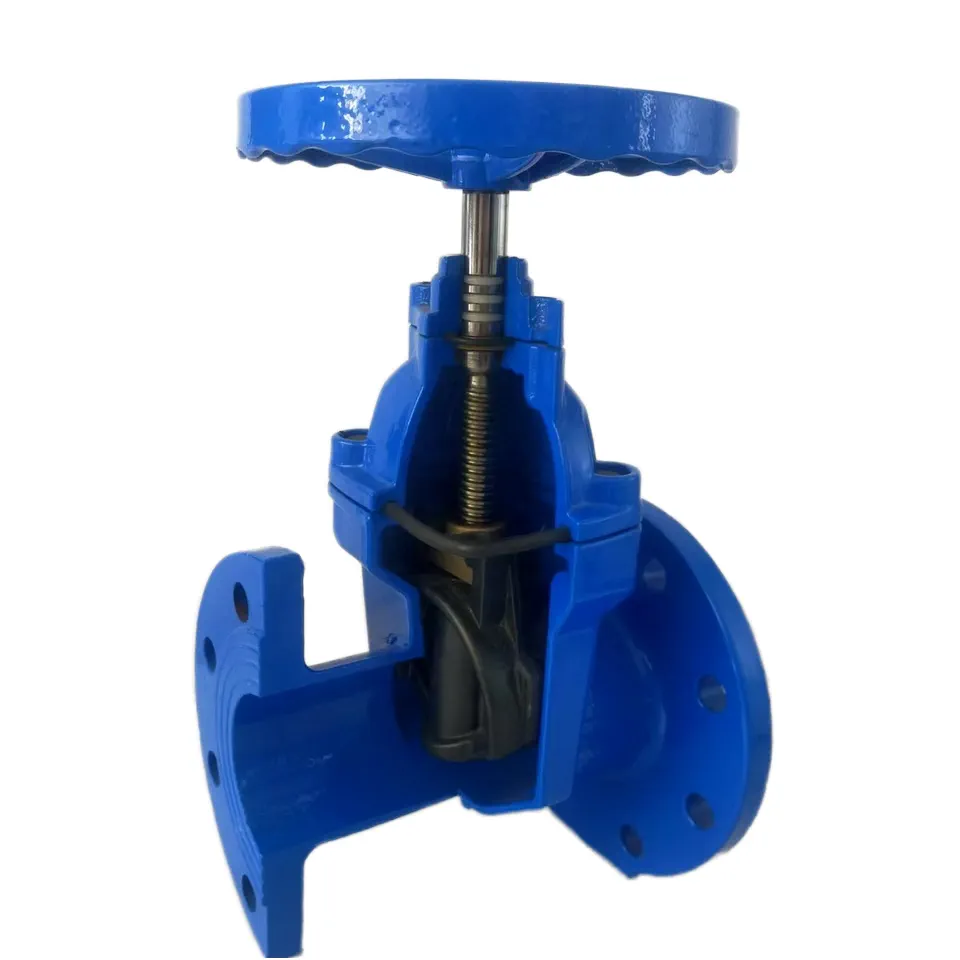
Resilient Seated Gate Valve (NRS)
S4 / S5 · DN40 – DN600 · BS5163 / EN 1074-2