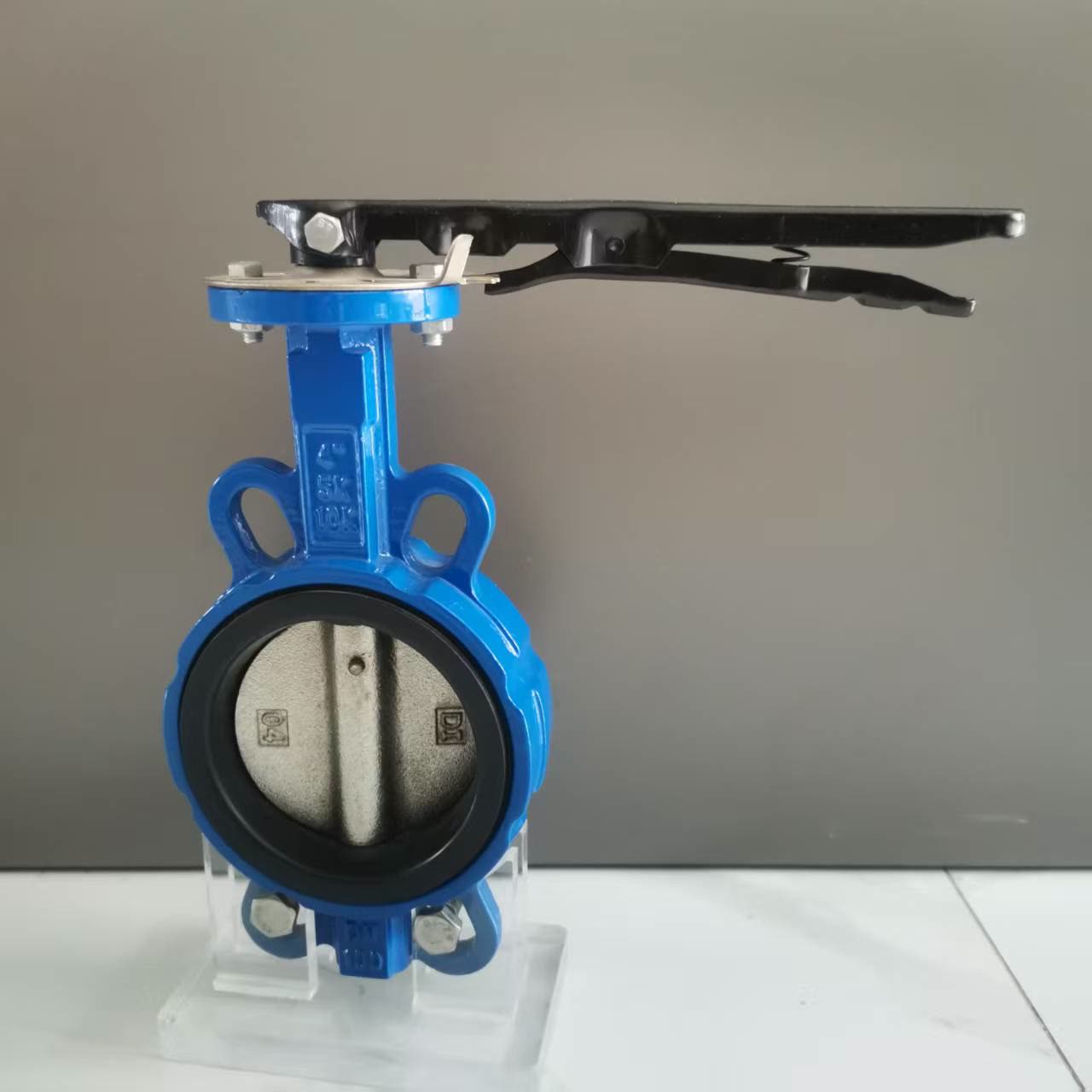
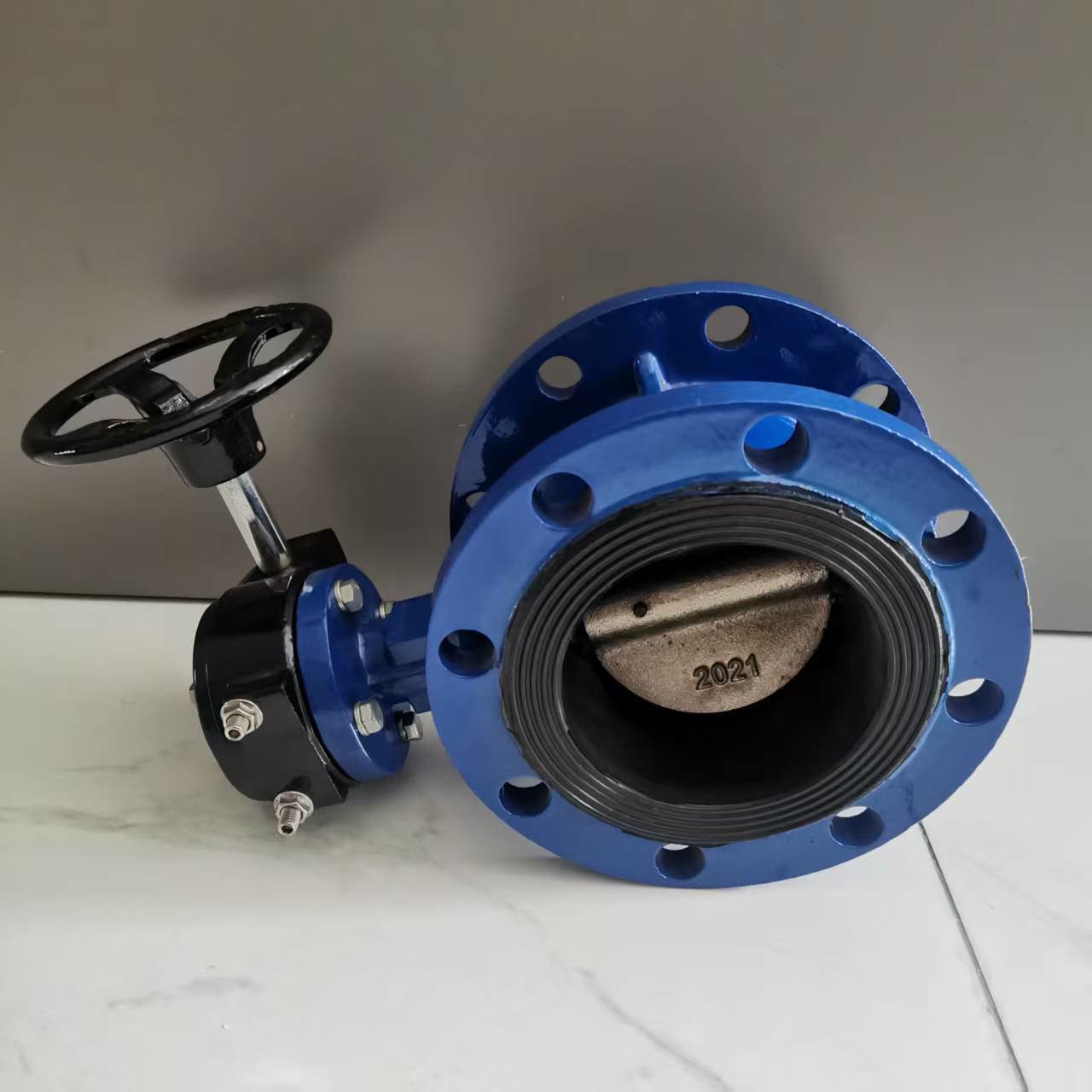
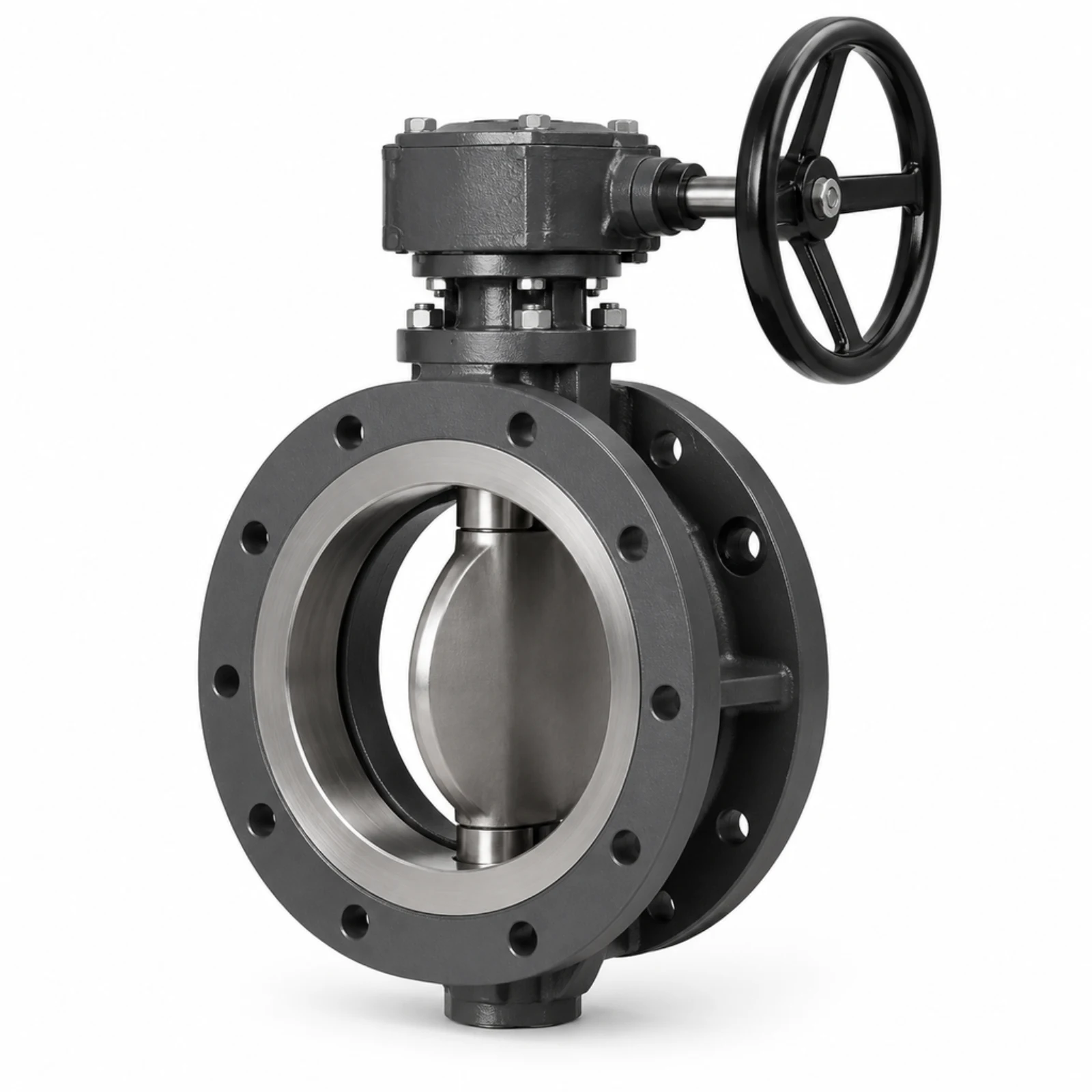
A flanged butterfly with a worm gear is what replaces a gate valve from about DN200 upward: the gear gives the mechanical advantage a lever cannot, so a seated disc can be cracked open by one man on a handwheel, and the flanged body carries the line load without the wafer's dependence on bolt tension. Bubble-tight on EPDM, DN100 at PN10/PN16 in this listing, sized upward on request. Same rule as the wafer: an isolating valve. If the duty is to control flow, the disc wears the seat and the answer is a control valve with a characterised trim.
General Specifications
SizeDN100 (4")
Pressure RatingPN10 / PN16
End ConnectionDouble flanged
OperationWorm gear (turbo), manual — actuator on request
MediaWater mains and networks, treatment plants
Max. Working Temperature0 – 80 °C (EPDM seat)
Materials & Coating
BodyDuctile iron, epoxy coated; duplex 2205 / 2507 available on request
DiscSS304 (CF8)
SeatEPDM resilient
Applications
Water mains & networks Industrial pipelines Treatment plants Full-bore flow service
Flanged, worm-gear operated — what that combination buys
A double-flanged butterfly bolts between two pipe flanges and can be removed without spreading the pipeline the way a wafer pattern sometimes demands. The worm gear trades operating speed for torque: a few turns of the handwheel move the disc through its travel, so a large valve can be operated by one person instead of a long lever.
That is why this pattern is the usual choice on larger isolation duties in water mains, treatment plants and industrial lines — the places where the valve is big, operated occasionally, and has to be operable by whoever is on shift.
Bubble-tight comes from the seat, not the disc
The disc is stainless and it is what interrupts the flow, but what makes the valve hold is the resilient seat the disc closes against. In this pattern the seat is EPDM and the body is epoxy-coated ductile iron, so the sealing surfaces are rubber against stainless — which is why a bubble-tight result is achievable at normal water temperatures without lapping.
The same fact explains the limits. Above the elastomer temperature the seat is the part that degrades; in a medium that attacks EPDM the seat is again the first casualty. Neither is a disc problem, and neither is fixed by a different disc material.
Where a butterfly is the wrong valve
A disc sits in the flow path even when fully open, so a line that has to be pigged clean needs a different valve. A disc held part-open for long periods erodes at the seat edge and can chatter — continuous throttling belongs to a control valve. And on a duty that needs metal-to-metal sealing at high temperature, a resilient seat is the wrong starting point.
None of these are defects of the butterfly; they are duties it was never designed for. Most complaints about butterfly valves trace back to one of the three.
What to confirm on a flanged butterfly order
- Size and pressure rating — the pattern covers PN10 / PN16 water service; outside that needs confirming
- Face-to-face and flange drilling, so it drops into the existing gap
- Operation: worm gear is standard here; actuator on request, with the control signal
- Media and temperature, since the EPDM seat is the limit
- Whether the line is pigged, or throttled continuously — either changes the valve family
- Disc and stem material expectation where the medium is not plain water
Frequently asked
Flanged or wafer butterfly — which one?
Flanged where the valve has to be removable without spreading the pipeline, and where the joint has to be as rigid as the pipe. Wafer where space is tight and the line can be opened. The disc and seat are the same idea in both; the connection is the decision.
Is a butterfly valve bubble-tight?
With a resilient EPDM seat and a stainless disc at normal water temperature, yes — that is the normal acceptance result for this pattern. Above the elastomer temperature or in an aggressive medium the seat degrades and the claim no longer holds.
Can it be used for throttling?
It can be part-open, and short-term modulation is common. Continuous throttling at a part-open disc erodes the seat edge and can cause chatter — that duty belongs to a control valve. If throttling is the job, say so before the valve is chosen.
Why a worm gear instead of a lever?
Torque. A lever gives fast quarter-turn operation on small valves; above a certain size the torque needed is beyond comfortable hand operation, and a worm gear reduces it to a few turns. Actuators take this further where remote or automated operation is needed.
What materials are standard?
Epoxy-coated ductile-iron body, stainless disc and an EPDM resilient seat. Where the medium is not plain water, the disc and stem material should be stated in the enquiry rather than assumed.
Can the valve be pigged?
No — a butterfly disc remains in the flow path. Where the line has to pass a pig, the valve family has to change to a full-bore type such as a gate valve.
What does the quotation state about testing?
The test regime follows the standard the order names, and what is tested plus the documentation supplied is written on the quotation for that order — so the report describes the valve that was built.
More from this series
Related guides