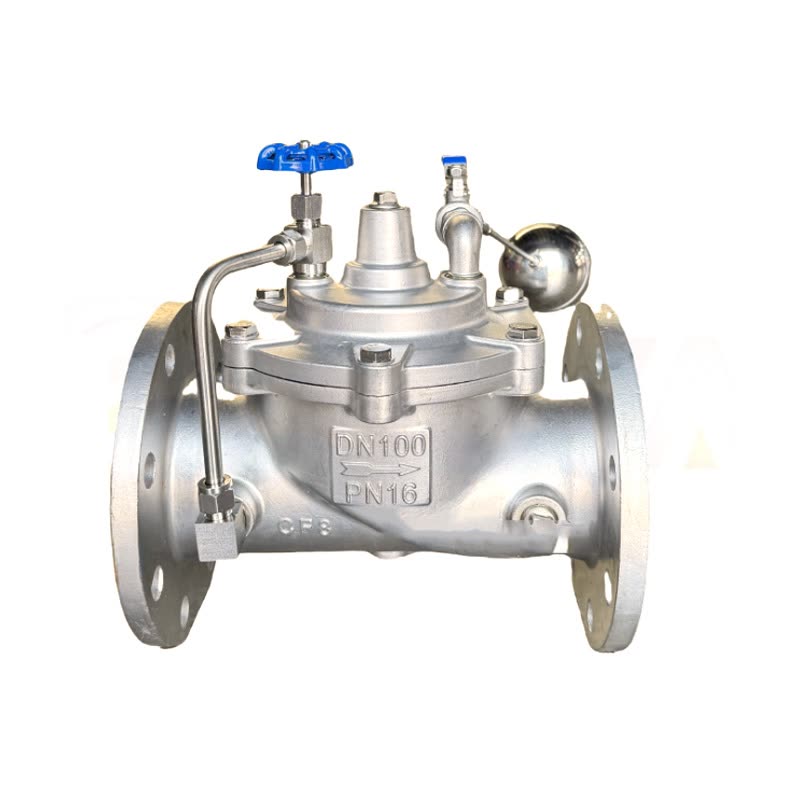
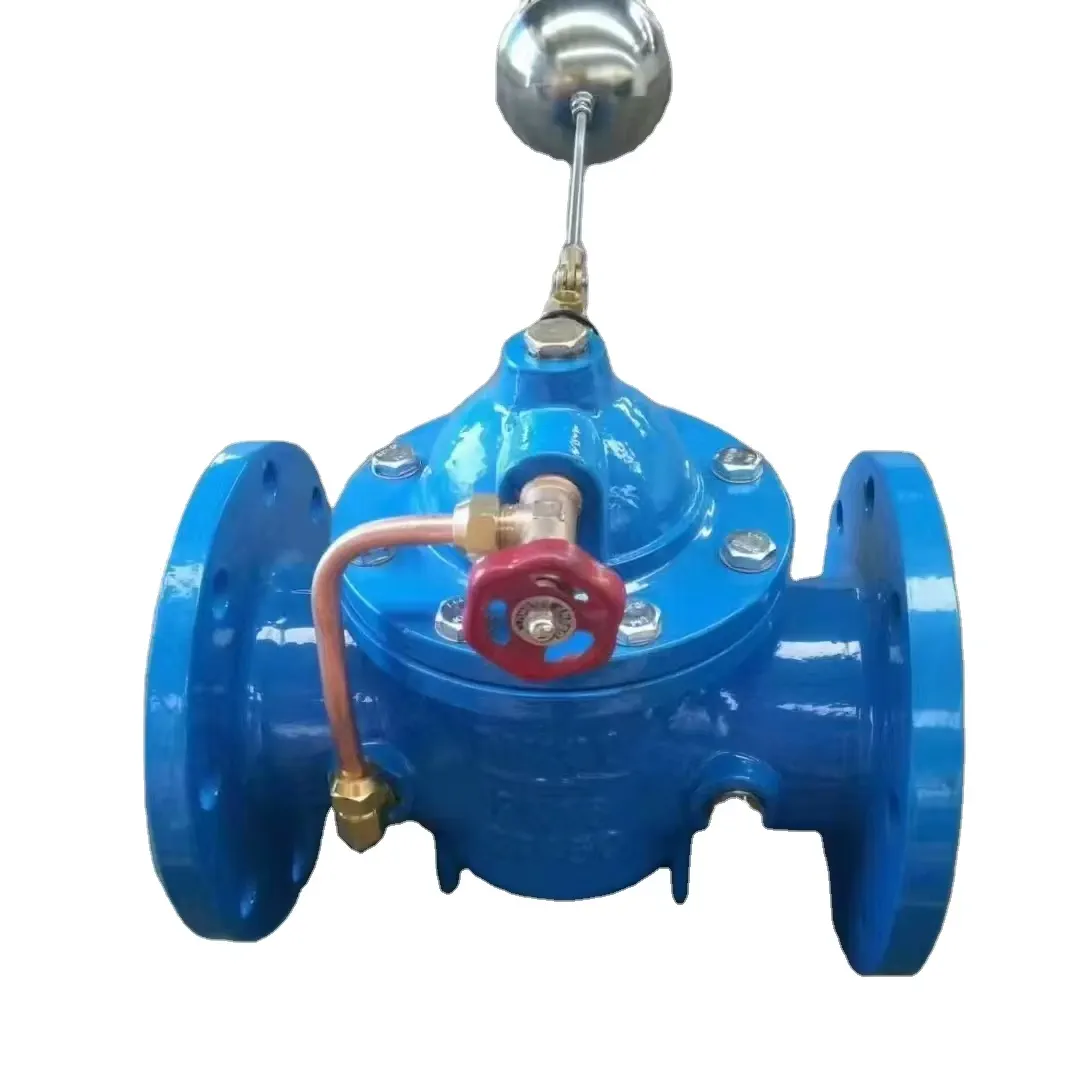
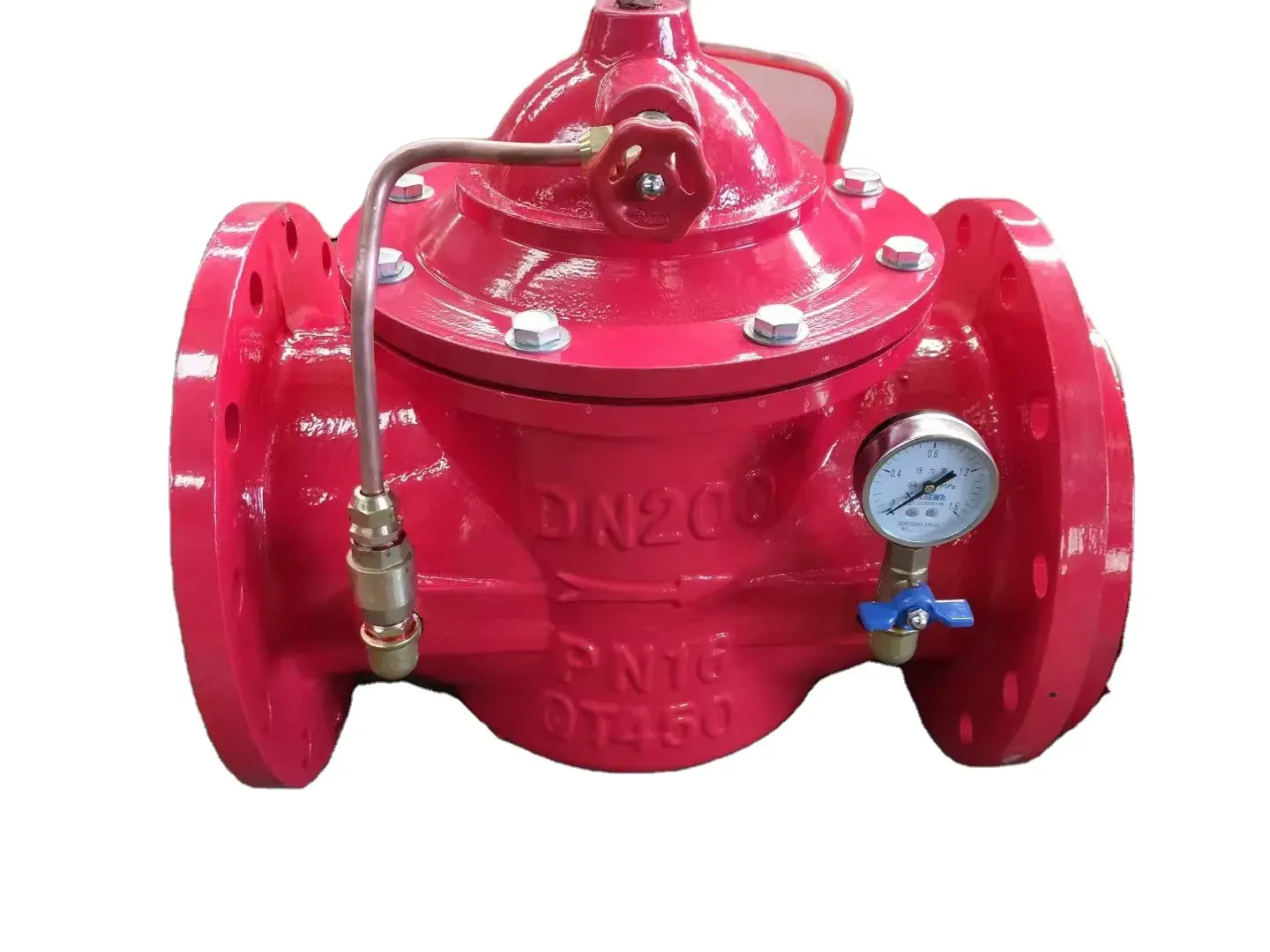
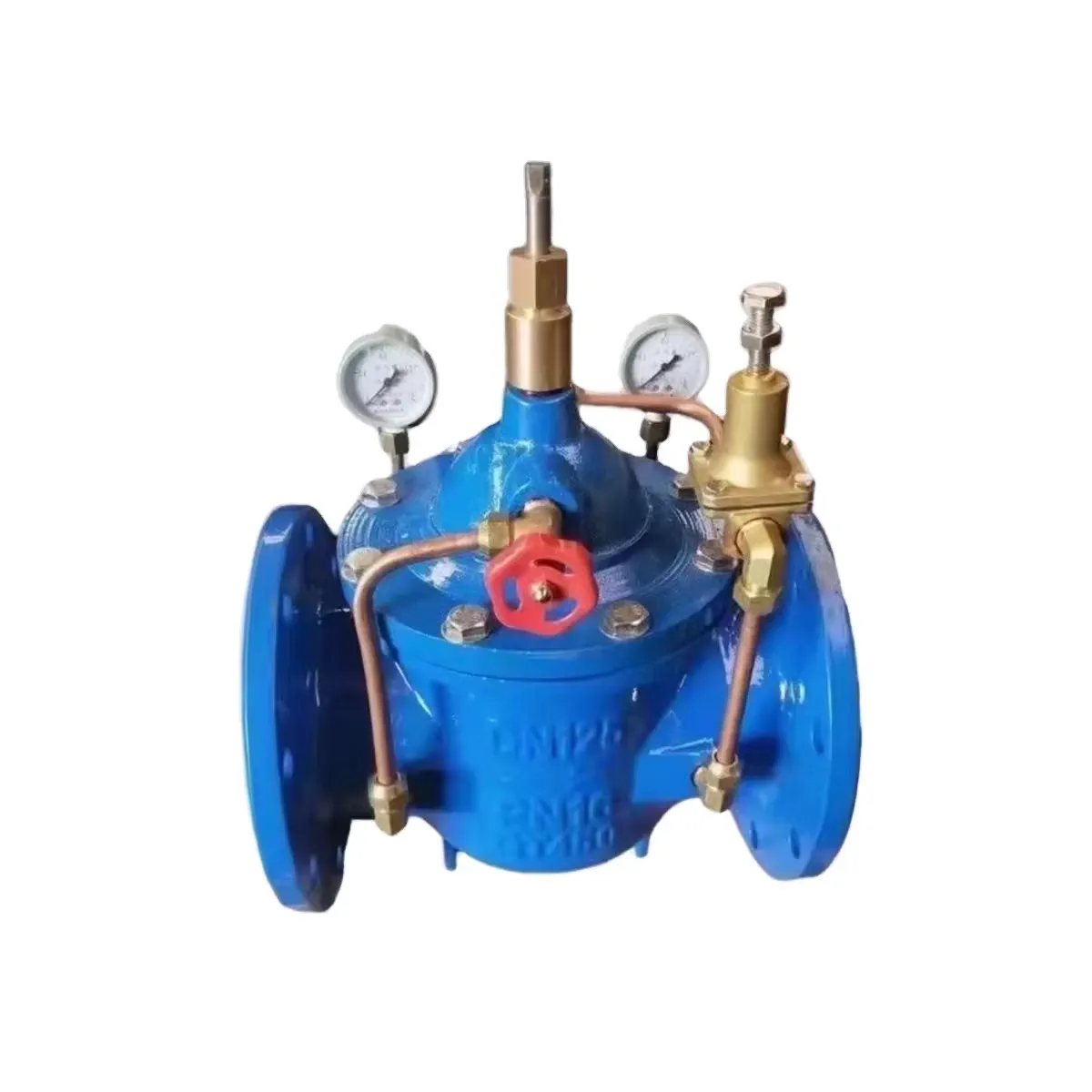
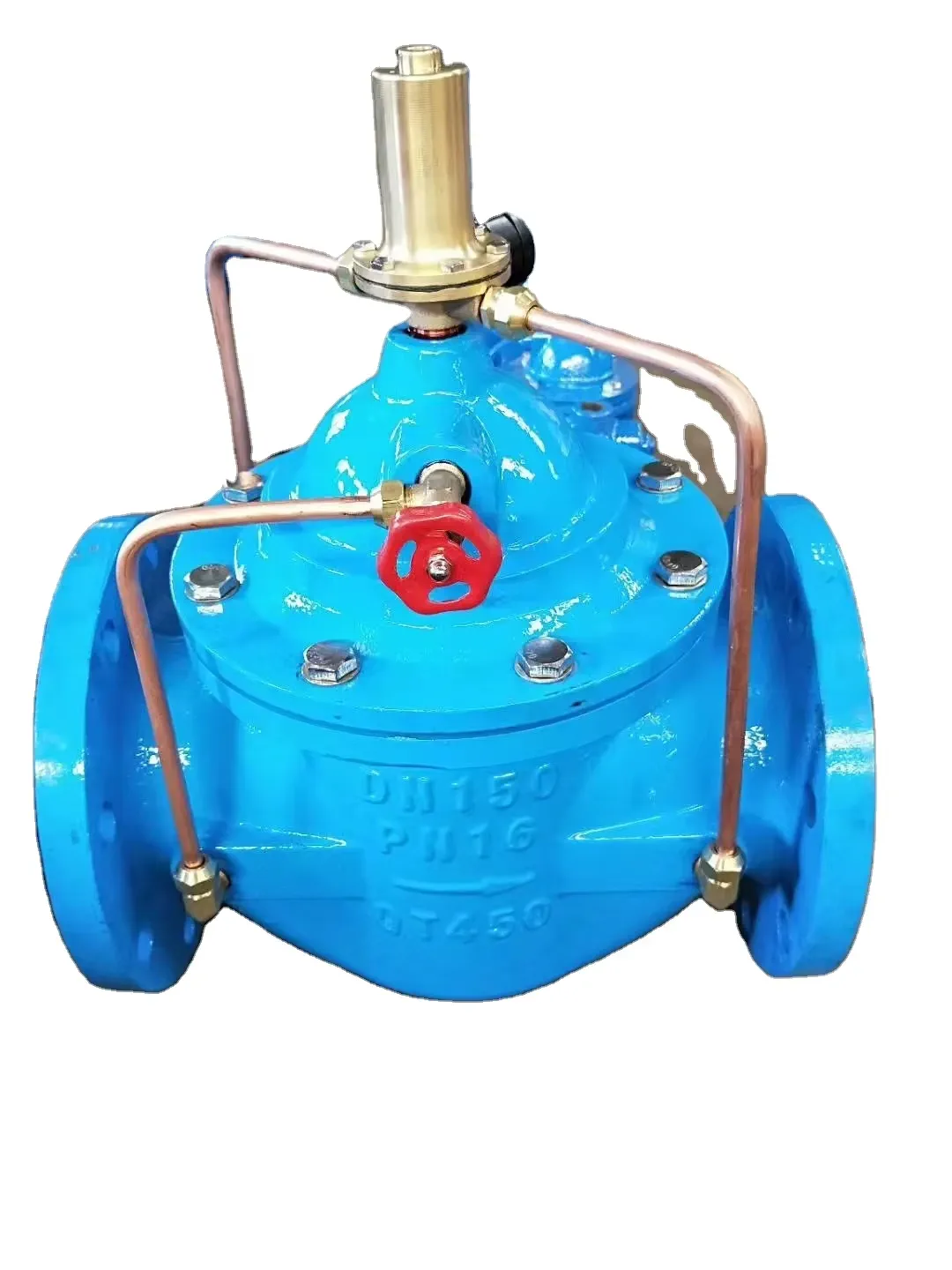
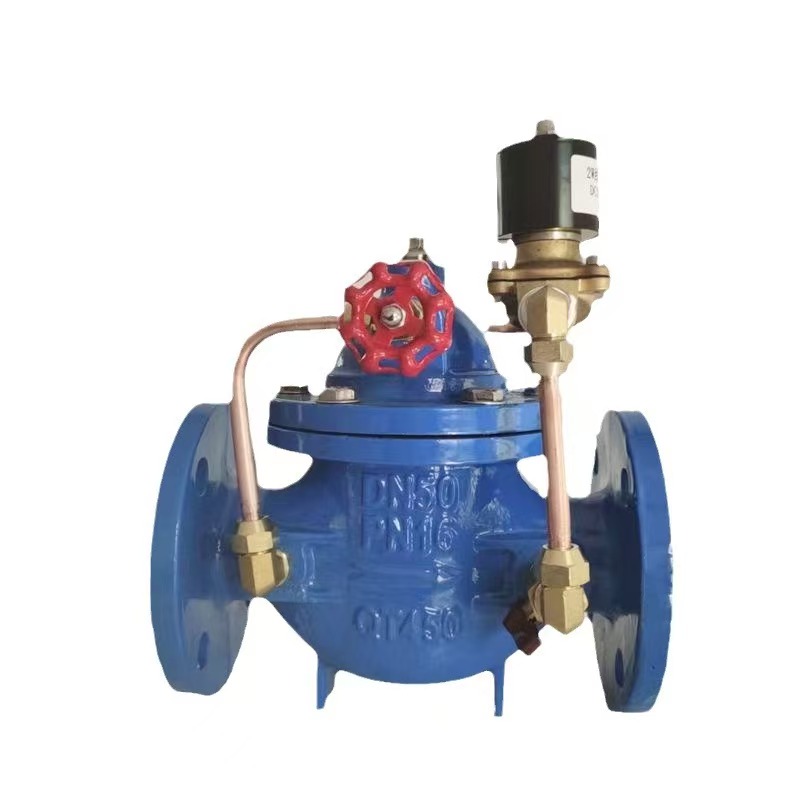
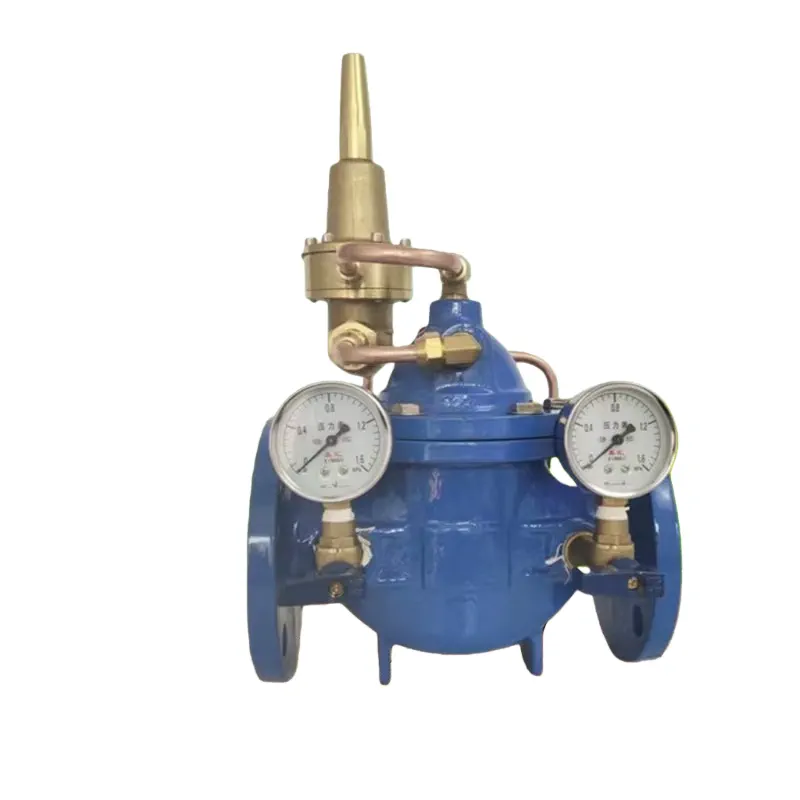
A 200X is a main valve with a small pilot bolted on top: the pilot senses downstream pressure and moves the diaphragm, so the valve throttles as demand changes and the outlet stays at the set pressure even when the inlet swings. Two limits decide the application. There must be enough inlet pressure above the set point for the valve to work at all, and it will not hold a set pressure it cannot reach at the flow demanded. Above DN200 the seat takes the whole pressure drop — cavitation noise from the seat means the drop is too big for one valve.
General Specifications
Size RangeDN50 – DN400
Model200X
Pressure RatingPN10 / PN16 (PN25 on request)
End ConnectionDouble flanged
Flange DrillingBS EN 1092-2 (DIN 2501)
FunctionPressure reducing
OperationPilot-operated, hydraulic
PilotStainless steel pilot and tubing
ServiceWater supply, transmission mains, HVAC, industrial process
Max. Working Temperature70 °C standard (EPDM) — NBR for 80 °C, FKM for up to 150 °C on request
Materials & Coating
Body / BonnetDuctile iron, epoxy coated
Pilot & TubingStainless steel
DiaphragmReinforced rubber
TrimStainless steel (grade per order)
Design Features
Why choose itHolds constant downstream pressure regardless of upstream fluctuation
Applications
High-rise buildings Pump discharge Industrial water Irrigation mains
Pilot-operated: the main valve does the work, the pilot does the thinking
The 200X is not a spring pressing directly on a seat. A small pilot valve senses downstream pressure and uses it to control the main valve, which carries the flow. That arrangement is what lets the valve hold a steady downstream pressure while upstream pressure moves and demand changes — the pilot re-trims the main valve continuously.
The consequence for the buyer is that the setting is a downstream pressure, not a fixed spring force. It is adjusted at the pilot, and it is only meaningful if the inlet pressure is high enough above the set point for the valve to have something to reduce.
The pilot is the part the installation can ruin
Pilot-operated valves are sensitive to what reaches the pilot. A small orifice in the pilot circuit is what usually blocks first, and the symptom is a valve that drifts or stops responding rather than one that fails completely. A strainer ahead of the pilot is not optional on a dirty line.
The downstream sensing point matters as much. It has to be taken where the flow is settled, far enough from the valve outlet and from elbows, so the pilot is reading the pressure the system actually sees. A sensing tap in a turbulent zone makes the valve hunt.
Where a pressure reducing valve belongs — and where it does not
It belongs where a supply pressure is too high for what is downstream: high-rise buildings zoned by floor, pump discharge into a distribution network, irrigation mains fed from a higher-pressure source. In all three the job is the same — protect what is downstream from a pressure it was not designed for.
It does not do flow control, level control or pump control; those are different pilots in the same family. It does not work on steam, and it cannot raise pressure. And on a line where the inlet pressure is close to the set point, there is nothing for it to reduce and the installation has no purpose.
What to confirm before a 200X order
- Inlet pressure range and the downstream set point — the difference between them is what the valve works with
- Flow range, minimum and maximum, since a valve sized for the maximum can hunt at the minimum
- Size and pressure rating — DN50–DN400 and PN10 / PN16 standard, PN25 on request
- Media and temperature, with the EPDM basis and the alternative elastomers stated
- Sensing point arrangement: where the downstream pressure is taken, and whether a strainer and bypass are included
- Whether the duty is really pressure reduction, or flow, level or pump control — those are different pilots
Frequently asked
How is a pilot-operated PRV different from a direct-acting one?
A direct-acting valve uses a spring against a diaphragm, so accuracy and capacity both fall as flow rises. A pilot-operated valve lets a small pilot control a large main valve, which holds the set point more steadily across the flow range and at larger sizes.
Why is the downstream pressure not holding steady?
Usually the pilot circuit: a partly blocked orifice, a strainer missing or full, or a sensing point taken in a turbulent zone. The valve is responding to what the pilot tells it, and a blocked or badly placed pilot gives it bad information.
Does it need a strainer?
On any line that is not guaranteed clean, yes — ahead of the pilot. The pilot orifice is small by design, and it is the first thing debris blocks. A bypass arrangement is also worth discussing where the valve cannot be taken out of service.
Can it hold pressure at zero flow?
A pilot-operated reducing valve closes at zero demand and holds the set pressure downstream, which is one of its advantages over some other arrangements. Confirm the shut-off behaviour with the enquiry if the downstream volume is large.
Can it be used for flow or level control instead?
Not with this pilot. Flow control, level control and pump control are different pilot arrangements in the same valve family. If the duty is one of those, say so at the enquiry — the main valve may be the same, but the pilot is not.
What size and pressure range is available?
DN50 to DN400, PN10 / PN16 as standard with PN25 on request, double flanged. The inlet and outlet pressure range for the specific order is confirmed against the duty rather than taken from the size alone.
What materials are standard?
Epoxy-coated ductile-iron body and bonnet, stainless pilot and tubing, reinforced rubber diaphragm, stainless trim per order. The diaphragm is the part that ages, so media and temperature belong in the enquiry.
More from this series
Related guides