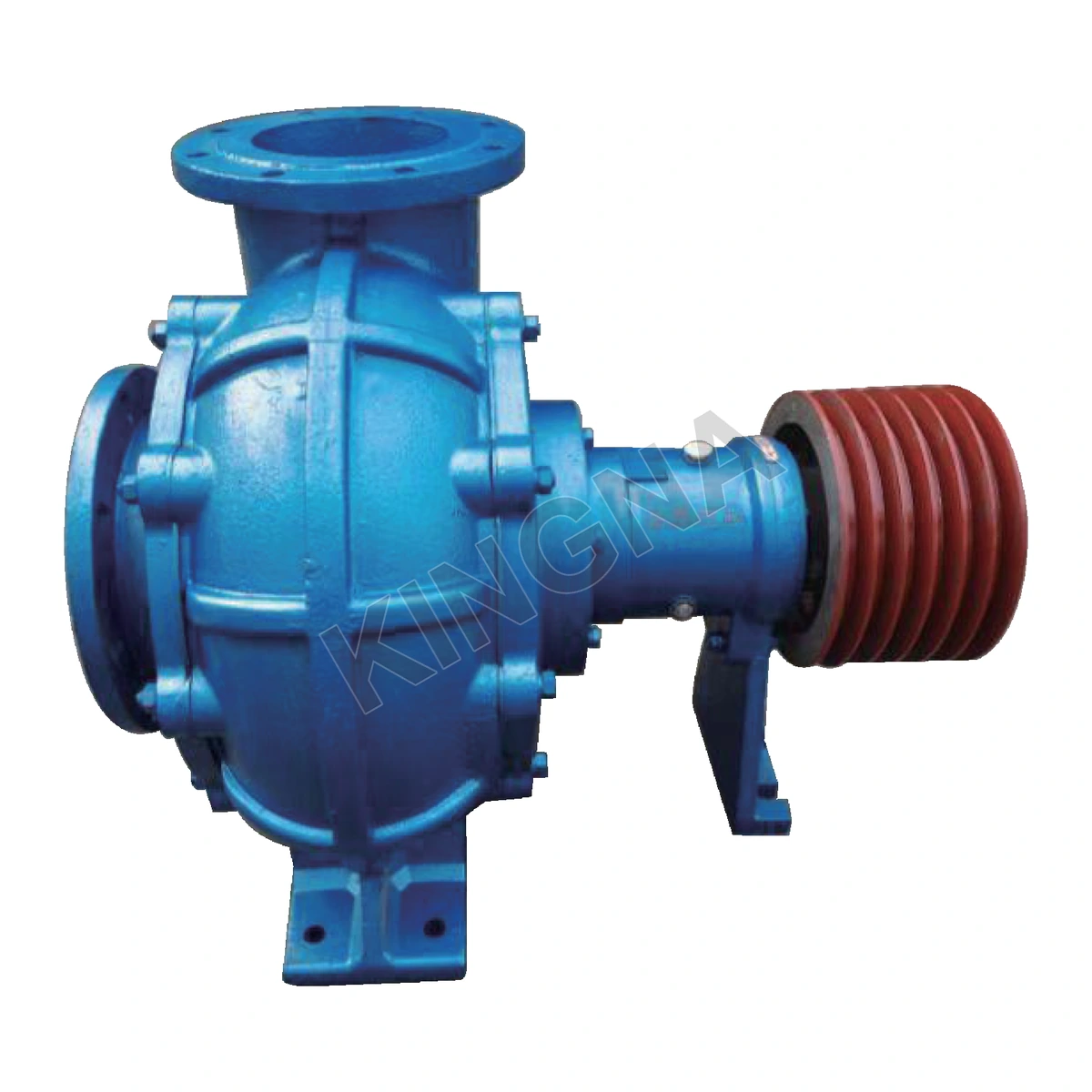
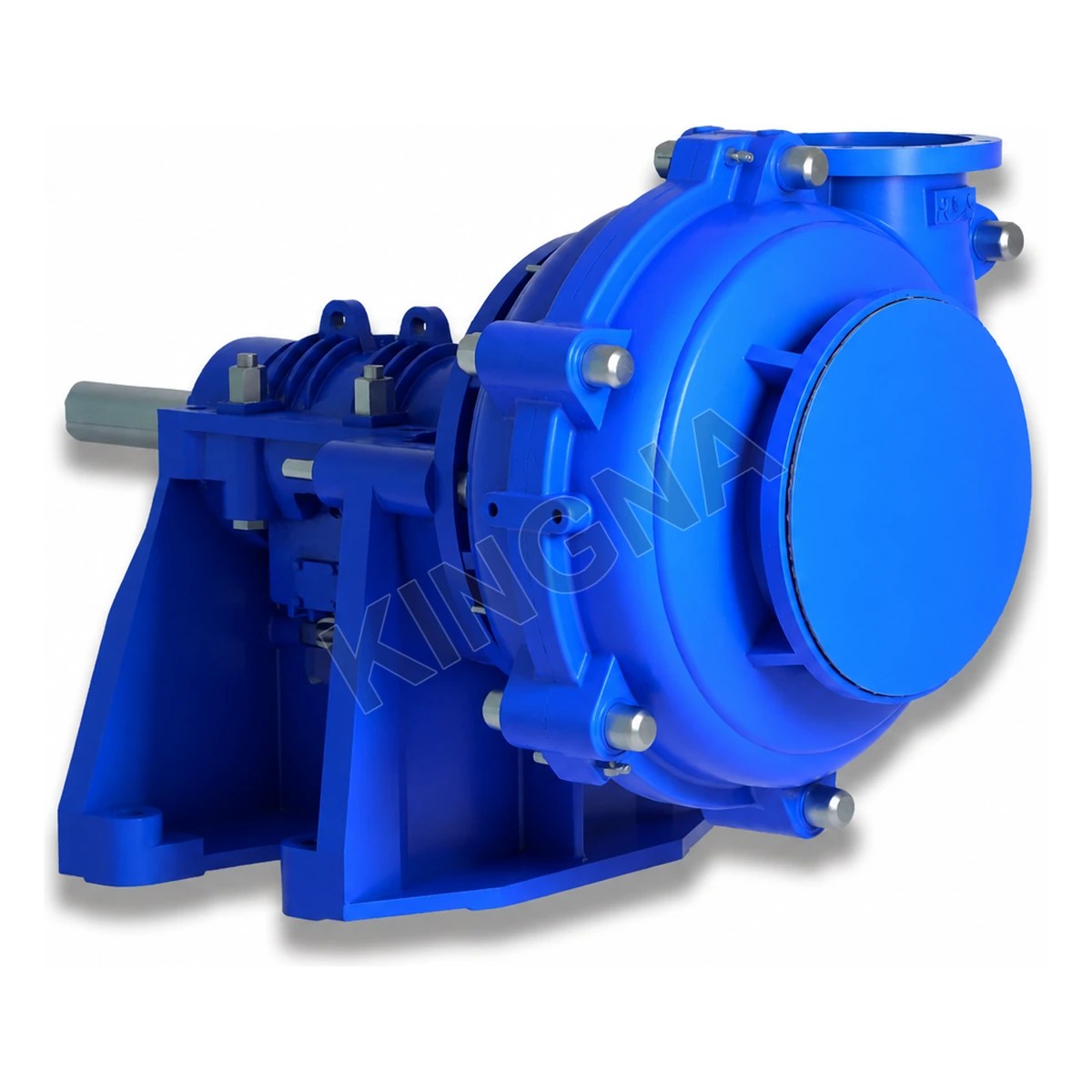
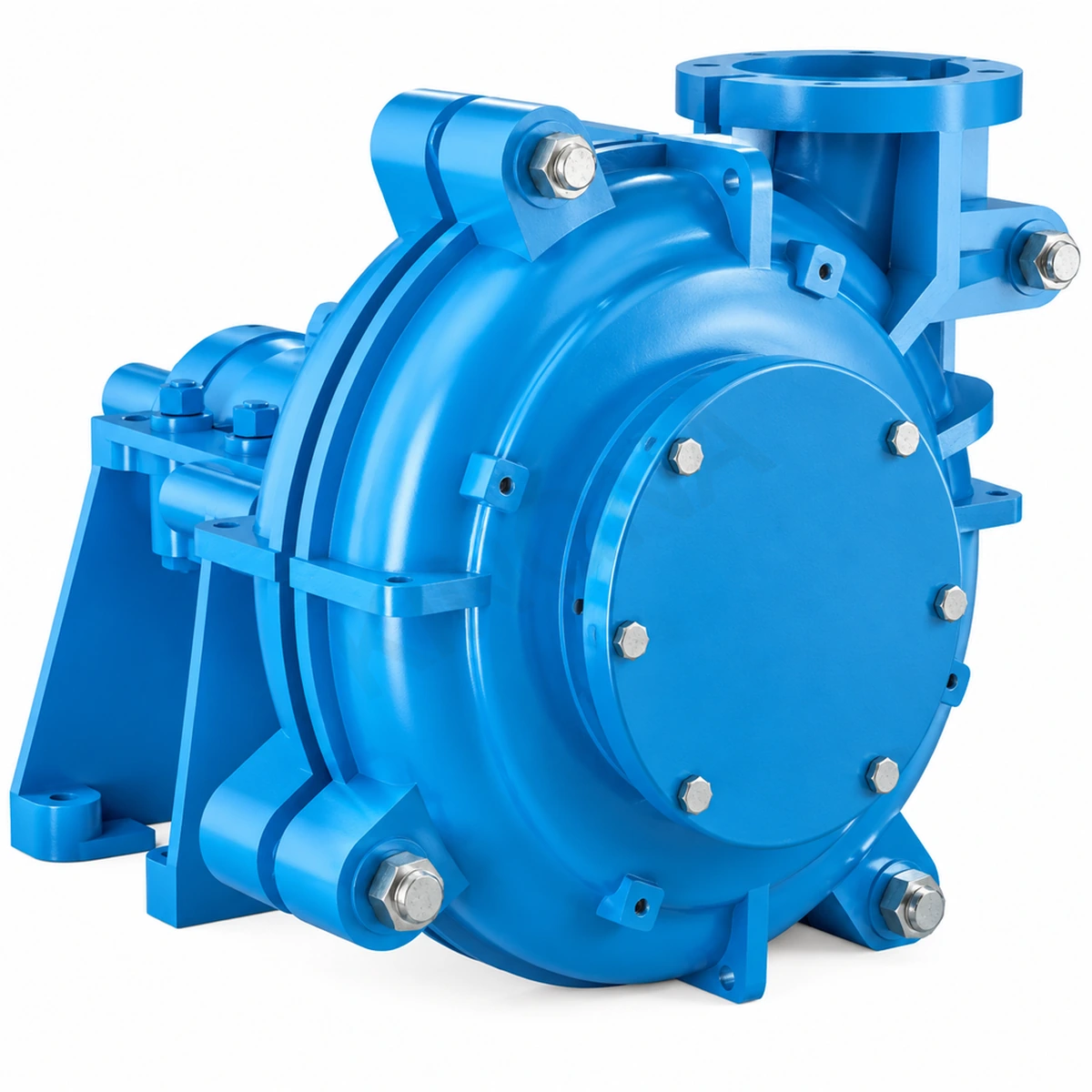
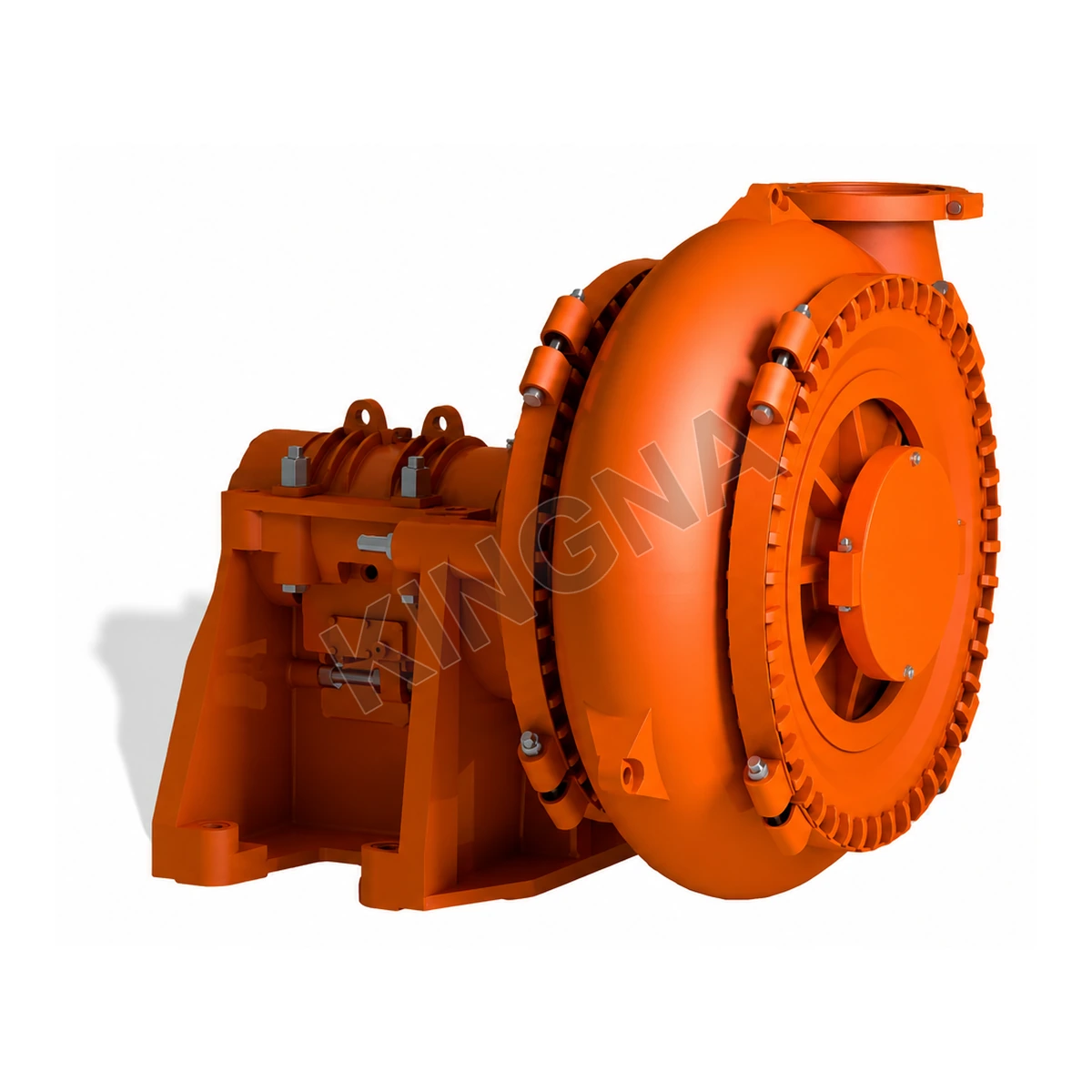
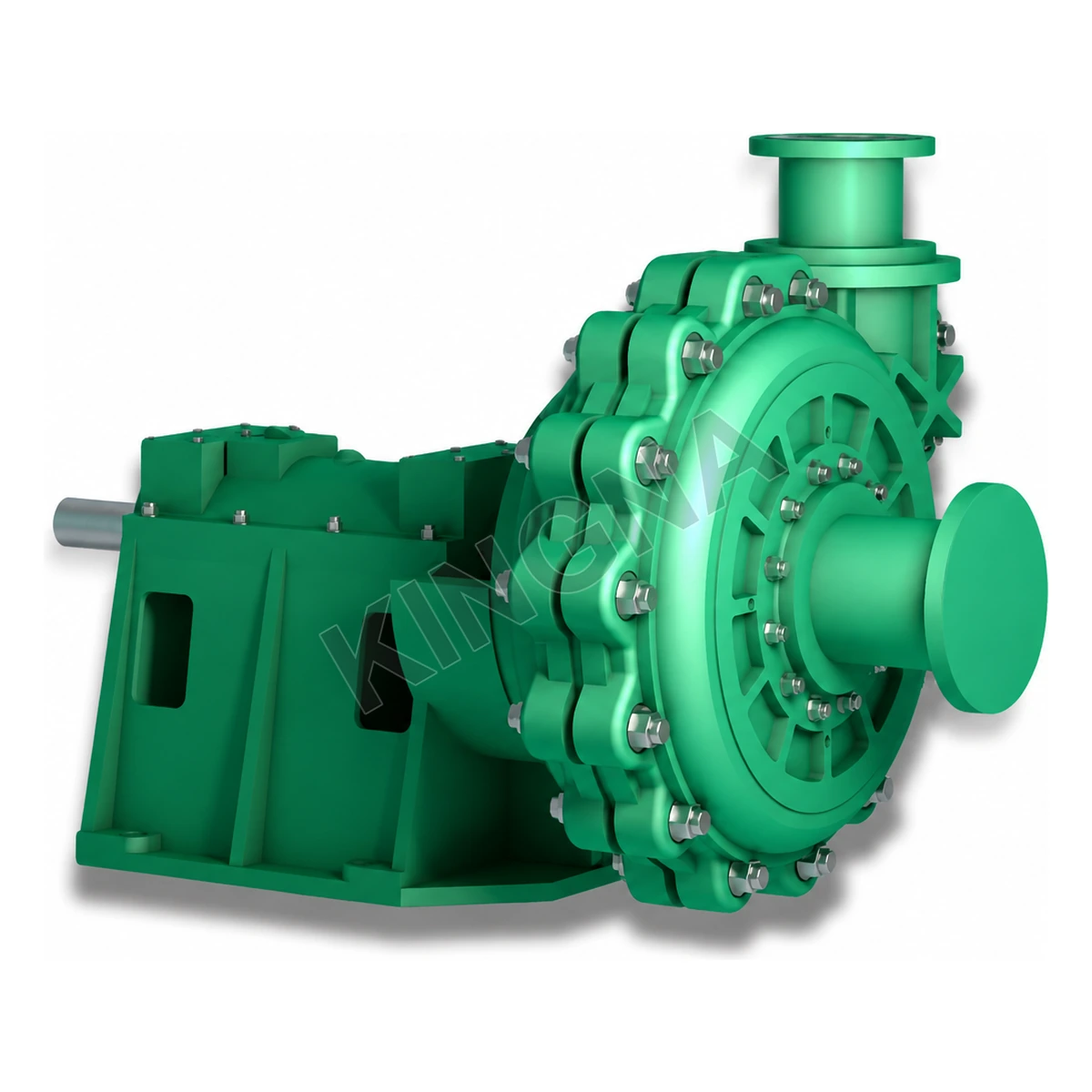
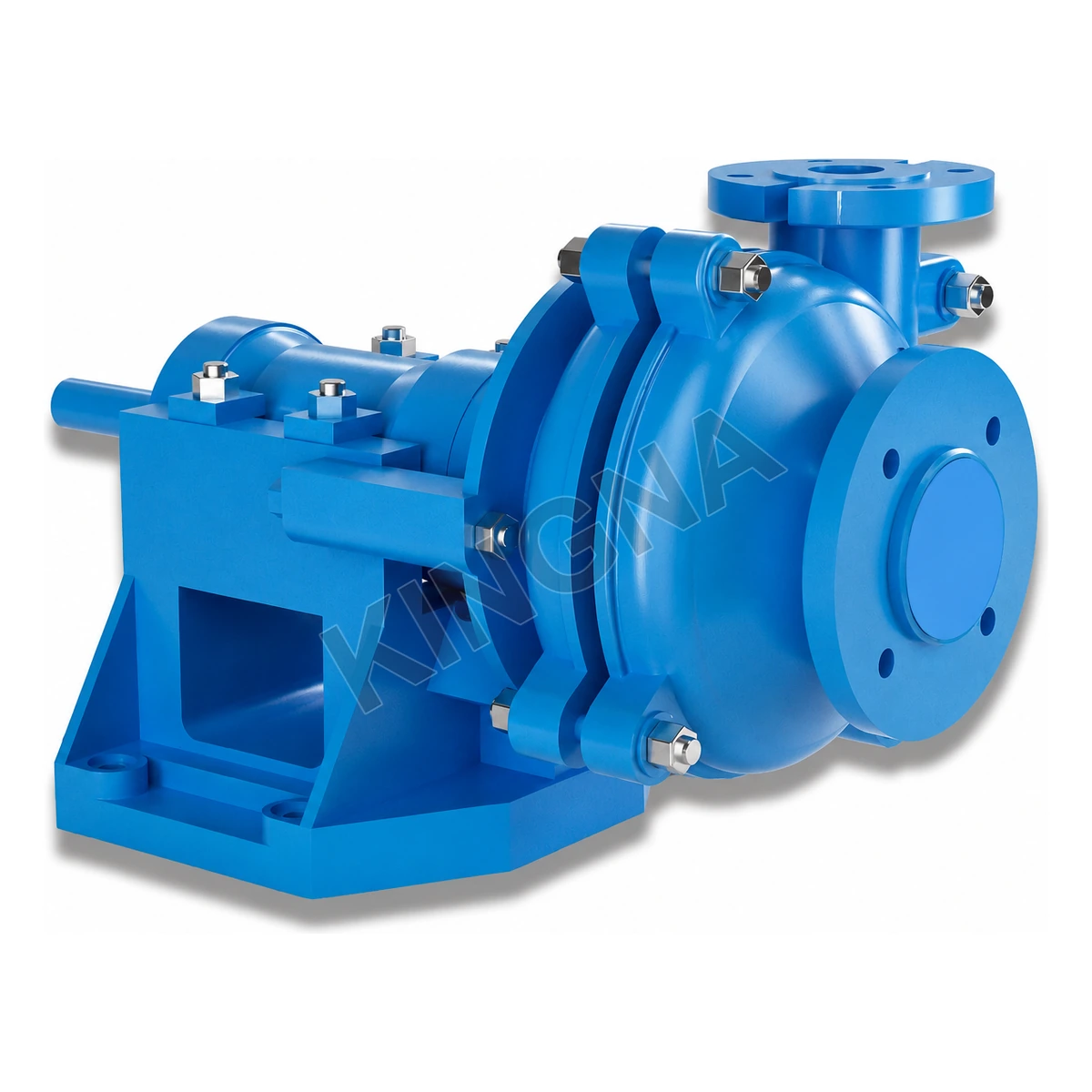
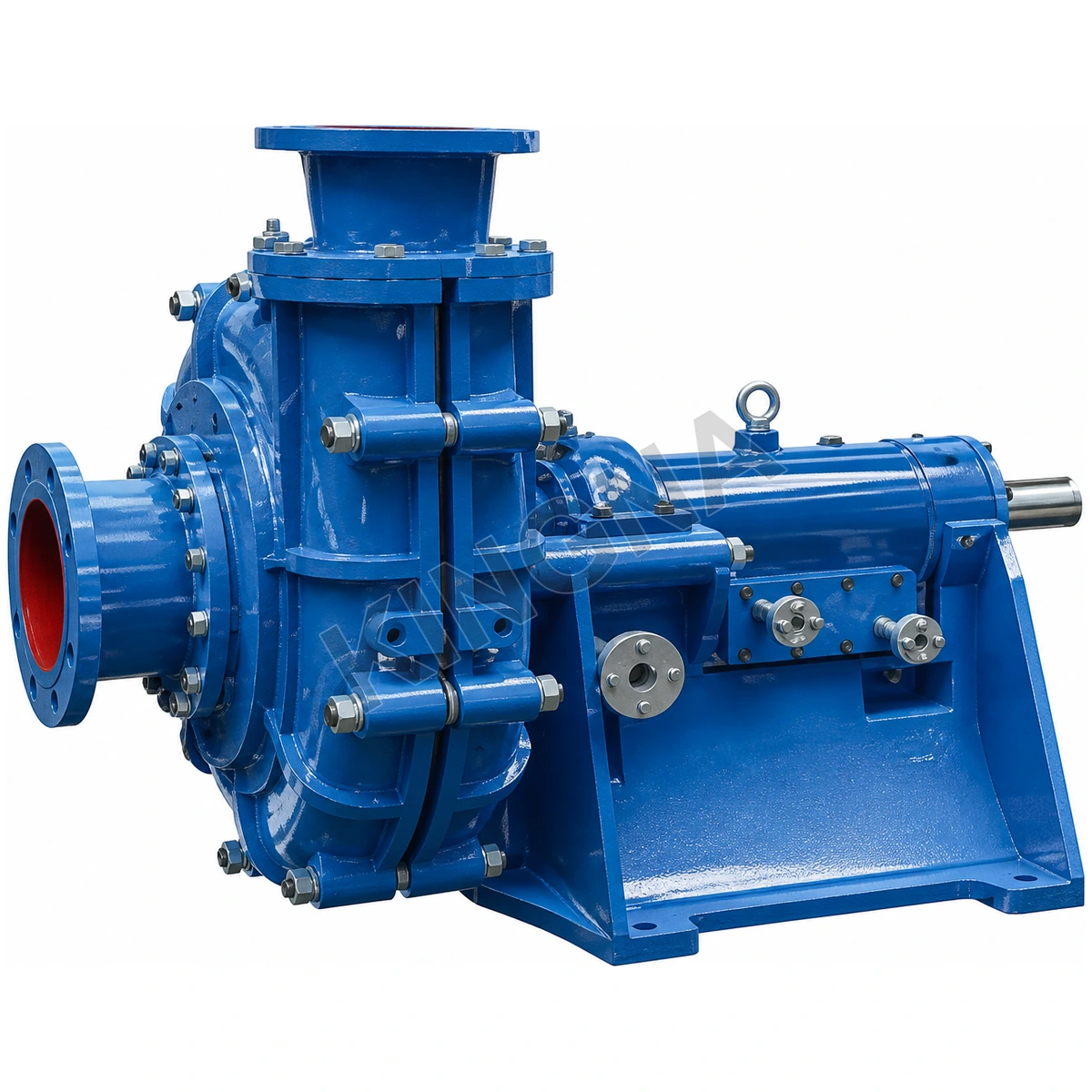
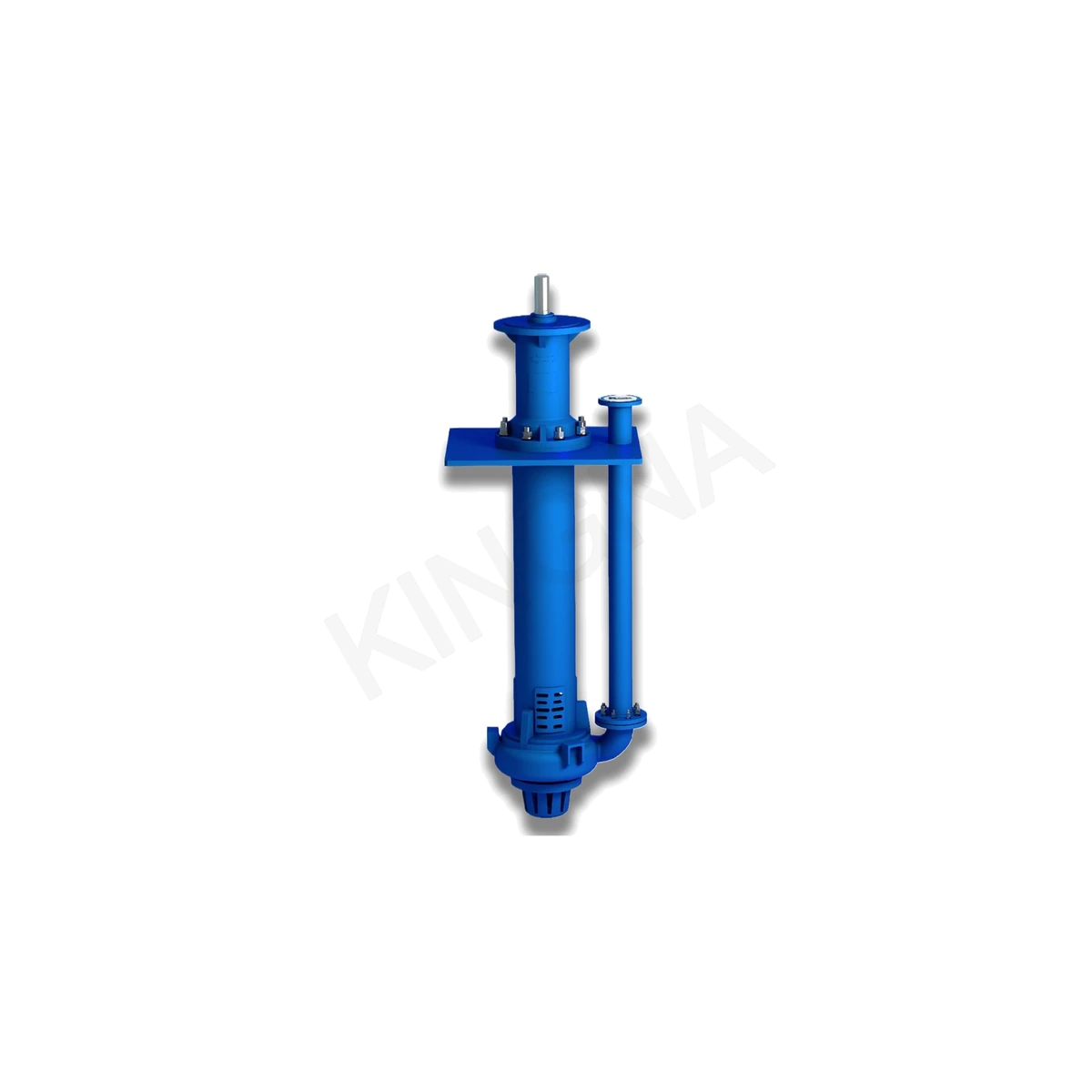
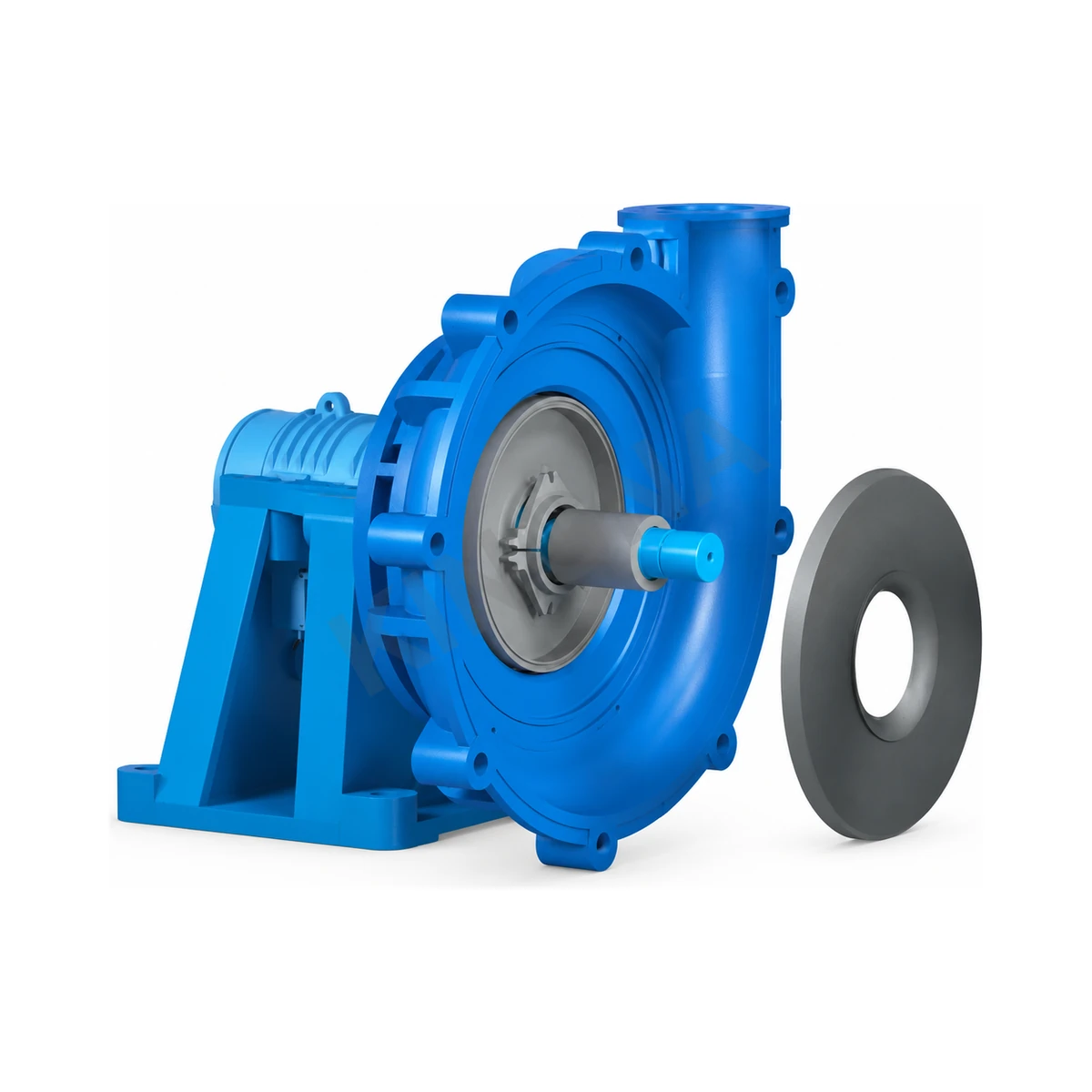
A dredging and sand pump is a slurry pump with a big throughlet: the volute is ribbed and heavy, the wetted end is replaceable, and the impeller runs slowly enough on the large frames — down to 385 r/min — that the solids pass instead of grinding the casing. Nineteen models cover 100 to 6,600 m³/h at 20 to 63 m, suction DN120 to DN700, impellers 280 to 1,560 mm. Flow and head are the easy part of the selection; what decides the build is the solids: concentration, the largest particle against the throughlet, and whether the drive is belt or direct.
General Specifications
TypeSingle-stage cantilevered mud and sand pump, ribbed volute, large throughlet
Flow Rate100 – 6,600 m³/h
Head20 – 63 m
Suction / DischargeSuction DN120 – DN700 · Discharge DN120 – DN600
Speed385 – 1,200 r/min
Shaft Power22 – 1,830 kW (largest frame: 1,830 kW shaft, 2,500 kW motor)
DriveV-belt or direct coupling, selected per duty and available prime mover
SelectionThe table below is the published rating point per model. Solids concentration, maximum particle size and wear-part grade are confirmed per application.
Max. Working Temperature≤ 80 °C
Model Range
NJB-100100 m³/h · 40 m · 1200 r/min · 22 kW · DN120×120 · impeller 280 mm · 172 kg
NJB-150150 m³/h · 30 m · 1200 r/min · 30 kW · DN127×127 · impeller 303 mm · 220 kg
NJB-175200 m³/h · 25 m · 1200 r/min · 55 kW · DN175×175 · impeller 330 mm · 290 kg
NJB-200650 m³/h · 30 m · 1100 r/min · 110 kW · DN200×190 · impeller 390 mm · 520 kg
NJB-225-200800 m³/h · 35 m · 1000 r/min · 300 kW · DN225×200 · impeller 540 mm · 1,530 kg
NJB-250800 m³/h · 30 m · 1100 r/min · 160 kW · DN226×220 · impeller 390 mm · 590 kg
NJB-250-200900 m³/h · 35 m · 1000 r/min · 340 kW · DN250×200 · impeller 540 mm · 1,530 kg
NJB-275-2501,100 m³/h · 26 m · 900 r/min · 400 kW · DN275×250 · impeller 586 mm · 1,490 kg
NJB-3001,800 m³/h · 25 m · 900 r/min · 340 kW · DN300×280 · impeller 540 mm · 1,330 kg
NJB-3502,250 m³/h · 26 m · 900 r/min · 400 kW · DN350×350 · impeller 586 mm · 1,550 kg
NJB-4002,800 m³/h · 26 m · 860 r/min · 450 kW · DN400×400 · impeller 680 mm · 2,600 kg
NJB-400-3503,200 m³/h · 30 m · 600 r/min · 880 kW · DN400×350 · impeller 940 mm · 5,860 kg
NJB-4503,000 m³/h · 24 m · 650 r/min · 480 kW · DN450×435 · impeller 740 mm · 2,700 kg
NJB-5003,200 m³/h · 20 m · 650 r/min · 510 kW · DN500×470 · impeller 780 mm · 2,900 kg
NJB-500-5003,600 m³/h · 20 m · 600 r/min · 735 kW · DN500×500 · impeller 940 mm · 5,500 kg
NJB-5503,500 m³/h · 24 m · 600 r/min · 650 kW · DN550×490 · impeller 890 mm · 4,200 kg
NJB-6004,500 m³/h · 24 m · 600 r/min · 800 kW · DN600×550 · impeller 940 mm · 5,500 kg
NJB-6606,000 m³/h · 25 m · 420 r/min · 1200 kW · DN660×600 · impeller 1040 mm · 7,400 kg
NJB-700-6006,600 m³/h · 63 m · 385 r/min · 1830 kW · DN700×600 · impeller 1560 mm · 18,800 kg
Materials & Coating
BodyHigh-chrome alloy (Cr27) / rubber lined, replaceable
Applications
River, canal and harbour dredging Sand and gravel winning Gold washing and placer recovery Tailings and plant sumps
What this pump is for, and what it is not
The NJB is a mud and sand pump: it moves water that carries solids. Dredging a river or a harbour basin, winning sand and gravel, washing gold-bearing gravel, clearing a plant sump or moving tailings — the medium is the same in each case, a solids load in water, and the pump is selected on how much solids and how coarse they are.
It is not a clean-water pump with a thicker casing, and it is not a chemical pump. The published range in the table below is the maker's rating point per model — flow, head, speed, shaft power, branch sizes, impeller diameter and bare-pump mass. Those figures let you pick a frame size and see the shaft power the duty needs; they do not by themselves tell you the wear-part grade, the permitted solids concentration or the largest particle the pump will pass.
What to send before a model is quoted
Five items decide the model and the wetted end: the medium and its solids content by weight or volume, the largest particle size, the required flow and head including pipeline length and static lift, the available drive (V-belt from a diesel engine or a direct-coupled motor), and the site conditions — suction arrangement, whether the pump floats, sits on a bank or is lowered into a sump.
Send those and the model, the impeller trim and the wear-part material come back as one answer. Quoting from the range table alone is how a pump ends up either oversized on power or undersized on throughlet, and the throughlet is the figure that decides whether a dredging pump blocks on the first cobble.
More from this series
Related guides