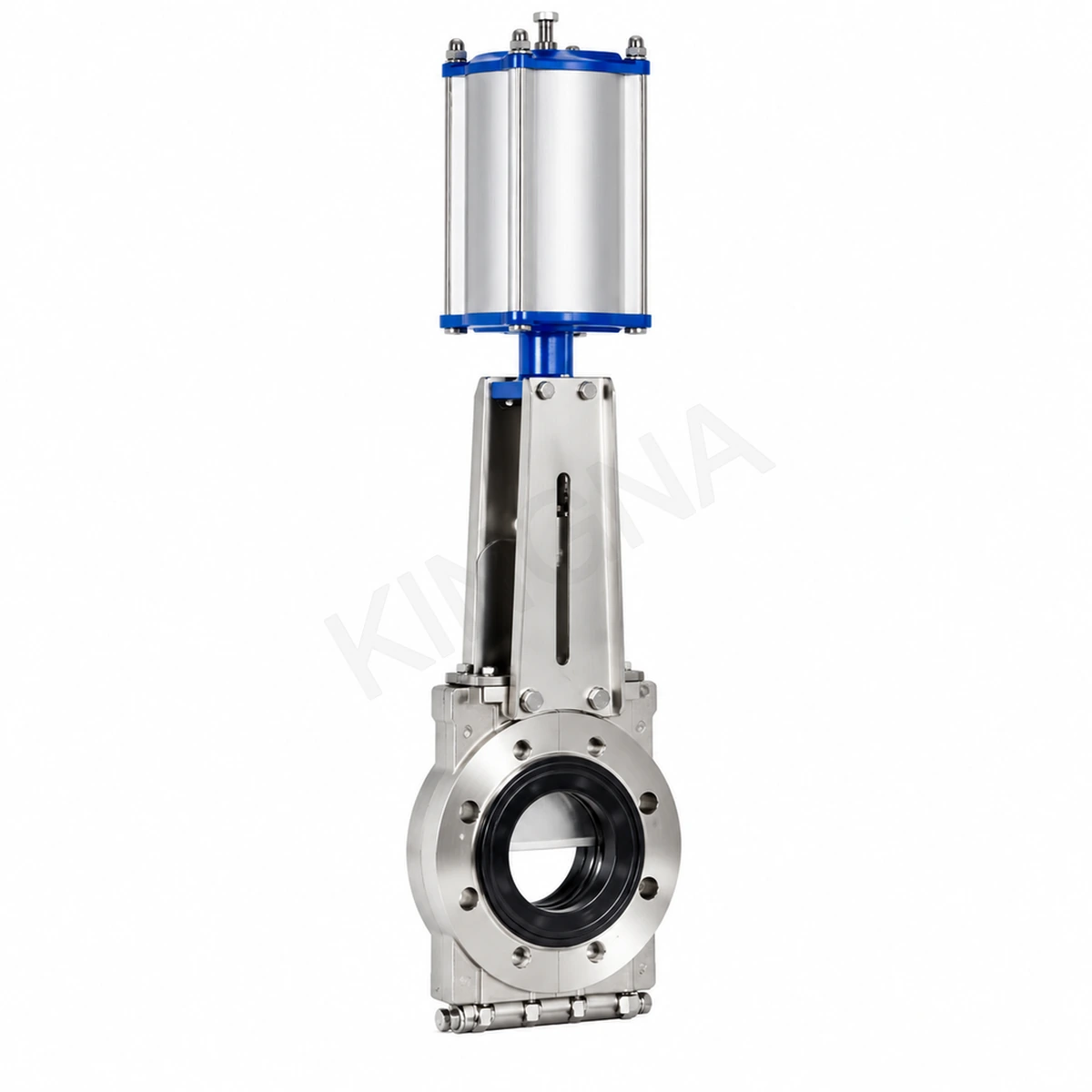
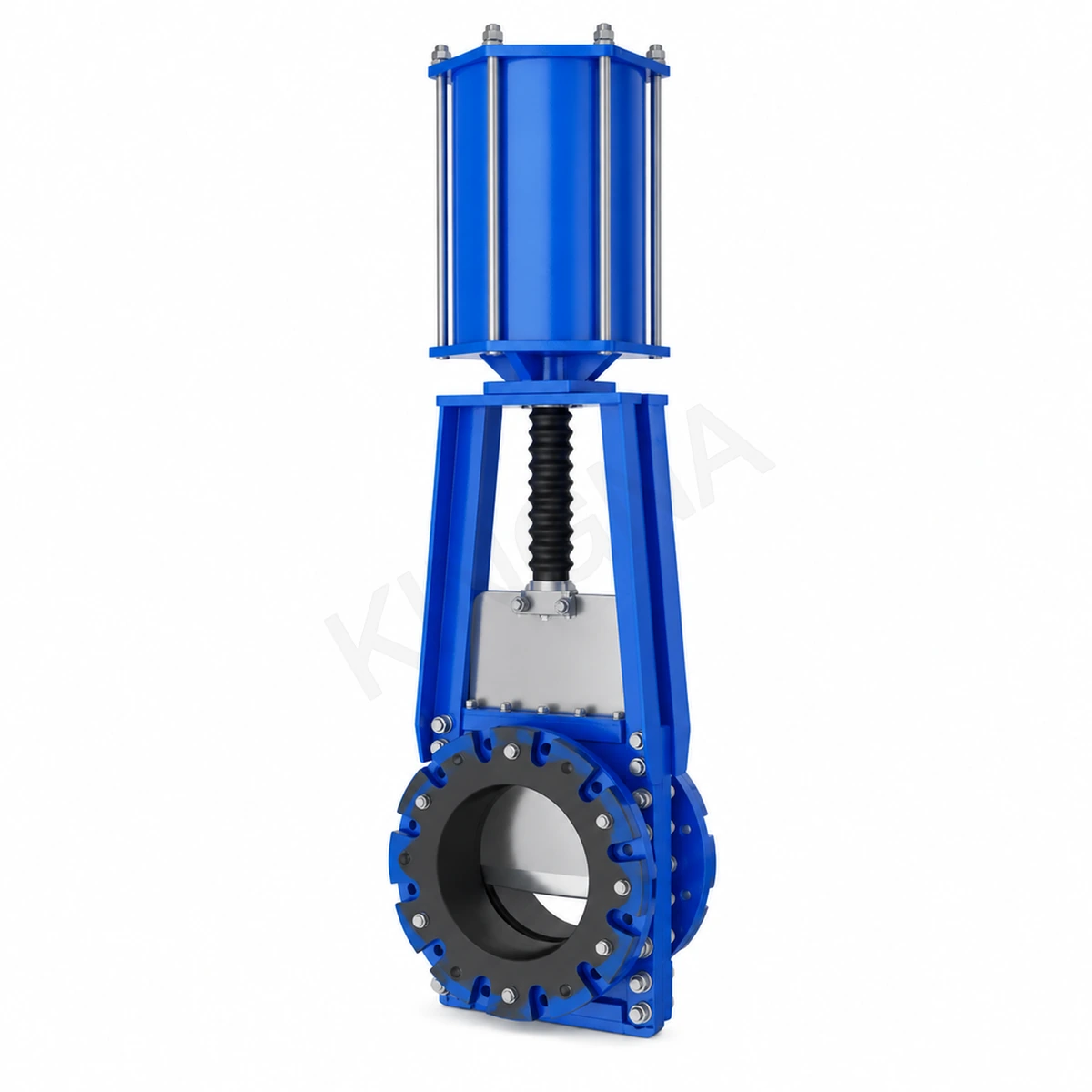
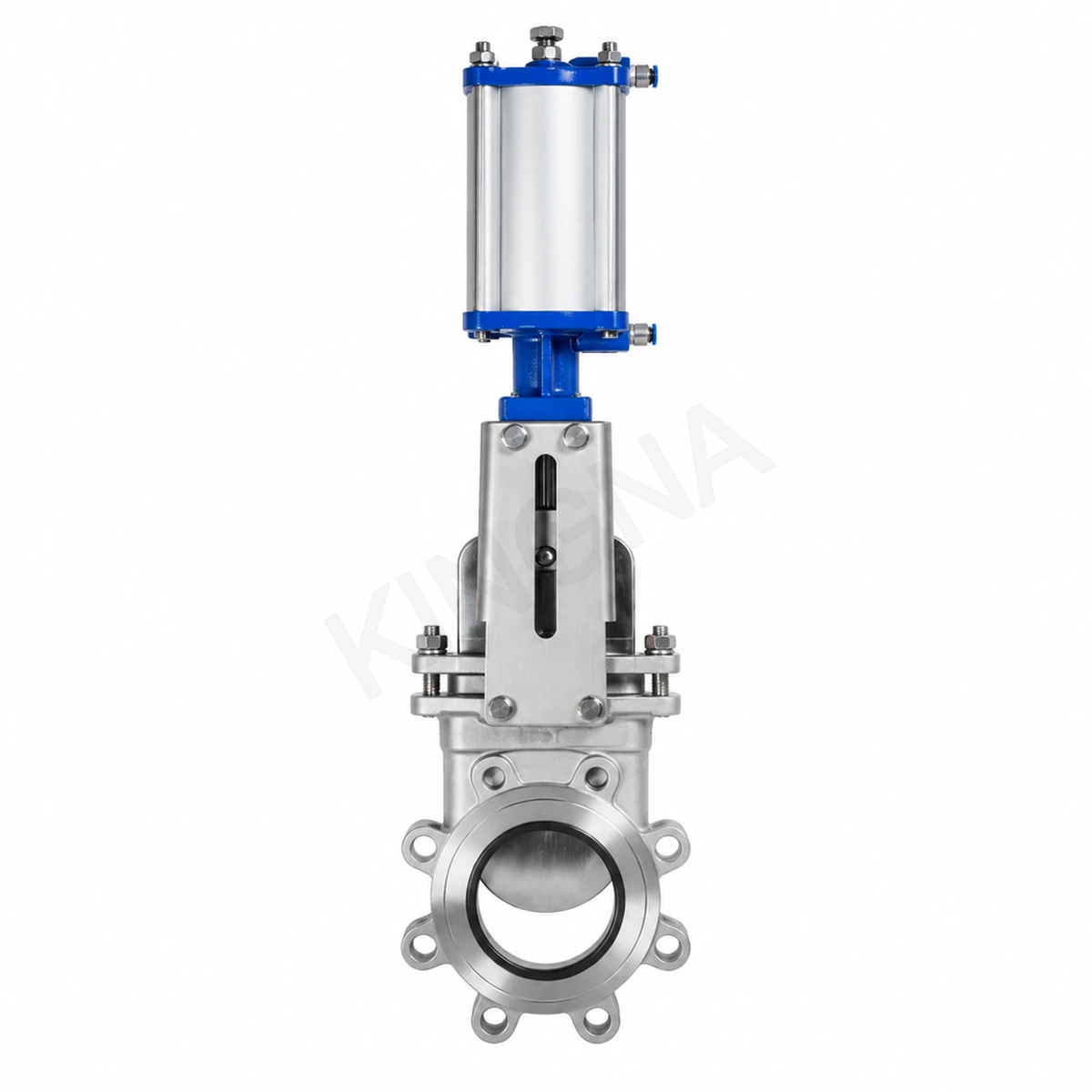
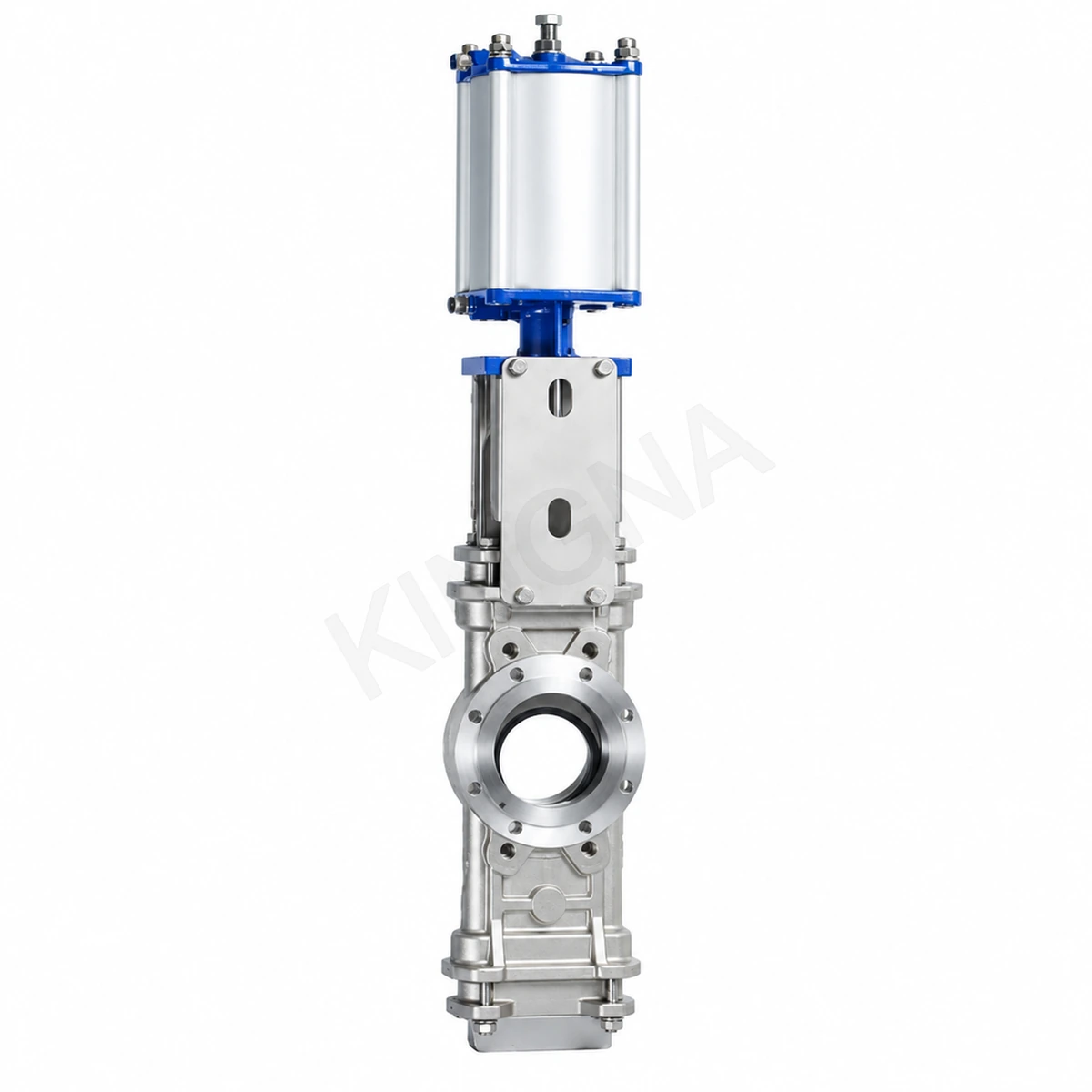
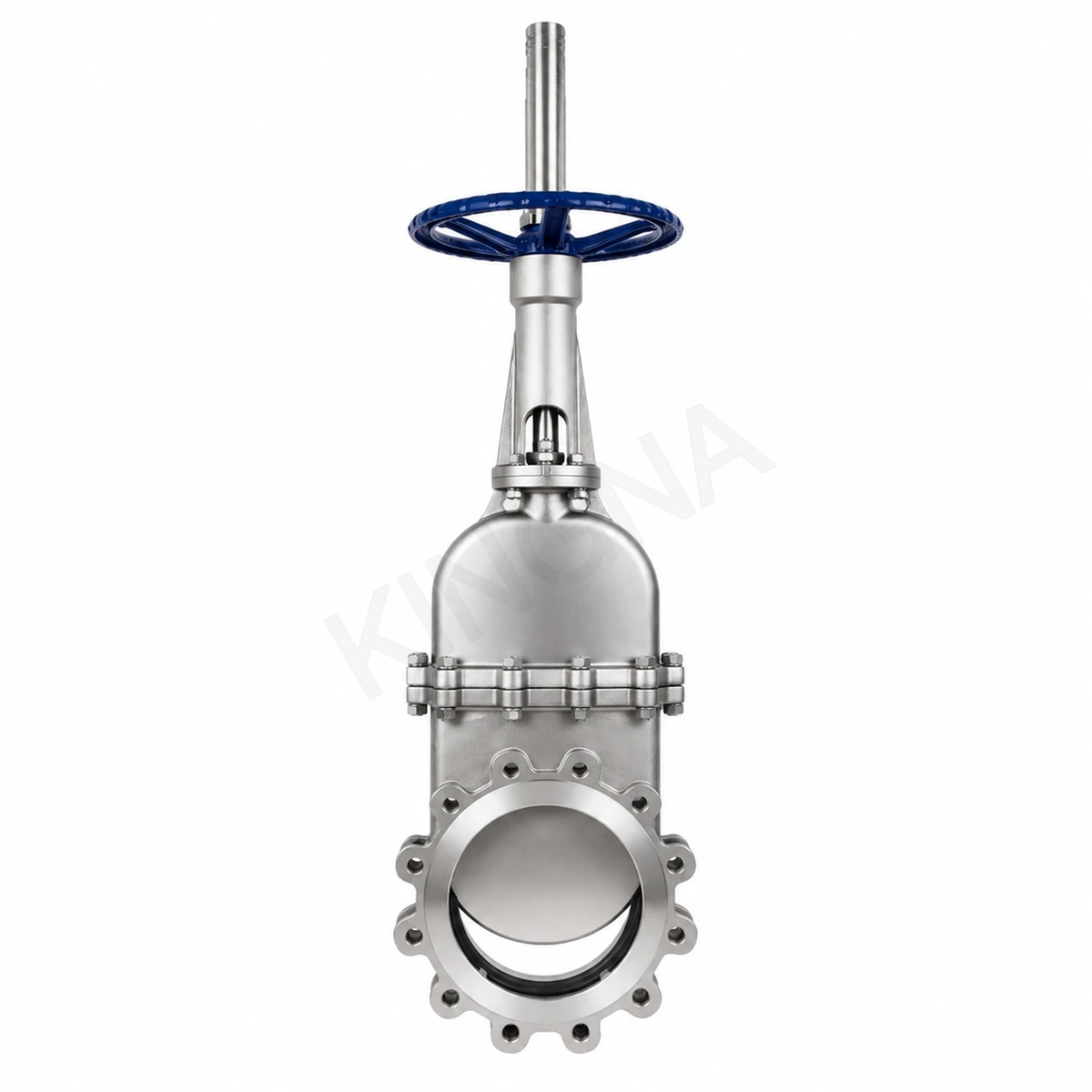
The KPZ73 is the light-slurry knife gate: a bi-directional on-off valve for tailings, slag and slurry carrying up to 40 % solids. Both seats are moulded in abrasion-resistant rubber and close against a machined gate, so the valve seals on its own line pressure instead of relying on a wedge. The two-piece body is machined to remove the gap where slurry normally packs, gate guides inside the cavity keep the gate aligned on every stroke, and a recessed drain cover at the bottom lets the body be flushed without dismantling the pipe. Bodies are offered in cast iron, carbon steel, stainless and duplex steel, with natural rubber or EPDM seats. Sizes DN50–DN1000, PN10 / PN16 or 150LB, working pressure 10 bar, −29 to 150 °C.
General Specifications
Size RangeDN50 – DN1000 (larger sizes on request)
Pressure RatingPN10 / PN16 / 150LB
Working Pressure10 bar
Flange DrillingEN 1092 / ASME B16.5 / HG/T 20592 / GB/T 9124.1 / AS 2129 / AS 4087
Face-to-FacePer manufacturing partner's standard — custom lengths available
Flow ControlOn / off isolation — not for continuous throttling
Sealing DirectionBi-directional
OperationHandwheel, bevel gear, pneumatic, electric or hydraulic
MediaTailings, slag, coal slag and slurry with up to 40 % solids
Temperature−29 to 150 °C
Materials & Coating
BodyCast iron / carbon steel / stainless steel / duplex steel
GatePrecision-machined knife gate, guided inside the cavity
SeatReplaceable resilient rubber seat — NR or EPDM
Body ConstructionTwo-piece split body, machined for a gap-free cavity
Stem SealingMoulded packing with a dedicated upper seal
DrainRecessed bottom drain cover for flushing
Applications
Tailings and return-water lines Coal preparation fine slurry FGD gypsum systems Non-ferrous hydrometallurgy
A rubber-lined passage takes the abrasion instead of the metal
On a light slurry duty the wear is sliding abrasion from fine solids, not impact from coarse ones. A rubber-lined body and gate present a compliant surface to that abrasion, and the flow passage stays uninterrupted, so there is no step in the bore for material to build up on.
This is also the reason the build is used where the line must isolate tightly: the compliant seat closes onto a matching surface rather than metal onto metal.
Secondary sealing is what keeps slurry out of the packing
The sealing arrangement is layered: the primary seat closes the bore, and a secondary seal with its own grease reservoir wipes the gate as it moves, so slurry does not reach the packing. The wiper is a wear item and belongs in the spares list, not in the initial price comparison.
Where the medium is coarse or the line rating climbs, the heavy slurry build is the one to select instead.
More from this series
Related guides