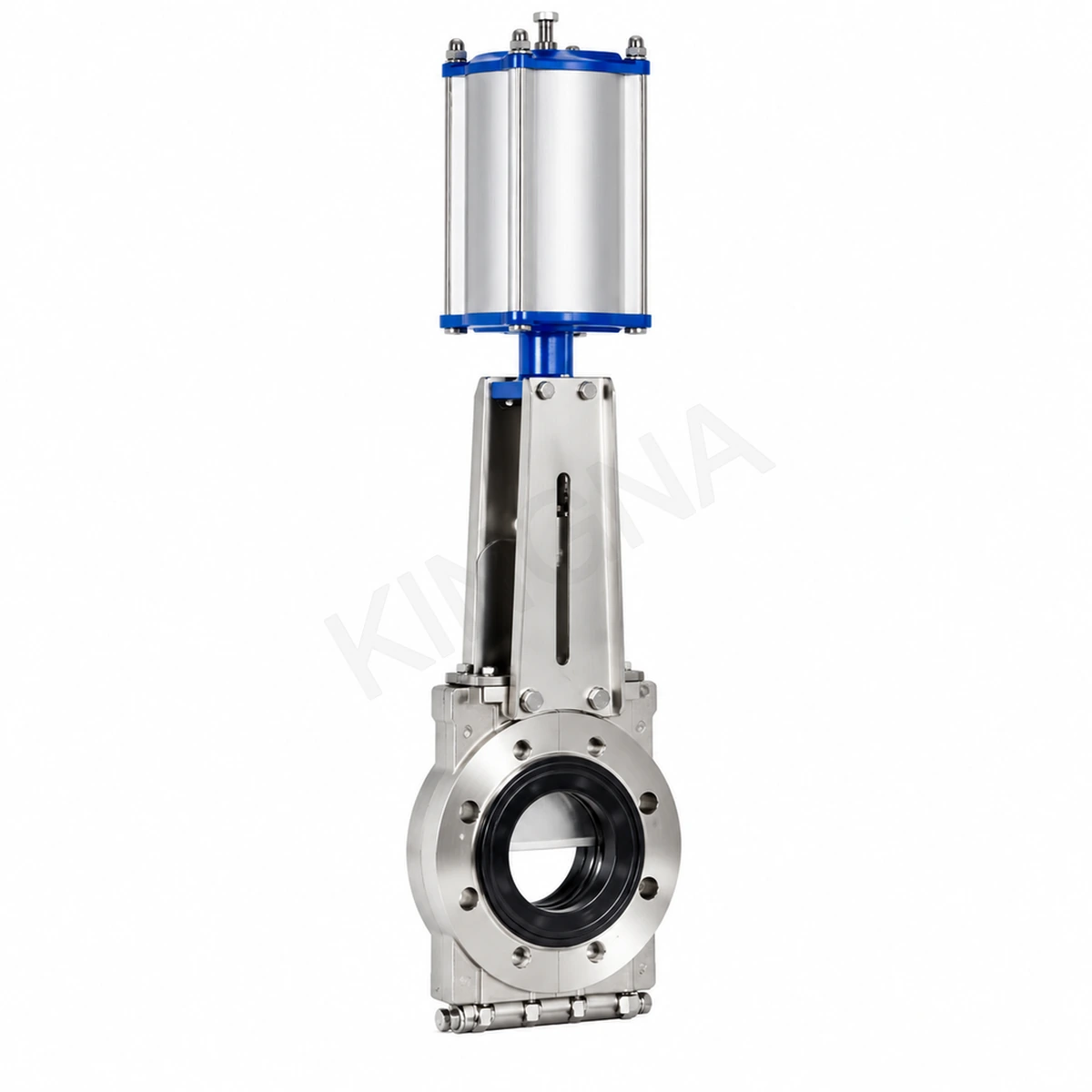
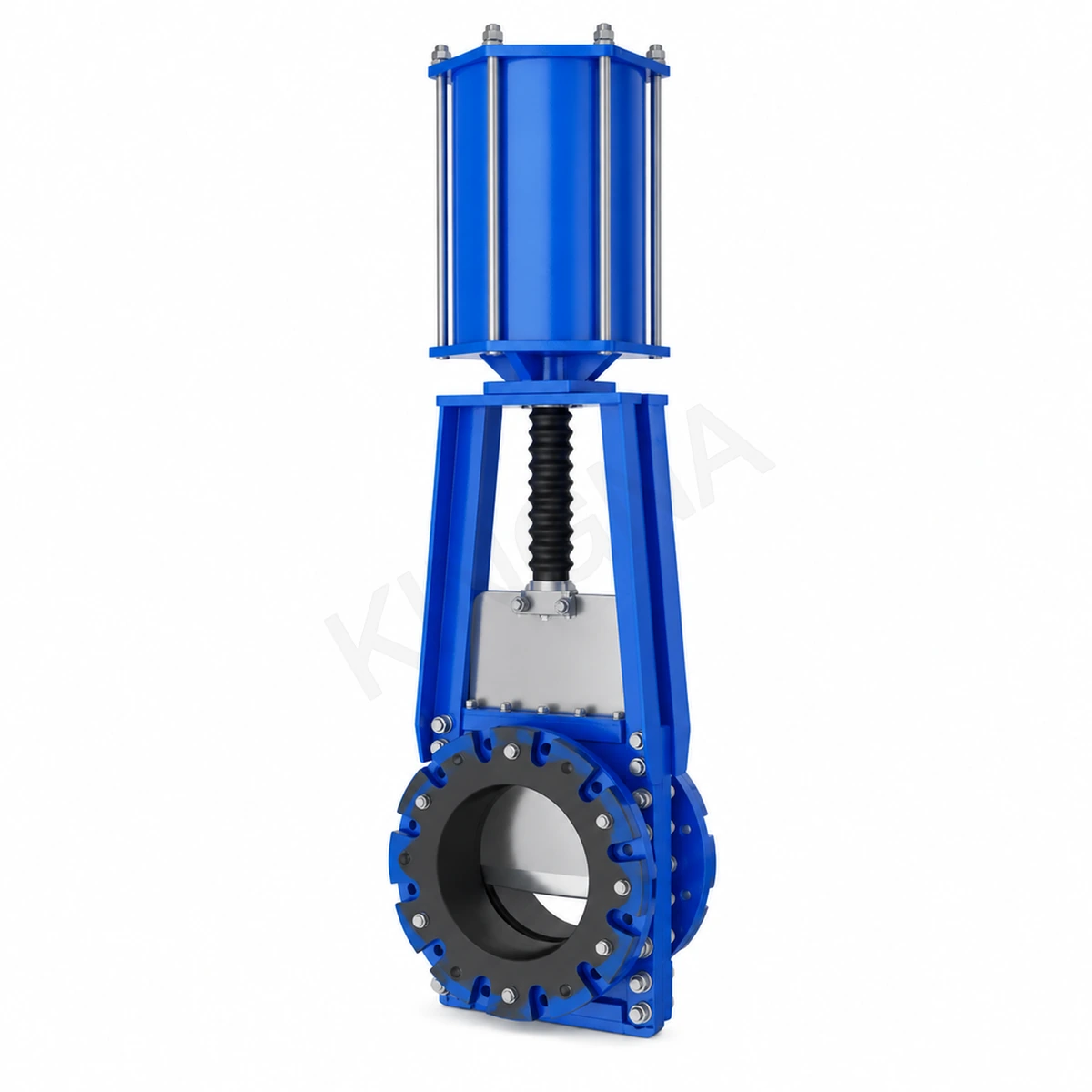
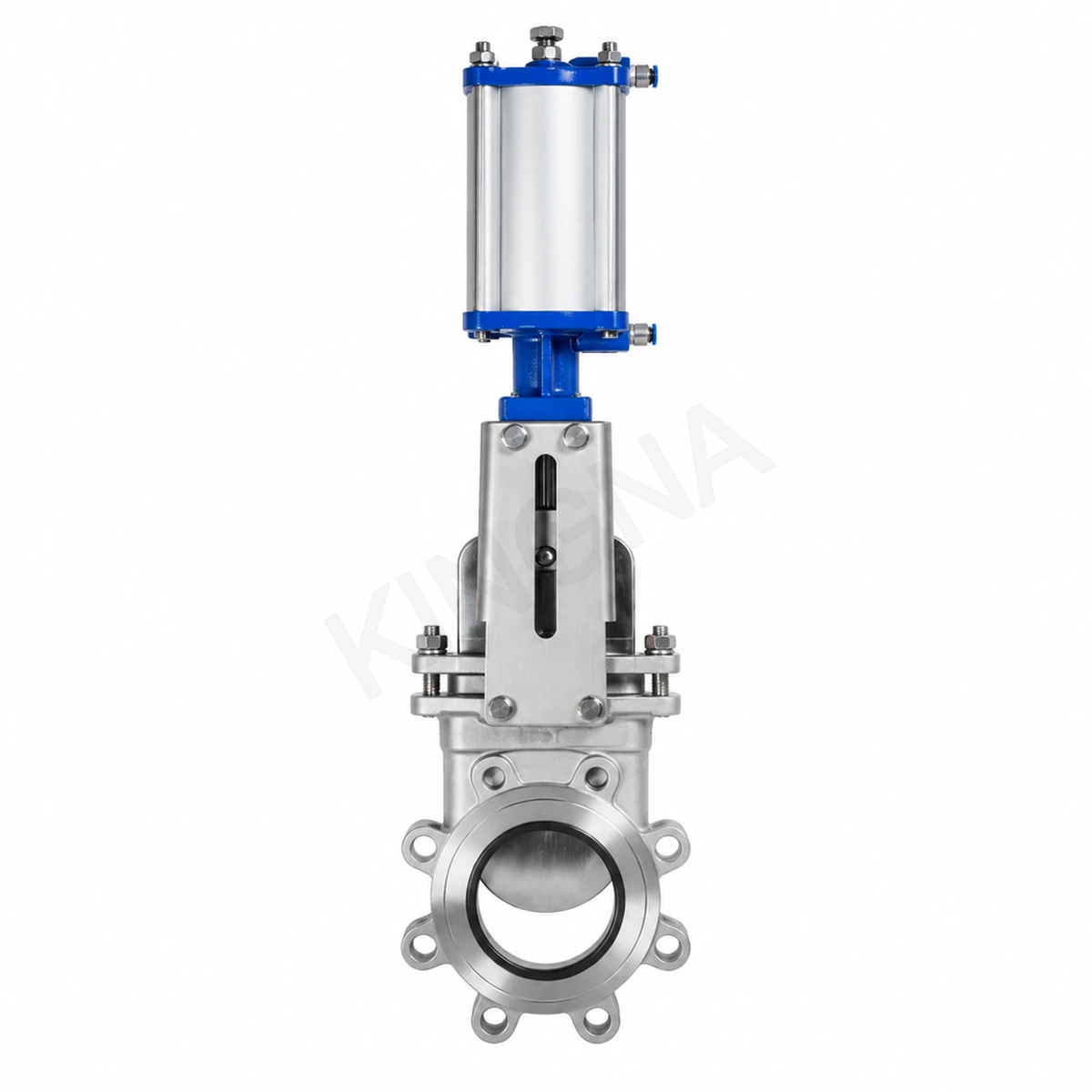
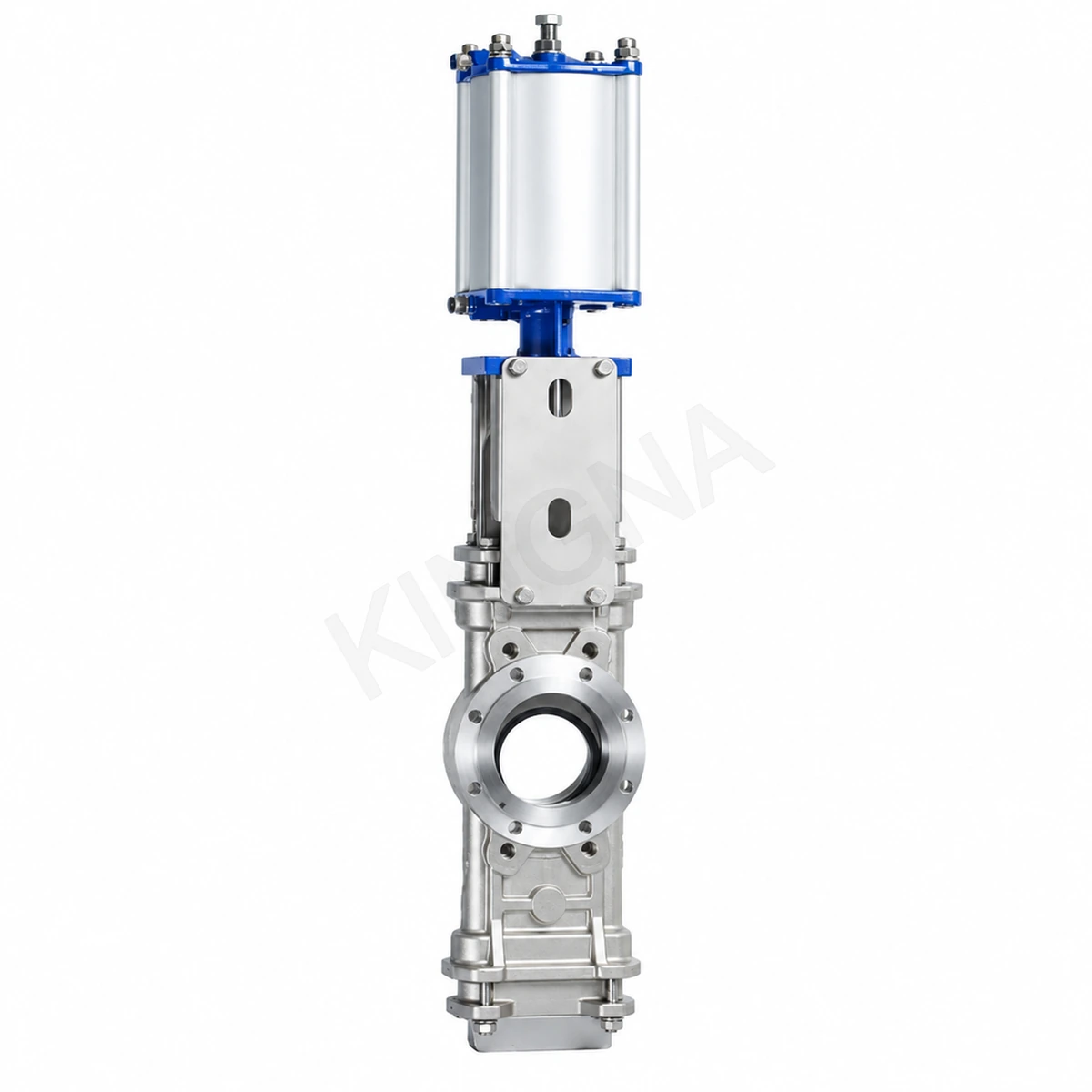
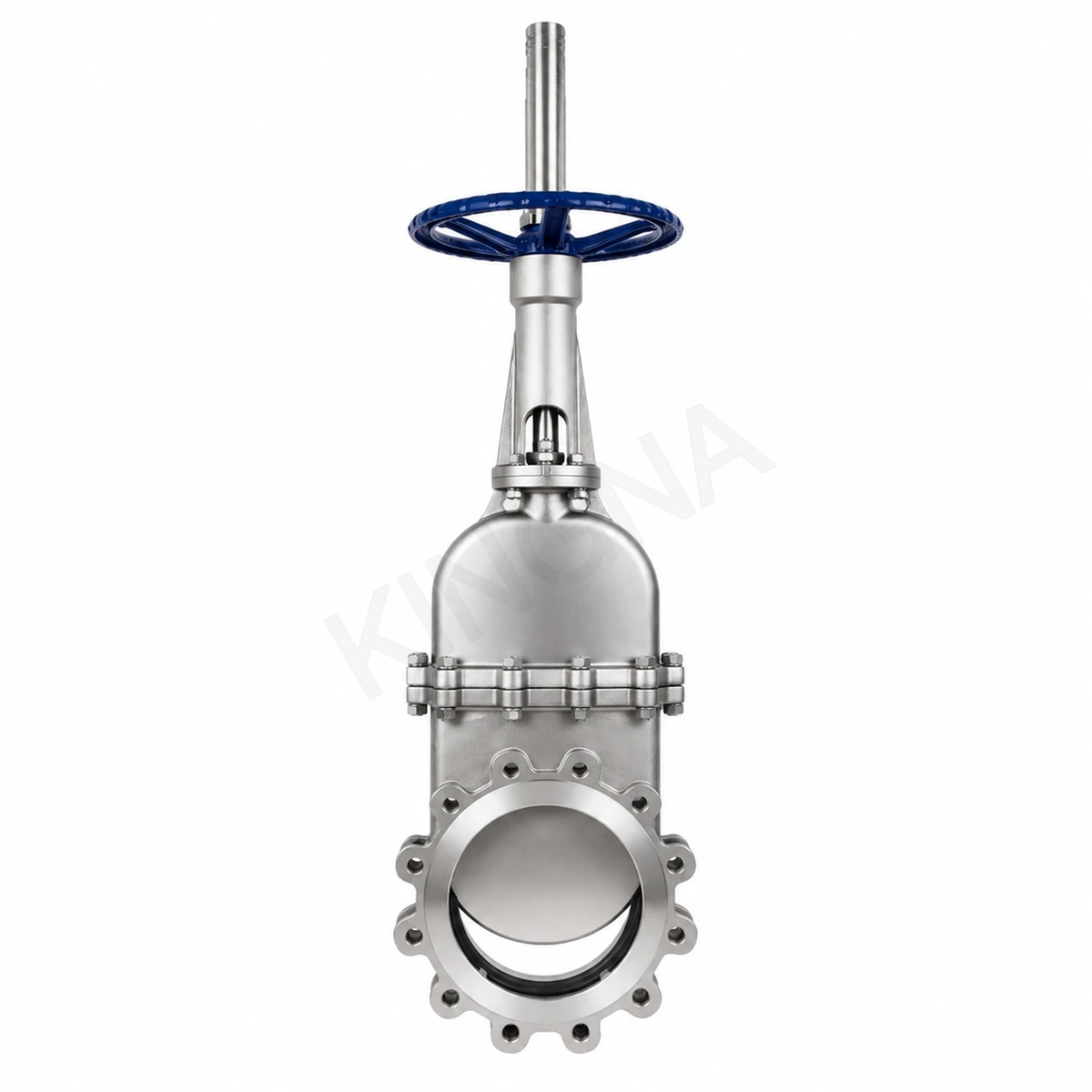
The APZ73 is a knife gate with a fully enclosed, one-piece bonnet. Gate and upper stem are wrapped inside the cover, so the valve isolates the medium from the surroundings — the configuration to choose for dust, volatile and contamination-sensitive duty where an open yoke would let material escape or packing ingress. Sealing runs one way against a replaceable seat, and the ring packing in the enclosed bonnet gives a protected upper seal. The body stays compact enough for tight installations. Sizes DN50–DN600, PN10 / PN16 / 150LB with table D/E drilling, working pressure 10 bar, −29 to 200 °C or −29 to 425 °C depending on the seat material.
General Specifications
Size RangeDN50 – DN600 (larger sizes on request)
Design StandardMSS SP-81
Face-to-FaceMSS SP-81 (custom lengths on request)
Flange DrillingEN 1092 / ASME B16.5 / HG/T 20592 / GB/T 9124.1 / AS 2129 / AS 4087
Working Pressure10 bar (DN50–DN600)
Flow ControlOn / off isolation — not for continuous throttling
Sealing DirectionUni-directional
OperationHandwheel, bevel gear, pneumatic, electric or hydraulic
MediaSolid particles, slurry, fibres and dust-laden media
Temperature−29 to 200 °C / −29 to 425 °C depending on seat material
Pressure RatingPN10 / PN16 / 150LB (table D/E drilling)
Materials & Coating
BodyCarbon steel / stainless steel / duplex steel / special material
BonnetOne-piece fully enclosed bonnet, gate and stem inside
GatePrecision-machined knife gate
SeatReplaceable seat — metal (hard) or resilient (soft)
Stem SealingRing packing inside the enclosed bonnet
Applications
Dust and powder conveying Flue-gas and ash isolation Chemical and pharmaceutical lines Covered tanks and sumps
A closed bonnet keeps the moving parts out of the medium and the dust out of the packing
The enclosed knife gate carries a fully closed bonnet over the gate, with an annular packing around the stem. The gate and the packing are shielded from the medium and from the plant atmosphere, which is what makes this build suitable for dust and for media that would otherwise contaminate or seize the stem area.
Dust-tight service is the usual reason to choose it over a standard knife gate: fine dry solids do not need a full-bore passage, they need a valve that does not pack its own bonnet with material.
What the enquiry has to state
Line rating and size, medium and its particle size, temperature, and whether the valve is in dust or in slurry. The body and gate material follow the medium, and the operator follows the cycle frequency.
More from this series
Related guides