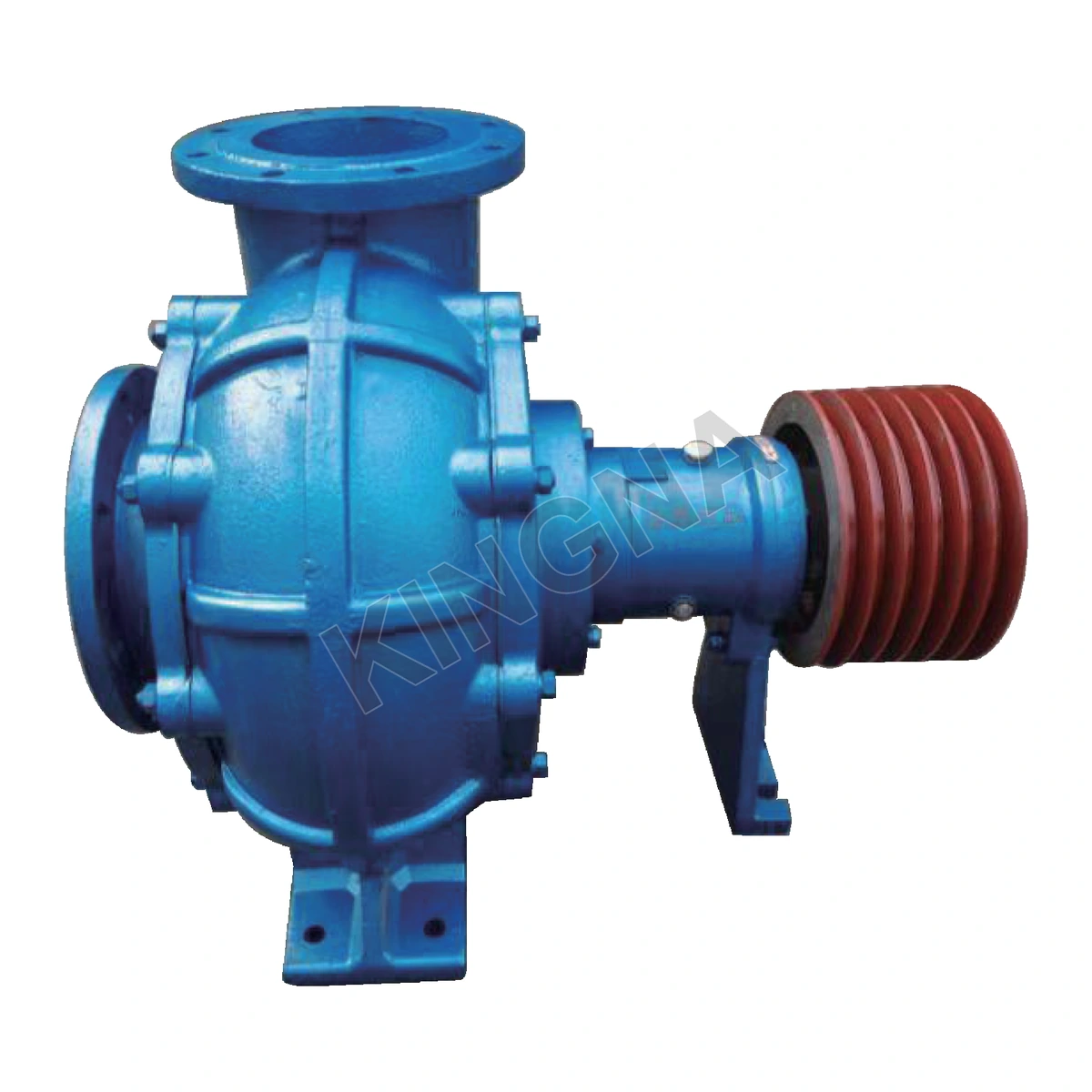
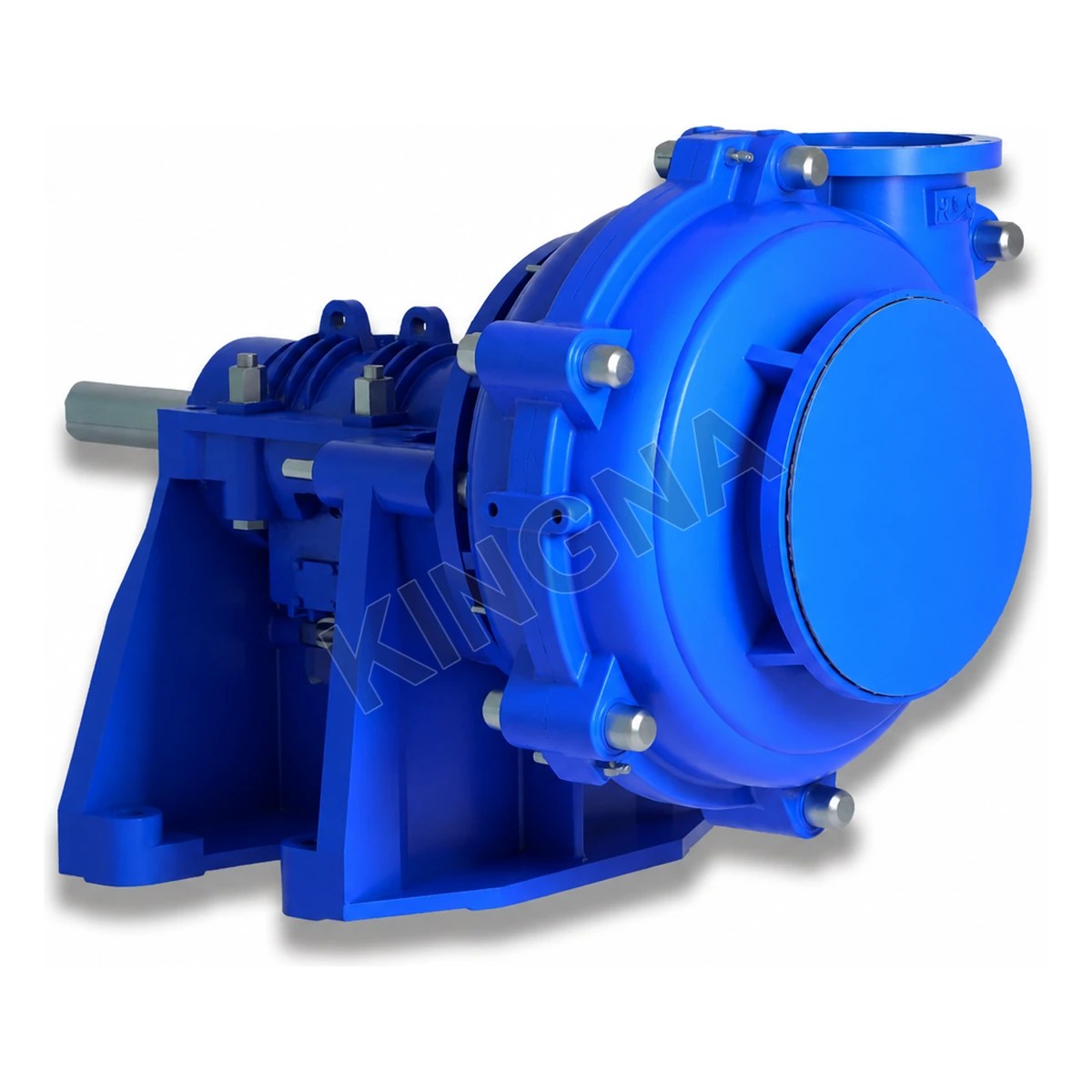
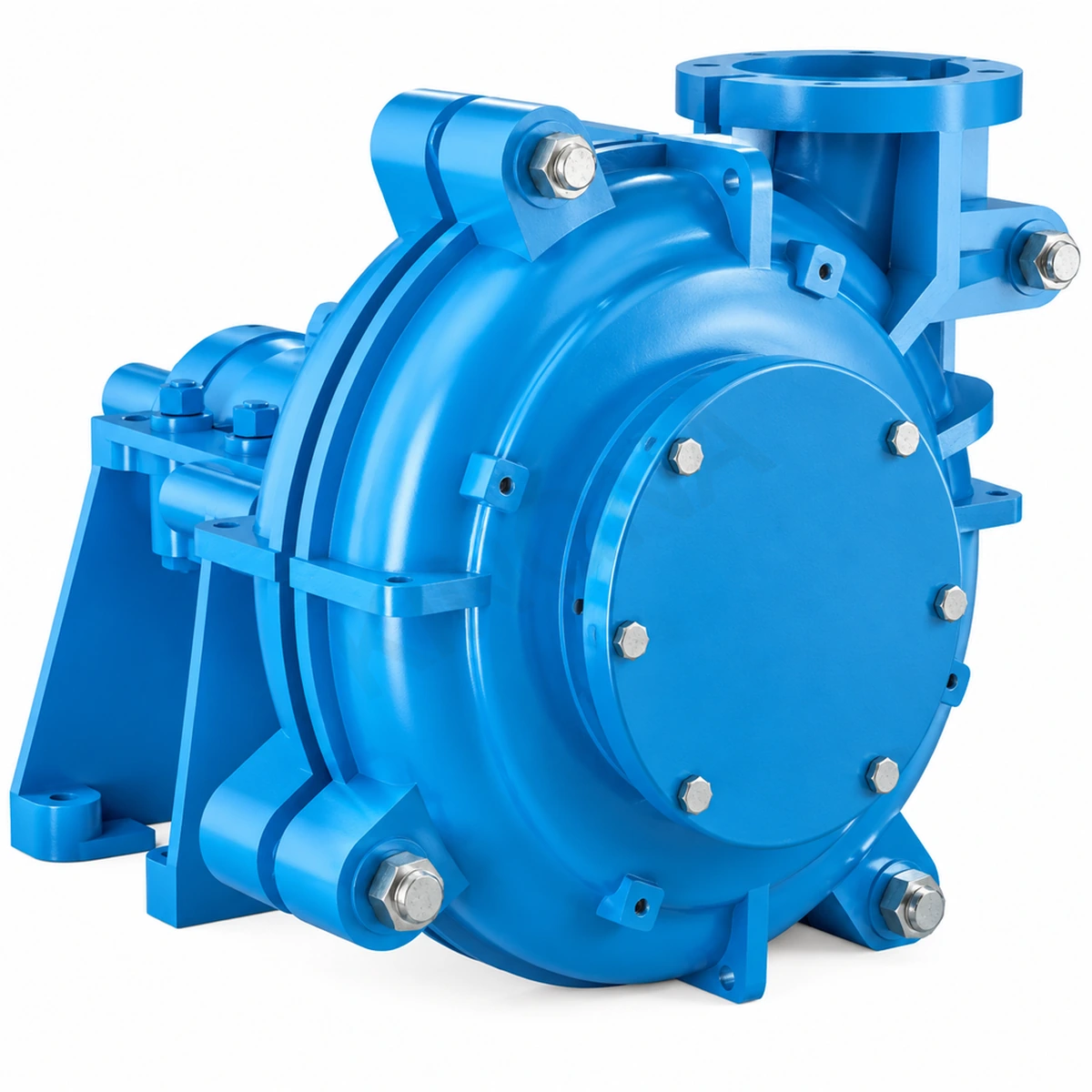
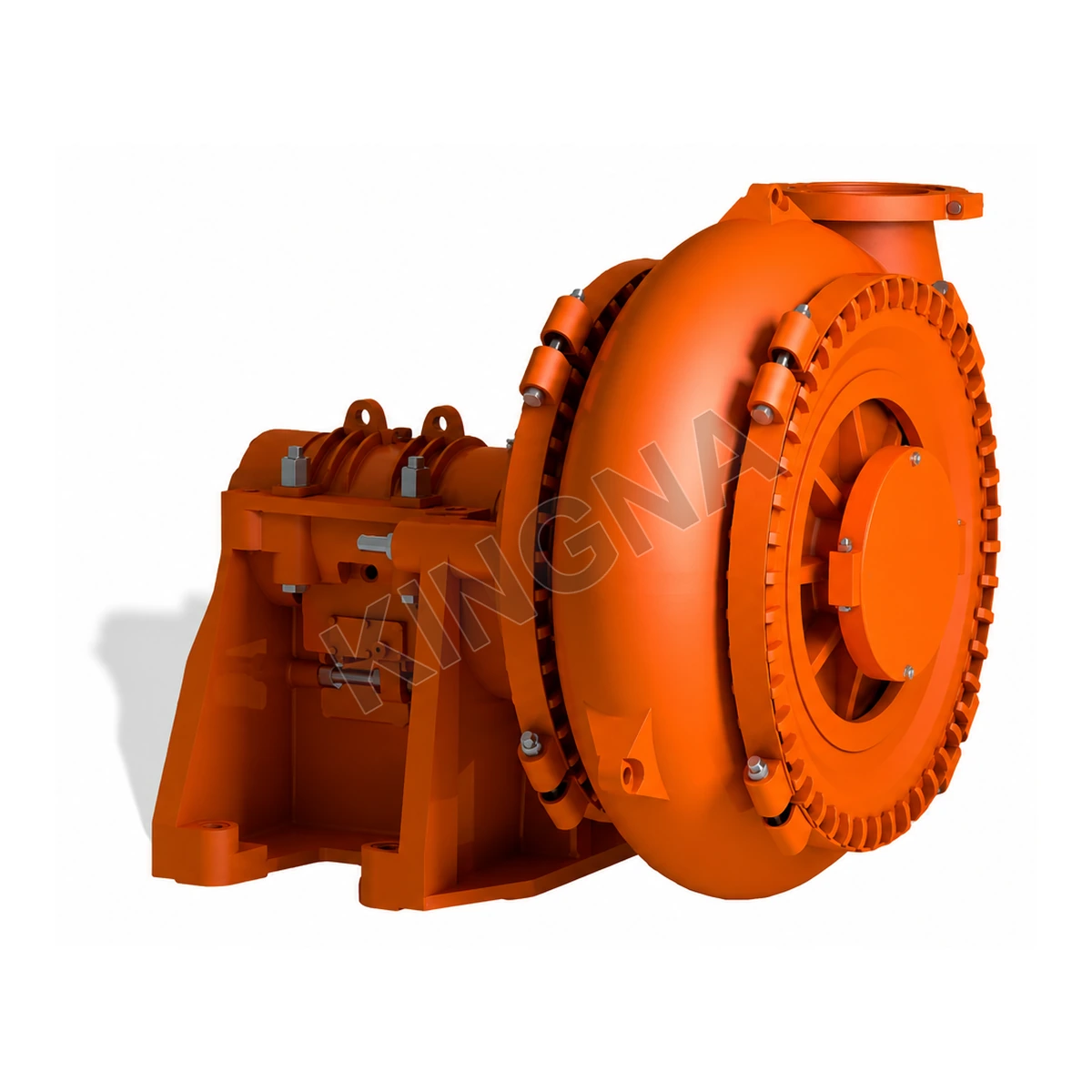
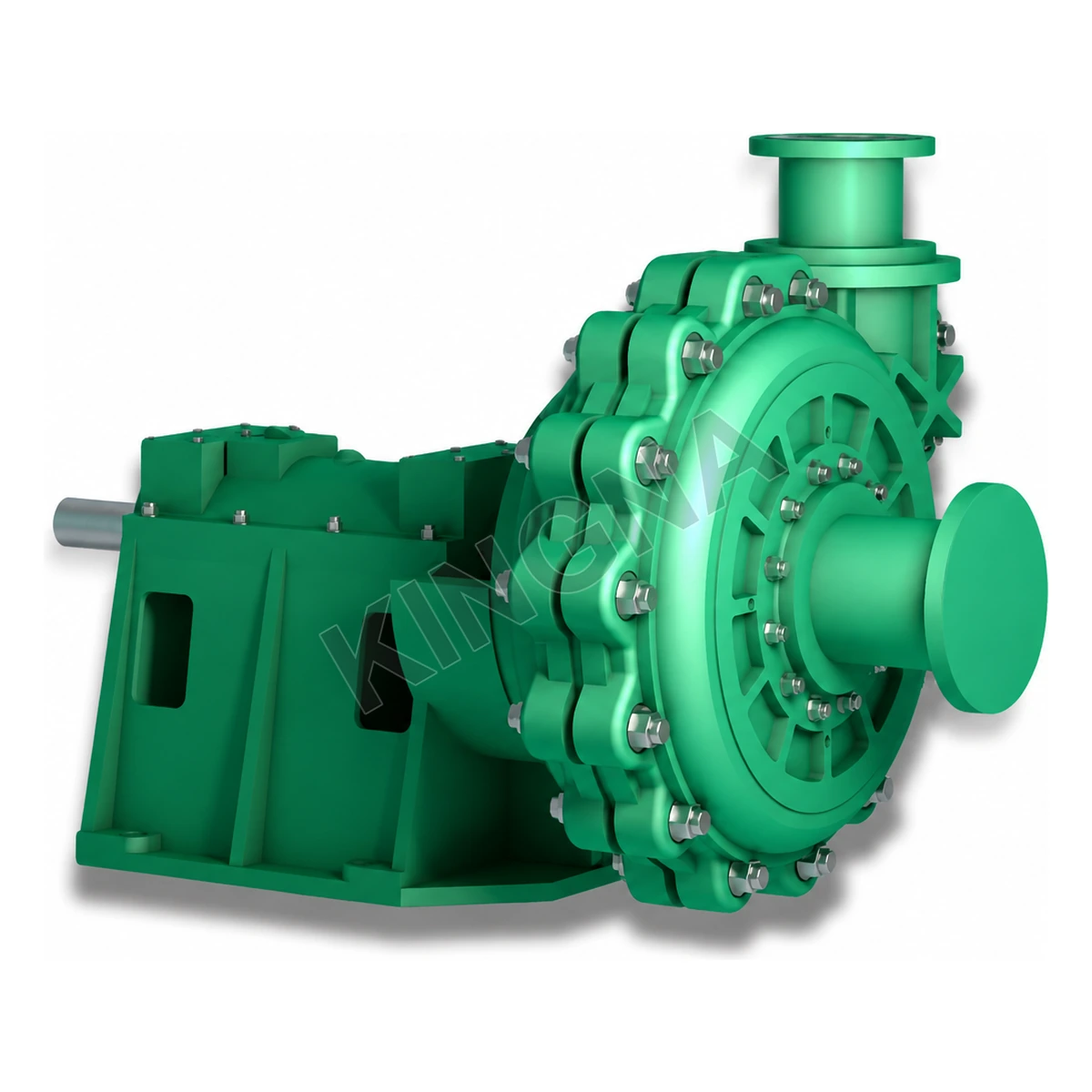
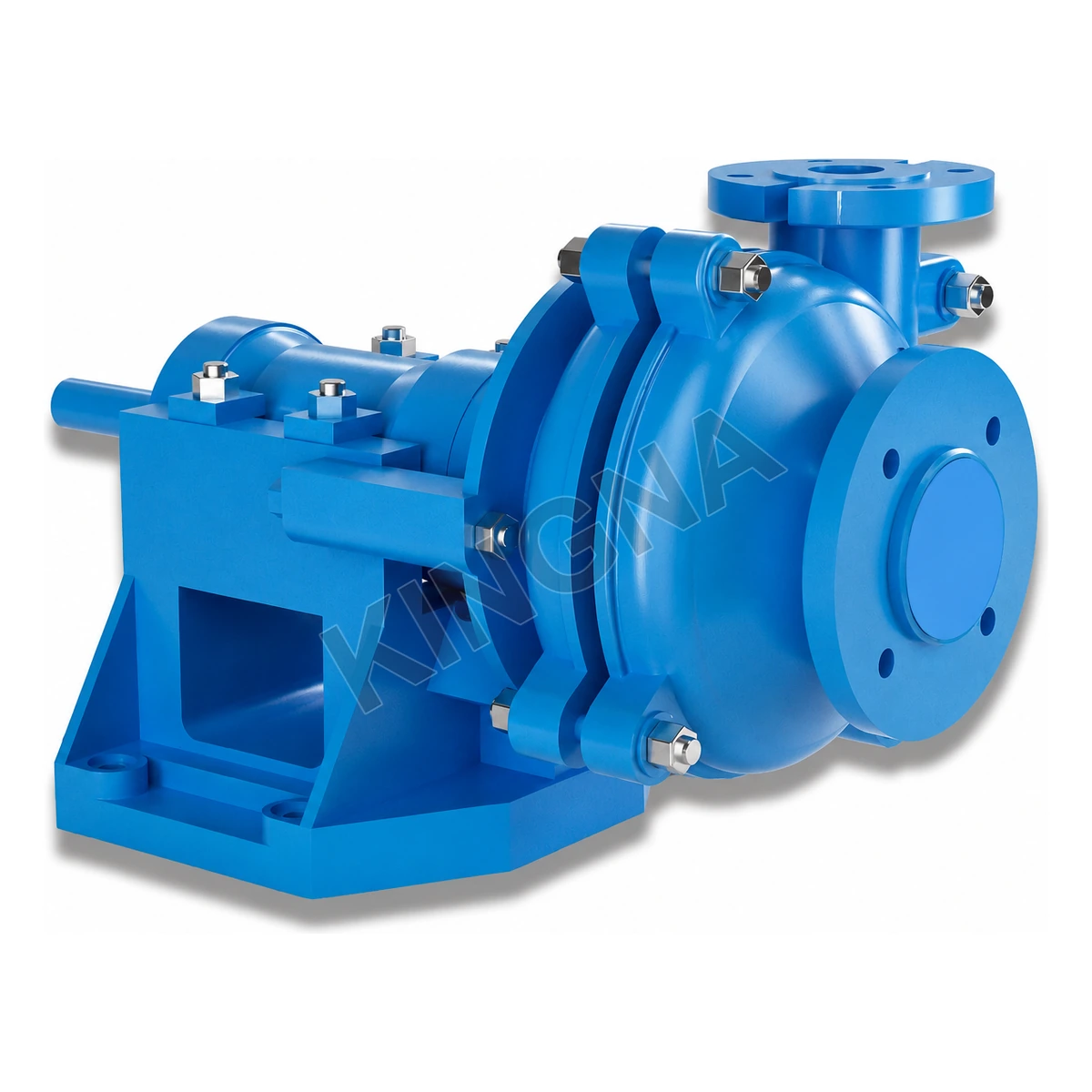
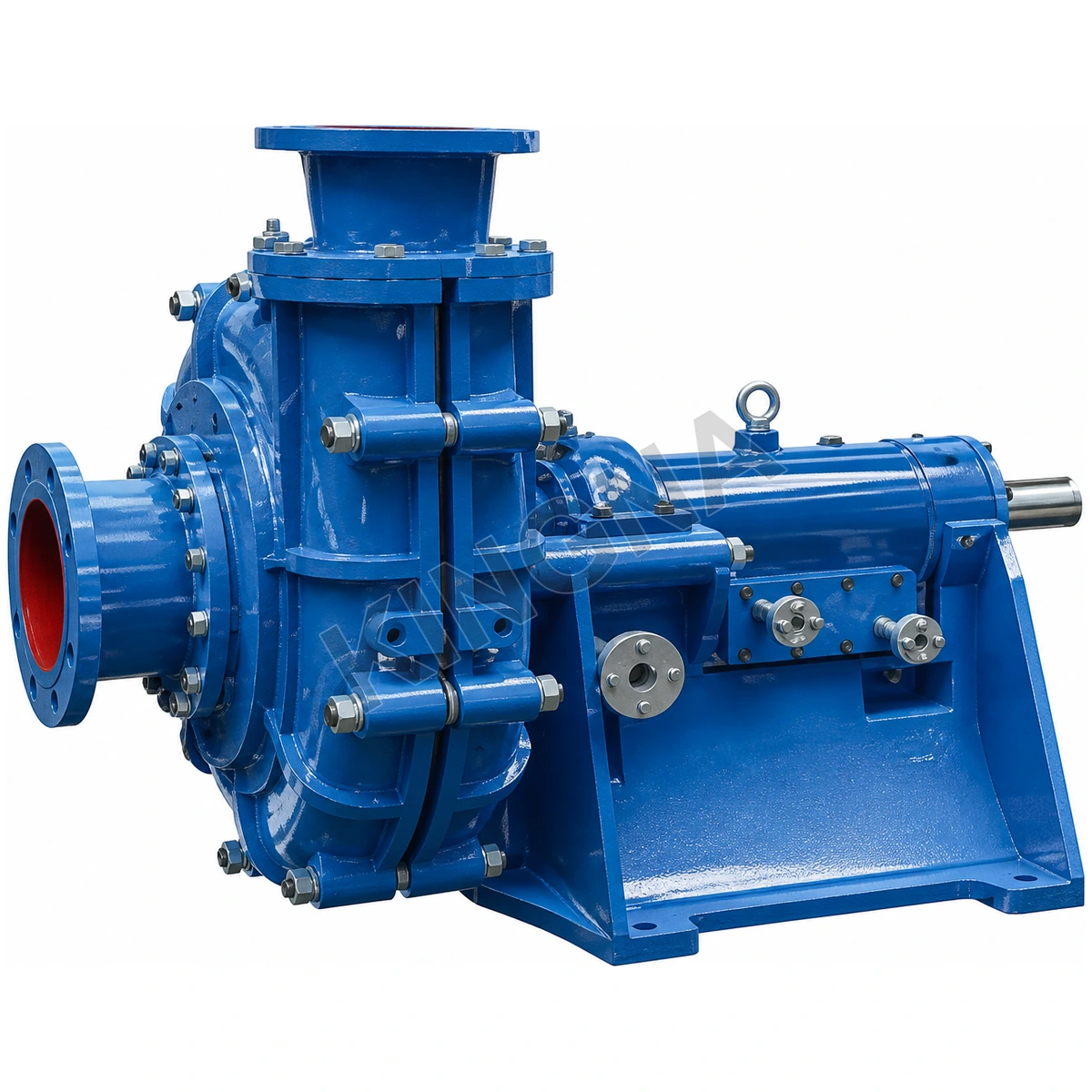
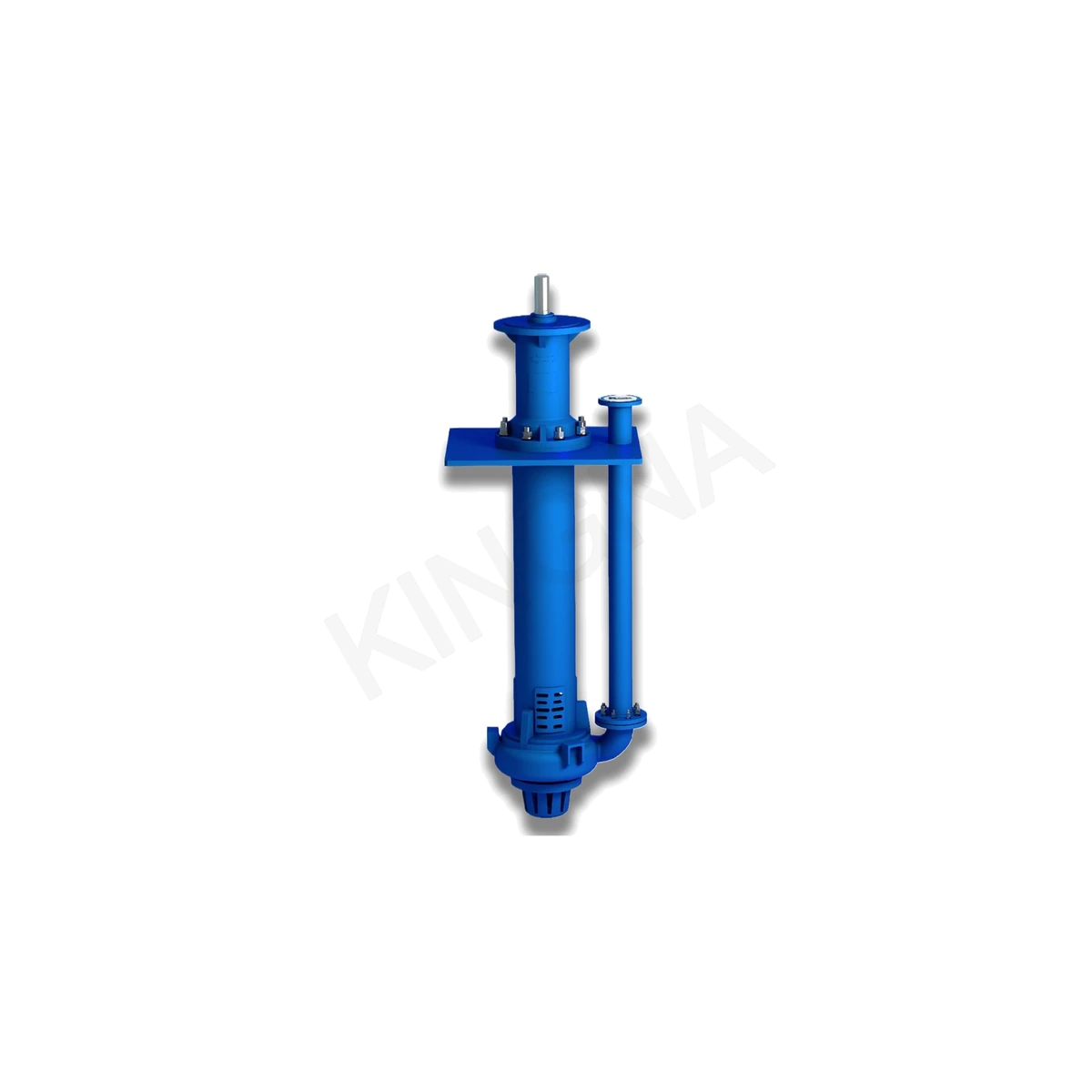
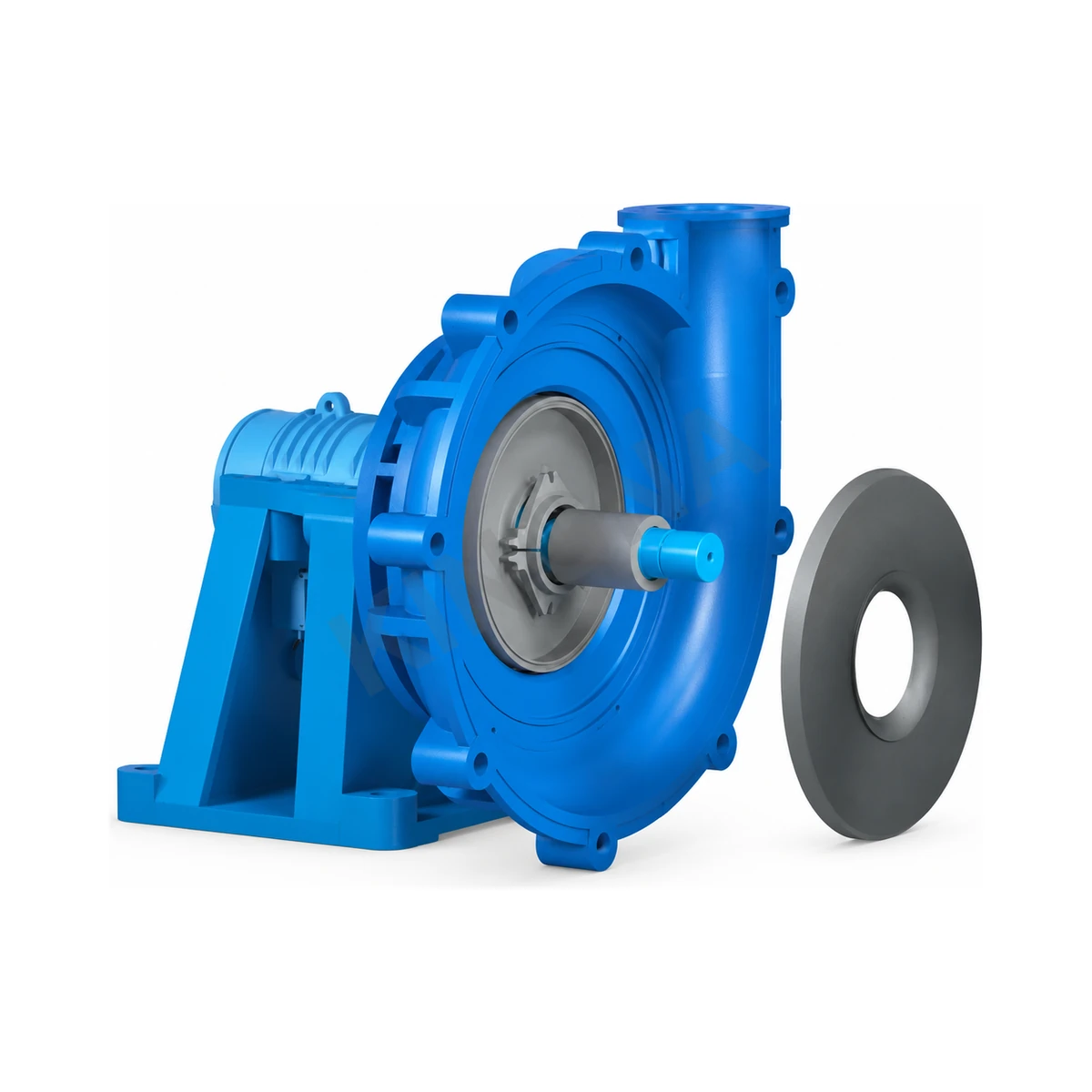
The light member of the slurry range: same double-casing layout as the heavy pumps, but built for fine solids at low concentration — metallurgy, coal, building materials — and run at higher speed so it stays compact and takes little floor space. Liner and impeller come in wear-resistant metal (M) or rubber (R), and both are replaceable, which is the point of the design: the liner wears, the casing holds the pressure. Sealing is gland packing or a centrifugal expeller, so a duty with little or no seal water is still covered. DN20–650, 10–14,000 m³/h, 10–60 m.
General Specifications
Outlet SizeDN20 – DN650
Flow Rate10 – 14,000 m³/h
Head10 – 60 m
Speed370 – 3,000 r/min, stated per model in the printed table
StructureSingle-stage, single-suction, cantilevered horizontal centrifugal, double casing
Shaft SealGland packing or centrifugal (expeller) seal
Model DesignationMaterial + bore + series + frame code, e.g. M100KSL-DB
Model Range — metal (M)M20KSL-AB · M50KSL-BB · M75KSL-CB · M100KSL-DB · M150KSL-EB · M300KSL-SB · M350KSL-FB · M400KSL-STB · M550KSL-TUB · M650KSL-TUB
Model Range — rubber (R)R50KSL-BB · R75KSL-CB · R100KSL-DB · R150KSL-EB · R300KSL-FB · R350KSL-FB · R400KSL-STB · R450KSL-STB · R550KSL-TUB · R650KSL-TUB
SelectionSeries ranges are for preliminary selection; the final model is selected against the duty point on the printed curve.
Max. Working Temperature≤ 80 °C
Materials & Coating
Frame Plate Liner / ImpellerWear-resistant metal (M) or rubber (R), replaceable
CasingDouble casing — outer casing carries the pressure, inner liner takes the wear
DutyLow-abrasion, low-concentration slurry with fine solids
Applications
Mill discharge with fine solids Coal and building-materials slurry Tailings and settling-pond transfer Low-abrasion process slurry
Light slurry is a different wear problem, not a smaller pump
Calling this a light pump describes the loading, not the size: the range runs to DN650, and the same casing family covers mill discharge on a fine-grind circuit as well as coal and building-materials slurry. What changes is the abrasion mechanism — fine solids sliding across the liner rather than coarse particles striking it — and that is what the M and R builds are chosen against.
A rubber-lined hydraulic end handles sliding abrasion well and is usually the cheaper wear part, but it will not take impact from coarse particles. A metal liner takes the impact and wears faster under fine sliding abrasion. The choice between the two is the first decision on this series, and it follows the particle size distribution of the solids, not the tonnage.
What to send, and what the speed does to the selection
Send the solids concentration, the particle size range, flow, head and the slurry temperature. Concentration and particle size decide M or R; the duty point then decides the model and the impeller trim.
This series runs faster than the heavy pumps, which is what keeps the footprint small — and it also means the suction side matters more. If NPSH is marginal, say so in the enquiry: on a high-speed light slurry pump the cavitation limit is reached before the head limit is.
More from this series
Related guides