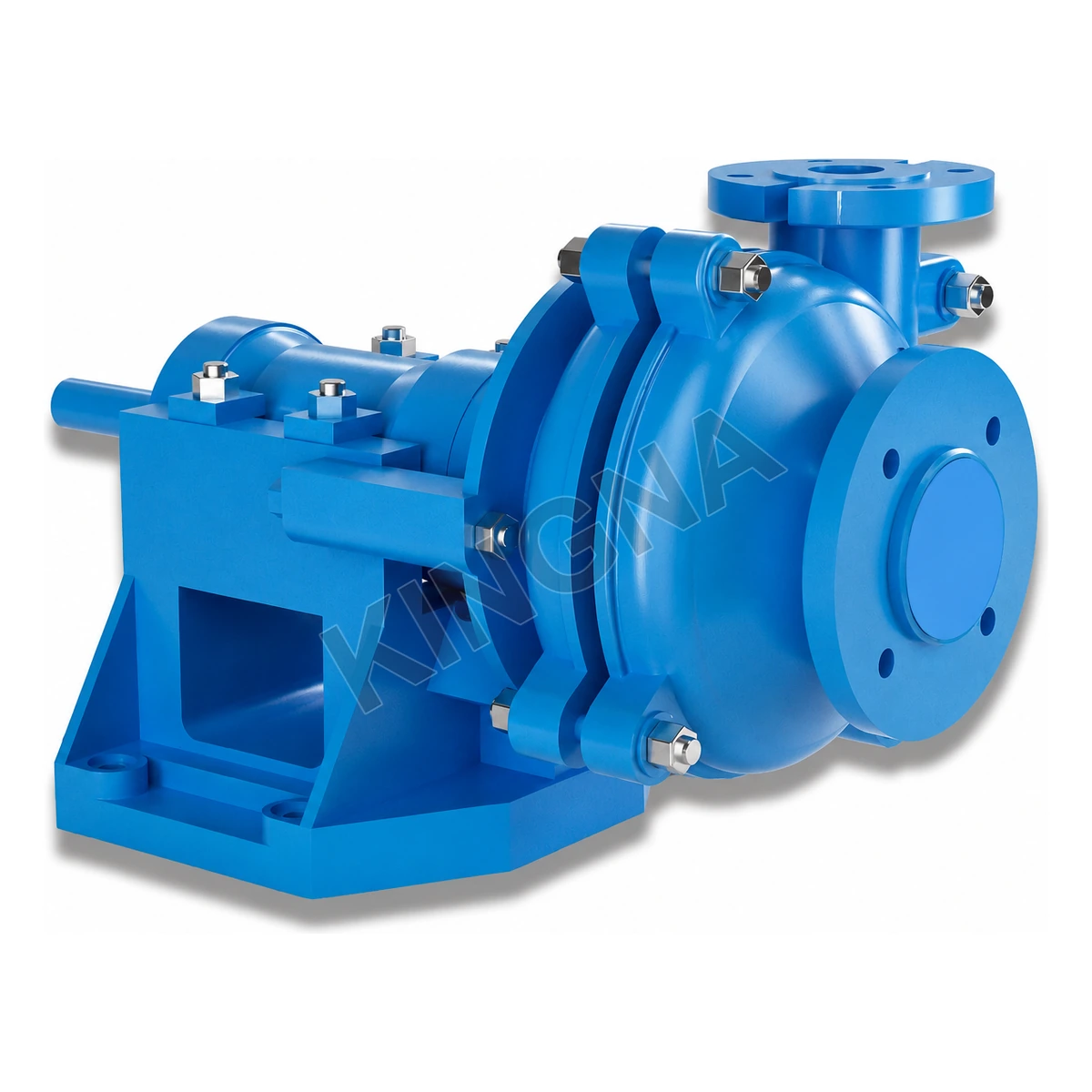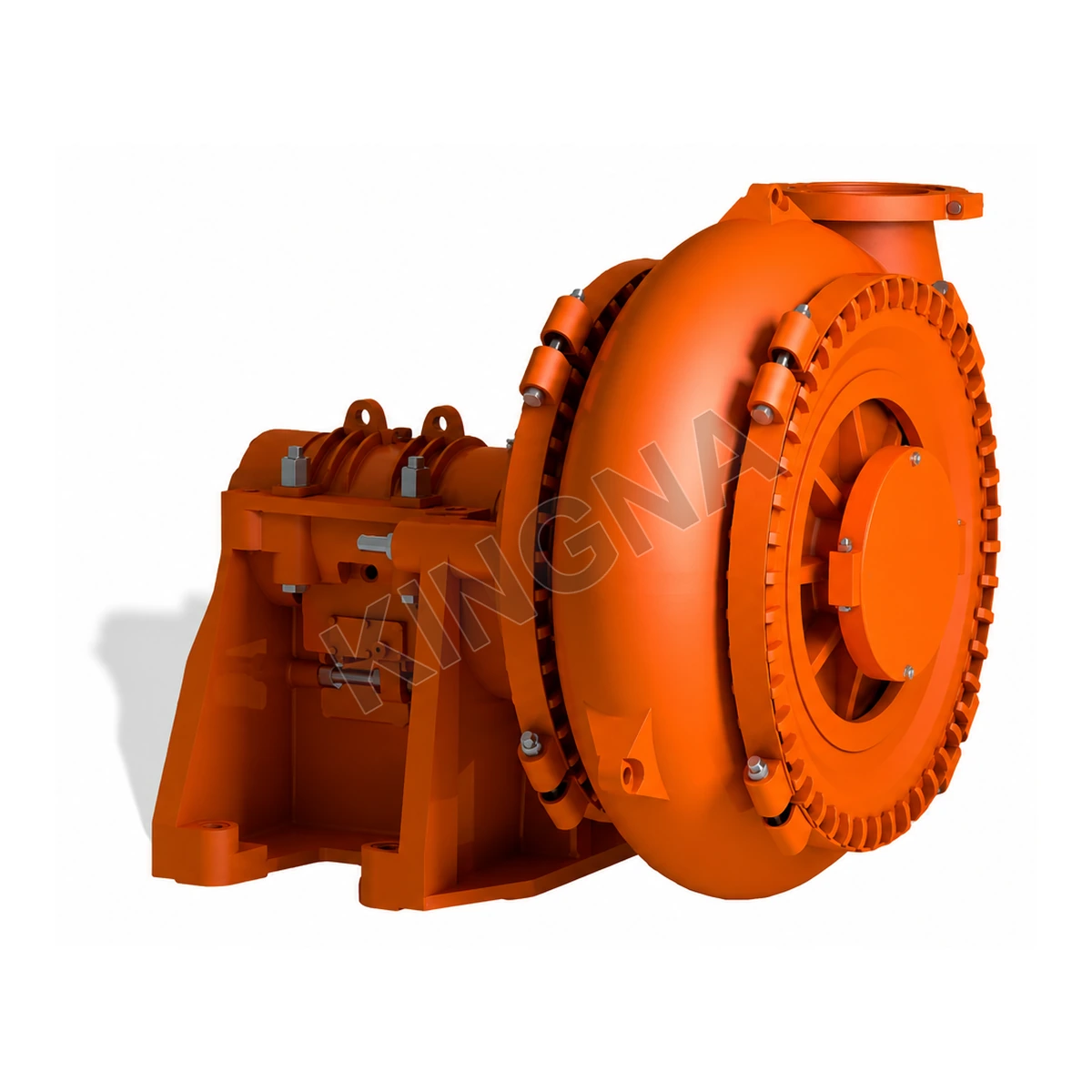

Selecting a slurry pump is not a scaled-up version of selecting a water pump. The solid particles that give a slurry its purpose — ore, tailings, coal, ash, sand — also attack every wetted surface the pump owns. This guide works through the decisions in order: what makes slurry service different, which pump family fits which duty, how to choose between hard metal and rubber, and what the valves and spare-parts plan around the pump need to look like.
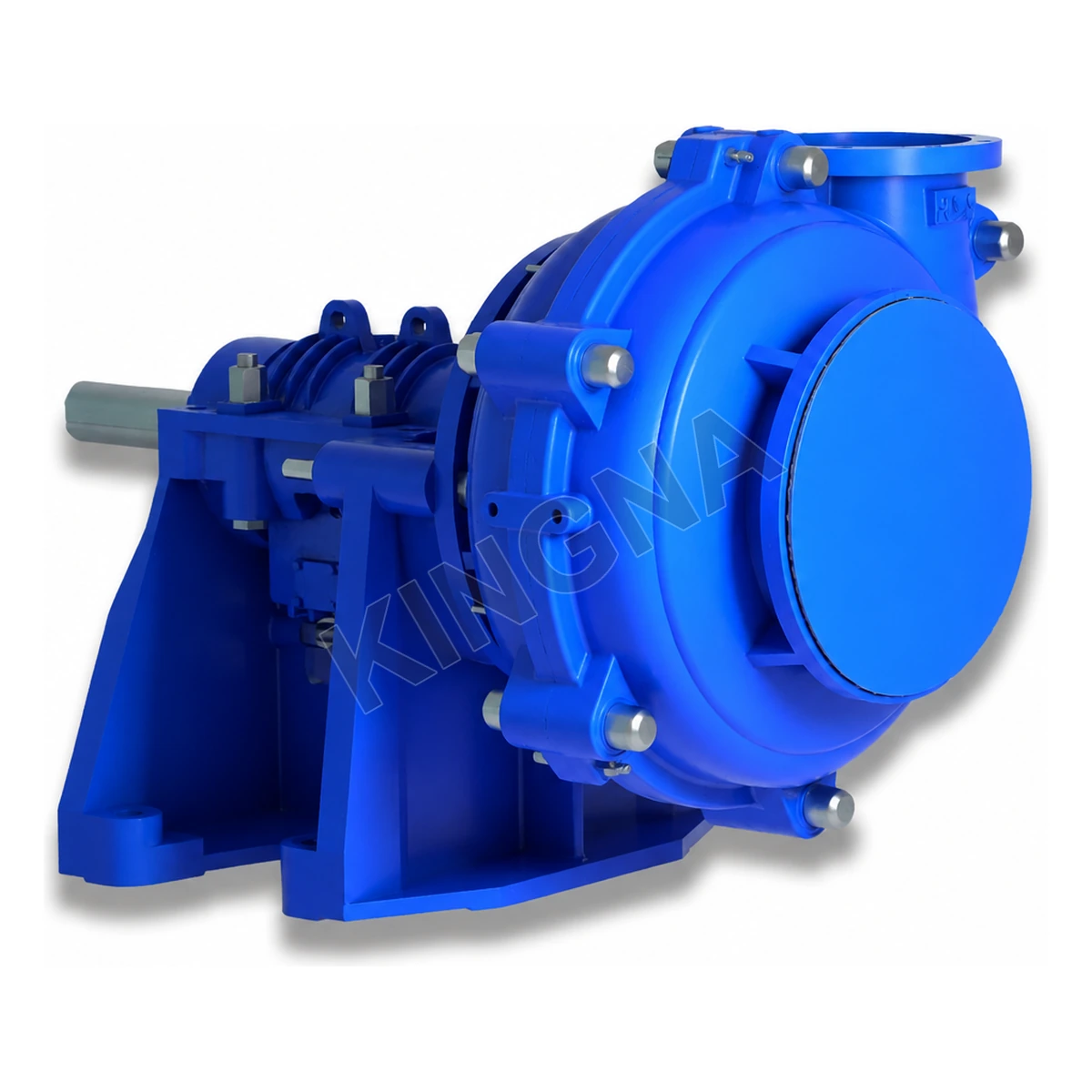
Why slurry pumping is its own discipline
A slurry is a mixture of solid particles — usually with a specific gravity above that of water — carried in a liquid, and moving it is abrasive by nature. The industry treats rotodynamic slurry pumps as a distinct equipment class precisely for this reason: the US Hydraulic Institute dedicates its ANSI/HI 12.1-12.6-2021 standard to rotodynamic slurry pumps, covering horizontal and vertical designs for abrasive slurry service, their nomenclature, application, installation, operation and maintenance.
The practical consequence is that wear, not efficiency, drives many selection decisions. Impellers, liners and throat bushes are consumables in slurry service, and the pump family, the lining material and the spares strategy all follow from one question: how aggressive is the slurry, and how big are its particles?
The pump families and where each fits
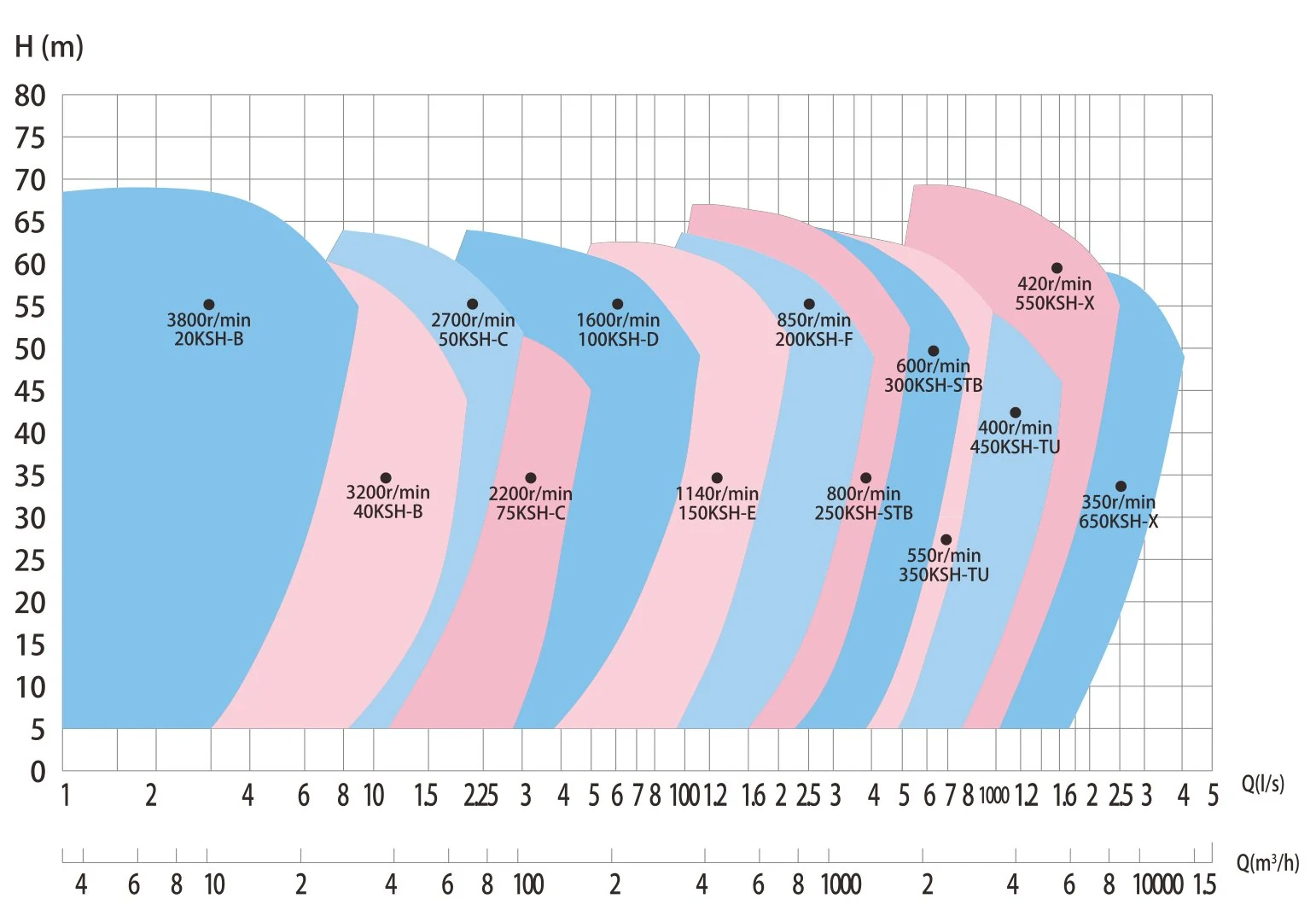
Slurry duty splits into recognisable service categories, and each category has a construction style that has proven itself in it. The listed patterns below give the envelope of each family:
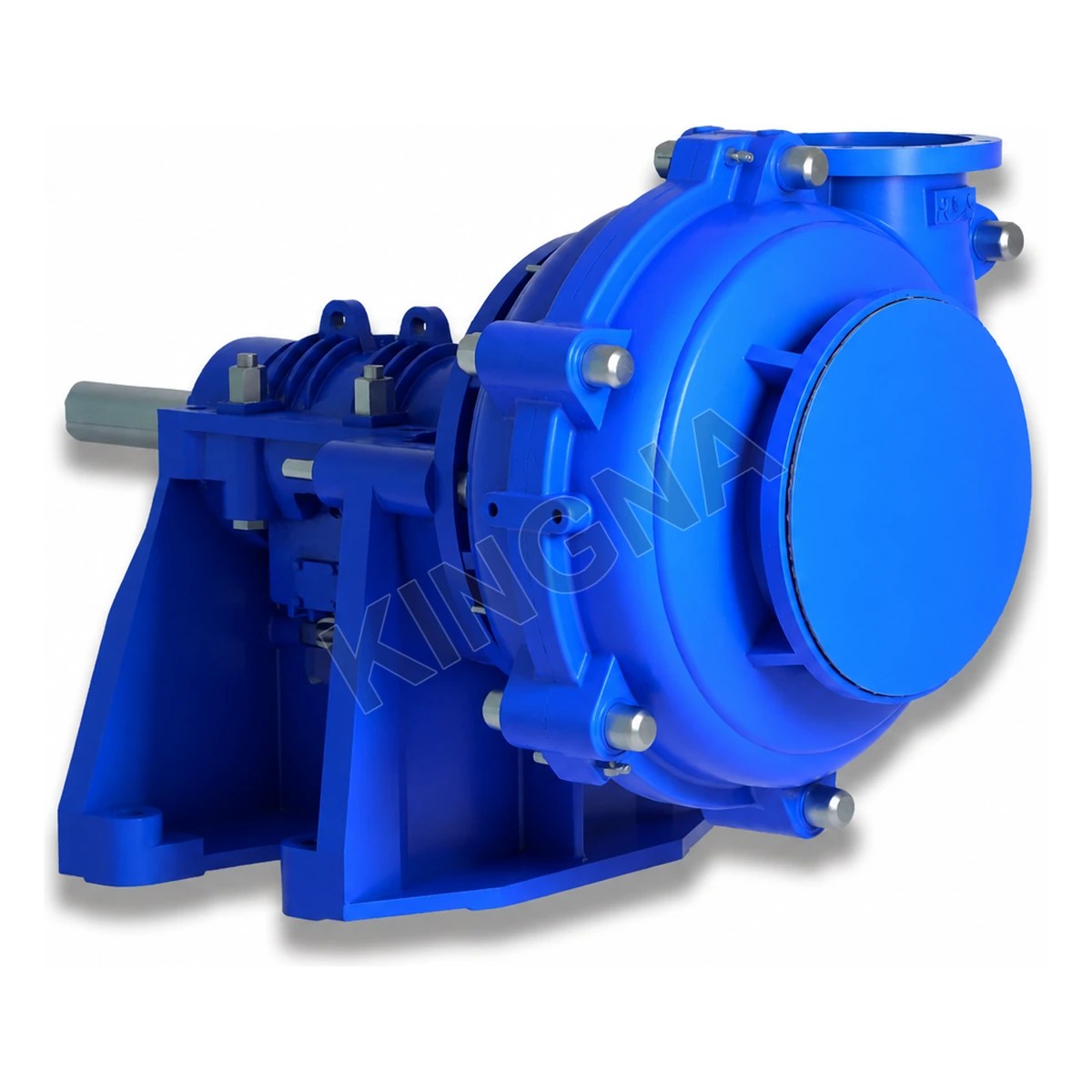
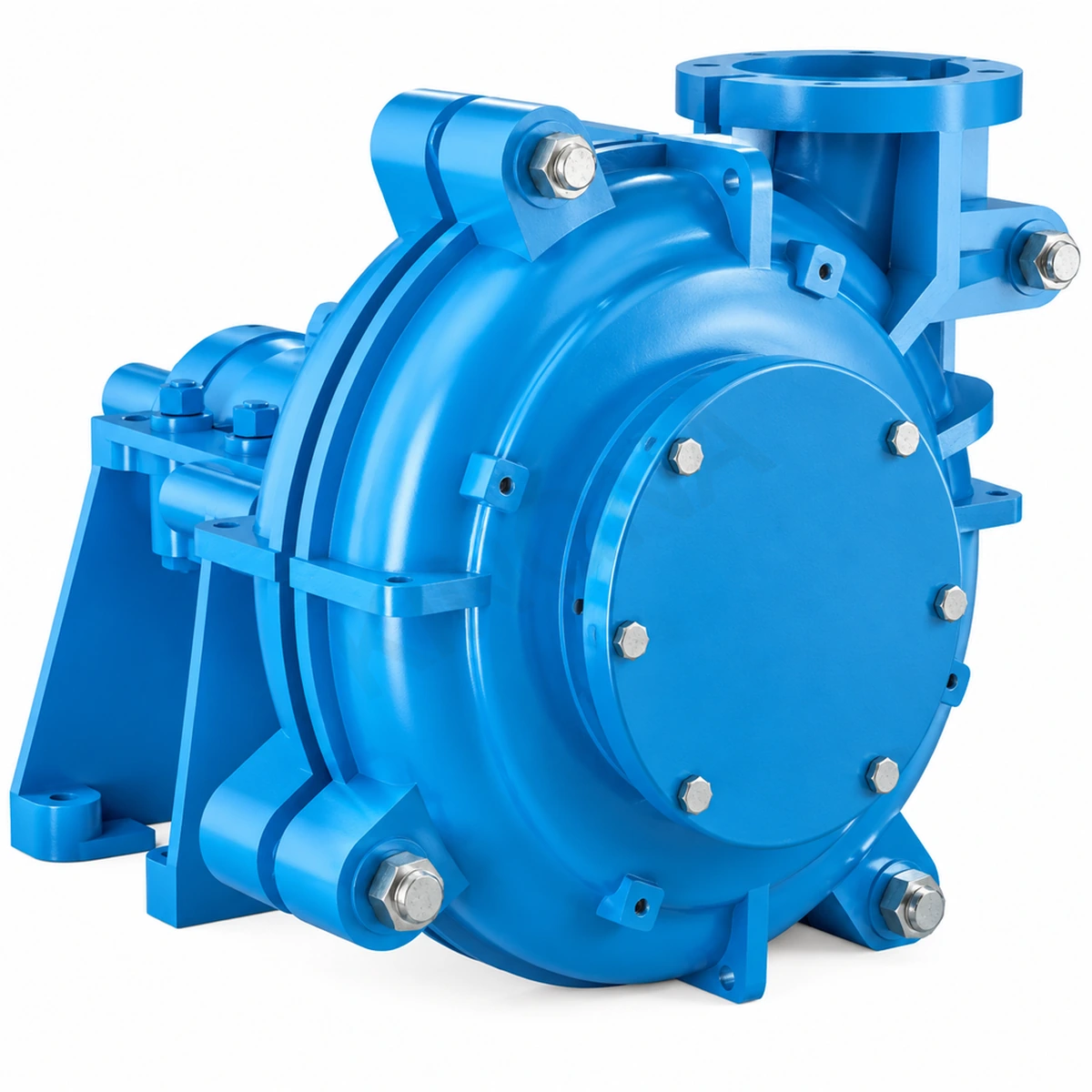
Two patterns deserve a closer look. The double-casing heavy-duty design is the classic mill-discharge machine: it sits downstream of grinding circuits — where mill and wear liners define the upstream wear regime — and is used in mill-discharge, tailings and tunnelling duties. The vertical sump pump solves a different problem: its submerged hydraulic end and seal-free design suit sump and pit duties.
| Duty category | Listed pattern | Listed envelope |
|---|---|---|
| Mill discharge, tailings, shield tunnelling | Heavy-Duty Slurry Pump (KSH / KSM) | DN20–DN650 · 10–14,000 m³/h · head 10–70 m · double casing, metal or rubber lining |
| High-head abrasive, high-density slurry | High-Head Slurry Pump (KSHH) | DN20–DN150 · 10–900 m³/h · head 20–100 m · hard metal only · series installation possible |
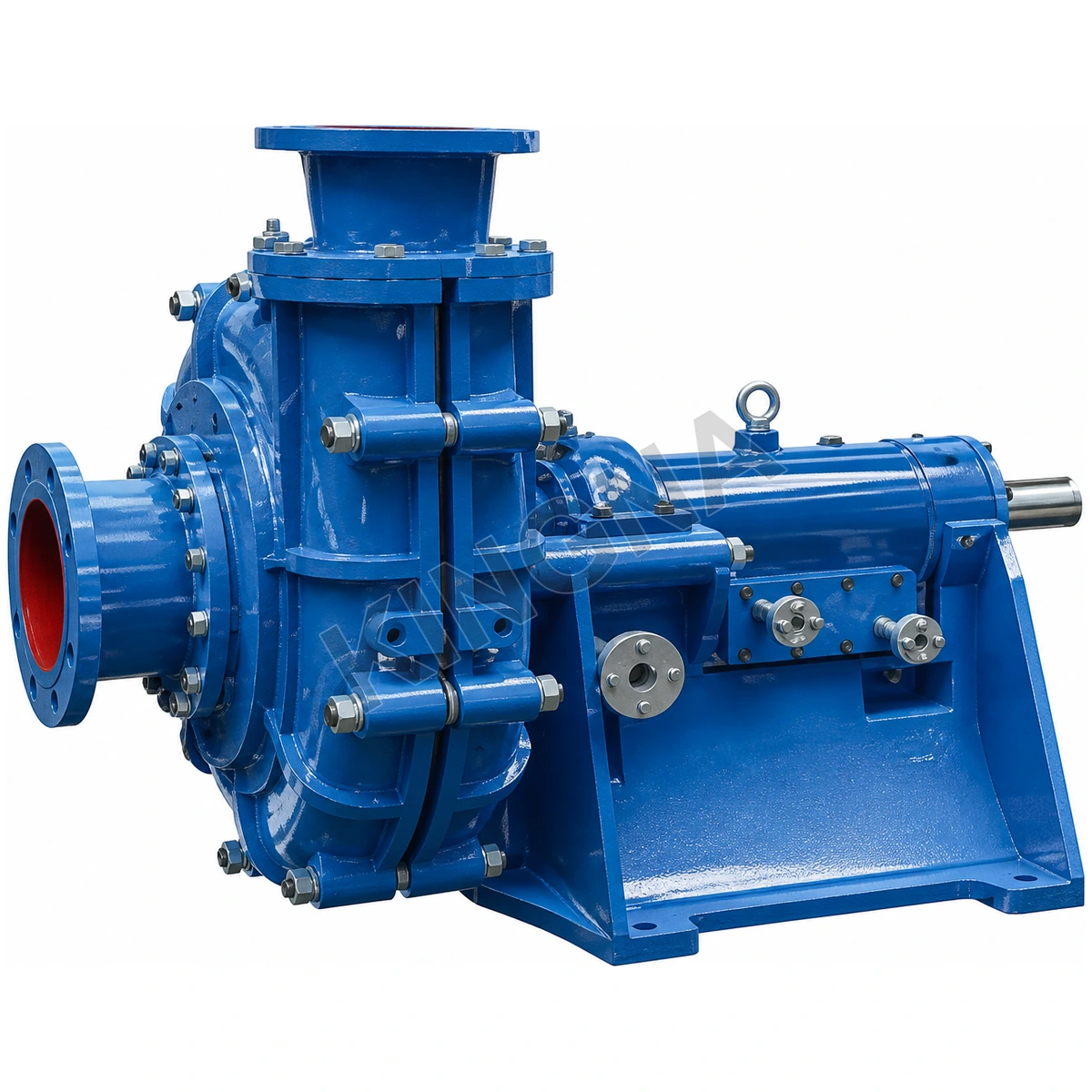
| Medium and high head slurry | High-Head Slurry Pump, Double Casing (ZGB) | DN50–DN300 · 20–1,800 m³/h · head 20–120 m · hard metal only |
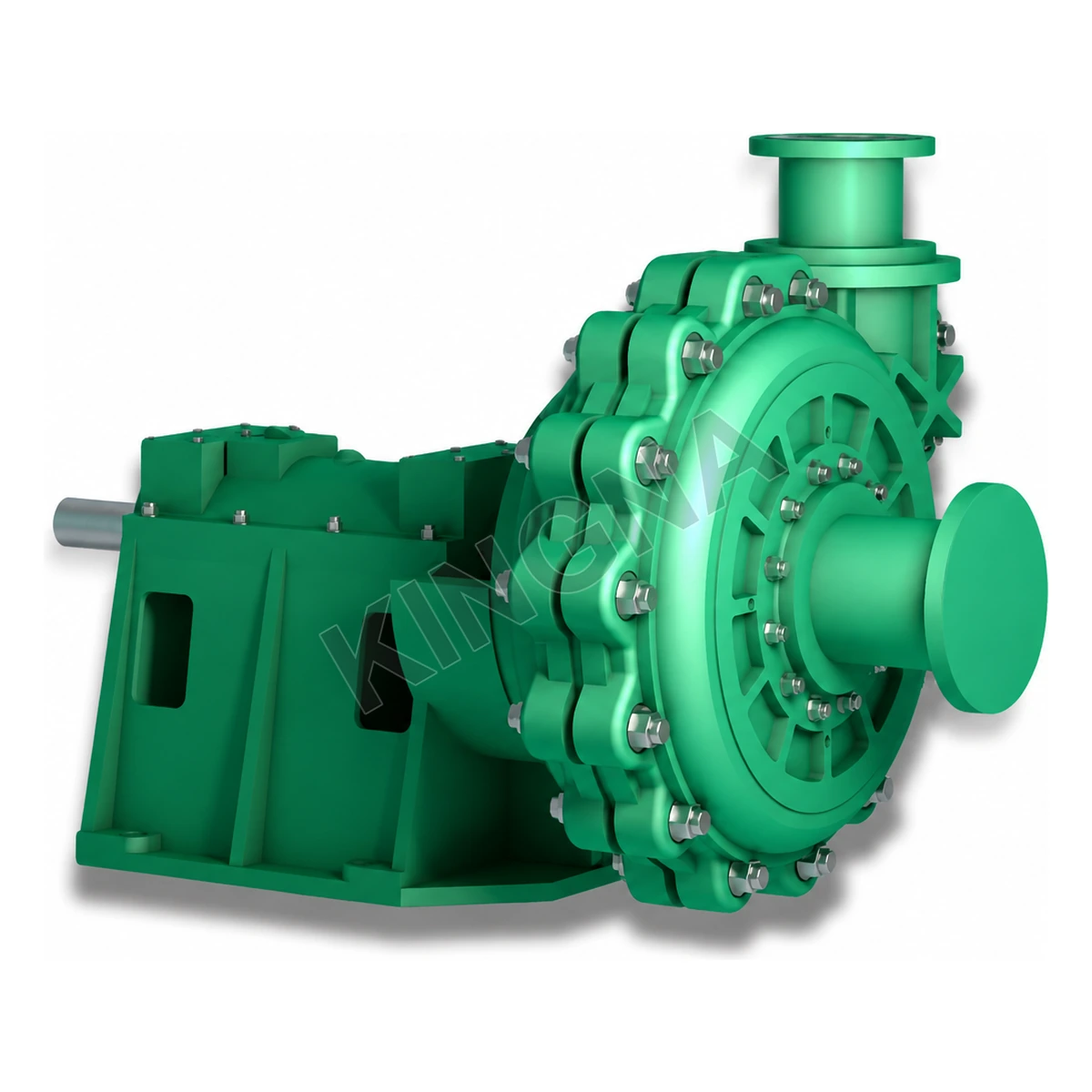
| Dense, highly abrasive slurry | Heavy-Duty Slurry Pump (ZD/G) | DN40–DN300 · 4–2,550 m³/h · head 9–135 m · −20 to 120 °C |
| Light slurry duty | Light Slurry Pump (KSL) | DN20–DN650 · 10–14,000 m³/h · head 10–60 m · metal or rubber · 370–3,000 r/min |
| Coarse solids, sand and gravel | Gravel Pump (KSG) | DN100–DN400 · 60–4,000 m³/h · head 10–60 m · discharge rotatable through 360° |
| Sump and pit drainage | Vertical Sump Slurry Pump (KSS) | DN40–DN300 · 18–1,267 m³/h · head 4–40 m · submerged hydraulic end, no shaft seal |
| Dredging and sand winning | Dredging & Sand Pump (NJB) | 19 models · 100–6,600 m³/h · head 20–63 m · shaft power 22–1,830 kW · V-belt or direct coupling |
Metal or rubber: choosing the lining
- Hard metal linings — high-chrome white iron in the listed wet-end parts — are the only option on the KSHH, ZGB, ZD/G and KSG patterns, consistent with the duties those families are built for: high head, high density, coarse solids.
- Dual-lining patterns — the KSH/KSM, KSL and KSS families are listed with wear-resistant metal or rubber (M/R) linings — leave the choice open at specification stage.
Reading the duty point honestly
- Match the family to the head, not just the flow. Light-duty designs are listed to 60 m of head, double-casing patterns to 120 m, and the ZD/G range to 135 m. A duty point near the top of one family's range is usually comfortable inside another's.
- Use series installation before oversizing one machine. The KSHH pattern is listed as series-capable, and for long-distance or high-lift transfer duties two machines in series frequently solve a head problem that a single oversized pump handles badly.
- Check the speed and drive implications. The KSL pattern is listed at 370–3,000 r/min depending on model, and the NJB dredging range at 385–1,200 r/min with V-belt or direct-coupling drive — lower speeds generally favour wear life, so the drive arrangement is part of the wear strategy.
Wet-end parts are the real maintenance schedule
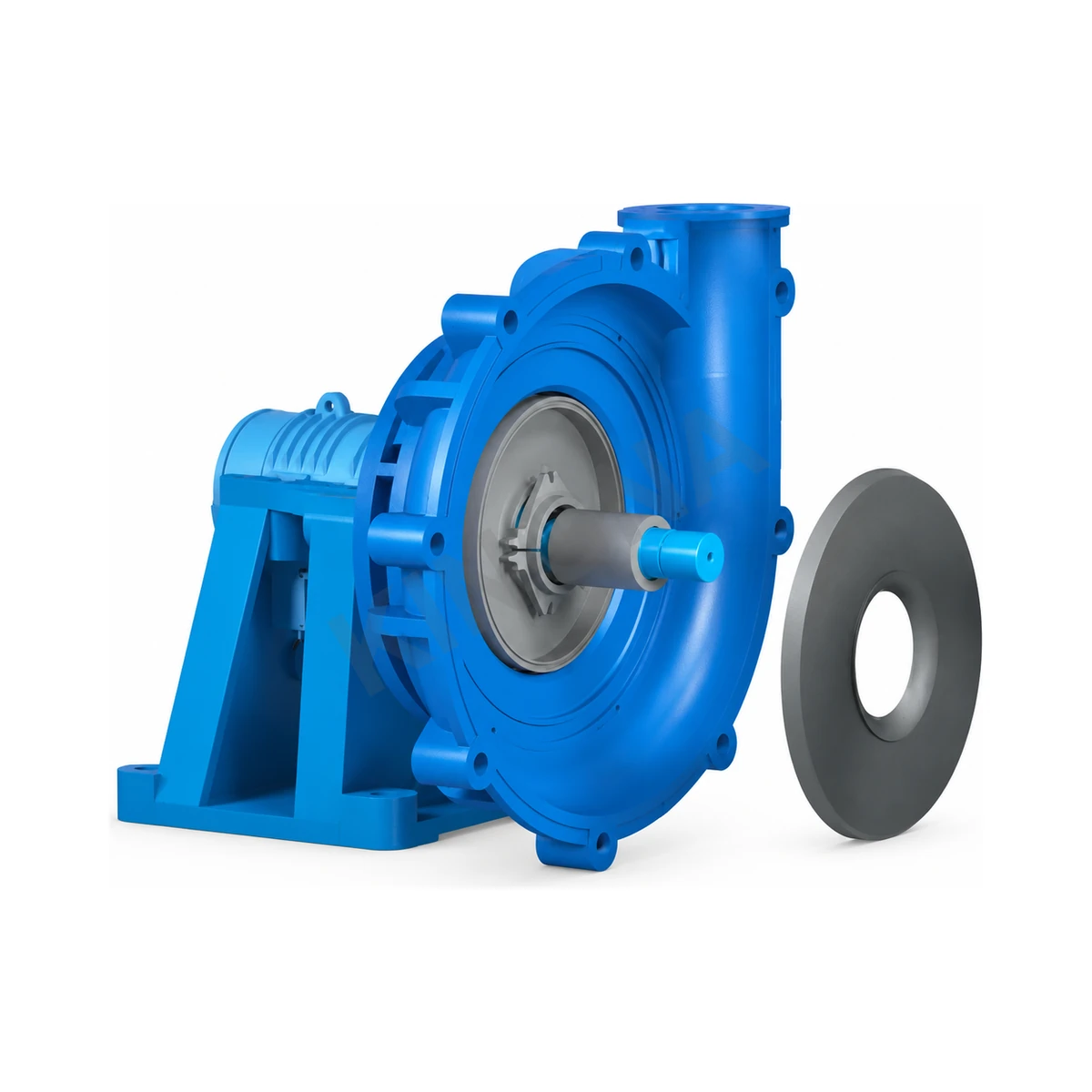
- Order basis. Parts are ordered by part number against the pump model and its materials list, in the pump's OEM dimensions or to the buyer's drawing — a single part is the listed minimum, and a full wet-end set may be specified when a complete renewal is planned.
- What is not included. The bearing assembly, shaft, base and drive are renewed separately, so a plant's spares holding should be defined against both lists.
Isolation valves on a slurry line
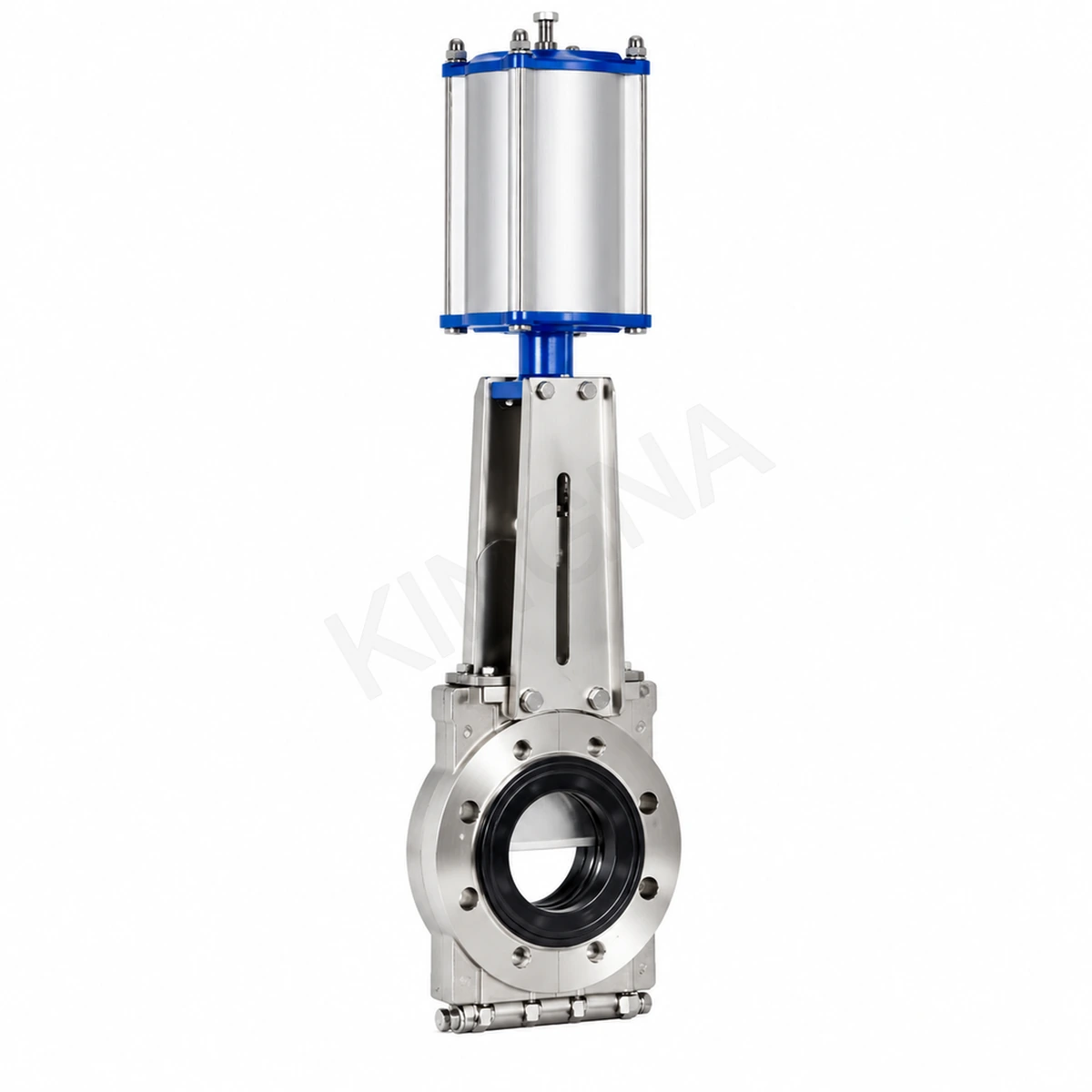
A slurry pump is only half the hydraulic package — the isolation valves around it face the same abrasive media, and their construction follows the same logic.
Gate-style isolation on slurry lines is the territory of the knife gate valve, whose blade gates across the flow; the body design and solids-clearance behaviour should be checked for the selected model. The listed Slurry Knife Gate Valve (KPZ73) covers DN50–DN1000 with PN10/PN16/150LB ratings, resilient NR or EPDM bi-directional seats, a listed working pressure of 10 bar and a temperature range of −29 to 150 °C. For higher-pressure duties the listed Heavy-Duty Slurry Knife Gate (ZKPZ43) extends to PN25/PN40 and 300LB with a listed working pressure of up to 40 bar and reinforced seats. Where the line carries ash, residue or crystallising media, the listed Through-Port Knife Gate Valve (CPZ73) is designed to MSS SP-81 with two replaceable bi-directional seats in DN50–DN900.
Where a line needs throttling or modulating rather than simple open/close, the listed V-Port Ball Valve, Full Bore, 2-Pc (VZ47) offers a near equal-percentage flow characteristic with metal or soft seats, in DN25–DN350. Exact pressure classes and seat materials for a given order should be confirmed with the factory.
A practical selection sequence
Pulling the threads together, a disciplined selection runs in this order:
1. Characterise the slurry — particle size distribution, solids density, temperature and chemistry. Every later decision keys off this.
2. Fix the duty point — required flow and total head, including any future changes to the circuit.
3. Choose the family — double casing for mill discharge and tailings, high-head patterns for lift duties, gravel patterns for coarse solids, vertical sump or dredging patterns for pit and river duty.
4. Choose the lining — hard metal for coarse, high-energy duties; metal or rubber per the slurry analysis where the dual-lining patterns apply.
5. Plan the wet-end renewals — define the spares list against the wet-end set, and record wear rates from day one.
6. Specify the isolation valves — knife gate patterns matched to pressure class and media, with control valves where modulation is needed.
7. Confirm the range — the size ranges, pressure ratings and lining options listed above are the published envelope; a specific order should be confirmed with the factory before commitment.
Reference sources
- ANSI/HI 12.1-12.6-2021, *Rotodynamic Pumps for Nomenclature, Definition, Application, and Operation* (Hydraulic Institute, 2021) — covers rotodynamic slurry pumps, horizontal and vertical, for abrasive slurry service; the ANSI Webstore listing records it as a revision of the 2016 edition. https://webstore.ansi.org/standards/hi/ANSIHI122021
- Listed pump and valve specifications and typical duties, as published on our product pages.