Valve datasheets commonly list PN16, PN25, Class 125 or Class 300. The difficulty begins when a European PN specification reaches a plant designed around ASME Class ratings. A purchase order may then specify a pressure equivalent but the wrong flange drilling. This guide explains what each system measures, where approximate conversions are useful, and which details must remain tied to the project pipework.
Why pressure ratings decide more than safety
A pressure rating states the maximum working pressure a valve can withstand at a defined reference temperature. The rating includes a margin below the pressure at which the weakest component, commonly the body, bonnet or seat, would fail. It also determines the flange standard, wall thickness, bolting, hydrostatic test pressures, valve weight and price.
Two systems dominate international valve trade. PN, derived from the French pression nominale, belongs to the European DIN and EN family and is written as PN10, PN16, PN25 or PN40. The number approximates pressure in bar. ASME Class ratings appear as Class 125, Class 150, Class 300 or Class 600. Their numbers come from older steam-service practice and do not correspond to one fixed pressure. Neither system is inherently better. They use different standards, flange dimensions and testing conventions.
The procurement risk is usually a specification mismatch rather than an obvious choice of a rating that is too low. Common examples include ordering a Class 150 valve for a PN16 pipeline, specifying PN16 when pump shutoff pressure exceeds 16 bar, or accepting a quotation below the rating shown on the drawing. These errors are much cheaper to correct before production than after delivery.
The PN system: nominal pressure in the EN world
PN grades are defined for flanges in EN 1092-1 and referenced by valve standards such as EN 1074 for water-supply valves and DIN 3352 for gate valves. The number after PN is close to, but not always exactly, the maximum allowable pressure in bar at the reference temperature. For standard materials, that temperature is commonly within the 20 °C to 120 °C range, depending on the material group. Municipal water valves most often use PN10, PN16, PN25 and PN40.
PN16 means that the complete valve is designed for 16 bar continuous working pressure at ambient temperature. Under ISO 5208, the shell hydrostatic test is 1.5 times the rating, or 24 bar for PN16. The seat test is 1.1 times the rating, or 17.6 bar. Those two multipliers should be checked first on the supplier test certificate.
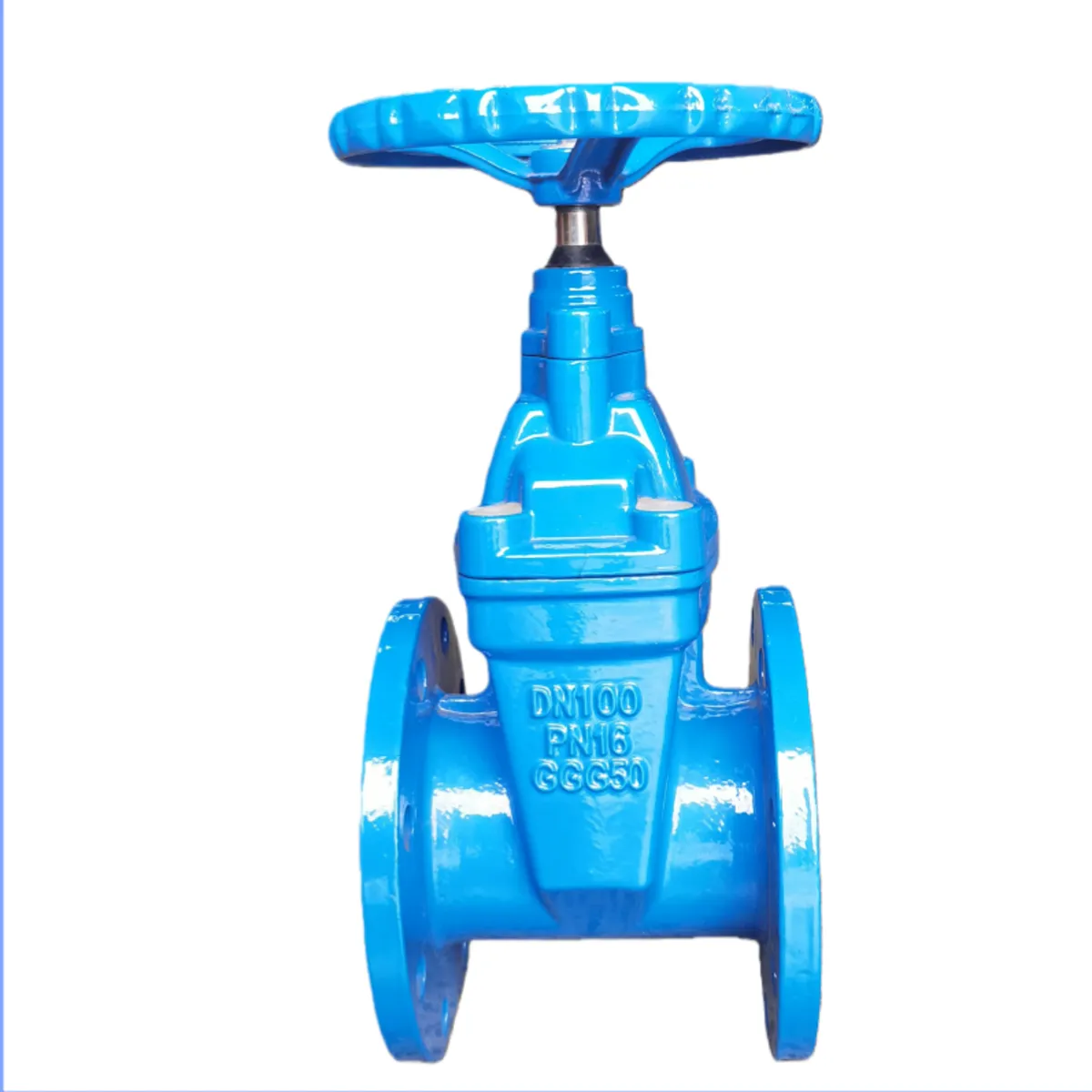
A body may be cast for PN25 but the bolting, actuator or another component may limit the assembled valve to PN16. The nameplate rating applies to the complete valve, not only the casting. PN grades are also widely produced outside Europe. Chinese factories manufacture DIN-series valves at scale, so a DIN F4 PN16 resilient gate valve is often a cost-effective choice for a PN project regardless of its location.
The ASME Class system: temperature-dependent ratings
ASME Class ratings follow a different method. A Class rating is a pressure-temperature curve, not one nominal pressure. The allowable pressure depends on the material group and decreases as temperature rises. ASME B16.34 provides the tables for steel valves and ASME B16.1 covers iron flanges. At reference conditions, a Class 150 carbon-steel valve is rated for roughly 19 to 20 bar, about 285 psi, while Class 300 supports roughly 51 bar at ambient temperature.
In water and municipal service, the grades seen most often are Class 125 on cast-iron-pattern valves, traditionally associated with AWWA applications, at about 12 bar, and Class 150 on ductile-iron valves. Under AWWA C509/C515, Class 150 ductile iron is 250 psi, about 17.2 bar. A Ductile Iron AWWA-pattern NRS gate valve rated Class 150 performs a similar duty to a PN16 DIN valve, but the flange, bolts and certification documents differ.
Class 300 and higher ratings are used for pump discharge headers, filtration skids and hydraulic control loops. Pilot-operated hydraulic control valves are commonly available in PN16 through PN40 and equivalent Class ratings. Temperature matters in hot service: a Class 150 carbon-steel valve rated for 19 bar at 20 °C may be rated for only about 10 bar near 400 °C. In water systems, elastomer seats usually set the practical temperature limit well before the metal pressure class does.
PN vs Class: conversion table
The table compares common ratings by approximate maximum working pressure at ambient temperature, standard family and typical service. Use it to compare supplier quotations, not to replace the project specification. Flange compatibility remains a separate issue.
| Rating | Approx. max working pressure (ambient) | Standard family | Typical service |
|---|---|---|---|
| PN10 | 10 bar (145 psi) | EN 1092-1 / DIN 3352 | Gravity mains, irrigation, low-lift networks |
| PN16 | 16 bar (232 psi) | EN 1092-1 / DIN 3352 F4 | Municipal water: the most common grade worldwide |
| PN25 | 25 bar (363 psi) | EN 1092-1 / DIN 3352 F5 | Pumping stations, transmission mains |
| PN40 | 40 bar (580 psi) | EN 1092-1 | High-lift pump discharge, industrial water |
| Class 125 | ~12 bar (175 psi, cast iron) | ASME B16.1 | Legacy US-spec water and HVAC |
| Class 150 | ~17 bar (250 psi ductile iron) / ~20 bar (285 psi steel) | AWWA C509/C515, ASME B16.34 | US-spec waterworks, general industrial |
| Class 300 | ~51 bar (740 psi, steel, ambient) | ASME B16.34 | Industrial process, high-pressure pump systems |
| Class 600 | ~100 bar (1,480 psi, steel, ambient) | ASME B16.34 | Steam, hydrocarbon, specialty service |
The conversion trap: ratings convert, flanges do not
PN16 and Class 150 are close in working pressure at ambient temperature, but that does not make them interchangeable. A PN16 flange under EN 1092-1 and a Class 150 flange under ASME B16.5 differ in bolt size, bolt count, bolt-circle diameter and often thickness. A Class 150 valve will not bolt onto a PN16 pipeline, and the reverse is also true.
The same problem applies to bolting. Class 150 flanges use inch-series studs, while PN flanges use metric bolts. Discovering mixed hardware during installation can stop the work for days. If the pipework is EN 1092-1, order EN 1092-1 flanged valves, even when an adjacent American-designed pump skid uses Class 150. Use a conversion joint or a supplier-made transition flange for the system change.
A related error is treating PN16 and Class 125 as equivalent on legacy cast-iron work. Class 125 cast-iron flanges under ASME B16.1 have their own drilling, which also differs from Class 150 steel flanges. For refurbishment projects with mixed pipe generations, photograph the existing flange and send it with the enquiry. A factory supplying a BS5163 metal-seated gate valve or a GB-standard metal-seated valve should confirm the drilling before production.
How to choose the right rating for your line
Do not select a valve from the pressure the line normally sees. Use the highest of three values: maximum steady working pressure, based on the highest static head and friction; pump shutoff pressure, which occurs when a downstream valve closes; and transient surge from rapid closure or a pump trip. In hilly networks, check the low point of the hydraulic profile. Surge can reach two to four times steady pressure.
Example: a transmission main has 8 bar steady pressure, a pump dead-head pressure of 12 bar and modeled surge of 14 bar. PN16 covers the three conditions with margin. PN10 does not, even though the line normally runs at 8 bar. The saving from a lower-rated valve is small compared with the cost of a failed component and an unplanned shutdown.
PN16 is the usual default for municipal distribution because it covers most common duties and is widely stocked. A practical rule is PN10 for gravity and irrigation lines with no connected pump, PN16 for standard municipal duty, PN25 for pumping stations and trunk mains, and PN40 for high-lift industrial service. Butterfly valves follow the same range. A wafer lever butterfly valve and a flanged gear-operated butterfly valve can both be quoted from PN10 to PN40, so the pressure rating alone does not determine the valve type.
What to confirm with the supplier before ordering
Put four checks in the enquiry before the proforma invoice: the assembled valve nameplate rating, not just the body casting; the flange drilling standard, such as EN 1092-1 PN16, ASME B16.1 or B16.5 Class, or JIS; the test schedule, with shell at 1.5× and seat at 1.1× under ISO 5208; and the seat temperature limit. EPDM resilient seats are typically rated to 80 °C to 120 °C. If the line runs hot, the seat may govern before the metal class does.
Ask for the pressure-temperature table for the exact valve model, rather than a generic datasheet. Established manufacturers of the DIN F4/F5 resilient gate valve series and the AWWA OS&Y series normally include this information in EN 1074 or AWWA certification paperwork. A supplier that cannot provide it should not receive the order without further verification.
Summary: a one-page decision path
PN and Class answer the same physical question: how much pressure a valve can hold at a given temperature. PN numbers approximate bar and are used across the EN and DIN system. Class ratings follow material and temperature curves and are used across ASME and AWWA systems. The table is useful for quotation comparisons, but flange drilling always follows the pipeline standard.
Set the governing pressure from dead-head and surge, not average flow. Select the nearest standard grade above it: PN16 for most municipal duty, PN25 or PN40 for pumped and industrial service. Then match the flange standard to the existing pipework and confirm the nameplate, drilling, test schedule and seat temperature in writing. A resilient-seated NRS gate valve specified this way arrives compatible with the pipework and supported by the required test records. Apply the same checks to OS&Y gate valves, DIN F4 metal-seated valves and every other series in the catalogue.
Frequently Asked Questions
Related Products
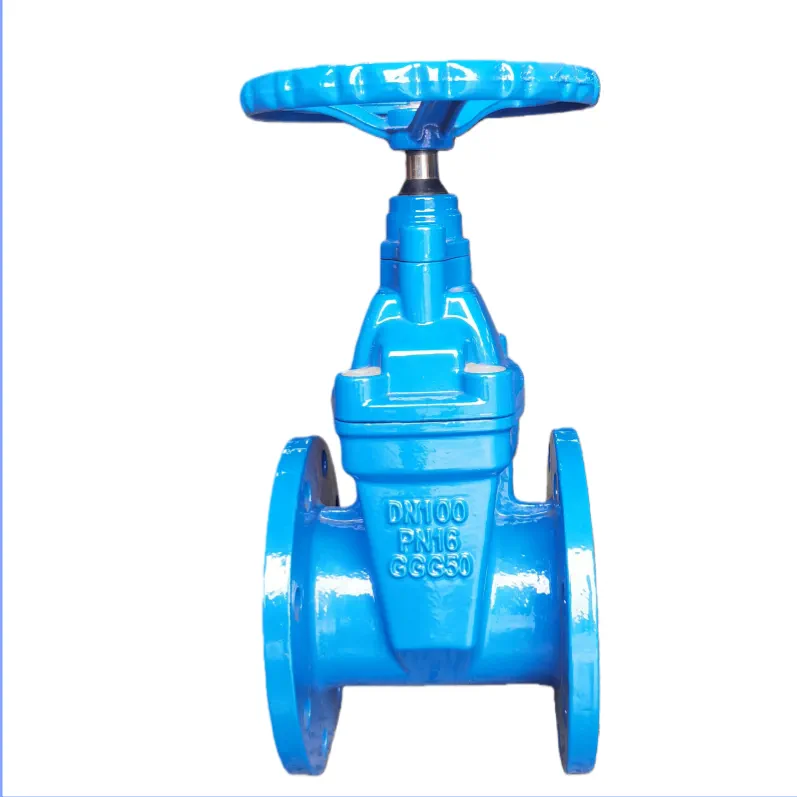
DIN F4 Resilient Gate Valve (NRS)
DIN 3352 F4 · DN50 – DN600 · PN10/16
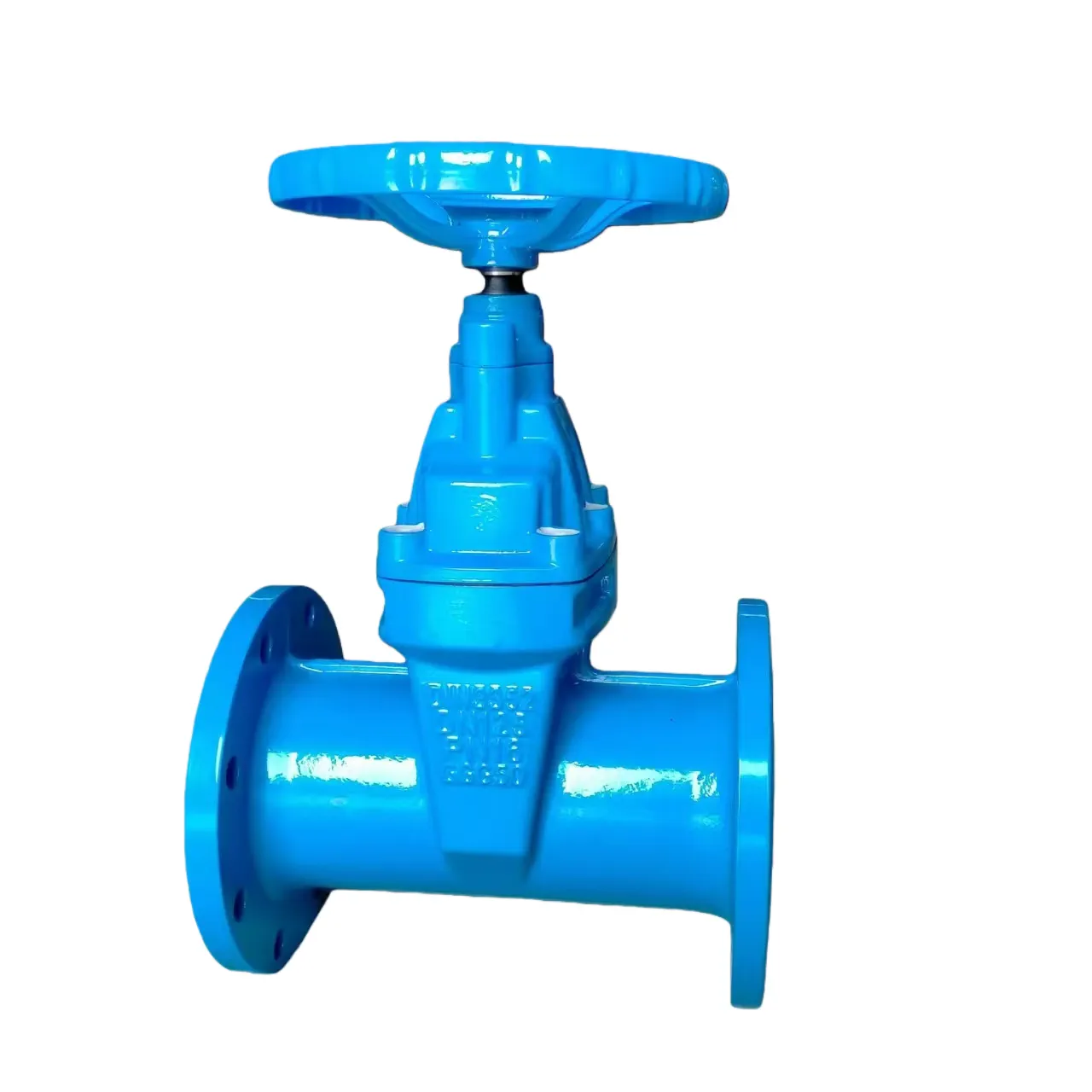
DIN F5 Resilient Gate Valve (NRS)
DIN 3352 F5 · DN40 – DN600 · PN16
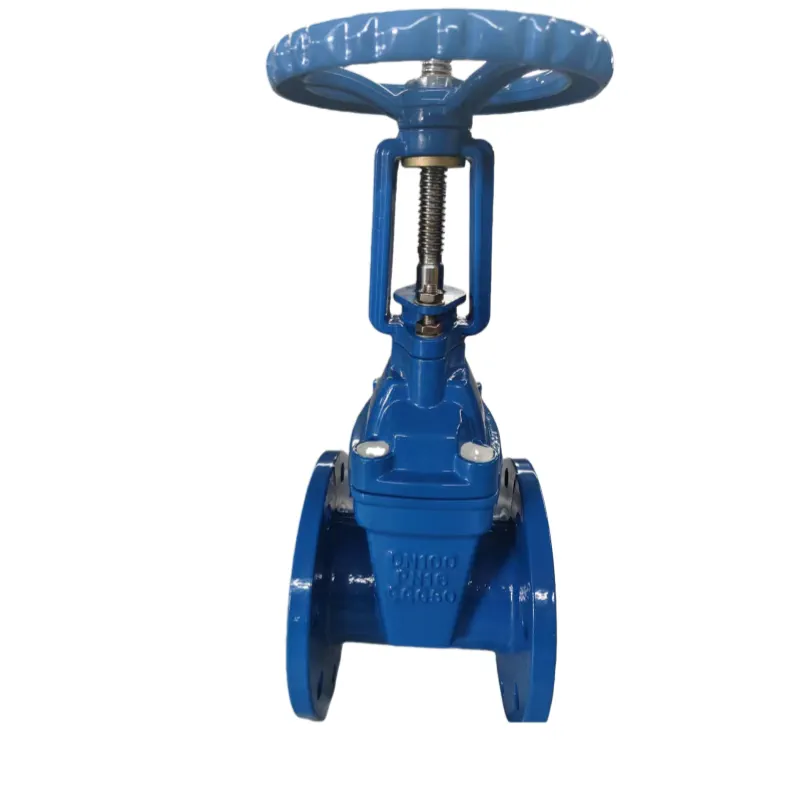
DIN F4 Resilient Gate Valve (OS&Y)
DIN 3352 F4 · DN50 – DN600 · PN10/16
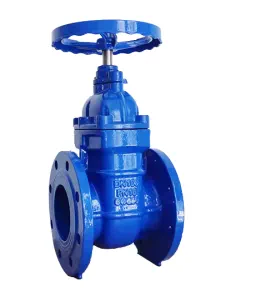
DIN F4 Metal-Seated Gate Valve (NRS)
DIN 3352 F4 · DN50 – DN300
AWWA Resilient Gate Valve (NRS)
AWWA C509 / C515 · DN40 – DN600
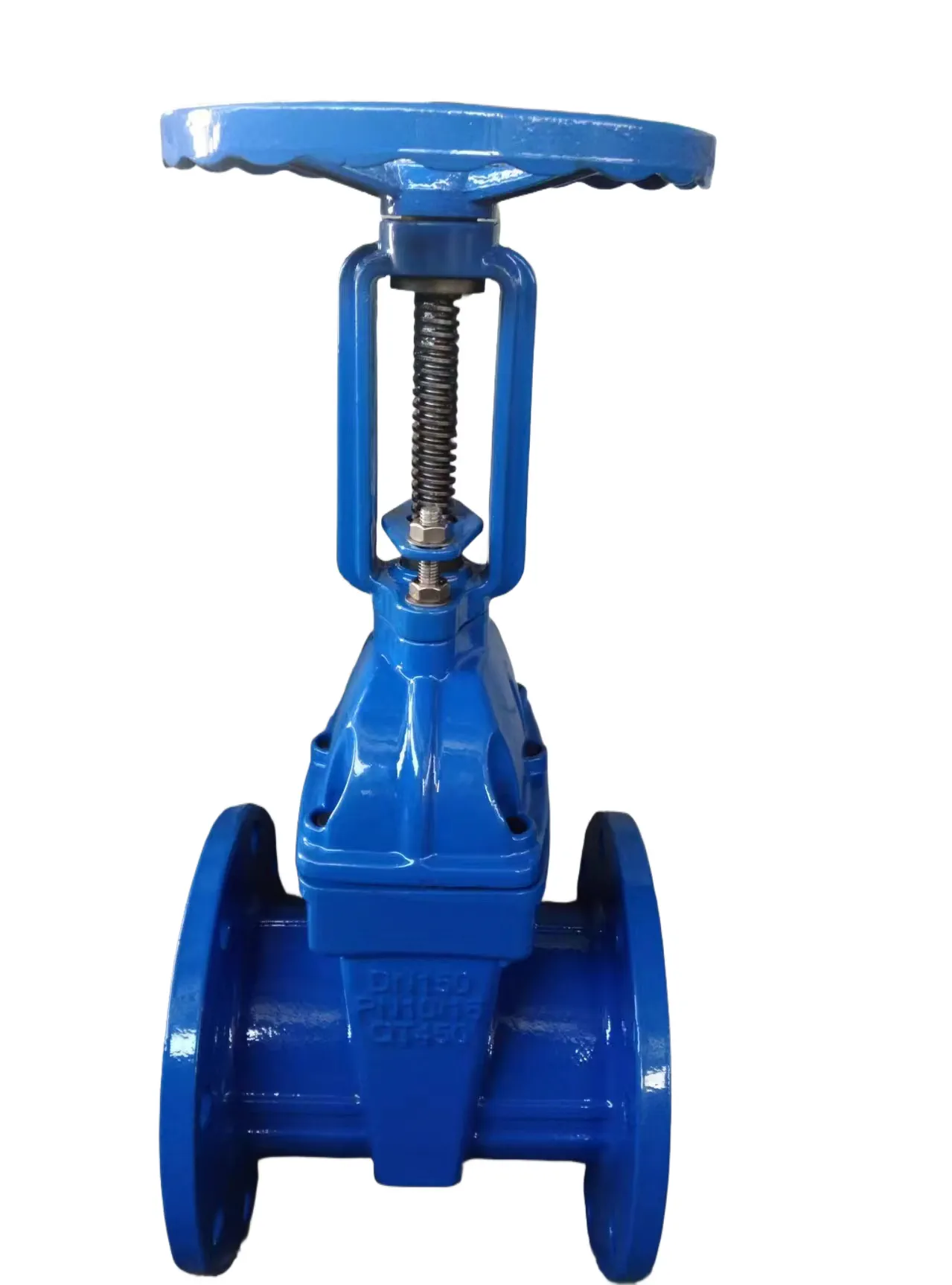
AWWA Resilient Gate Valve (OS&Y)
AWWA C509 / C515 · DN40 – DN600