

Not every cold line needs one. A cryogenic valve is specified when the medium is a liquefied gas held at very low temperature, such as LNG, liquid nitrogen, liquid oxygen or liquid ammonia. The cryogenic series available through our manufacturing partner covers −196 °C to +150 °C. Inside that band, the valve is built differently from an ambient-temperature valve in ways a buyer can check.
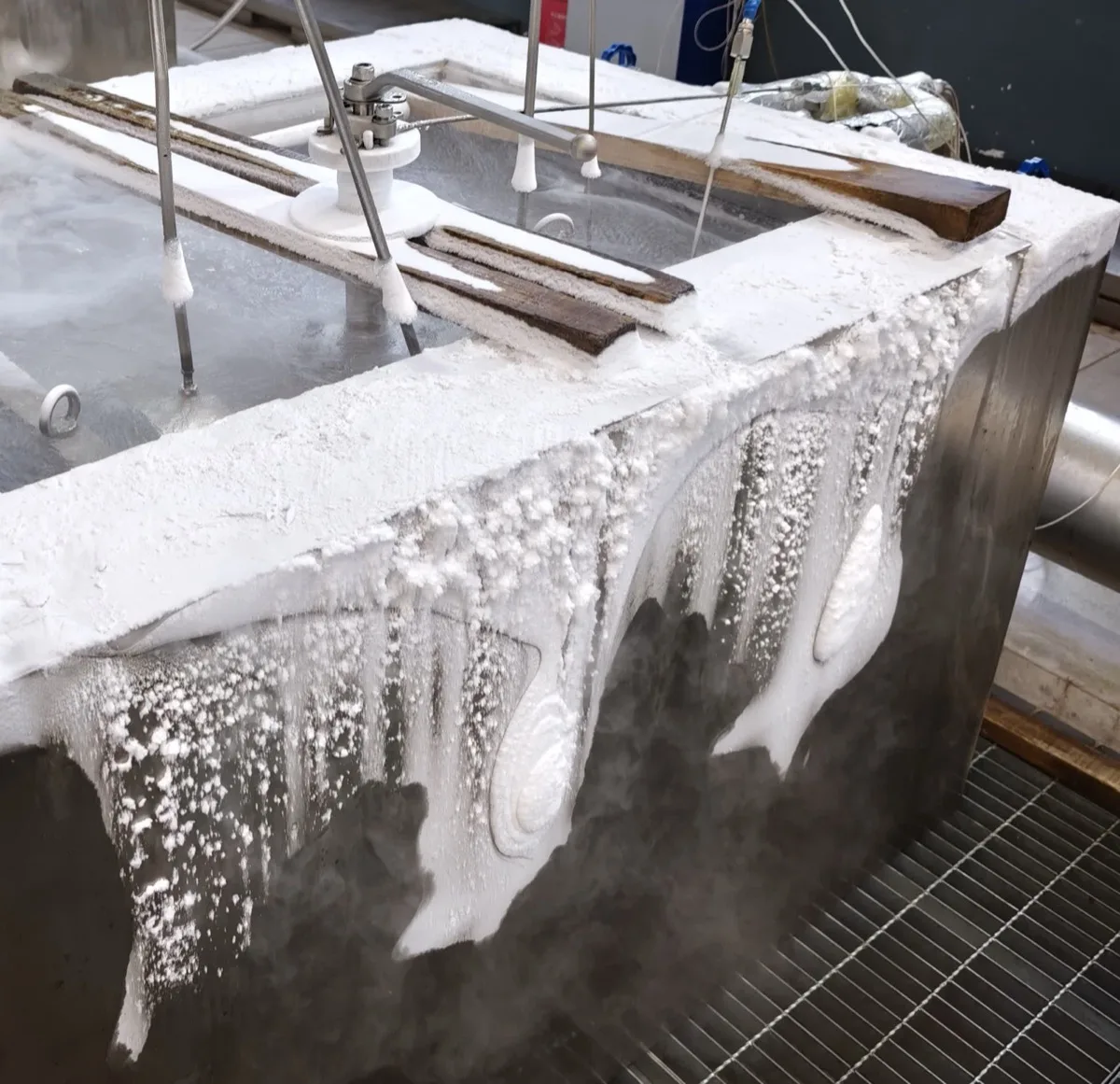
What changes when the service temperature drops
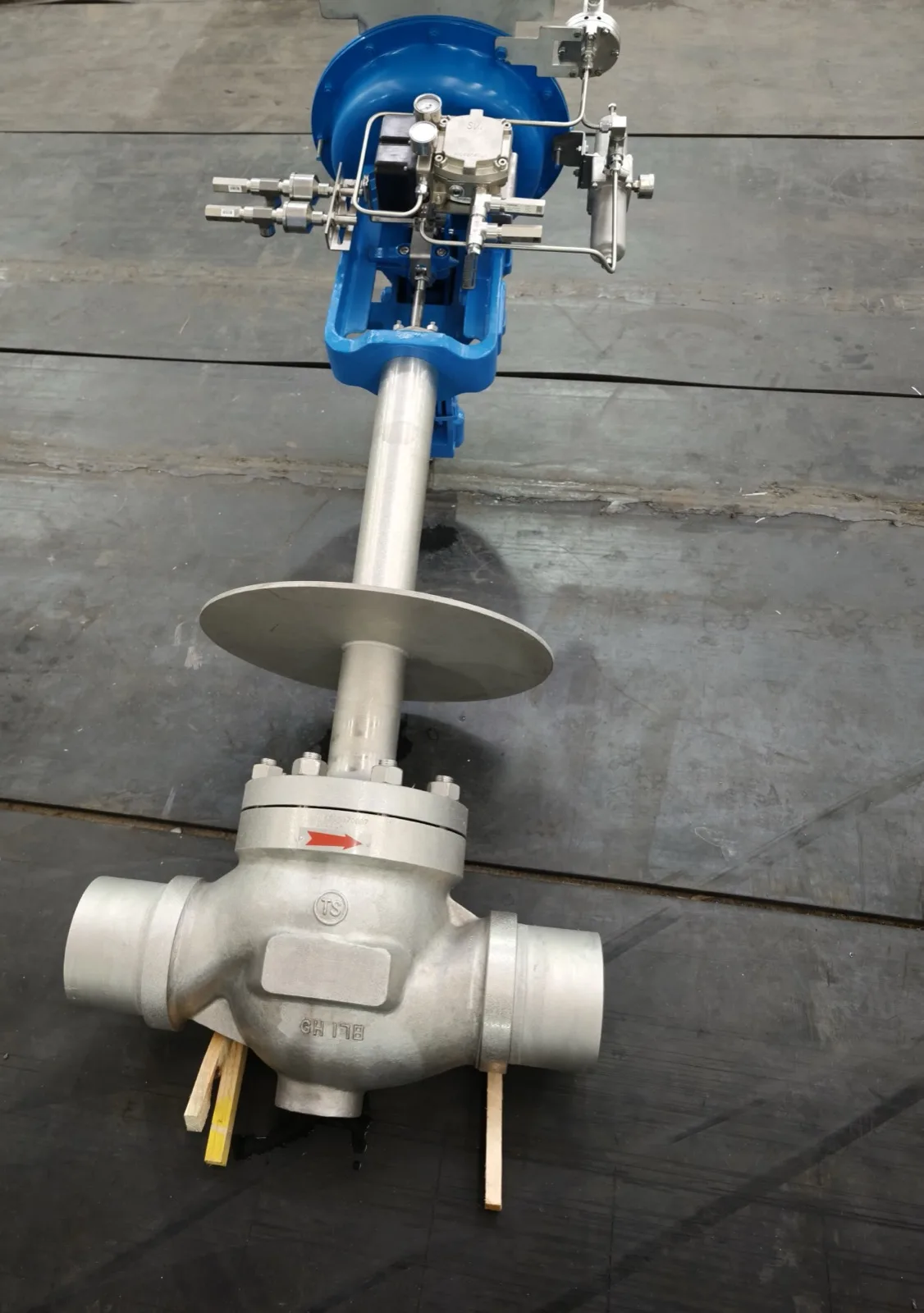
Liquid gas at −196 °C finds any weak point. The cryogenic series answers that with an extended bonnet, which keeps the packing at 0 °C or above. The stem is anti-blowout, so it cannot eject under pressure. Sealing faces are double-sided with cobalt-based (Stellite) hardfacing. The design is fire-safe and anti-static for flammable media such as LNG. The middle cavity self-relieves, so trapped liquid can expand without over-pressuring the body.
An ambient-temperature valve does not carry this combination. For water, utility and ambient process duty, an ordinary resilient-seated gate valve or butterfly valve is the correct choice. The low-temperature specification earns its cost only when the medium is actually a liquefied gas.
| Design point | What the cryogenic series specifies |
|---|---|
| Bonnet | Extended, keeps packing at 0 °C or above |
| Stem | Anti-blowout |
| Sealing faces | Double-sided cobalt-based (Stellite) hardfacing |
| Body material | Austenitic stainless steel to ASTM A351, grades CF8M / CF3M / CF3 / CF8 |
| Fire and static | Fire-safe and anti-static design |
| Middle cavity | Self-relieving |
| Testing | −196 °C liquid nitrogen test, full valve immersed plus spray test |
Size and pressure class depend on the valve type
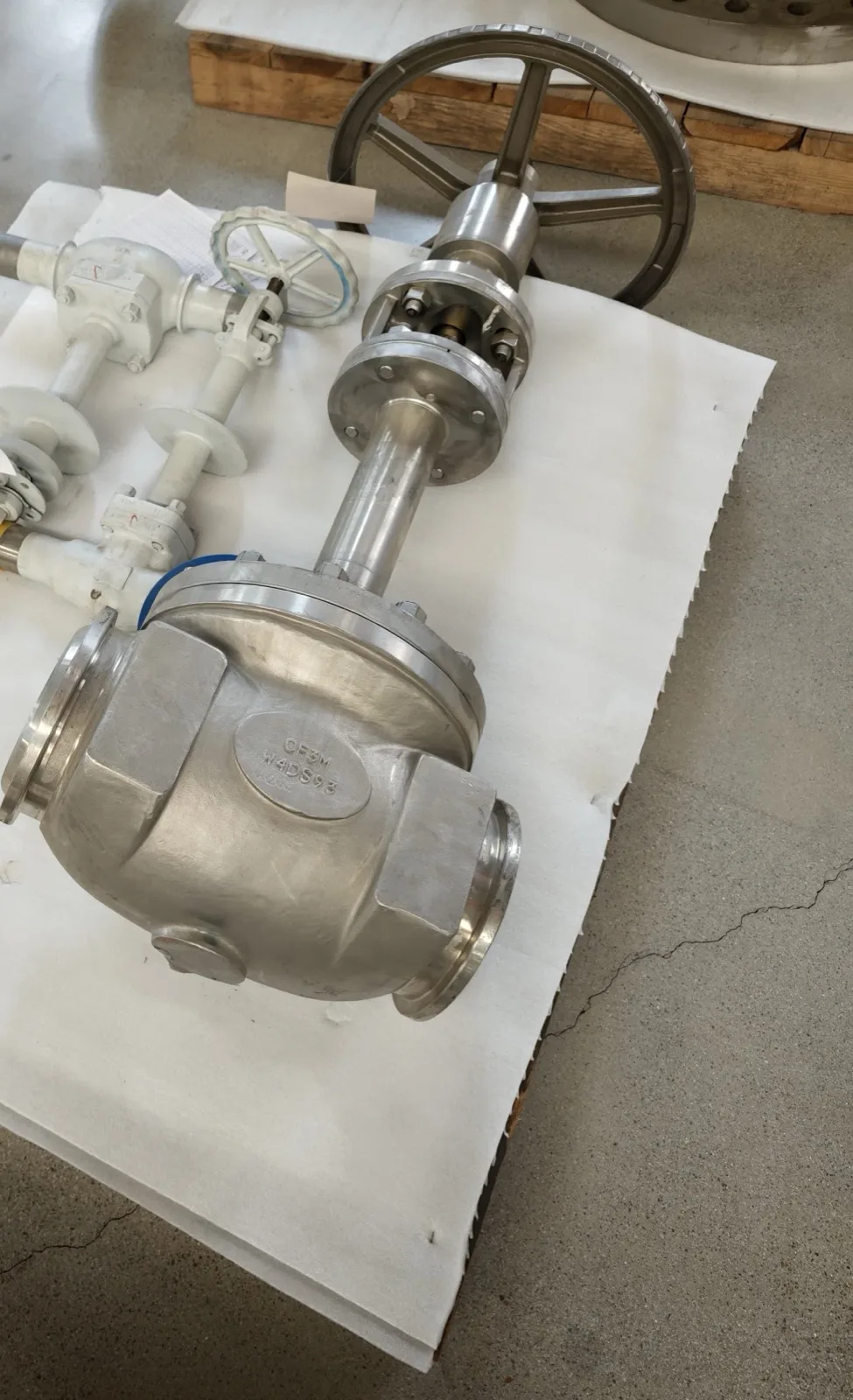
Buyers often expect one number to describe the whole line. The cryogenic range is a series, not one valve. Each type has its own size span and its own pressure classes.
The spans describe what the manufacturing line can produce across a series. One valve does not cover the full range. Sizes or classes outside these spans need written confirmation from the factory before you design around them.
| Valve type | Size span across the series | Pressure class | Key standards |
|---|---|---|---|
| Butterfly (with maintenance chamber) | 8" to 64" (DN200 to DN1600) | CL150 to 1500 up to DN600; CL150 to 300 above DN600 | API 609, BS 6364, GB/T 24925, ISO 21159, ISO 28921 |
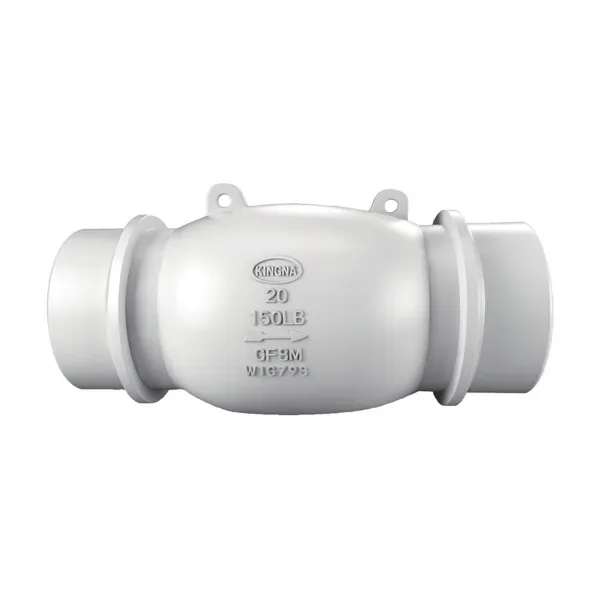
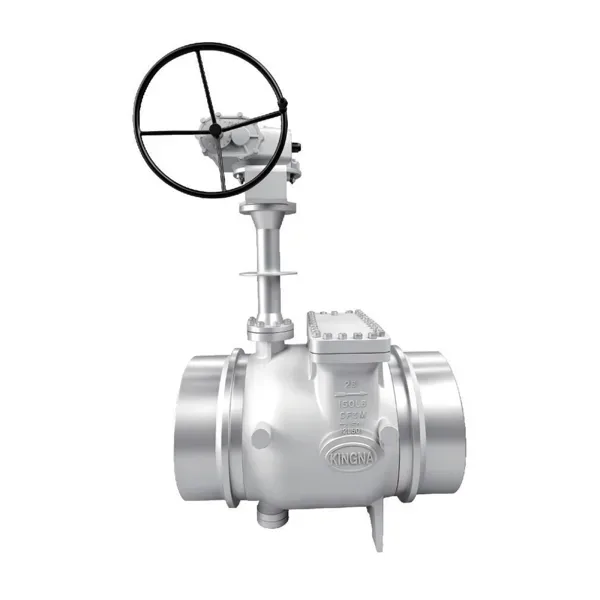
| Ball | 1/2" to 42" (DN15 to DN1050) | CL150 to 2500 (PN16 to 320) | API 6D, API 608, BS 6364, ISO 14313, ISO 17292, ISO 28921 |
| Gate | 1/2" to 32" (DN15 to DN800) | CL150 to 2500 (PN16 to 420) | API 600, API 6D, API 602, BS 6364, ASME B16.34 |
| Globe | 1/2" to 32" (DN15 to DN800) | CL150 to 2500 (PN16 to 420) | API 623, BS 1873, API 602, BS 6364 |
| Check | 1/2" to 40" (DN15 to DN1000) | CL150 to 2500 (PN16 to 420) | API 594, BS 1868, API 602, API 6D, BS 6364 |
When the extra specification is required
Specify cryogenic when the medium is LNG, liquid ammonia, liquid nitrogen or liquid oxygen and the design temperature falls below the ambient band. Typical duties are LNG receiving terminals, air separation plants, petrochemical and fine chemical plants, LPG service, and marine or offshore work.
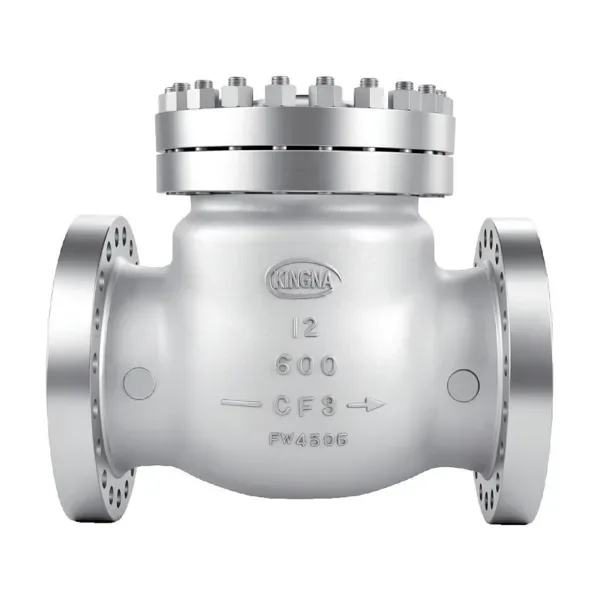
Do not specify it for ambient water, utility lines or ambient process service. Those duties are served by standard valves, including swing check valves for backflow prevention.
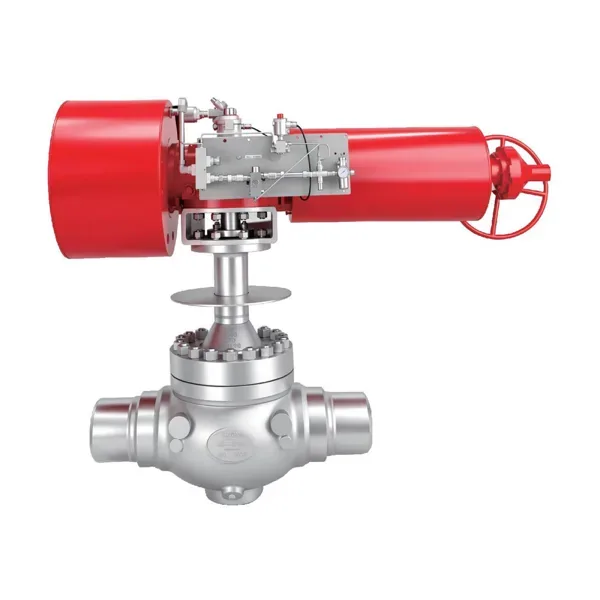
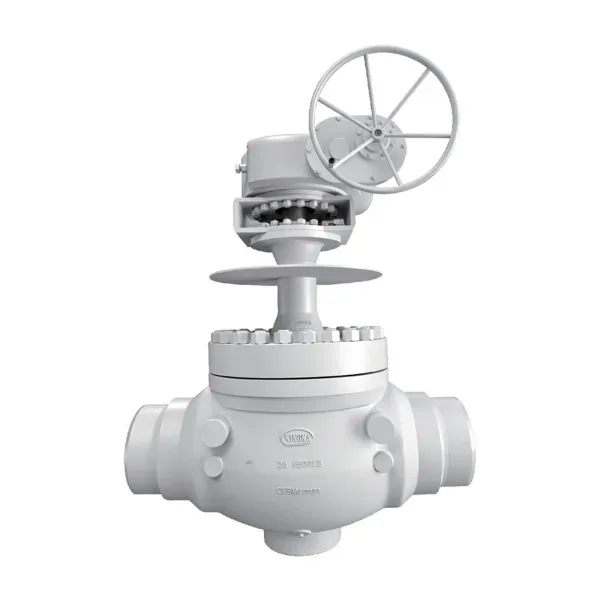
Choose the type by duty: butterfly with a maintenance chamber for large sizes, ball for tight shutoff, gate for isolation, globe for regulation, check for backflow.
What to put in the enquiry
- medium and design temperature range
- valve type and function
- nominal size and pressure class, stated per type
- end connection: flanged or butt weld
- applicable standards
- test requirements, including whether a −196 °C liquid nitrogen test is needed
- certification needs for the tender or AVL file
Certifications and testing
Our manufacturing partner holds API monograms for 6D, 6A, 602 and 609, and TÜV conformity certificates for API Spec 16A, 8C, Q1 and 4F. Fire and low-emission approvals include API 607 and 6FA, a cryogenic valve fire certificate, a micro-leakage certificate and ISO 15848-1. Seven classification societies approve the partner: ABS, CCS, RS, DNV, LR, BV and KR, alongside Russian EAC market access. Butterfly valves carry SIL certification, and the partner runs a CNAS-accredited laboratory with ISO 9001, ISO 14001 and ISO 45001 certificates.
For a tender file, three points matter. Certificate numbers, issue dates and expiry dates are not published, so confirm them on request. The classification societies are named, but the brochure does not state which products or sizes each one covers. Some certificates carry the partner's earlier registered name, so file them under the name printed on the certificate. Where an older parameter sheet and the brochure differ, the brochure is the current source.
Strength and sealing tests use API 598, API 6D, BS 6364 and MESC SPE 77/200. The partner states that its cryogenic treatment supports a 30-year service life, a manufacturer claim rather than a verified figure.
Where the reference list stands
The partner's reference list is strongest in China, with more than 25 domestic LNG receiving terminals. It also covers overseas LNG work in Cambodia, Nigeria, Algeria and Indonesia, plus petrochemical projects. That list belongs to the manufacturing partner, not to us. We have no delivered reference for this line in the Middle East and will not present the partner's projects as our own.
Reference sources
- Manufacturing partner's product brochure, 50 pages, obtained on 2026-09-15. Available on request to qualified buyers.
- ISO 28921-1 (Industrial valves: isolating valves for low-temperature applications), iso.org.
Frequently Asked Questions
Related Products
Cryogenic Valve Line
Butterfly, ball, gate, globe and check valves for LNG and air separation — engineered down to −196 °C on a partner-operated line.
Explore Cryogenic Valves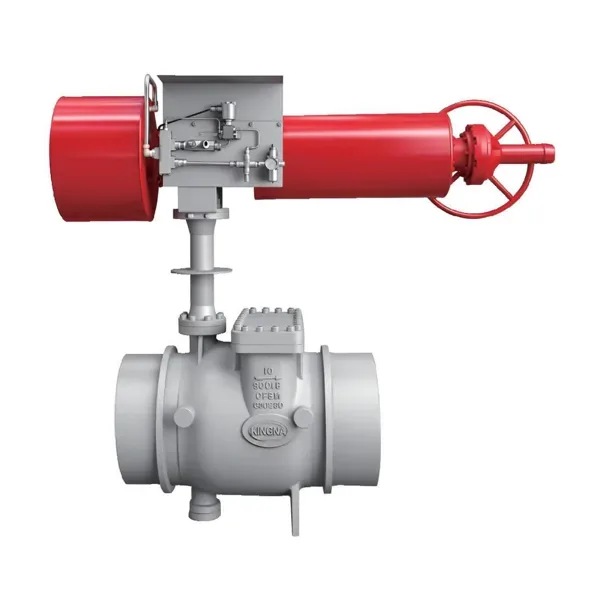
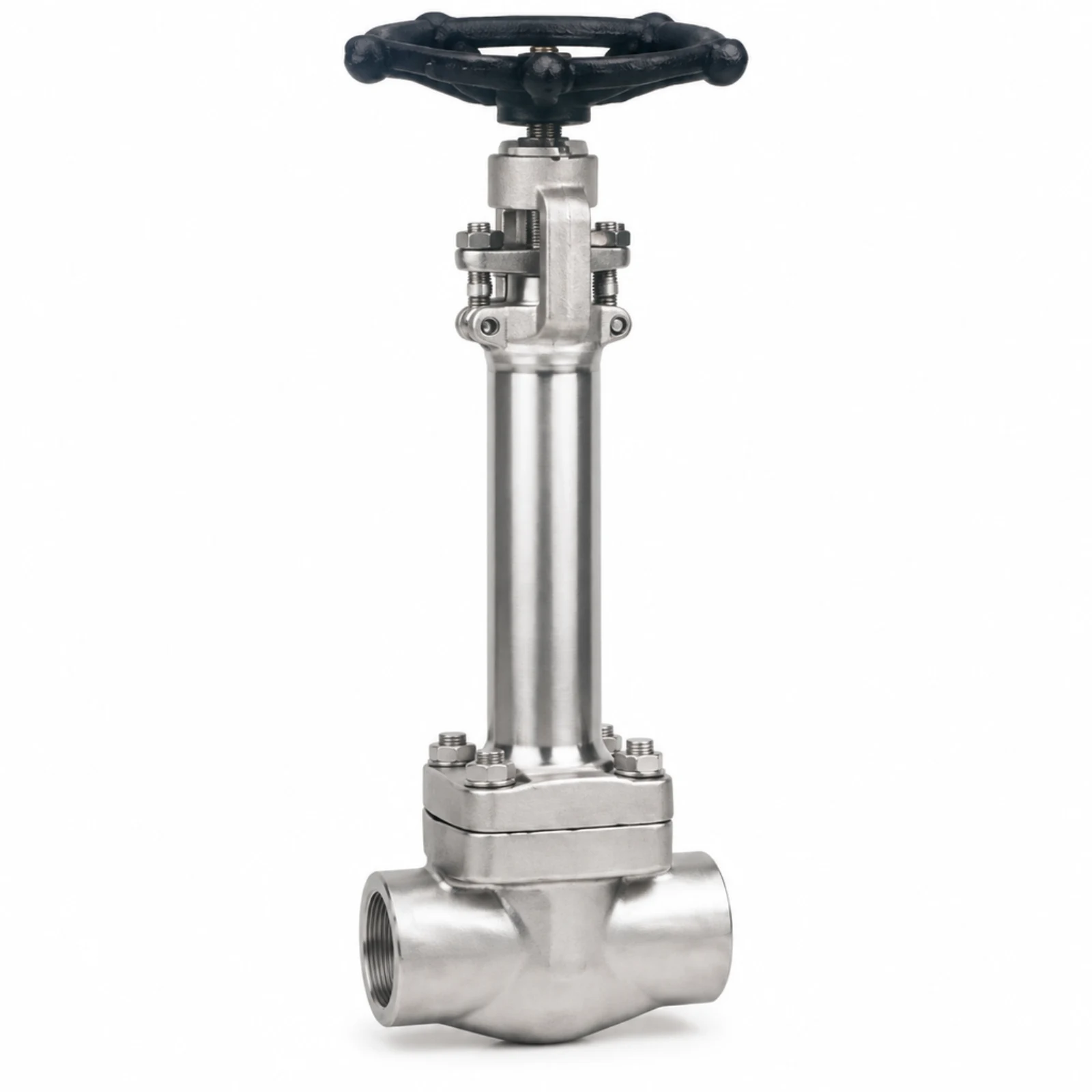
Cryogenic Gate Valve, Extended Bonnet
NPS 1/2" – 8" · Class 150 / 300 · −46 °C to −196 °C
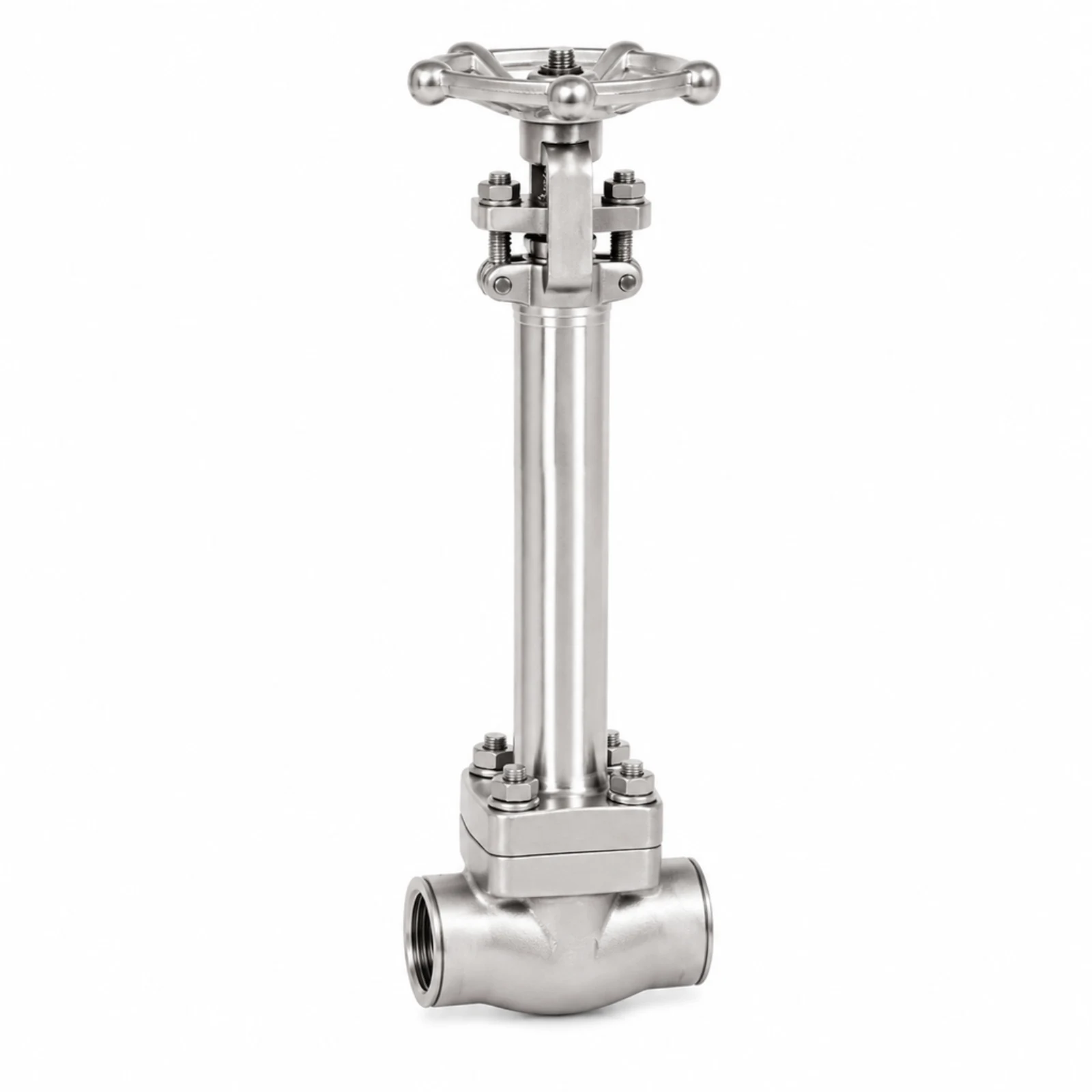
Cryogenic Globe Valve, Extended Bonnet
NPS 1/2" – 8" · Class 150 / 300 · −46 °C to −196 °C
Cryogenic extended-bonnet valve: why it is built this way
Every cryogenic order is engineered to order. These are the eight points our engineers check before a valve is released.
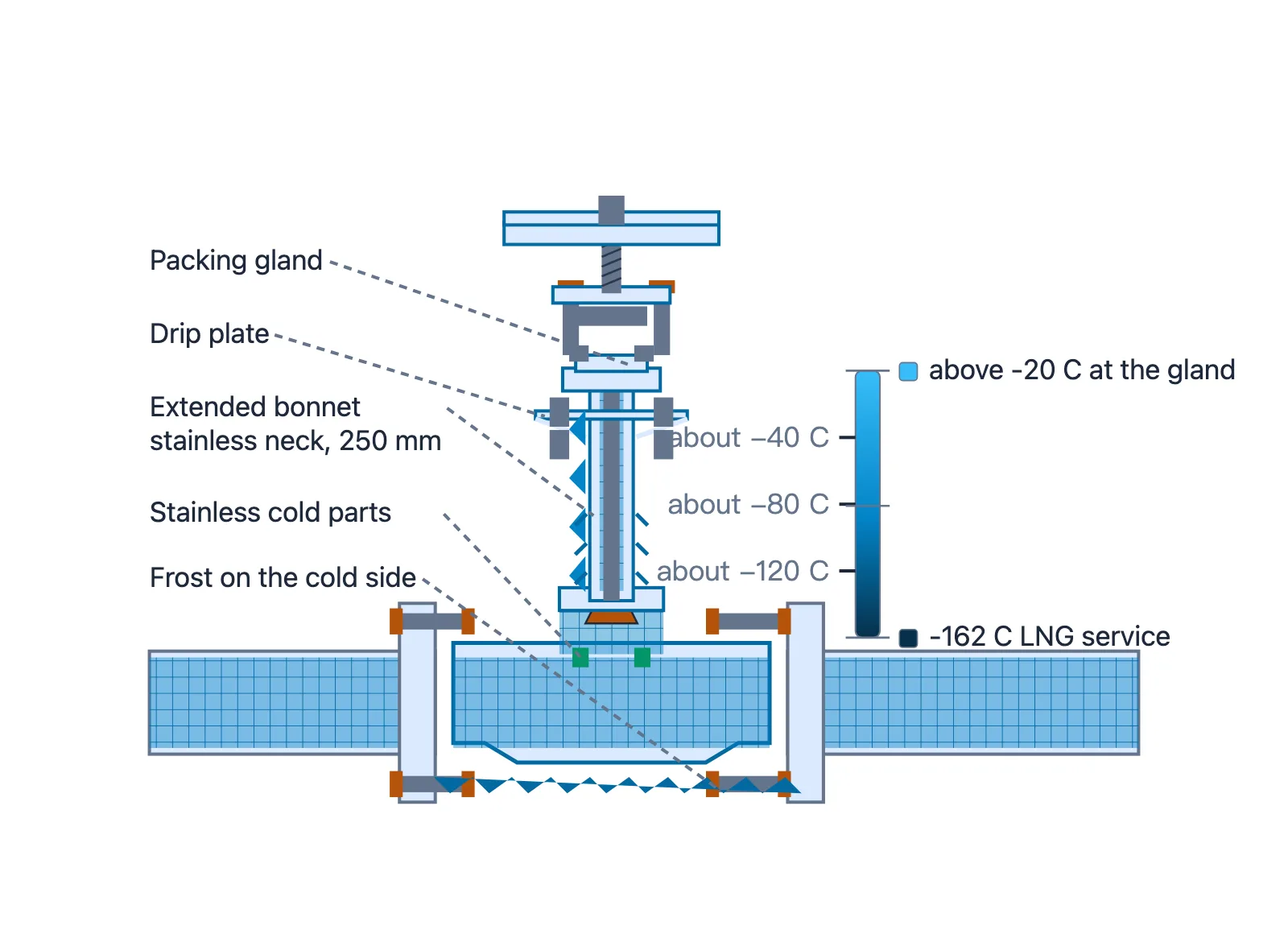
- Extended bonnet
250 mm minimum neck for non-cold-box service (BS 6364) - keeps the gland seal out of the cold zone - Why the gland stays warm
Packing must stay above -20 C; a short neck freezes the seal and the stem cannot move - Handwheel and yoke
Fixed handwheel, outside-screw yoke - standard operator, no special cryogenic part - Face-to-face
350 mm long pattern / 190 mm short pattern, DN100 PN16 (EN 558) - Flanges
EN 1092-2: OD 220 mm, 8 x Ø19 mm, 20 mm thick - Overall height
Approx. 550-610 mm depending on neck length and operator - Service range
Down to -162 C (LNG) - frost and cold-box insulation shown on the body - Temperature
Falls along the neck: about -162 C at the body, above -20 C at the gland