Crusher wear parts affect far more than the replacement invoice. The wrong jaw-plate tooth profile can reduce throughput; the wrong cone-liner profile can shift the product size; and the wrong blow-bar material can crack under impact or disappear quickly under abrasion. For mines, quarries and aggregate plants, a wear part is not a minor spare. It is a working component of the crushing circuit. This guide provides a practical approach to selecting wear parts for jaw, cone, impact, VSI, hammer and gyratory crushers. It covers the main part families, material options, the information to include in a quotation request, and the checks to complete before shipment.
Start with the crusher duty, not the part name
Two jaw plates with identical dimensions can perform very differently because feed material, feed size, moisture, fines content and discharge setting all influence the wear mechanism. Define the duty before requesting a quotation:
- Hard, abrasive rock: granite, basalt, quartz-rich ore and hard aggregate. Prioritize abrasion resistance and a stable wear profile.
- Impact-heavy feed: large feed lumps, recycled concrete containing steel, or mixed quarry feed. Prioritize toughness and crack resistance.
- Fine abrasive duty: sand-making, pump and feed systems. Prioritize hard phases and resistance to surface wear.
- Combined impact and abrasion: the condition in many real crushing circuits. Material selection must balance hardness and toughness.
This is why serious wear-part sourcing begins with operating conditions. A supplier should ask for the feed type, crusher model or drawing, CSS or discharge setting, current service life and the failure mode of the previous part.
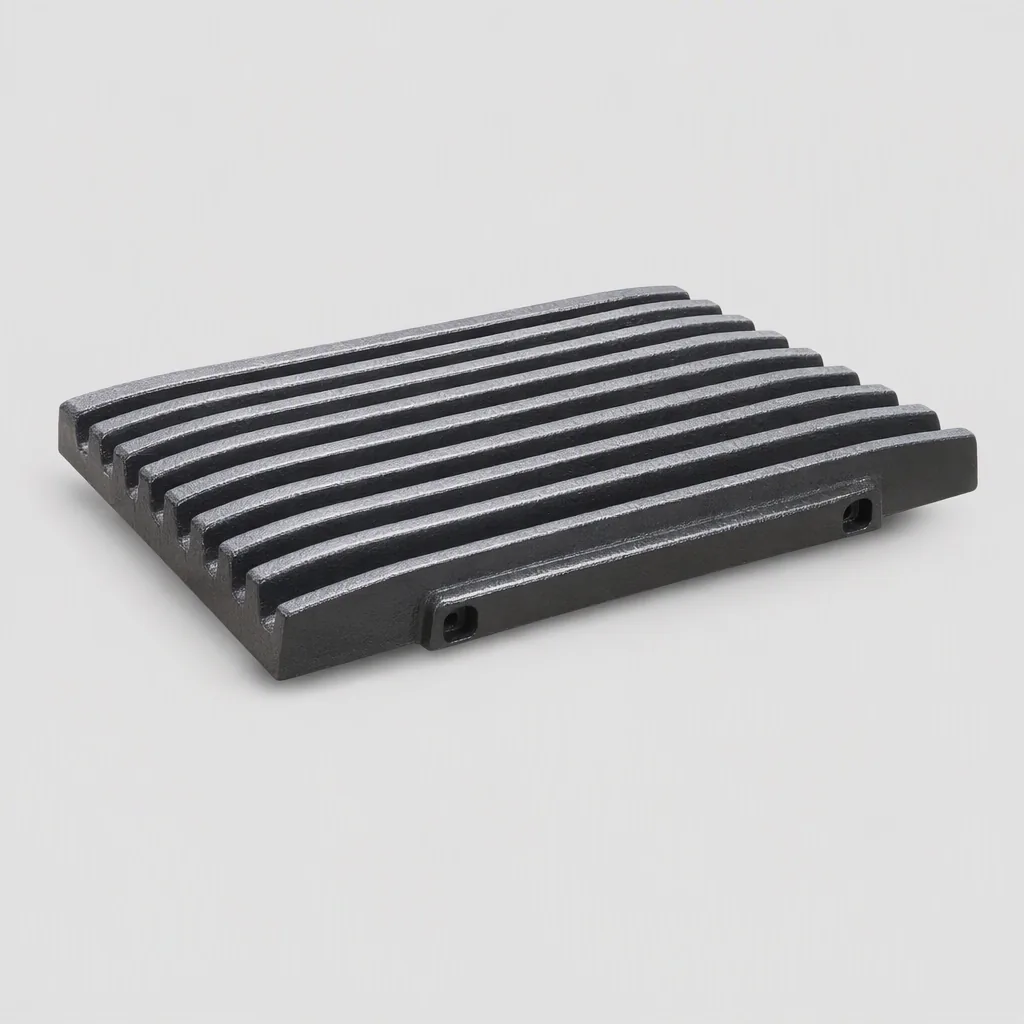
Jaw crusher wear plates
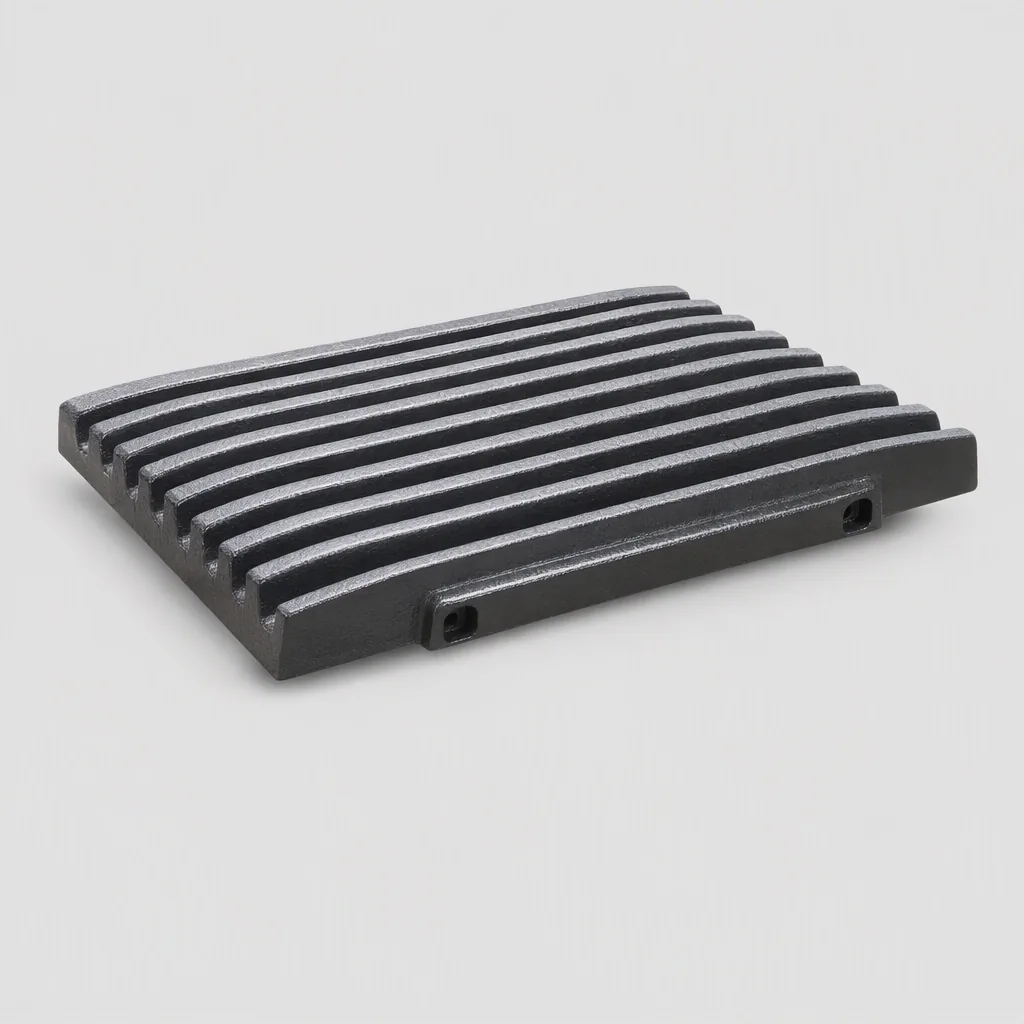
Jaw crusher fixed and swing plates withstand high compressive impact. The most common material family is high-manganese steel, including grades such as Mn13Cr2 and Mn18Cr2. Manganese steel work-hardens under impact: its surface becomes harder in service while the core remains tough.
For hard rock, tooth profile matters as much as chemistry. A coarse, aggressive tooth grips large feed, but may wear unevenly in abrasive stone. A flatter or quarry-style profile may provide more stable wear and a steadier discharge size. Cheek plates also deserve attention. Severe cheek-plate wear can expose the crusher frame and disturb the crushing geometry.
Quote checklist for jaw plates:
- Crusher model, OEM part number or drawing
- Quantities for fixed jaw, swing jaw and cheek plates
- Tooth profile or a photo of the existing plate
- Feed material and maximum feed size
- Current service life in hours or tonnes
- Whether the problem is premature cracking or gradual wear
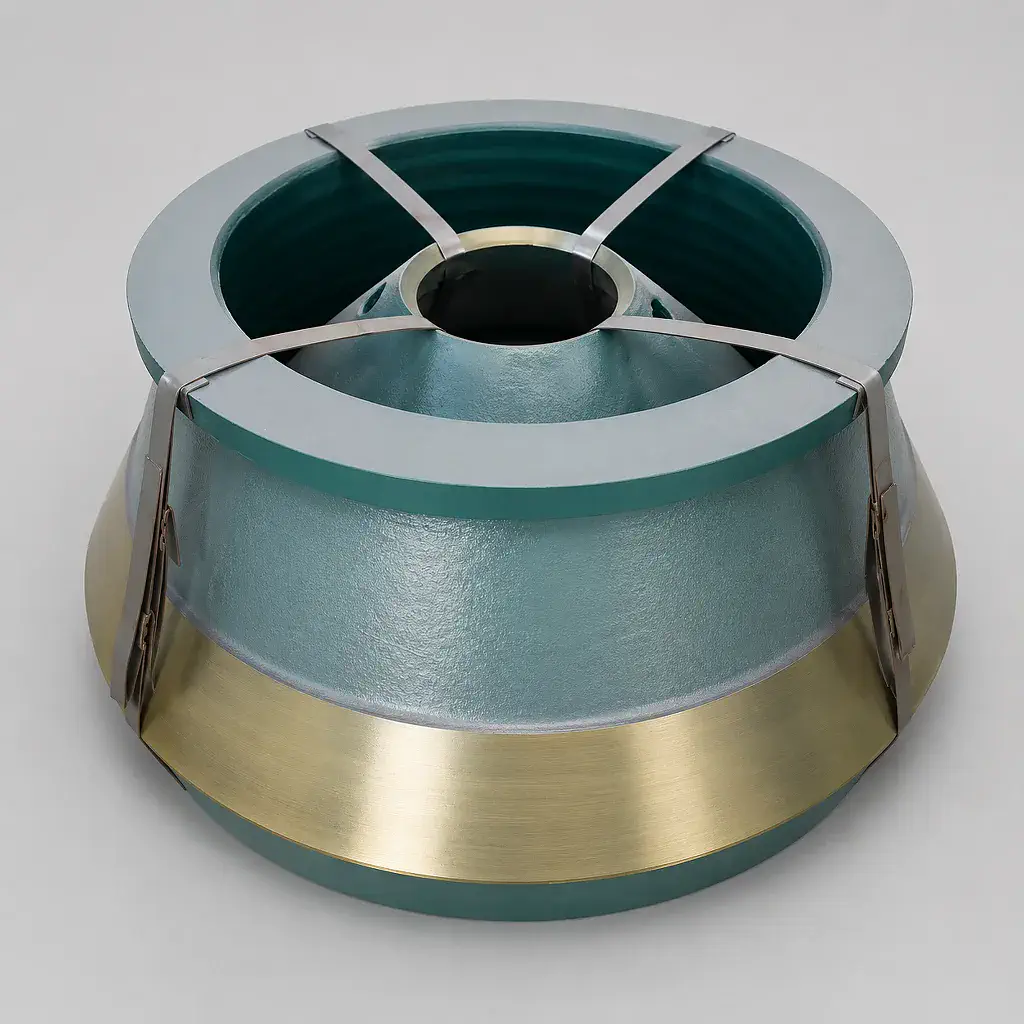
Cone crusher mantles, concaves and bowl liners
Cone crusher mantles and concaves influence both crushing performance and final product shape. An unsuitable liner profile can increase power draw, generate excessive fines or reduce capacity before the liner is fully worn.
High-manganese steel remains standard for many cone liners, with Mn13Cr2 and Mn18Cr2 common in quarry and mining applications. For some severe duties, microalloy-adjusted manganese steel or localized insert-enhanced designs may be considered after reviewing the wear pattern. Alloy steel may also be appropriate when the duty calls for a different balance of toughness and wear resistance. The essential decision is to match the chamber profile to the feed size and target product, rather than simply selecting a catalog name.
A sound replacement program tracks liner life by tonnes crushed, not only by calendar days. If throughput drops early, the liner may have worn into an inefficient chamber shape. In that situation, a profile change may deliver more value than a minor chemistry change.
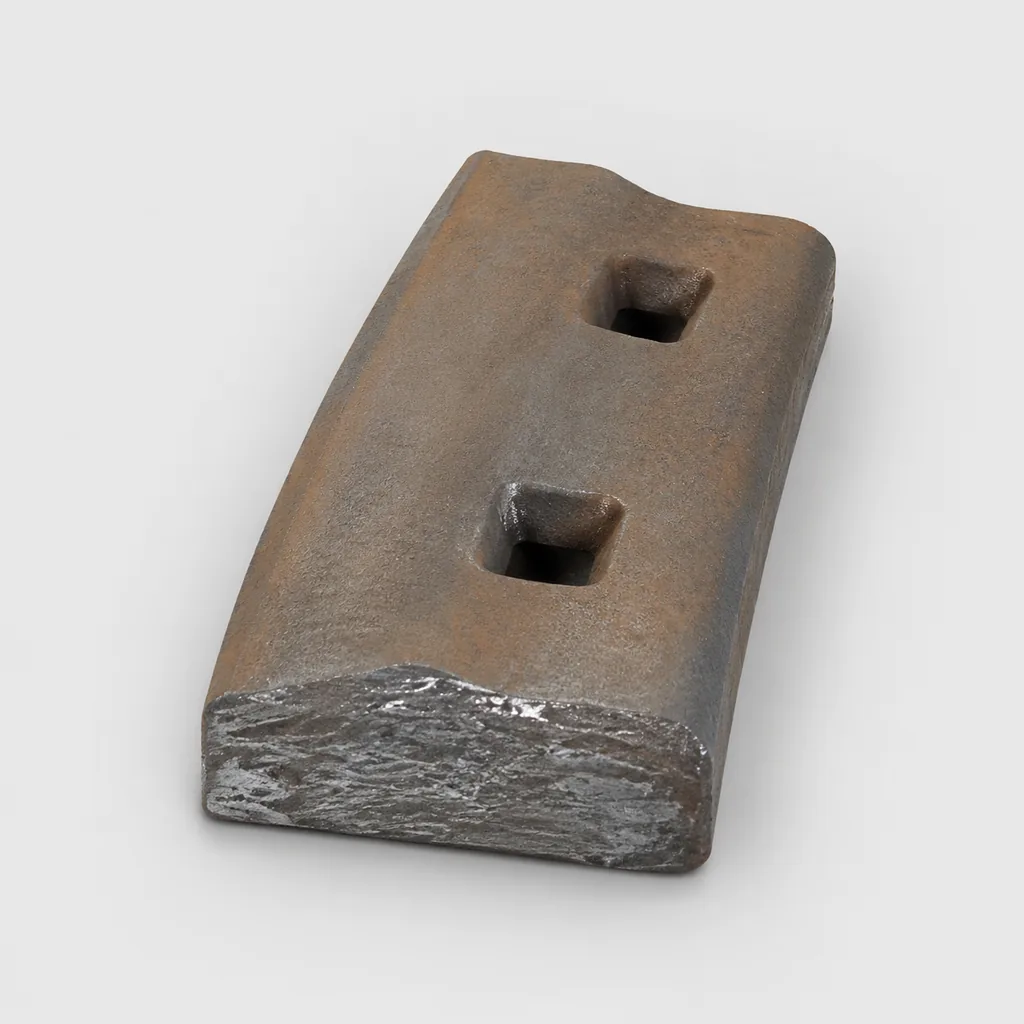
Impact crusher blow bars
Impact crusher blow bars sit at the center of the abrasion-versus-impact trade-off. High-chrome cast iron offers strong abrasion resistance, particularly in limestone and well-controlled aggregate feed, but is less forgiving under heavy impact or uncrushable contamination. Manganese steel is tougher and more impact-resistant, but can wear faster in abrasive feed.
The wrong blow-bar material generally fails in one of two ways:
- Cracking or breakage: the material is too brittle for the impact load or tramp conditions.
- Rapid face wear: the material is too soft, or the feed is too abrasive for the selected alloy.
For recycling, mixed feed or large impact loads, toughness comes first. For clean limestone and abrasive service with moderate impact, high-chrome may often produce a lower cost per tonne.
VSI rotors and sand-making wear parts
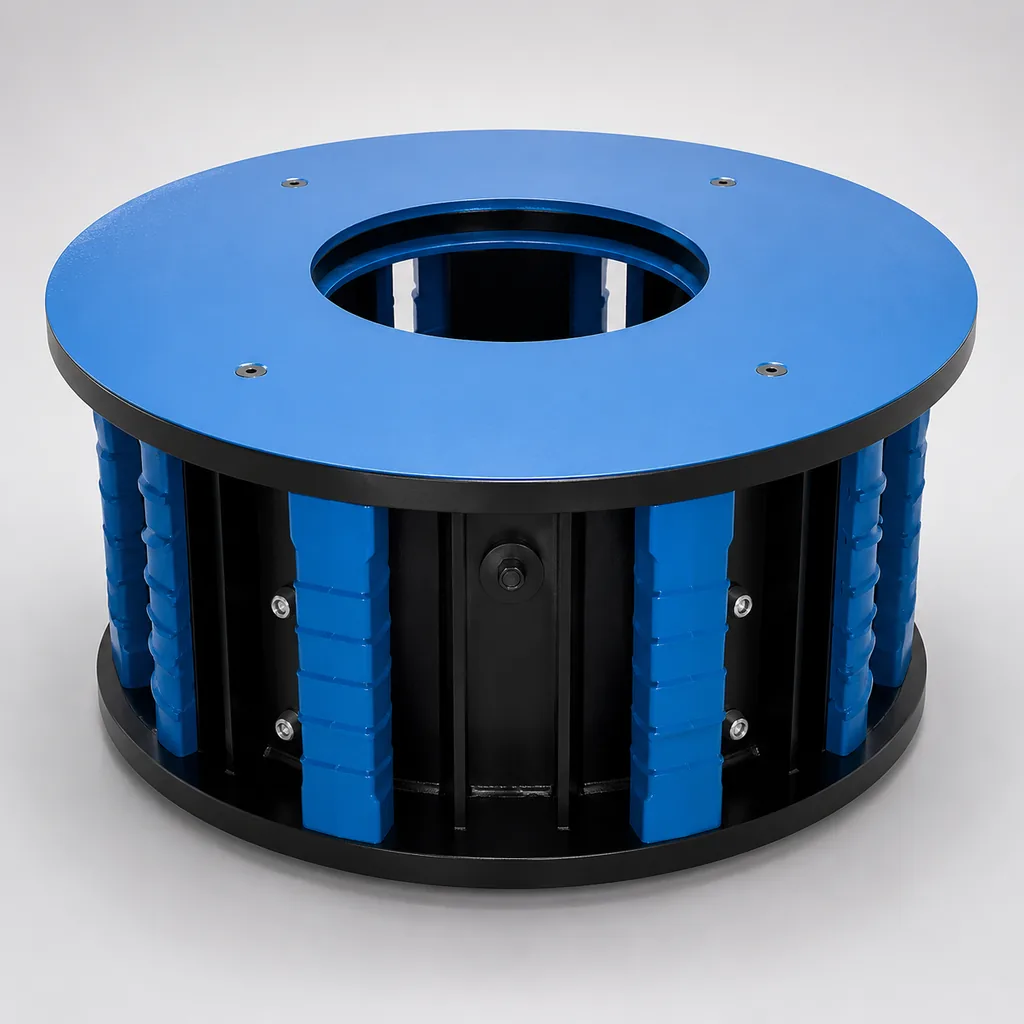
A VSI rotor is exposed to severe, high-speed abrasive wear. Balance, dimensional fit and material uniformity are critical. Even a strong material can cause trouble if rotor balance is poor or wear is inconsistent, creating vibration that damages bearings and reduces crusher uptime.
Whenever possible, quote VSI wear parts from drawings or confirmed dimensions. The supplier also needs to know whether the plant prioritizes product shape, sand yield or maximum wear life. In sand-making lines, evaluate wear cost together with product grading: a part that lasts longer but disrupts grading may not be cheaper in operation.
Hammer crusher hammers and gyratory arm guards
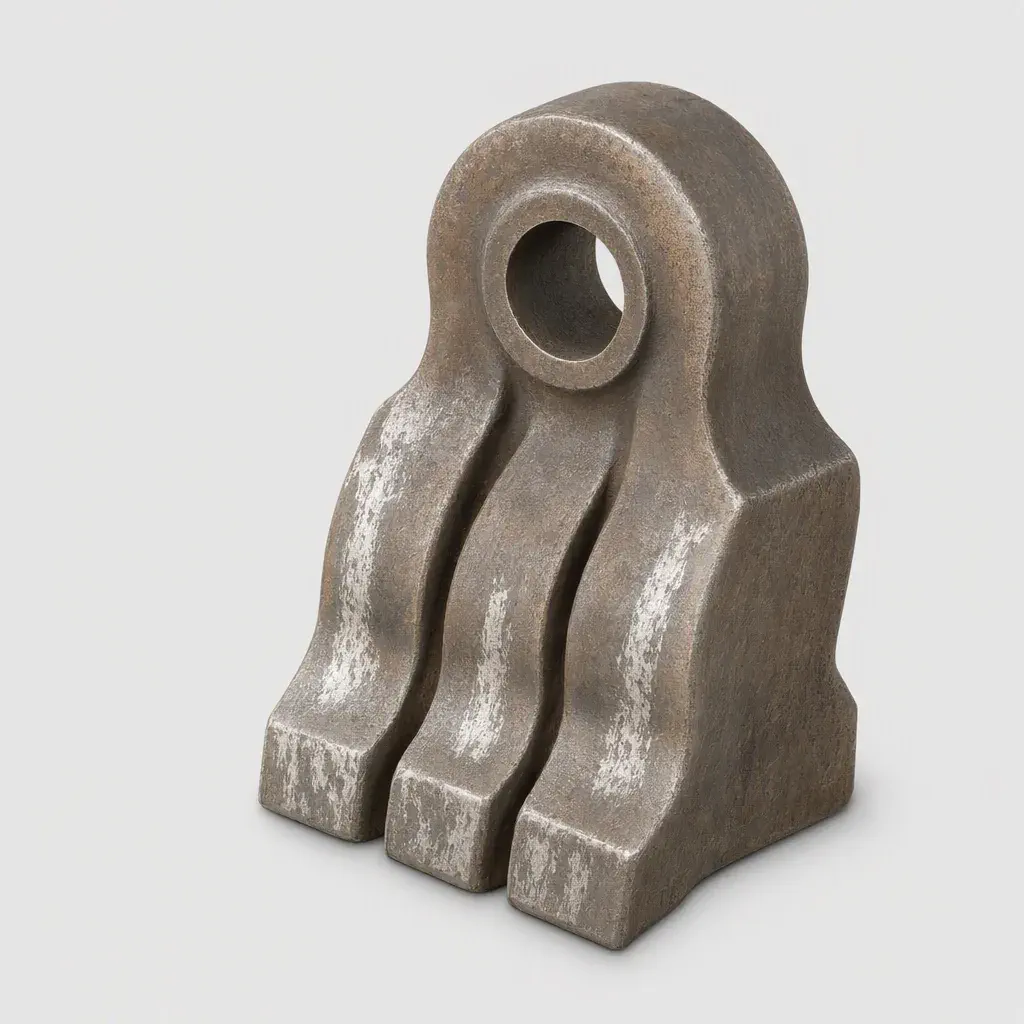
Hammer crusher hammers are widely used for limestone, coal and gypsum crushing. Depending on impact load and abrasiveness, they may be produced from manganese or high-chrome material. High-chrome can be attractive for softer but abrasive materials, while heavy-impact duty may call for a tougher manganese or alloy route.
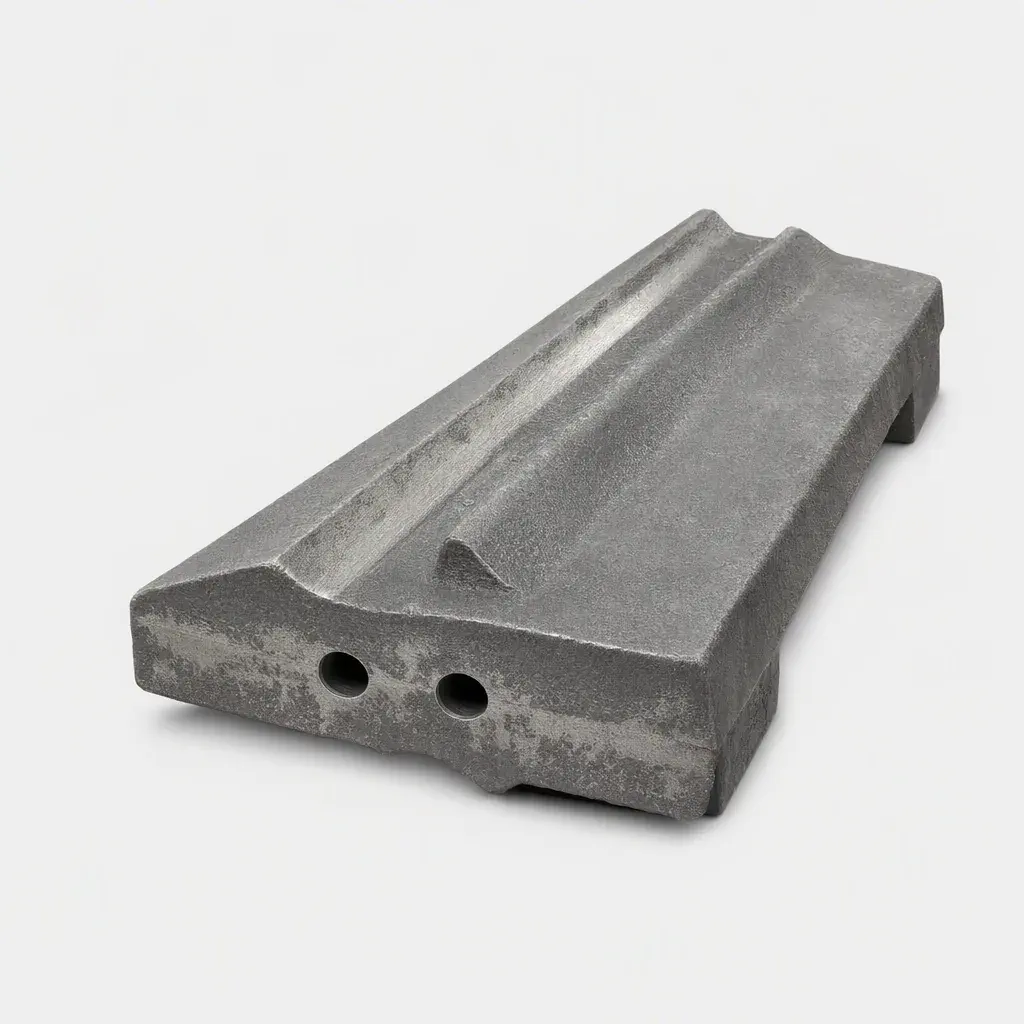
Gyratory arm guards protect primary-crusher structures in demanding mine applications. They are often made to drawing and should be checked carefully for fitting surfaces, lifting points and casting defects. Because primary-crushing downtime is costly, dimensional accuracy and predictable replacement are generally more important than a small unit-price saving.
Mill liners, high-chrome parts and custom wear parts
Not every wear part sits directly in the crusher chamber. Mill and wear liners, screen plates, grid plates and side liners protect the grinding and classification sections of the plant. High-chrome and alloy steel parts, including pump cases, rollers and feed plates, handle abrasive flow, sliding wear and repeated material contact.
When standard catalog parts do not address the duty, metal-matrix composite and custom wear parts may be considered. Hard-alloy or TiC insert-enhanced zones can be useful where wear is concentrated in a predictable area, such as the feed side, impact face or crushing-contact band. They should be designed from the failure pattern of the previous part, not added at random.
Inspection before shipment
For crusher wear parts, a basic inspection package should include:
- Drawing or part-number confirmation
- Material chemistry report by heat or batch, supported by spectral or chemical testing where required
- Hardness and mechanical testing where applicable
- Metallographic checks for high-chrome, alloy or specially reinforced parts when required by the order
- Visual inspection for cracks, sand holes, shrinkage and repair welding
- Dimensional inspection of fitting surfaces and bolt holes; 3D scanning can be useful for complex custom parts
- Ultrasonic testing for selected heavy or critical castings when agreed in the inspection plan
- Surface-treatment confirmation, including shot blasting and paint if requested
- Packing suitable for heavy castings and sea freight
Dimensional problems are often more expensive than chemistry problems because they may be discovered only during a shutdown. Request photos of key dimensions before shipment, especially for made-to-drawing parts.