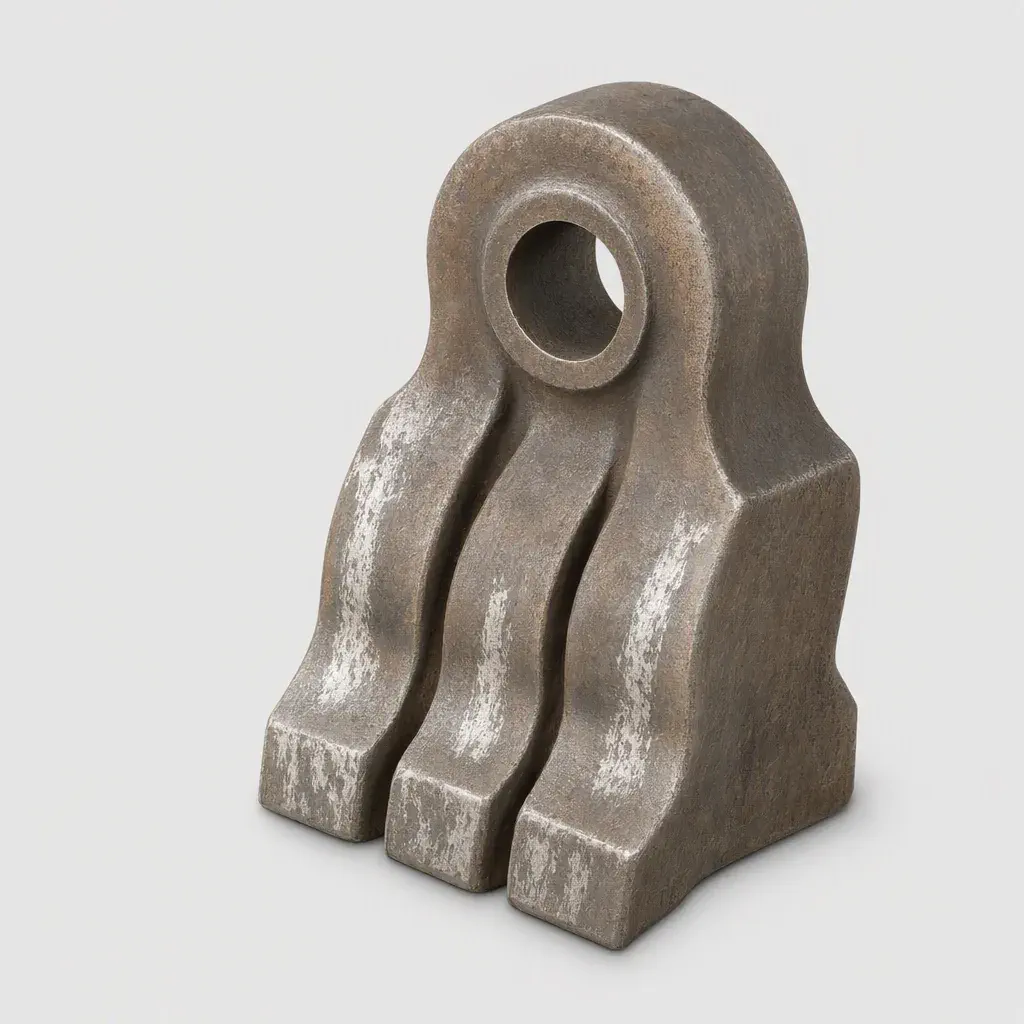
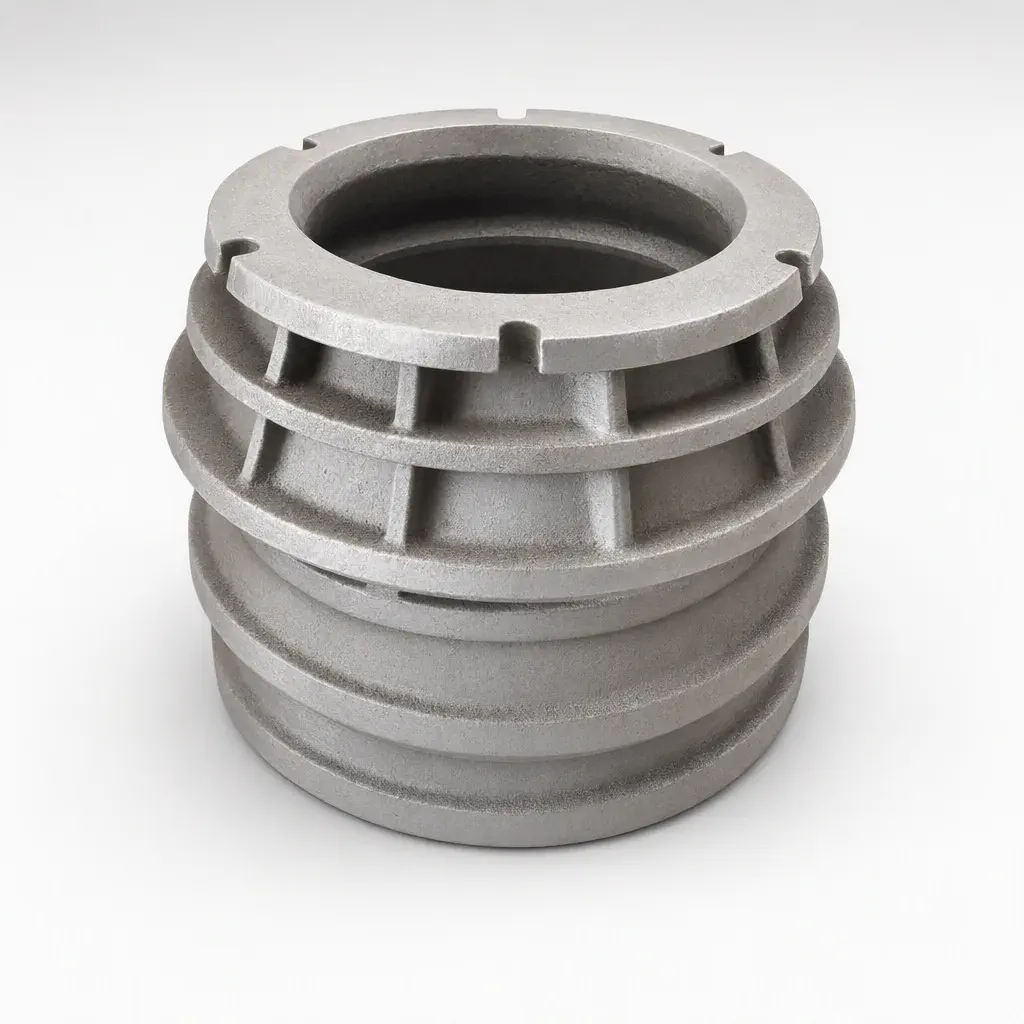
Most wear-part purchasing questions come down to one decision: manganese steel or high-chrome cast iron. Both are proven families, but they answer different wear problems, and the wrong choice is usually discovered only after the part is in service. This guide compares them on the criteria that matter on site — impact toughness, abrasion resistance, cost per hour and failure risk — and gives a practical decision path for common crusher parts. It is written for buyers who are tired of being sold "the hardest material" and want a defensible reason for the next order.
1. The two families in one sentence each
High-manganese steel is the tough, work-hardening option. Its surface hardens under repeated impact while the core stays tough, which makes it the standard for parts that take heavy compressive blows.
High-chrome cast iron is the hard, abrasion-resistant option. Its microstructure contains hard chromium carbides that resist scratching and gouging, but it is more brittle and cracks under heavy or contaminated impact.
Neither material is "better" in the abstract; each is better for a duty. The rest of this guide turns that sentence into a checklist.
2. How they behave under impact
Impact is the dividing line.
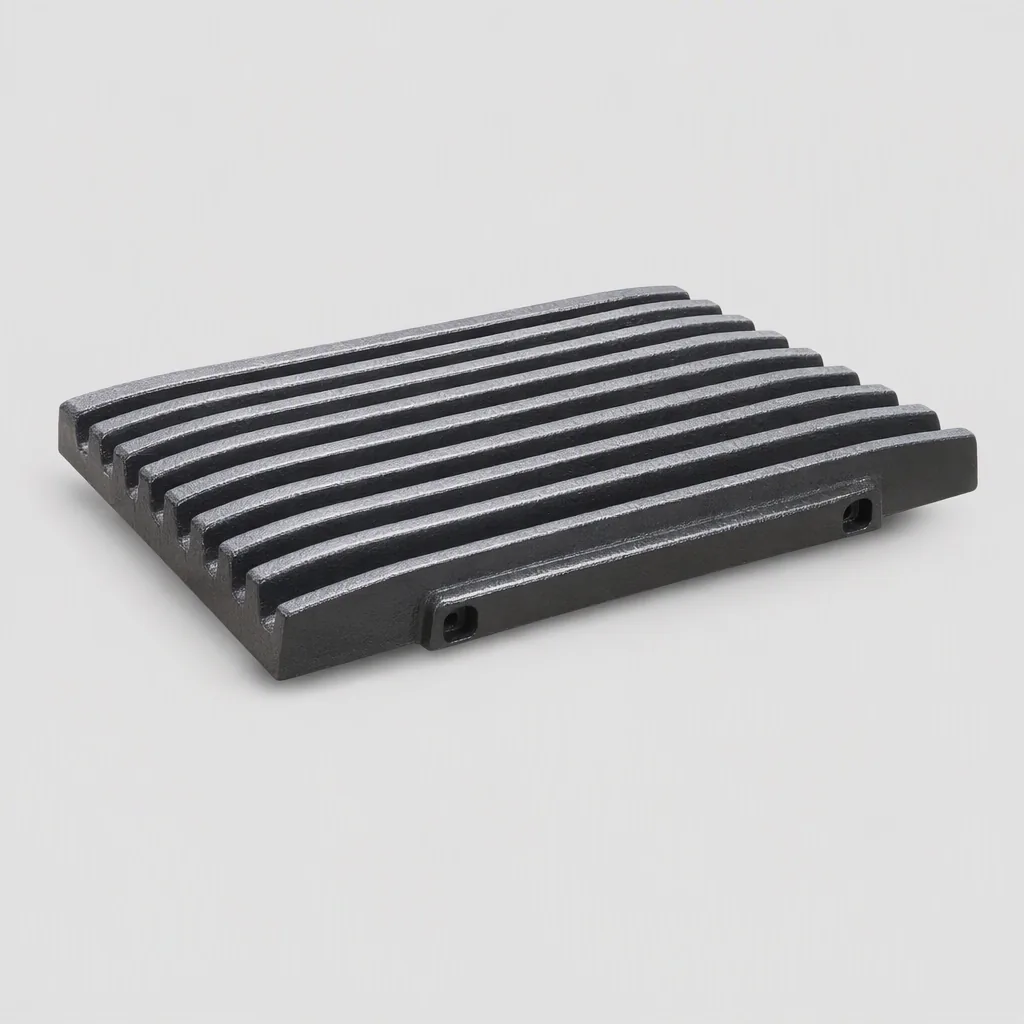
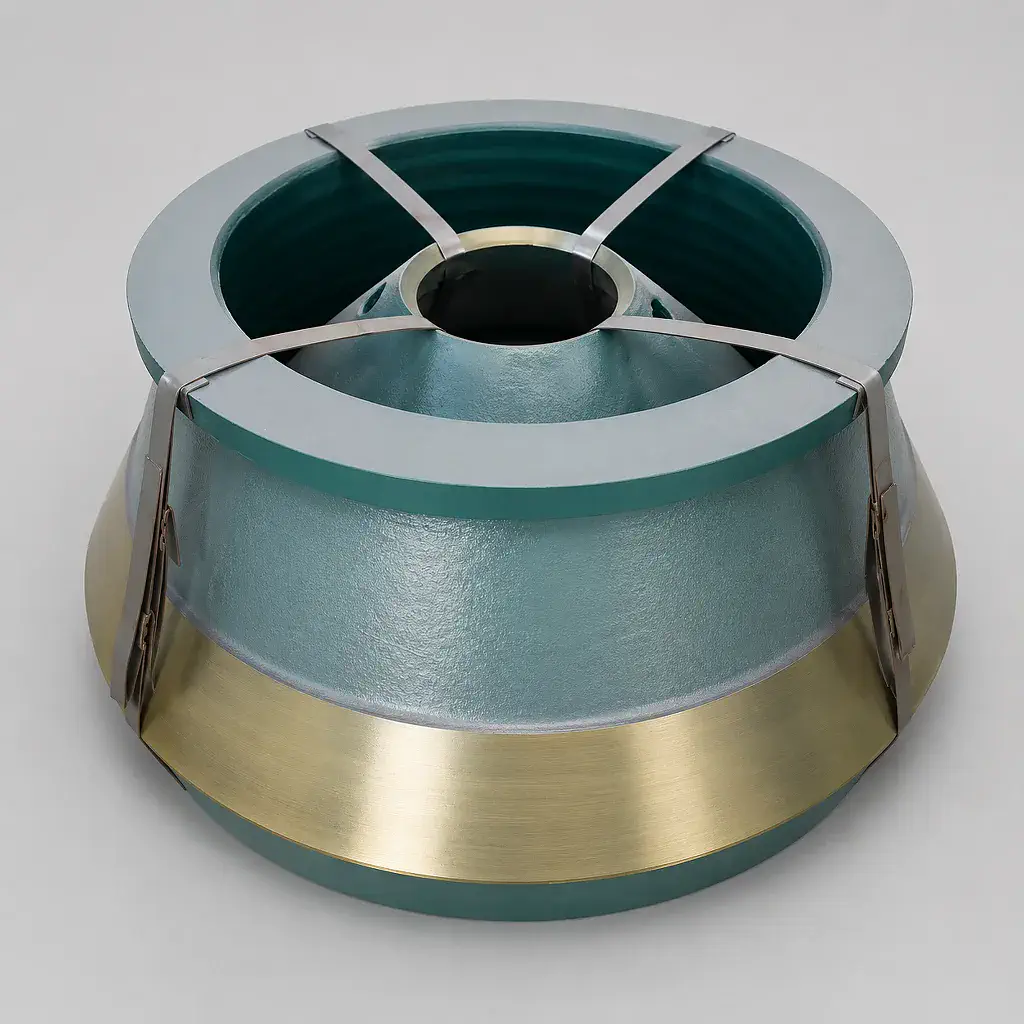
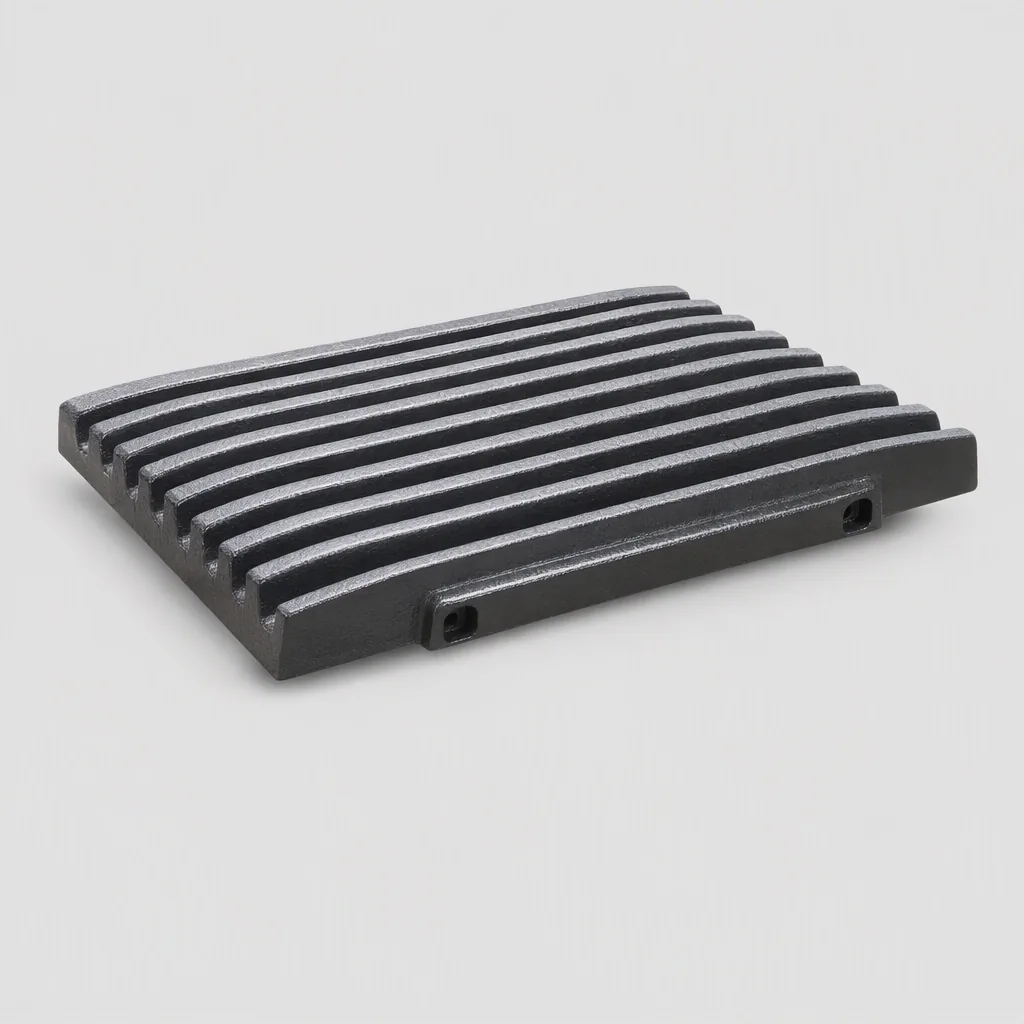
Manganese steel absorbs impact energy, work-hardening on every strike while the tough core keeps carrying the load. Cracks rarely initiate, and if they do, they propagate slowly. That is why jaw crusher fixed and swing plates and cone crusher mantles and concaves are almost always manganese steel: the duty is high-compressive impact with rock-to-steel contact.
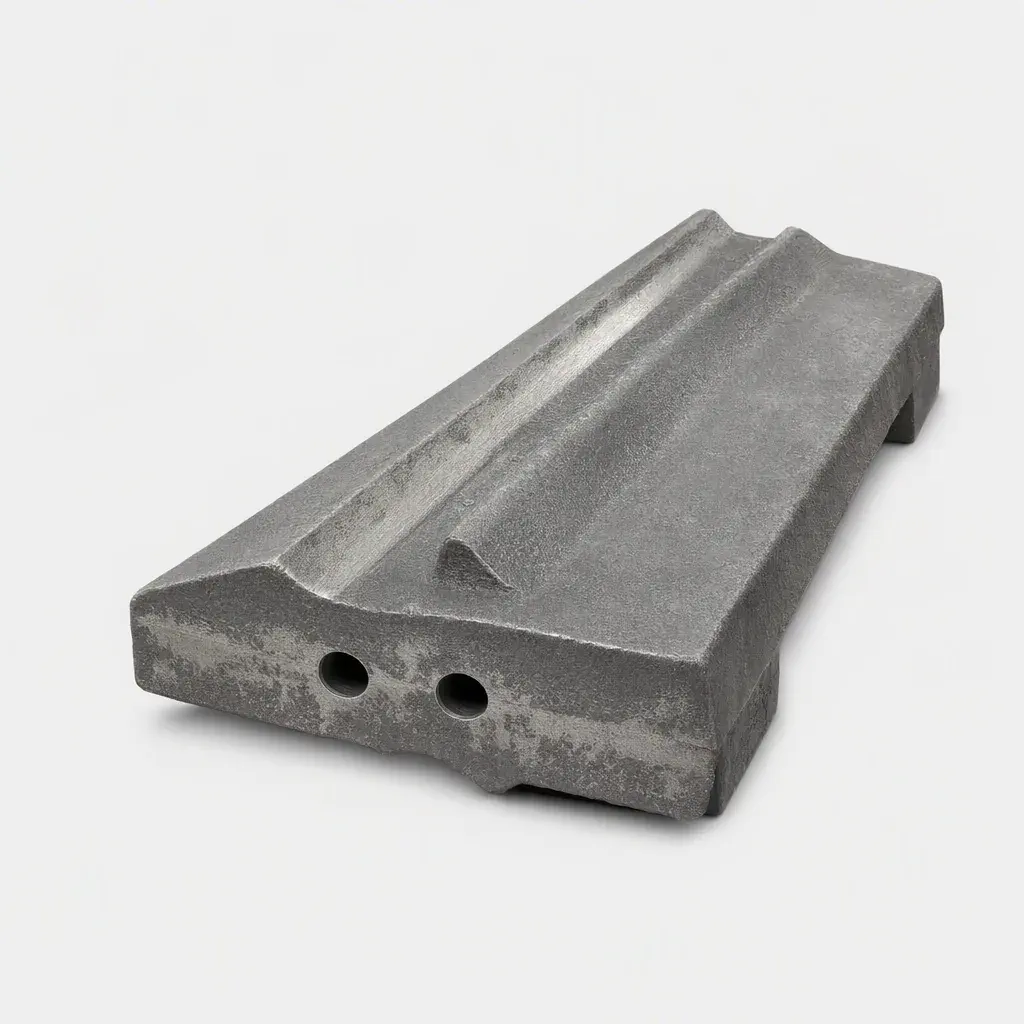
High-chrome cast iron has little toughness reserve. It resists abrasion very well but performs poorly under repeated heavy impact or when the feed contains uncrushable material. One tramp-metal event can crack a high-chrome impact crusher blow bar that a manganese one would merely dent.
The practical rule: if the part is hit hard and often, lean manganese. If it is abraded more than it is struck, high-chrome becomes attractive.
3. How they behave under abrasion
Abrasion is where high-chrome earns its reputation.
In low-impact, sliding or high-velocity abrasive service, manganese steel may not work-harden enough, and its surface wears away faster than expected. High-chrome's chromium carbides give a much harder wear surface in exactly these conditions. In practice the comparison usually comes down to the feed:
- Clean, well-graded limestone or aggregate with moderate impact — the classic high-chrome duty. High-chrome impact crusher blow bars and hammer crusher hammers hold up better here than manganese, which may never harden enough to earn its keep.
- Recycled aggregate that can carry steel scrap, or feed with variable hardness — the duty that ends high-chrome parts. One tramp-metal hit can crack a high-chrome bar in a single pass; a manganese bar takes the hit and keeps running, trading some wear life for reliability.
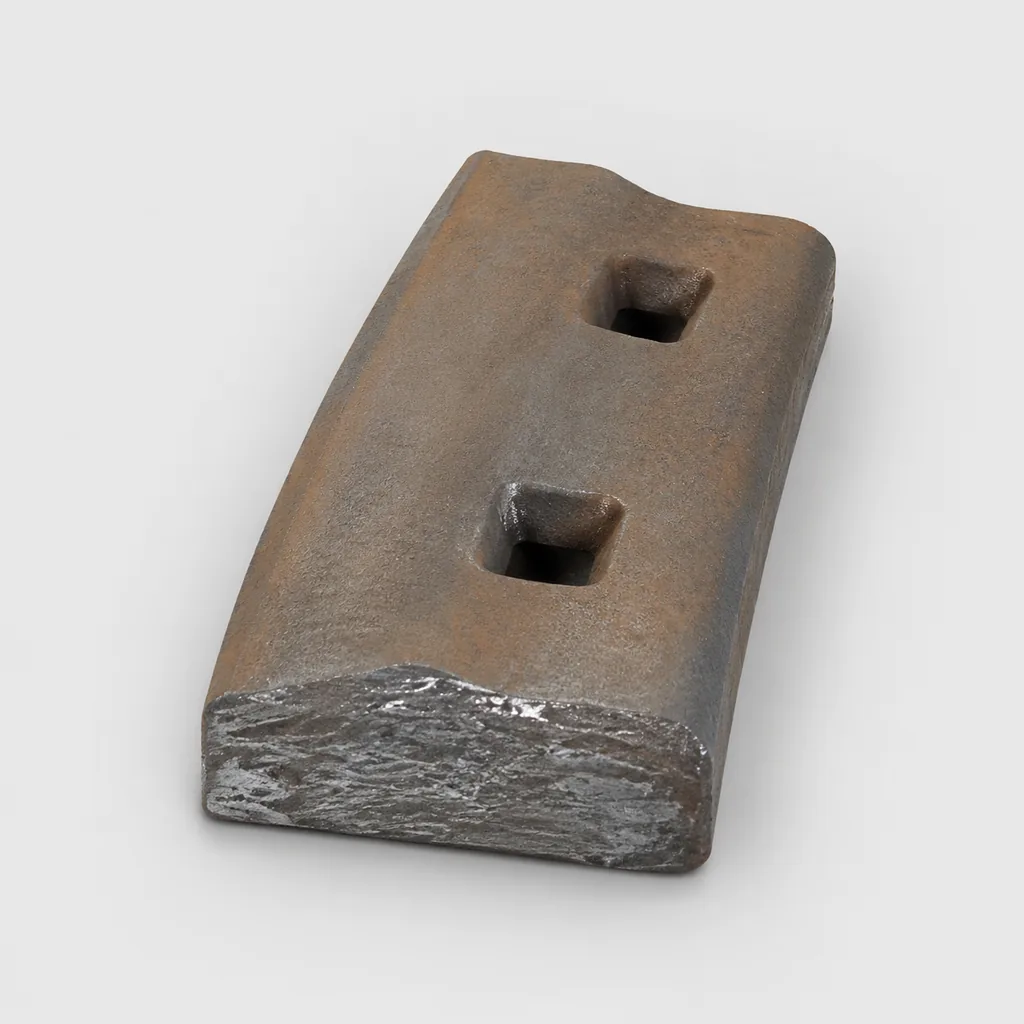
- Sliding wear without heavy impact — rollers, pump cases, feed plates and mill liners and wear liners in abrasive slurry or media contact lean toward high-chrome or alloy steel.
The trade-off is real: high-chrome parts usually last longer in pure abrasion, but they fail suddenly when the duty turns out to contain more impact than expected. Sudden failure is often more expensive than gradual wear, because it means unplanned downtime and possible damage to the crusher.
4. A comparison table for the procurement file
| Criterion | Manganese steel (Mn13Cr2 / Mn18Cr2) | High-chrome cast iron |
|---|---|---|
| Work hardening | Strong under impact | Negligible |
| Impact toughness | High | Low to moderate |
| Abrasion resistance | Moderate (improves with work hardening) | High in low-impact duty |
| Sudden cracking risk | Low | Higher, especially under tramp metal |
| Typical parts | Jaw plates, cone mantles, gyratory guards | Blow bars, hammers, pump cases, feed plates |
| Best duty | Heavy compressive impact | Abrasion with controlled impact |
| Worst duty | Pure low-impact sliding abrasion | Heavy or contaminated impact |
Use this table as the skeleton for a material justification on the next RFQ. A supplier that pushes one material for every part without asking about the duty should be questioned.
5. When the either-or choice breaks down: alloy steel and MMC
Not every part is a clean manganese-versus-high-chrome choice.
Alloy steel (including CrMo grades) sits between the two: better toughness than high-chrome, better wear resistance than plain carbon steel. It is a common direction for liners where the duty mixes abrasion and moderate impact.
The either-or choice breaks down when one zone of a part wears in a different regime from the rest. That is the moment to stop asking "which material" and consider a metal-matrix composite or hard-alloy enhanced part: hard phases or hard-alloy inserts are concentrated specifically in the severe-wear zones, with a tougher backing carrying the load. Look at this route when a single zone fails long before the rest of the part, or when both standard families have already been tried on the same duty and underperformed.
6. Decision path: five questions before you order
Walk through these in order. They usually settle the material question faster than any datasheet.
- What failed last time — wore out or cracked? Cracking points to toughness; rapid wear points to abrasion resistance.
- What is the feed? Size, hardness and contamination (tramp metal, rebar) drive both the material and the profile.
- Is impact heavy and frequent? If yes, manganese steel or a tough alloy is the safer base.
- Is the wear zone predictable? If one zone dies first, discuss MMC or hard-alloy enhancement instead of changing the whole material.
- What does the shutdown schedule tolerate? Gradual wear with planned replacement beats sudden cracking at an unknown date.
7. When to ask the foundry for a comparison trial
If the duty is genuinely borderline, a structured trial beats a guess. Ask for the same part geometry in two materials, define clear measurement points, and compare:
- Wear depth at fixed intervals
- Cracking or chipping events
- Cost per tonne crushed, not price per part
- Lead time and repeatability of quality
Document the result against the five questions above, and the next order stops being a debate.