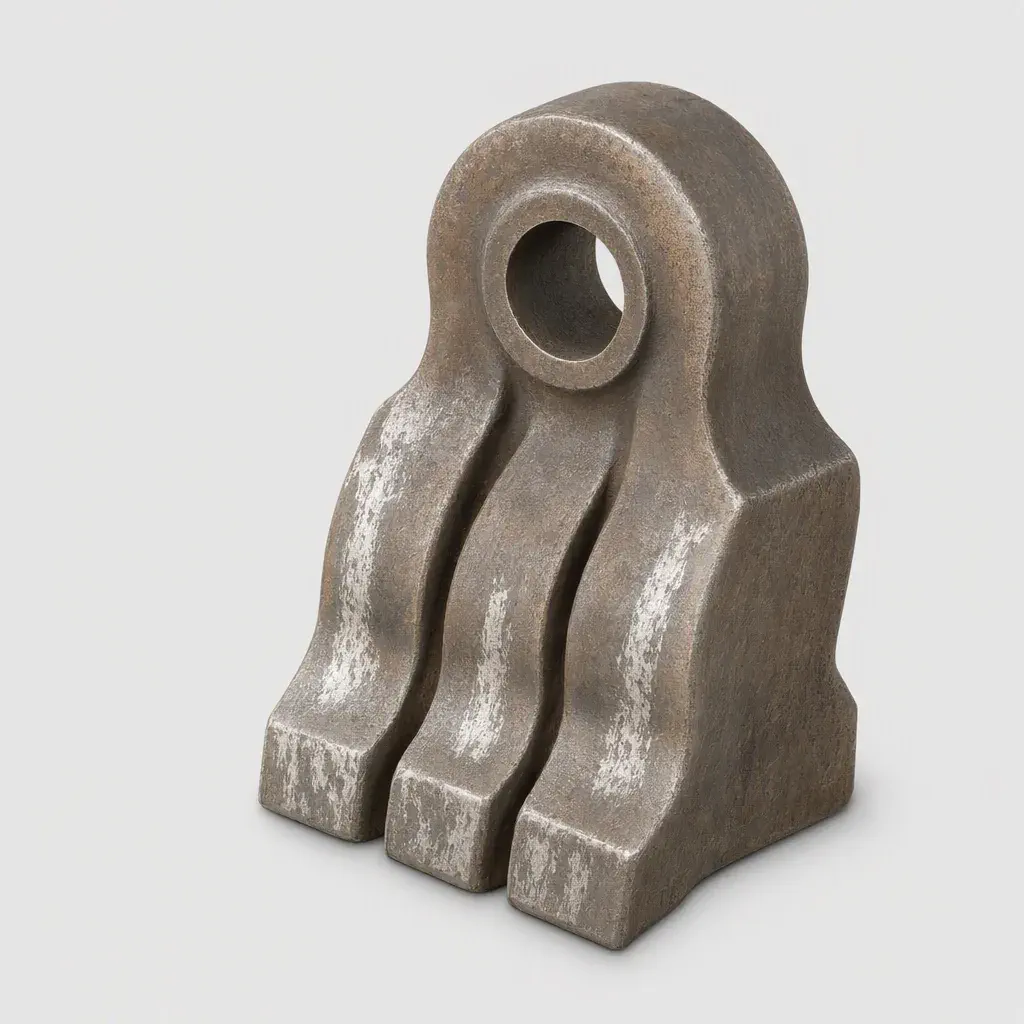
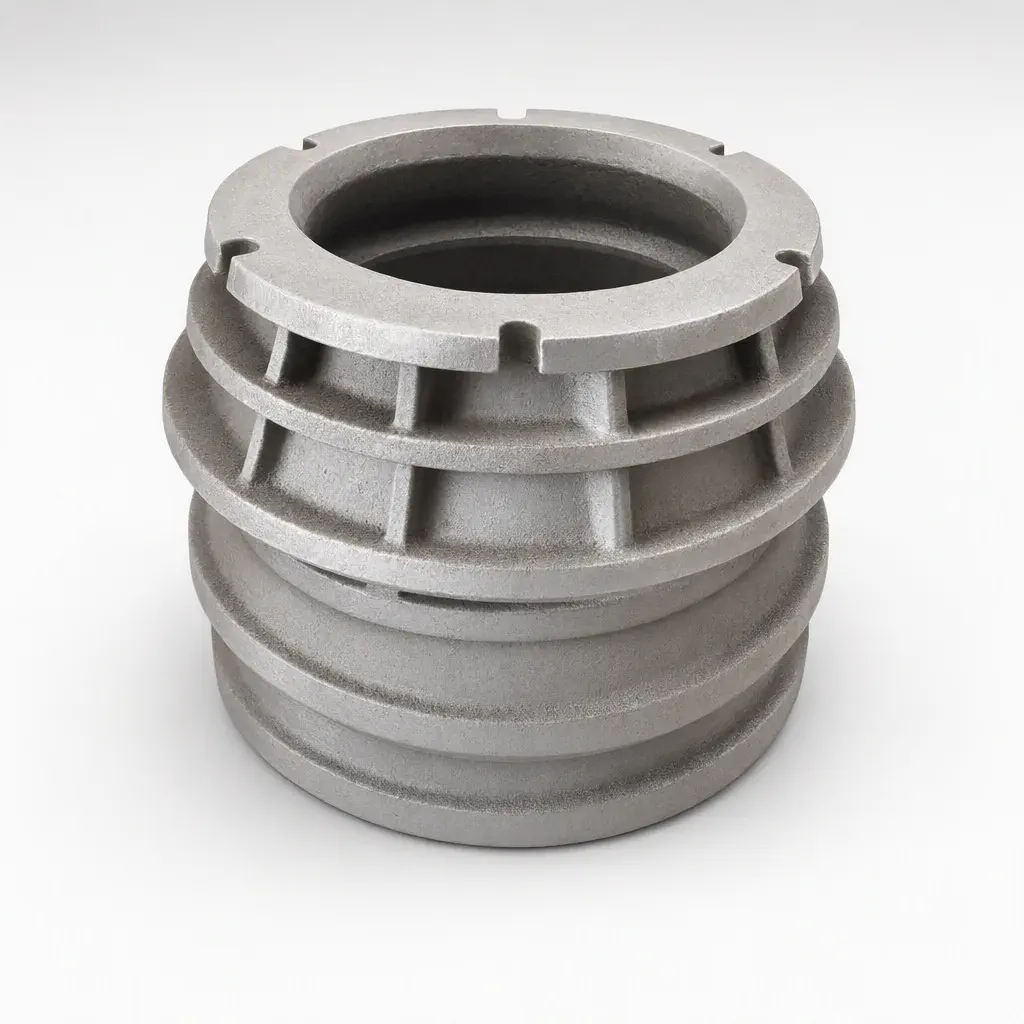
Wear-resistant castings fail for different reasons. Some wear away gradually under sliding abrasion; others crack under impact or lose their fit because the working surface wears unevenly. Material selection is the first control point, but it works only when chemistry, heat treatment, part design and operating conditions are considered together. This guide explains the main material families used in crusher and mining wear parts: high-manganese steel, high-chrome cast iron, alloy steel and metal-matrix composite materials. It is intended for buyers sourcing jaw plates, cone liners, blow bars, mill liners, hammers, pump cases, feed plates and custom castings.
Wear is not a single mechanism
Before selecting a casting material, identify how the part fails in service.
| Wear mode | Typical parts | Material direction |
|---|---|---|
| High impact with rock compression | Jaw plates, cone mantles, gyratory guards | Manganese steel or tough alloy steel |
| Abrasion with moderate impact | Blow bars, hammers, liners | High-chrome or balanced alloy |
| Sliding abrasion and slurry contact | Pump cases, rollers, feed plates | High-chrome, alloy or MMC |
| Localized extreme wear | Custom inserts, feed lips, severe-wear zones | MMC or hard-alloy enhanced design |
| Fit loss or profile change | Cone liners, mill liners, jaw plates | Correct profile plus suitable material |
A common mistake is to ask for “the hardest material.” Hardness can improve abrasion resistance, but excessive hardness often reduces toughness. A crusher part that breaks early is usually more expensive than one that wears gradually.
High-manganese steel: impact toughness and work hardening
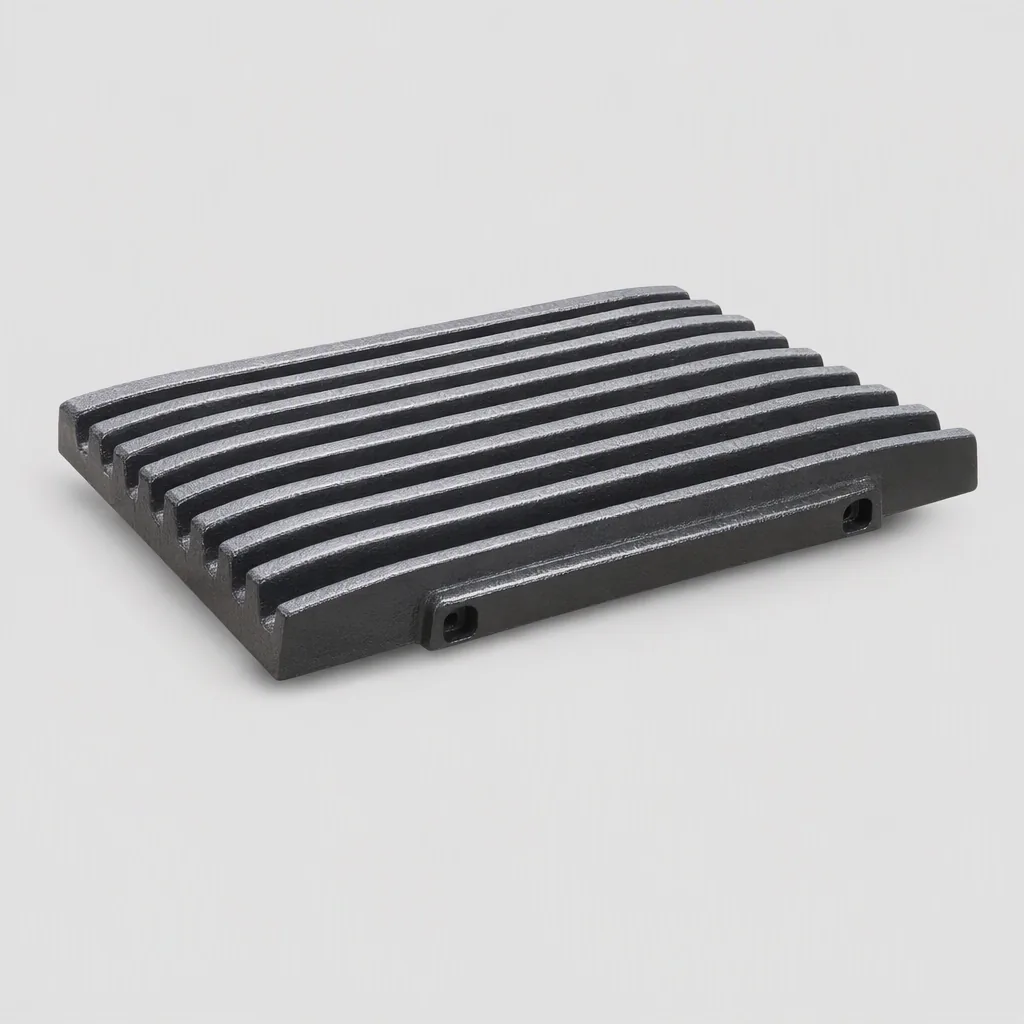
High-manganese steel is widely used for jaw crusher wear plates, cone crusher mantles and concaves, and some gyratory crusher arm guards. Typical grades include Mn13Cr2 and Mn18Cr2. Some suppliers also use microalloy-adjusted manganese-steel routes for specific duties, but these should be evaluated against the actual feed material, impact level and previous failure mode rather than treated as a universal upgrade.
Its key advantage is work hardening. Under repeated impact, the surface hardens while the core remains tough. This is why manganese steel performs well in crushing duties where impacts are sufficient to activate work hardening.
Manganese steel is not suitable for every wear mechanism. In low-impact, sliding-abrasion duty, the surface may not harden sufficiently and wear can be rapid. A high-chrome or alloy solution may be more appropriate in that situation.
Use manganese steel when:
- Feed impact is significant
- The part must withstand shock loads
- Gradual wear is acceptable but cracking is not
- The part operates in jaw, cone or primary-crushing duty
Be careful when:
- Feed is fine, dry and highly abrasive but impact is weak
- The part is exposed mainly to sliding wear
- The previous failure was rapid surface loss without clear impact marks
High-chrome cast iron: abrasion resistance with limits
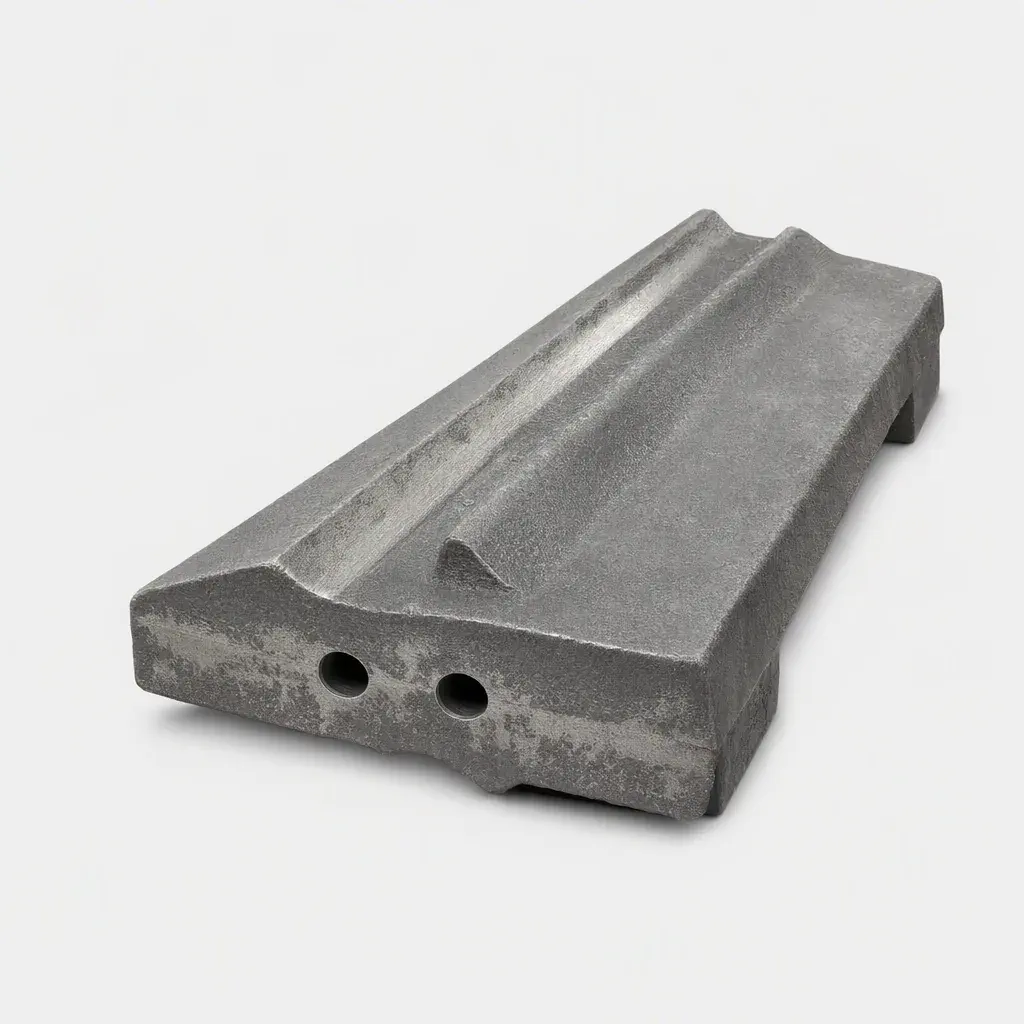
High-chrome cast iron is valued for its abrasion resistance. It is often considered for impact crusher blow bars, hammer crusher hammers, rollers, pump cases and feed plates in abrasive service. Chromium carbides in the matrix provide hard, wear-resistant phases.
The trade-off is toughness. High-chrome parts can perform well in limestone, aggregate and controlled abrasive duty, but they may crack when impact loads are excessive or tramp metal enters the crusher. Blow-bar selection should therefore consider feed size, contamination risk and crusher speed, not material grade alone.
For high-chrome castings, consistent heat treatment is critical. Two parts with similar chemistry can behave differently if carbide structure, hardness or stress relief is poorly controlled.
Use high-chrome when:
- Abrasion is the main failure mode
- Impact loads are moderate and controlled
- Feed is relatively clean
- The buyer evaluates cost per tonne, not just unit price
Avoid high-chrome when:
- The part experiences heavy shock loading
- Tramp metal is common
- Previous parts cracked instead of wearing out
- The machine sees highly variable feed
Alloy steel and CrMo liners
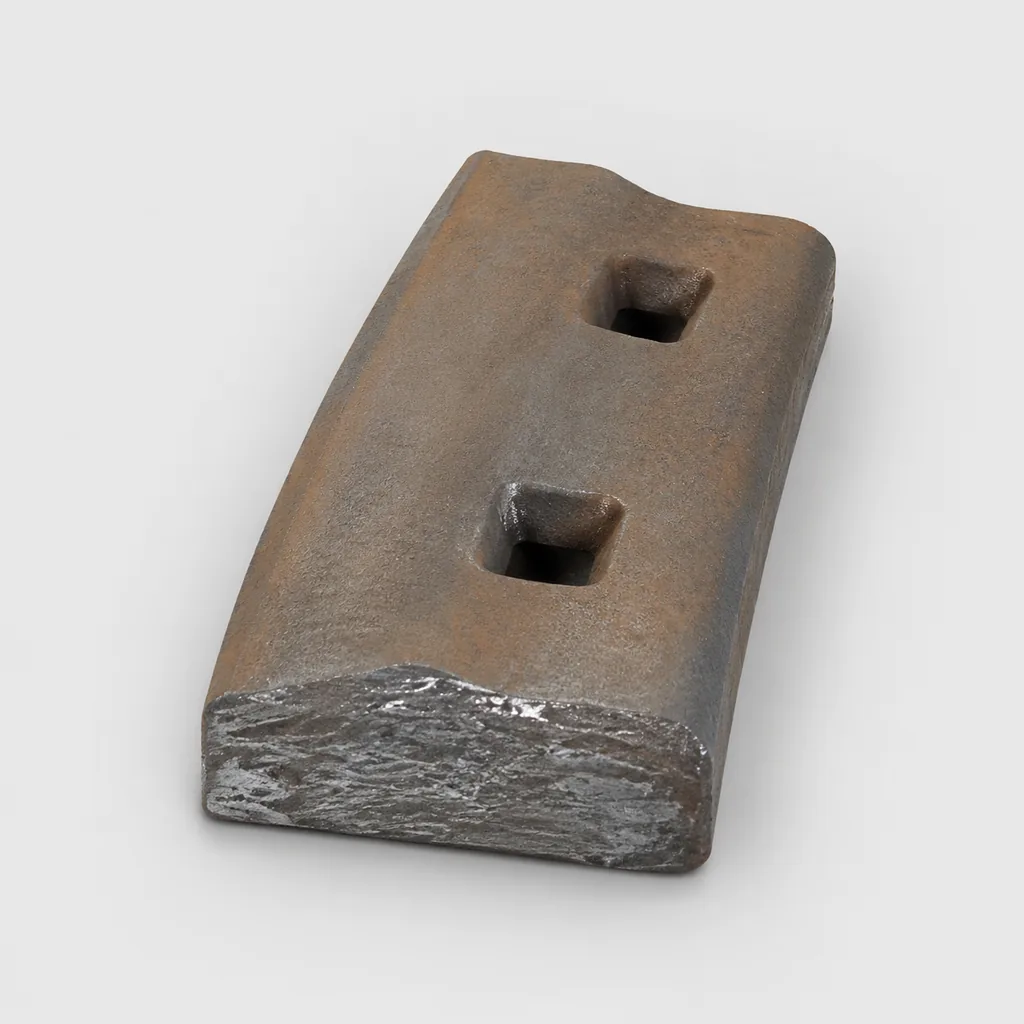
Alloy steel covers a broad range of chemistries. In mining wear parts, it is often used when pure manganese or high-chrome would be too narrow a solution. Mill and wear liners may use manganese or CrMo alloy depending on impact, grinding-media size, corrosion and liner profile.
CrMo liners are common where a part must combine strength, toughness and wear resistance. They are not always the hardest option, but can be a stable choice where crack resistance and dimensional reliability matter.
Alloy steel is also useful for structural wear parts where fit is important, including arm guards, feed plates, rollers and custom components that need both wear resistance and mechanical strength.
Metal-matrix composite and hard-alloy enhanced parts
Metal-matrix composite and custom wear parts are used when ordinary cast steel cannot provide sufficient resistance in a specific wear zone. The approach is to place hard phases, hard-alloy reinforcement or TiC insert zones where the part actually wears, while retaining a tougher backing material.
This can be useful for:
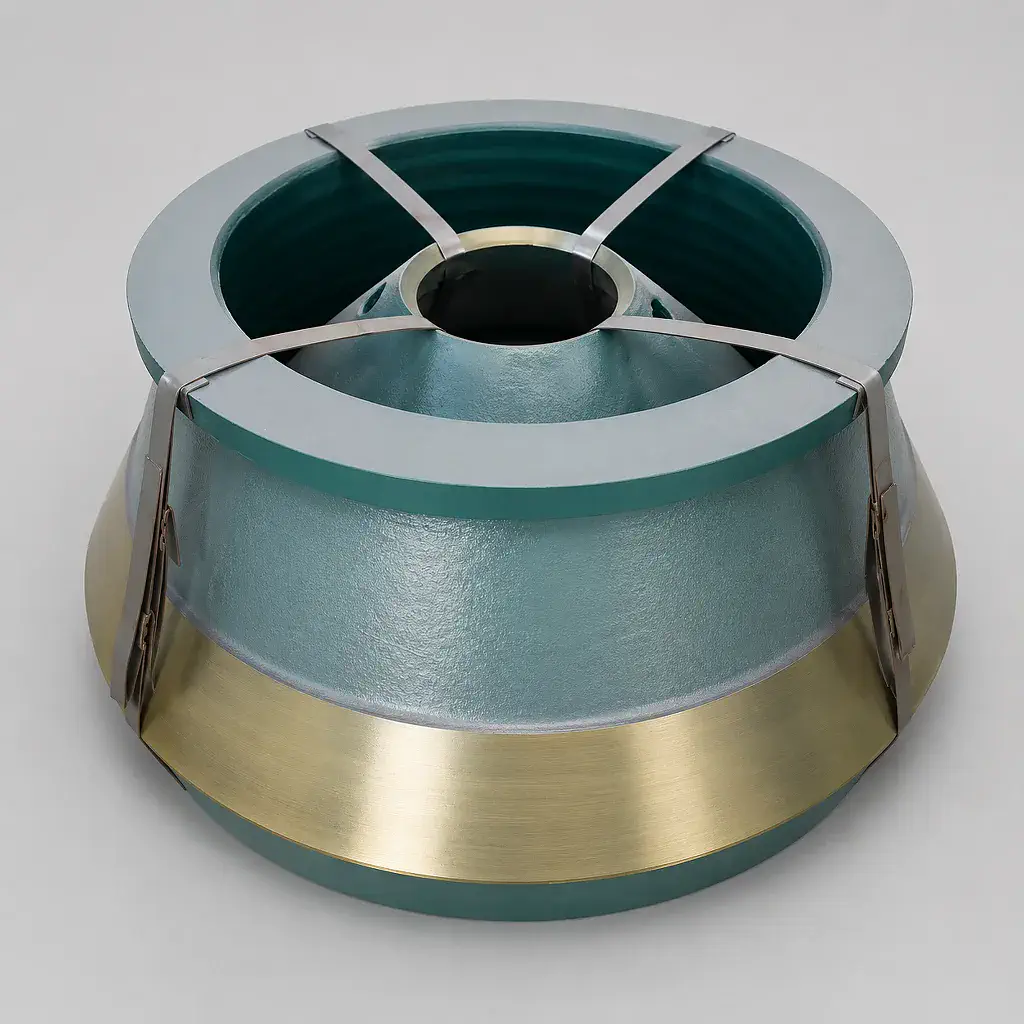
- Cone liners with a recurring high-wear band
- Jaw plates where one tooth zone wears faster than the rest of the plate
- Blow bars with predictable impact-face abrasion
- Feed plates with a predictable wear band
- High-wear edges in abrasive flow
- Crusher parts where one zone wears out before the rest of the casting
- Custom made-to-drawing parts for which the buyer can provide photos of a used part
MMC is not a universal upgrade. If reinforcement is placed in the wrong area, it adds cost without improving service performance. The most useful design input is a photo of the worn part showing exactly where the previous part failed.
Heat treatment is part of the material
A casting certificate showing chemistry is not enough. Heat treatment determines the final structure and performance. Buyers should ask for the process route in practical terms:
- Pouring and heat-number traceability
- Solution treatment or quenching where applicable
- Tempering or stress relief where needed
- Batch hardness-test results
- Visual inspection after heat treatment
For manganese steel, heat treatment must produce a tough austenitic structure. For high-chrome, it controls carbides, hardness and internal stress, which is why parts with similar chemistry can differ substantially in crack resistance and wear behavior. For alloy steel, heat treatment controls the balance of hardness, strength and toughness.
How to specify material in a quotation
A good RFQ should not simply request the “best material.” Use a short, practical specification:
- Part name, crusher model, drawing or OEM number
- Current material, if known
- Feed material and abrasiveness
- Feed size and output size
- Current service life
- Failure mode: worn thin, cracked, broken, lost fit or uneven wear
- Desired improvement: longer life, less cracking, better product shape, faster delivery or lower cost per tonne
For custom parts, send drawings together with photos of the used part. These photos are often more useful than clean catalog images because they show the actual wear pattern.
Practical material map
| Part family | Common material starting point | When to change |
|---|---|---|
| Jaw plates | Mn13Cr2 / Mn18Cr2 | Change tooth profile or manganese grade if wear is uneven or impact conditions differ |
| Cone mantles and concaves | Mn13Cr2 / Mn18Cr2 / alloy | Review the profile first if product size or capacity drops early |
| Blow bars | High-chrome or manganese | Choose high-chrome for abrasion and manganese for impact |
| Mill liners | Manganese steel / CrMo alloy | Match grinding-media size, impact and liner profile |
| Hammers | Manganese / high-chrome | Select according to limestone, coal or gypsum abrasiveness and impact load |
| Pump cases / rollers / feed plates | High-chrome / alloy | Consider MMC or insert reinforcement for localized severe abrasion |
| Pin rollers / pin plates / protective liners | Alloy steel / high-chrome | Match wear, fit and impact risk before selecting hardness |
| Custom wear parts | Alloy / MMC / made-to-drawing | Use worn-part photos to position reinforcement correctly |