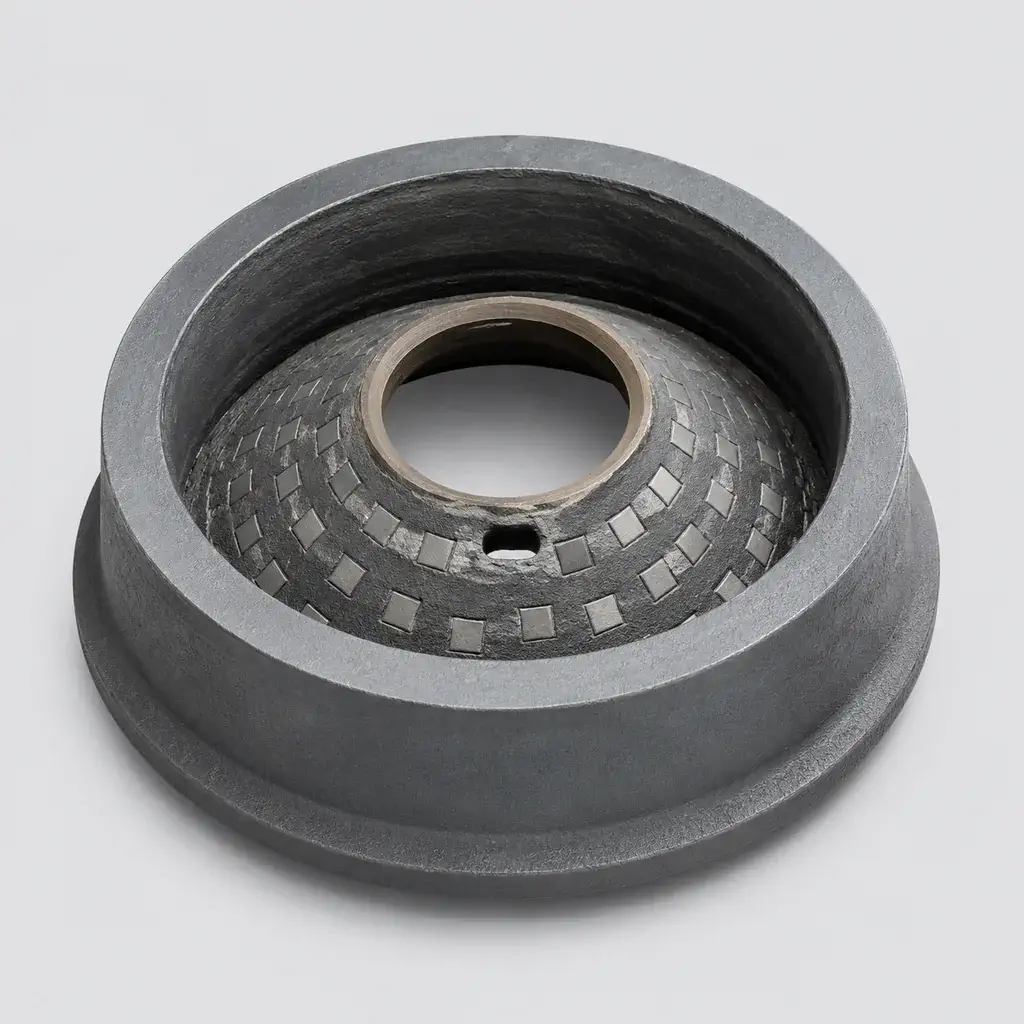
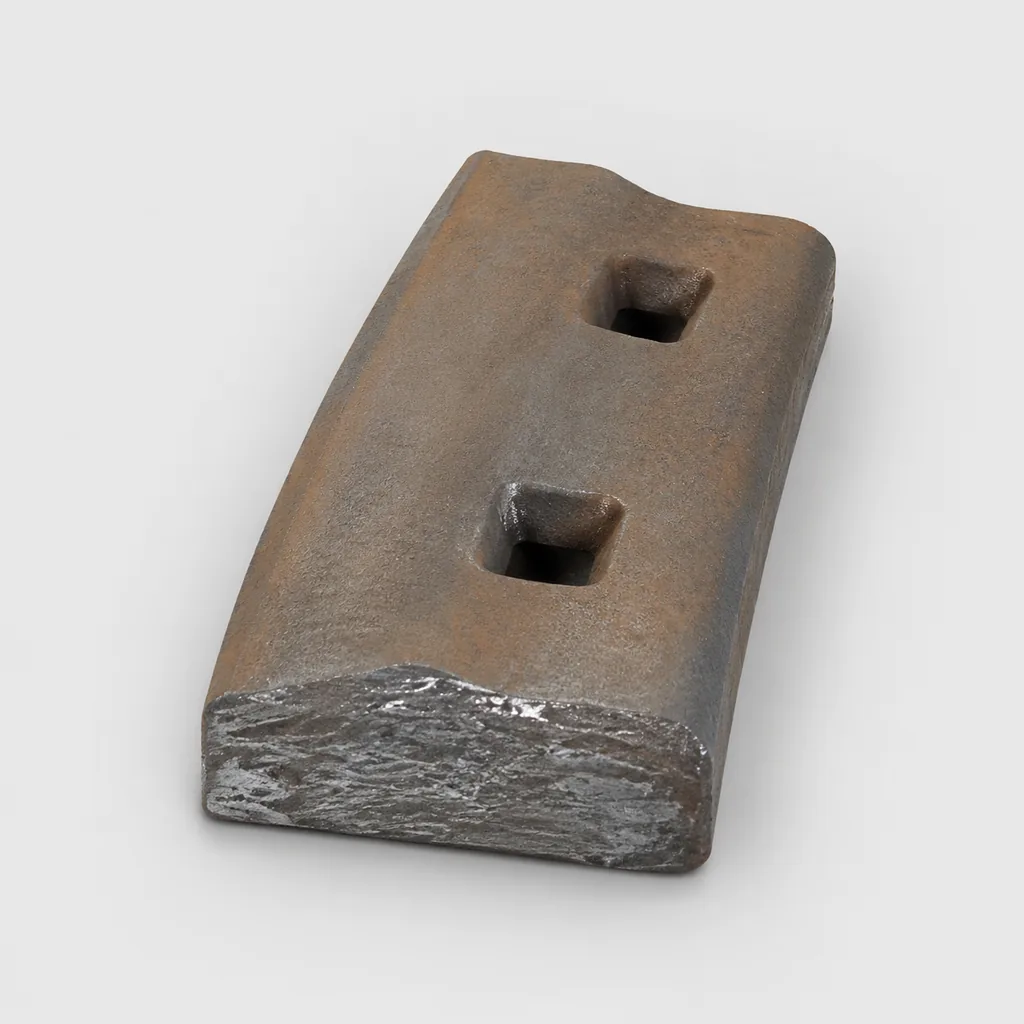
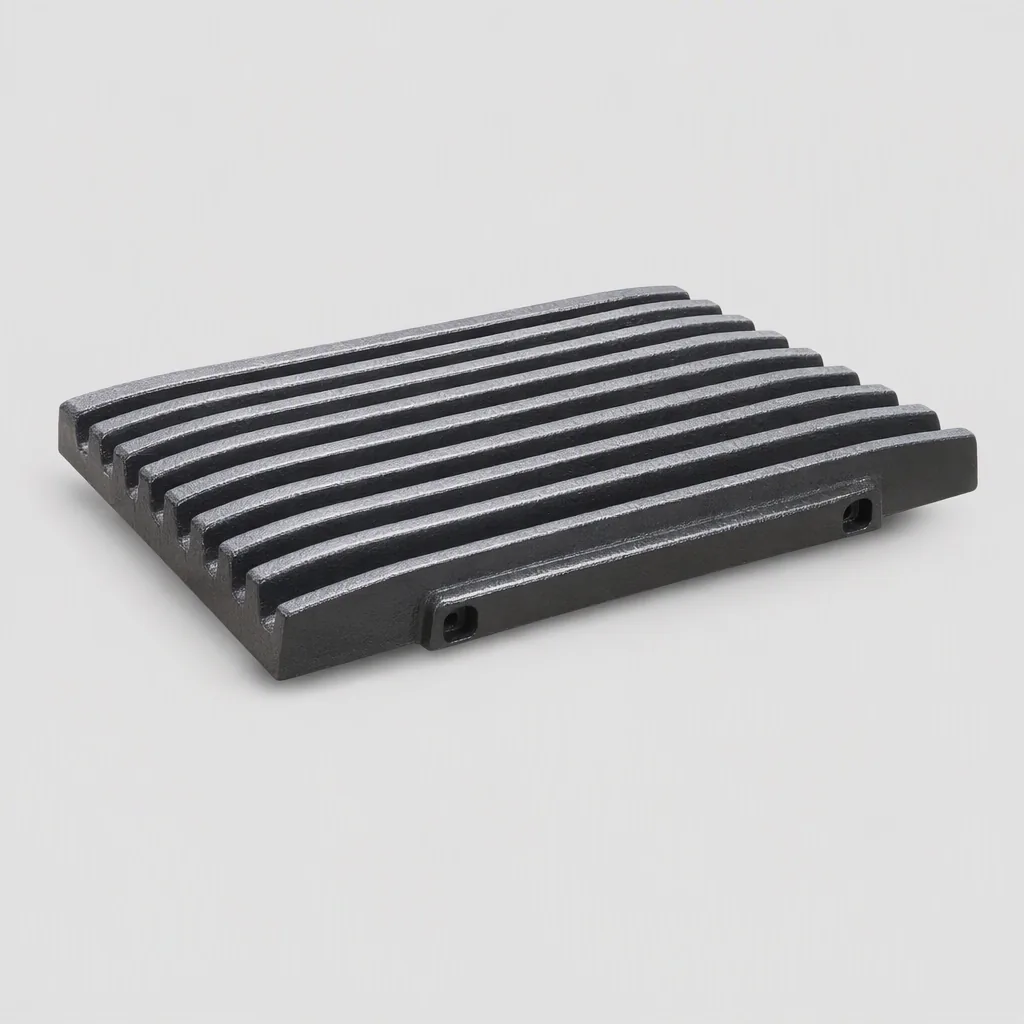
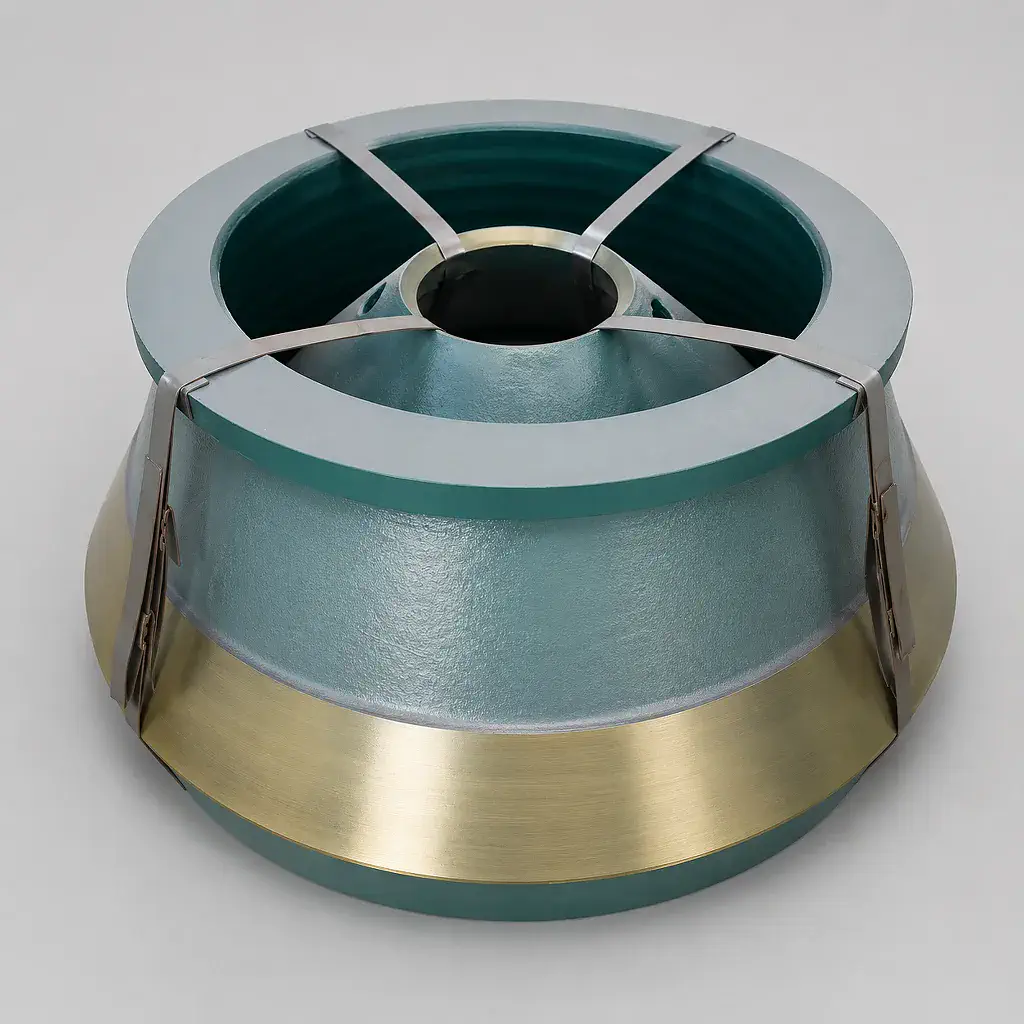
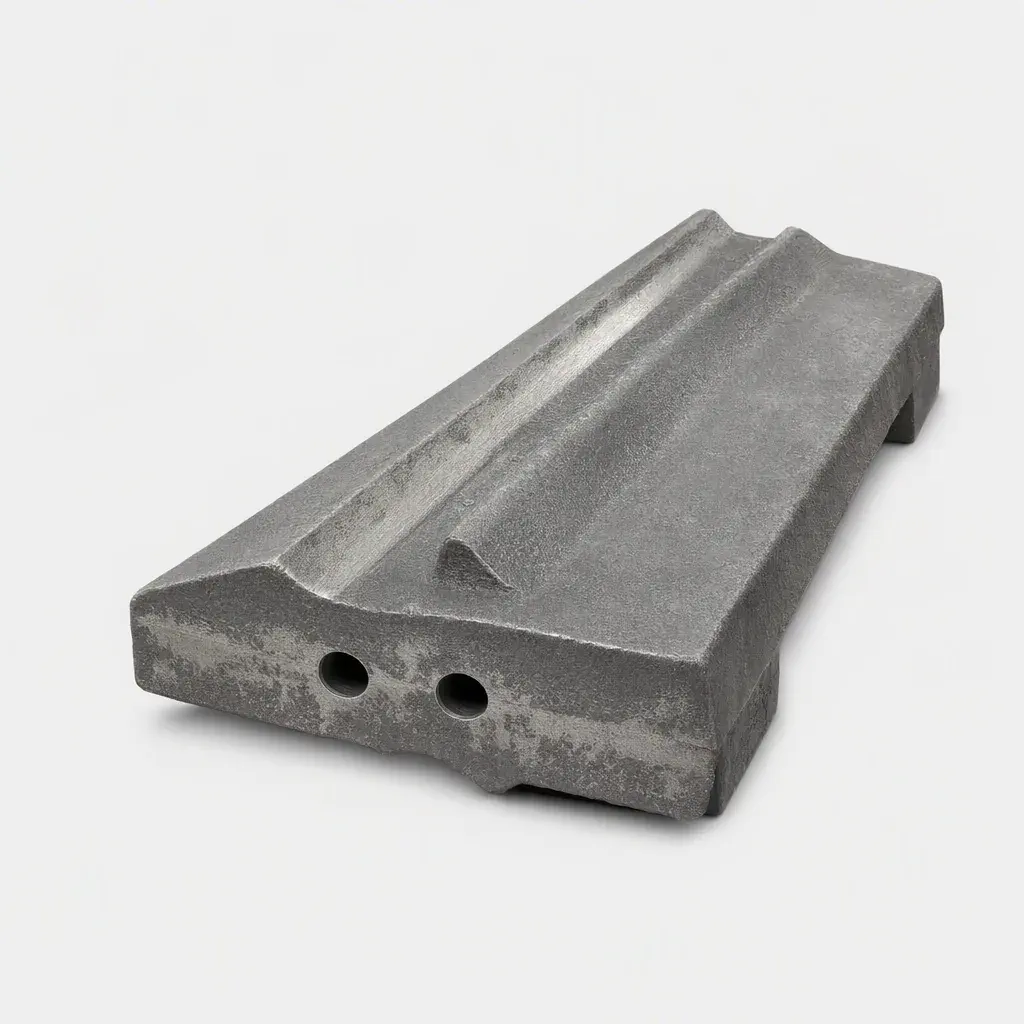
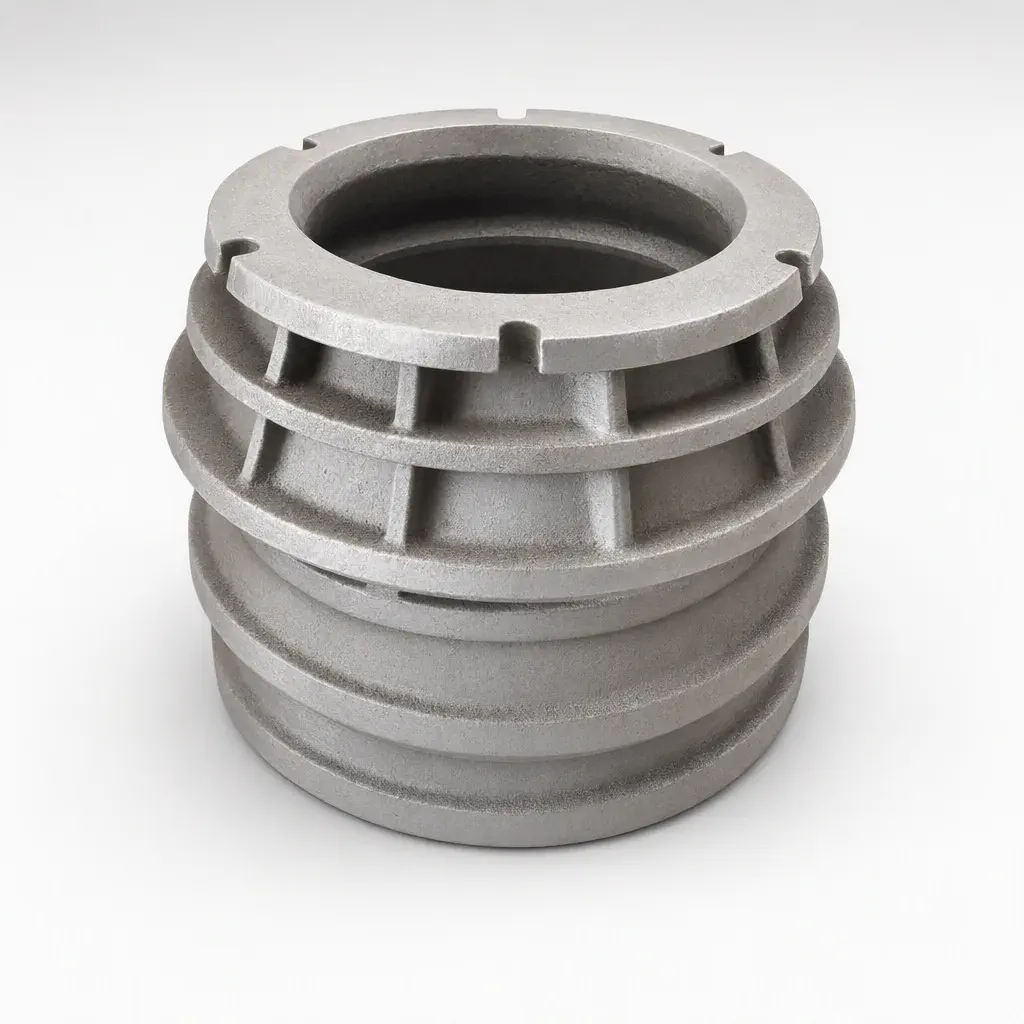
Custom crusher wear parts are not ordered in the same way as standard spares. A drawing is useful, but it does not describe the feed material, wear pattern, cracking history, shutdown schedule or the buyer’s actual performance target. The strongest quotation combines engineering data with operating data. This guide explains how to request custom crusher wear parts from drawings, what a casting supplier needs before pricing, how the casting process works and which quality-control points matter before shipment.
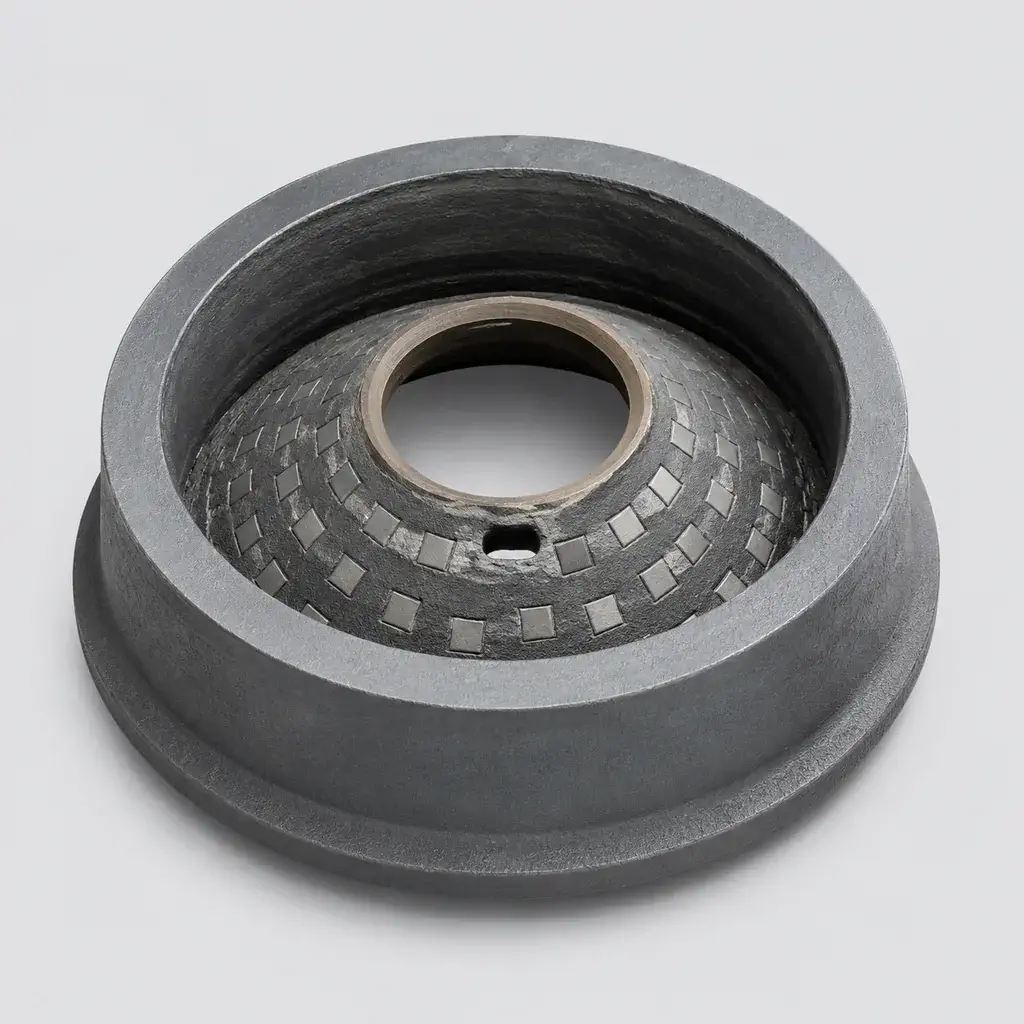
When custom wear parts make sense
Standard wear parts are usually the fastest option when the crusher model is common and the duty is ordinary. Custom casting becomes useful when one of the following applies:
- The machine is old, modified or locally rebuilt
- The OEM part number is unclear
- The existing part fits but wears too quickly
- The plant wants to change the tooth profile, liner profile or impact-face design
- Wear is concentrated in one zone while the rest of the part still has serviceable material
- The buyer needs metal-matrix composite or hard-alloy enhanced parts
- The part is a mill liner, feed plate, side liner, pump case or special protective casting made to drawing
Custom does not necessarily mean complicated. Some parts need only drawing confirmation and conventional casting. Others require material adjustment, pattern work, machining, fit checks and a more detailed inspection package.
What to send before asking for a price
The more complete the RFQ package, the more accurately a supplier can quote. At a minimum, provide:
- Part name and machine type
- OEM part number, if available
- Drawing in PDF, DWG, DXF or STEP format
- Photos of the new part, if available
- Photos of the worn part after service
- Current material and service life
- Feed material and maximum feed size
- Operating problem: rapid wear, cracking, poor fit, loose bolts or inconsistent product size
- Required quantity and target delivery date
- Surface-treatment and packing requirements
For jaw crusher wear plates, photos of the tooth profile are especially useful. For cone crusher mantles and concaves, chamber profile and target product size matter. For impact crusher blow bars, feed contamination and impact load help determine whether high-chrome or manganese is the safer choice.
Drawing review: dimensions, fit and risk points
A casting drawing should distinguish critical dimensions from non-critical surfaces. Not every surface requires machining; machining everything increases cost and lead time. The supplier should review:
- Overall length, width, height and weight
- Mounting surfaces and bolt-hole positions
- Contact faces and locking surfaces
- Lifting points and safe-handling features
- Minimum wall thickness and hot-spot areas
- Shrinkage and machining allowances
- Whether existing pattern tooling can be used or a new pattern is required
If the drawing is incomplete, a sample part can help, although shipping heavy castings is slow and costly. Clear photos with several measured reference dimensions can often support the initial review.
Material selection for custom parts
Select material according to the failure mode, not habit. For repeat parts, standard manganese, high-chrome or alloy steel may be sufficient. For severe localized wear, the discussion may extend to microalloy-adjusted manganese steel, TiC insert zones or MMC-style reinforcement, but only when photos of the worn part identify a clear target zone.
| Failure mode | Likely direction |
|---|---|
| Cracking or sudden breakage | Increase toughness; consider manganese or tougher alloy steel |
| Rapid abrasive wear with little impact | Consider high-chrome or a hard-alloy enhanced design |
| Localized wear in one strip or edge | Consider MMC or reinforcement only in the high-wear zone |
| Uneven wear that changes product size | Review the profile before changing chemistry |
| Elongated bolt holes or worn fit surfaces | Review fit, machining and backing or contact support |
For a general crusher-spares program, manganese steel covers many impact parts, high-chrome covers abrasive lower-impact parts, alloy steel covers balanced structural wear and MMC addresses extreme local wear. The custom route allows these decisions to be made part by part.
Casting process overview
A typical wear-parts casting workflow includes:
- Drawing and process review: confirm dimensions, material, machining allowances and the pattern plan.
- Pattern or mould preparation: make or adjust the pattern for shrinkage and the selected casting method.
- Moulding: prepare sand moulds, V-method moulds or EPC-style mould systems according to geometry, quantity and surface requirements.
- Melting and pouring: control chemistry by heat or batch and pour within the appropriate temperature range.
- Quenching and heat treatment: develop the required structure, hardness and toughness. High-chrome and alloy castings depend heavily on heat-treatment consistency.
- Cleaning, pressing where applicable and shot blasting: remove risers, gates, sand and scale, and correct practical shape issues where the process allows.
- Machining: machine fitting faces, bolt holes or contact surfaces where required.
- Inspection: check dimensions, hardness, visual defects and documentation.
- Packing: protect heavy castings from movement, impact and corrosion during sea freight.
Quality-control points that prevent shutdown surprises
The most expensive custom-part failure is discovering during a shutdown that the part does not fit. QC should therefore focus on fit and traceability before shipment.
Recommended inspection package:
- Drawing revision and part number confirmed in the documents
- Material chemistry certificate by heat number, with spectral or chemical testing where required
- Heat-treatment record or batch statement
- Hardness and mechanical test report when required for the material
- Metallographic testing for high-chrome, alloy or insert-enhanced castings when agreed
- Key-dimension photos with calipers or gauges
- Bolt-hole, mounting and contact-surface checks
- 3D scanning for complex shapes when manual measurement is insufficient
- Ultrasonic testing for selected heavy, thick or critical castings when specified
- Visual inspection: no cracks, serious shrinkage, sand inclusions or unsafe repair welding
- Surface-finish and painting confirmation
- Packing photos before container loading
For high-value parts, third-party inspection can be arranged. Even without it, photo-based pre-shipment checks can catch many practical problems.
Lead time and production planning
Custom wear parts usually fall into three lead-time groups:
- Existing pattern or familiar part: the fastest route, often handled like a repeat casting after drawing confirmation.
- New pattern with simple geometry: pattern work adds time, while production remains relatively straightforward.
- Heavy, complex or high-risk part: requires process review, possible trial casting, additional inspection and more planning.
Do not wait until the current part is close to failure. A better replacement program records service life by tonnes or operating hours, then orders the next set before the planned shutdown. For severe-duty parts, keep one emergency set where possible.
How to compare custom wear-part quotations
Do not compare unit price alone. Compare the complete offer:
| Item | Why it matters |
|---|---|
| Material route | Influences wear life and cracking risk |
| Pattern or tooling cost | One-time cost that may be reusable for repeat orders |
| Machining scope | Controls fit and lead time |
| Inspection package | Reduces shutdown risk |
| Packing method | Heavy castings can damage one another in transit |
| Lead time | Must align with the shutdown schedule |
| Technical communication | Custom parts require prompt drawing clarification |
A lower-priced quote with unclear material, no drawing review and no dimensional inspection is not cheaper if the part misses the shutdown window.
Need custom wear parts? Start with a technical review
If a part keeps wearing out too quickly, cracking or losing its fit, a technical review before any price comparison is usually the fastest route. Send the drawing together with the operating data, and the material route, casting process and inspection scope can be matched to the actual failure mode rather than guessed.
Send:
- Part name, machine model and OEM number if available
- Drawing in PDF, DWG, DXF or STEP format
- Photos of the worn part showing exactly where it failed
- Current material and service life in tonnes or operating hours
- Target shutdown window
Our wear-parts casting capability page explains the pattern, moulding, melting, heat-treatment, machining and inspection steps behind custom crusher wear parts. Where wear is concentrated in one zone rather than across the whole casting, the custom composite and hard-alloy enhanced wear parts range covers localized reinforcement designed from the worn-part evidence.