
A valve's pressure rating tells you what it can hold. Its coating decides how long it holds it. For ductile iron valves in water systems, the epoxy layer — sprayed liquid or fusion-bonded powder — is the barrier between the casting and decades of wet, sometimes corrosive service. This guide covers what these coatings are, how the FBE process runs, which quality checks separate a sound coating from a thin one, and what to confirm before ordering.
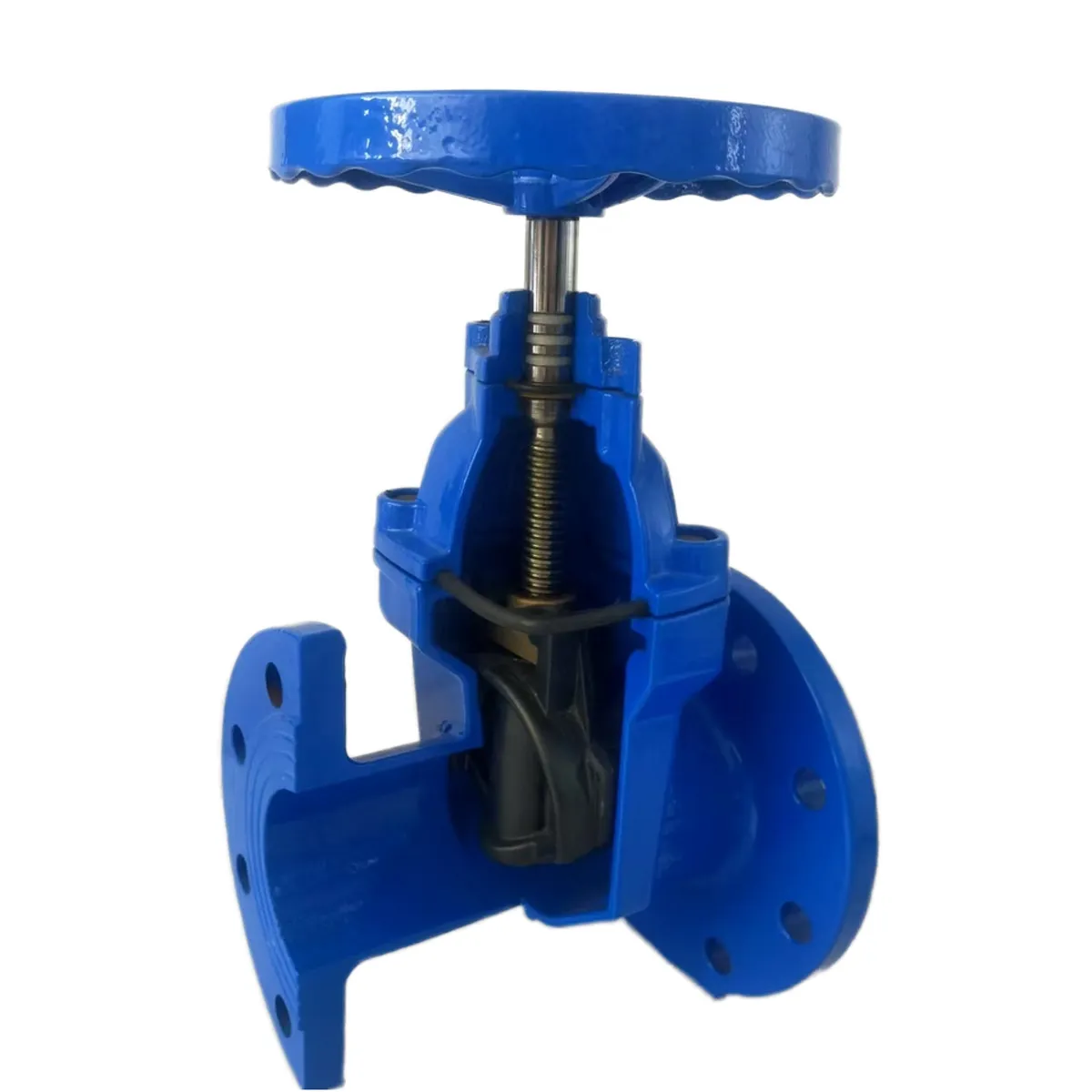
Why ductile iron valves need a coating
Ductile iron is the workhorse body material for water valves: it is strong, castable and economical. It is also a ferrous metal, and ferrous metals corrode in the presence of water and oxygen. Inside a potable main, corrosion is not just structural; it can affect water quality and cause tuberculation on the interior surface. Outside, a buried valve sits in soil chemistry that ranges from mildly damp clay to aggressive, saline ground.
A protective coating addresses both sides. The interior film isolates the iron from the conveyed water; the exterior film isolates the casting from soil and atmosphere. AWWA C550-24, *Protective Interior Coatings for Valves and Hydrants*, exists for exactly this duty. It sets requirements for protective interior coatings on valves and hydrants in water supply service.
The same logic applies across the valve family. The listed flanged butterfly valve with worm gear (D341X) pairs an epoxy-coated ductile iron body with an SS304 disc and EPDM seat. The Silent Check Valve (HC41X) uses an epoxy-coated ductile iron body with a 304 stainless-steel spring, and the Y-Type Strainers a 304 stainless-steel screen. In each case the epoxy body carries the corrosion duty.
Liquid epoxy vs fusion-bonded epoxy: what the terms mean
Buyers often see "epoxy coated" on a datasheet without realising it can describe two quite different processes.
Liquid epoxy is a two-component paint system. Resin and hardener are mixed, then sprayed, brushed or rolled onto the prepared surface, curing chemically at ambient or slightly elevated temperature. AWWA C550-24 sets the requirements for protective interior coatings on valves and hydrants, which is the duty such linings perform.
Fusion-bonded epoxy (FBE) is a solvent-free one-part powder. It is applied electrostatically to a heated part, melts on contact, flows over the surface and crosslinks as the heat cures it. No carrier evaporates, so one application builds a uniform film. AWWA C213:2022 describes the material, application and testing requirements for FBE coatings and linings for steel water pipe and fittings, and is the reference for the FBE family on waterworks steel.
Both routes produce an epoxy barrier; neither is universally better. What matters is that the specified system matches the component geometry, service environment and inspection regime.
| Feature | Liquid epoxy | Fusion-bonded epoxy (FBE) |
|---|---|---|
| Form | Two-component liquid (resin + hardener) | Single-component thermosetting powder |
| Application | Spray, brush or roll at ambient conditions | Electrostatic powder spray onto preheated metal |
| Curing | Chemical cure at ambient or elevated temperature | Heat-activated melt, flow and chemical crosslink |
| Film build | Multiple coats typical | Single fusion application |
| Governing waterworks reference | AWWA C550-24 (valve and hydrant interiors) | AWWA C213:2022 (steel water pipe and fittings) |
How the FBE process runs, step by step
An FBE finish is a factory process, and its quality is mostly decided before the powder leaves the gun:
1. Surface preparation. The casting is abrasive blast cleaned to the grade specified in the governing standard and datasheet, removing mill scale and rust and leaving an anchor profile the cured film can grip. AWWA's C213 revisions have progressively tightened this area. The 2015 edition updated blast-cleaning requirements alongside additions such as cathodic disbondment testing and a dedicated thickness section, per the revision notes published on the AWWA Store's C213-15 product page.
2. Preheating. The part is heated so the powder melts the instant it lands. Preheat temperature is part of the system's qualification: too cool gives poor flow, too hot begins curing before the film has flowed out.
3. Electrostatic application. Charged powder is sprayed onto the earthed part, depositing evenly, including into recesses a liquid might run out of.
4. Fusion and cure. The melted powder wets the anchor profile and crosslinks into a continuous thermoset film. The cure schedule, time and temperature together, is a specification item, which is why cure verification sections were revised in the governing standard.
5. Cooling and inspection. The cooled part passes the quality gates described next: thickness measurement and holiday testing at minimum.
The takeaway is that FBE quality is a chain. Surface prep, preheat, application and cure each have to hold, and the final inspections only verify what the process produced.
The quality gates: thickness, holidays and adhesion
- Low-voltage wet sponge testing suits thinner films (generally up to around 500 µm), where its low voltage will not damage sound film.
- High-voltage spark testing suits thicker films, with the probe voltage set against the measured thickness. Too low misses real holidays; too high can puncture sound film.
Matching the coating to the environment: ISO 12944-2:2017 categories
A coating that shrugs off a heated plant room can be overwhelmed in a coastal pump station, so specifying starts with classifying the environment. ISO 12944-2:2017 does this with corrosivity categories for atmospheres, extended in the 2017–2018 revision by the CX extreme category and immersion categories:
Valves in the same network can sit in different categories. An isolation valve in a ventilated chamber and a pump-discharge valve in a humid coastal plant room do not share an exposure. The category, not habit, should drive the coating specification, and where a component will be immersed or buried, the immersion and soil regimes need their own treatment rather than an atmospheric assumption.
| Category | Typical environment |
|---|---|
| C1 | Very low: heated indoor spaces |
| C2 | Low: rural inland atmospheres |
| C3 | Medium: urban and light industrial atmospheres |
| C4 | High: industrial or mild coastal atmospheres |
| C5 | Very high: high-salinity coastal or heavy industrial, high humidity |
| CX | Extreme: offshore, or extreme industrial with aggressive media |
Buried valves: zinc, epoxy and polywrap
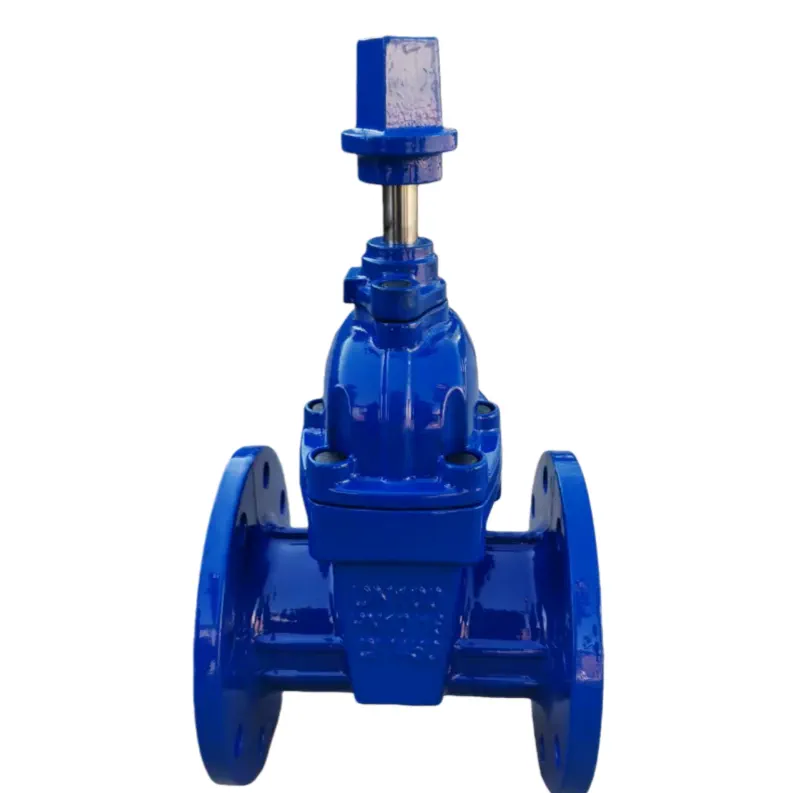
Buried service adds a layer of engineering on top of the coating itself. For ductile iron pipeline components, ISO 8179-1:2017 specifies a factory-applied external zinc-based coating, commonly finished with a topcoat, that protects the casting both directly and by galvanic action at points of damage. In aggressive soils, polyethylene encasement per AWWA C105 practice adds a mechanical barrier separating the component from the soil altogether.
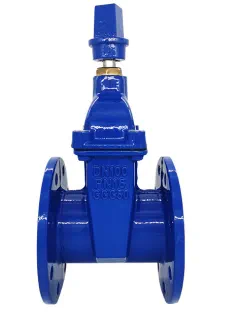
The two approaches are complementary. That is why the listed Buried Gate Valve (MZ45X / MZ45T) combines full epoxy protection with a polywrap option, a direct-burial design and a gearbox with extension spindle for operation from ground level. For chamberless installations under roads, the coating system and the encasement decision should be made together against the soil survey.
What to ask before you buy
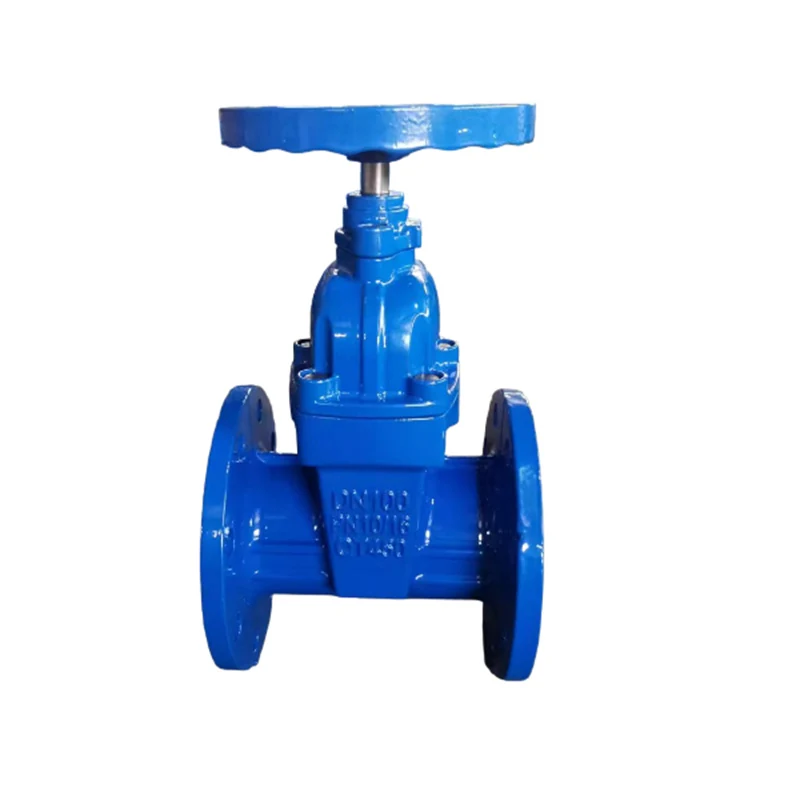
Coating failures are rarely exotic. They usually trace to an unspecified or unverified step. Five questions sort most of it out:
1. Which standard governs the coating? Interior coatings for valves and hydrants follow AWWA C550-24; FBE systems on waterworks steel follow AWWA C213:2022; European projects often carry paint-system requirements under ISO 12944:2017.
2. What film thickness is specified, and where is it measured? Minimum DFT plus the measurement plan, with attention to edges and internal passages.
3. Was the coating holiday tested, and by which method? Wet sponge or high-voltage spark, voltage set against measured thickness, with any holidays repaired and retested before release.
4. What surface preparation grade was used? Blast-cleaning grade and anchor profile are the foundation everything else sits on.
5. Is the coating qualified for drinking water contact? Contact-approval requirements differ by country and utility, so qualification documentation should be requested per project rather than assumed.
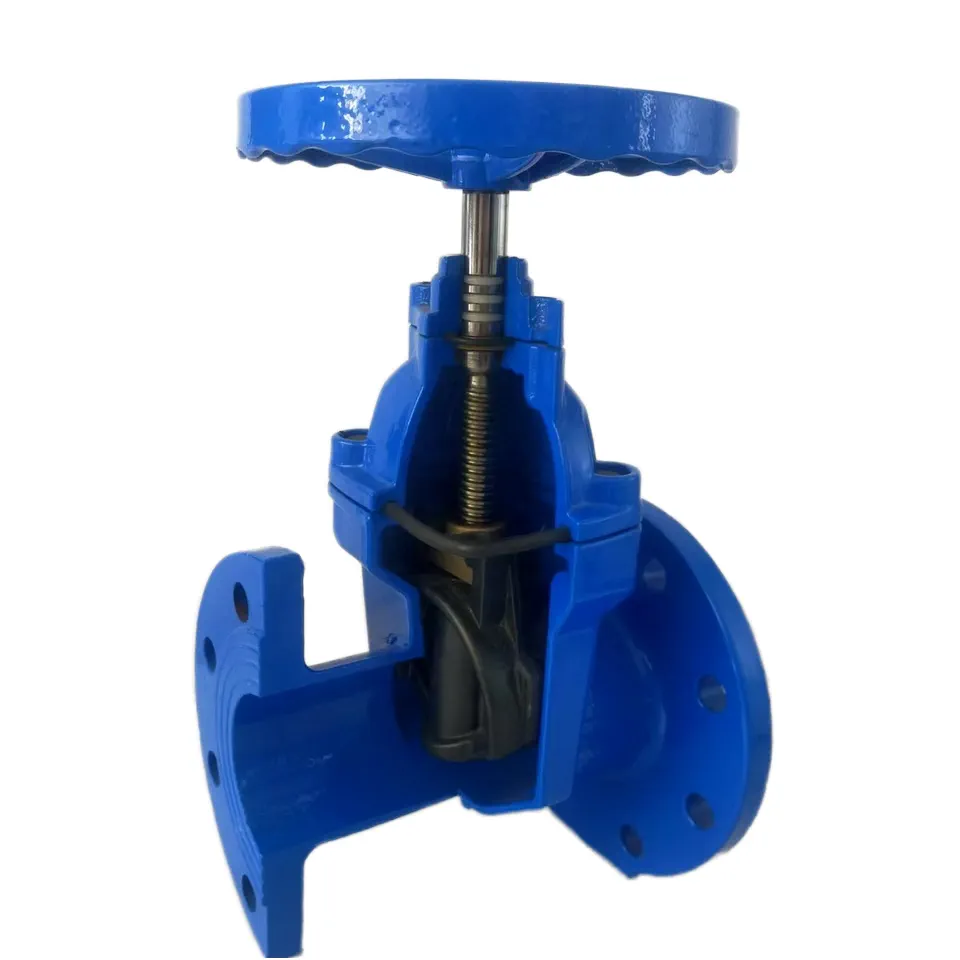
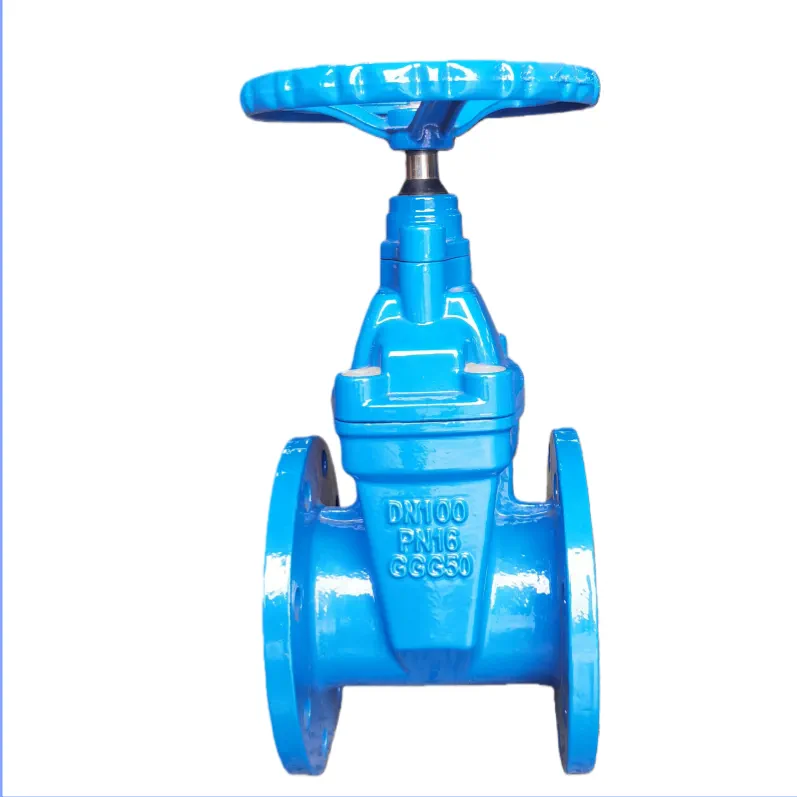
On the supply side, catalogue coatings should be read the same way. The listed resilient gate valves, such as the Resilient Seated Gate Valve (NRS) and the AWWA resilient gate valve (NRS), pair fusion-bonded epoxy coating on ductile iron bodies with EPDM resilient seats, and a DIN 3352 F4 (NRS) pattern is listed for German-spec projects. The F4/F5 pattern designations persist in product naming even though the DIN 3352 parts have been withdrawn and superseded by DIN EN 1171:2015 for industrial gate valves. Coating type as listed is the published configuration. The exact film specification, and size ranges and pressure classes for a specific order, should be confirmed with the factory before contract.
Reference sources
- AWWA C550-24, *Protective Interior Coatings for Valves and Hydrants*: American Water Works Association (minimum requirements for protective interior coatings for valves and hydrants).
- AWWA C213:2022, *Fusion-Bonded Epoxy Coatings and Linings for Steel Water Pipe and Fittings*: American Water Works Association (replaced the 2015 edition in May 2022). Revision notes for the 2015 edition are published on the AWWA Store's C213-15 product page (https://store.awwa.org/AWWA-C213-15-Fusion-Bonded-Epoxy-Coatings-and-Linings-for-Steel-Water-Pipe-and-Fittings-PDF), covering the added cathodic disbondment testing, thickness section and revised cure and blast-cleaning sections.
- AMPP/NACE SP0188-2024, *Discontinuity (Holiday) Testing of New Protective Coatings on Conductive Substrates*: Association for Materials Protection and Performance (wet sponge and high-voltage spark methods; revised from NACE SP0188-2006).
- ASTM D5162, *Standard Practice for Discontinuity (Holiday) Testing of Nonconductive Protective Coating on Metallic Substrates*: ASTM International.
- ISO 12944-2:2017, *Paints and varnishes — Corrosion protection of steel structures by protective paint systems — Part 2: Classification of environments*: International Organization for Standardization.
- ISO 8179-1:2017, *Ductile iron pipes, fittings, accessories and their apertures and cement-mortar linings — External zinc-based coating — Part 1: Zinc finish coating*: International Organization for Standardization (confirmed current in the 2023 systematic review).
- AWWA C105, *Polyethylene Encasement for Ductile-Iron Pipe Systems*: American Water Works Association (encasement practice for buried-service protection).
- DIN EN 1171:2015, *Industrial valves — Cast iron gate valves*: the standard that superseded the withdrawn DIN 3352 parts; the F4/F5 pattern designations persist in product naming.