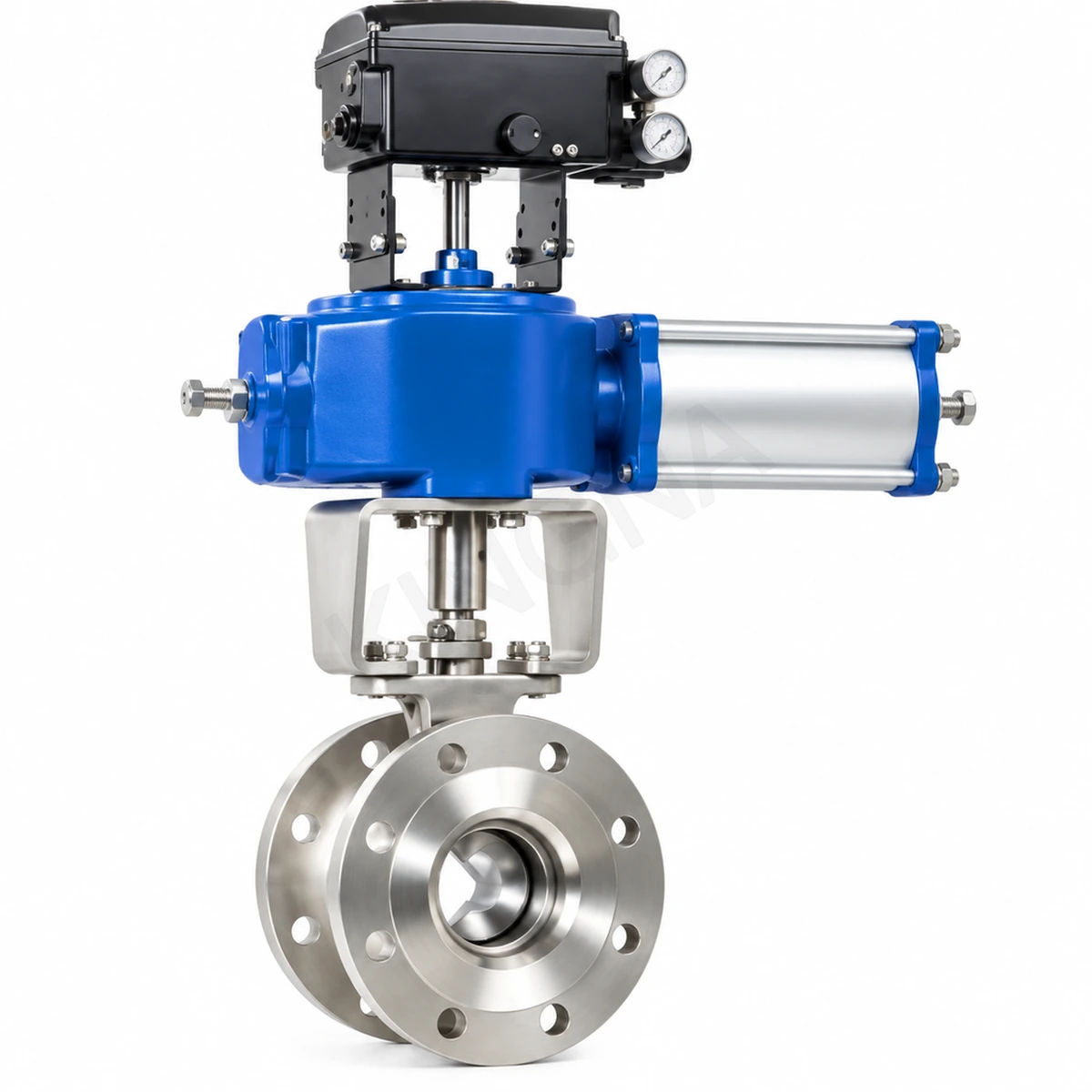
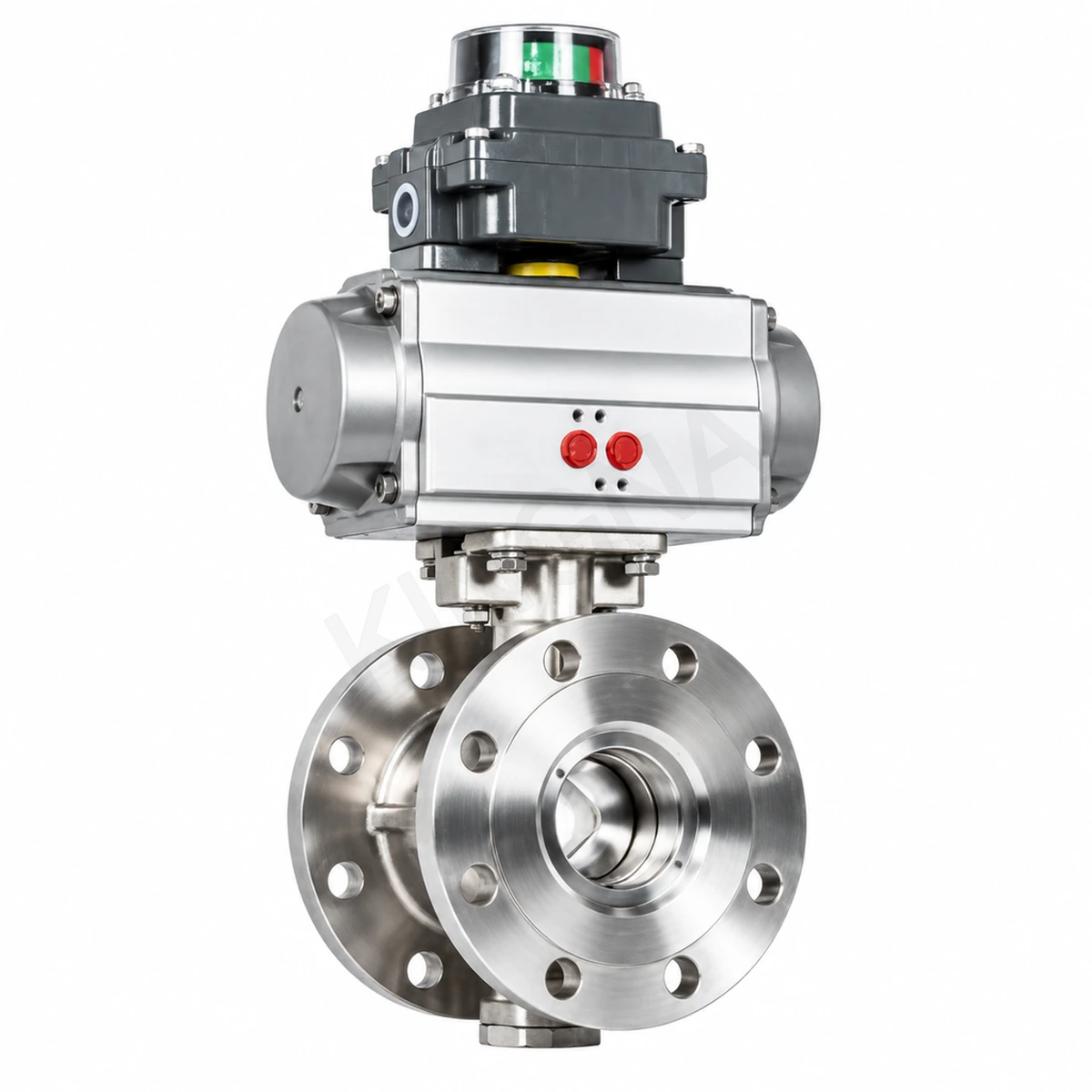
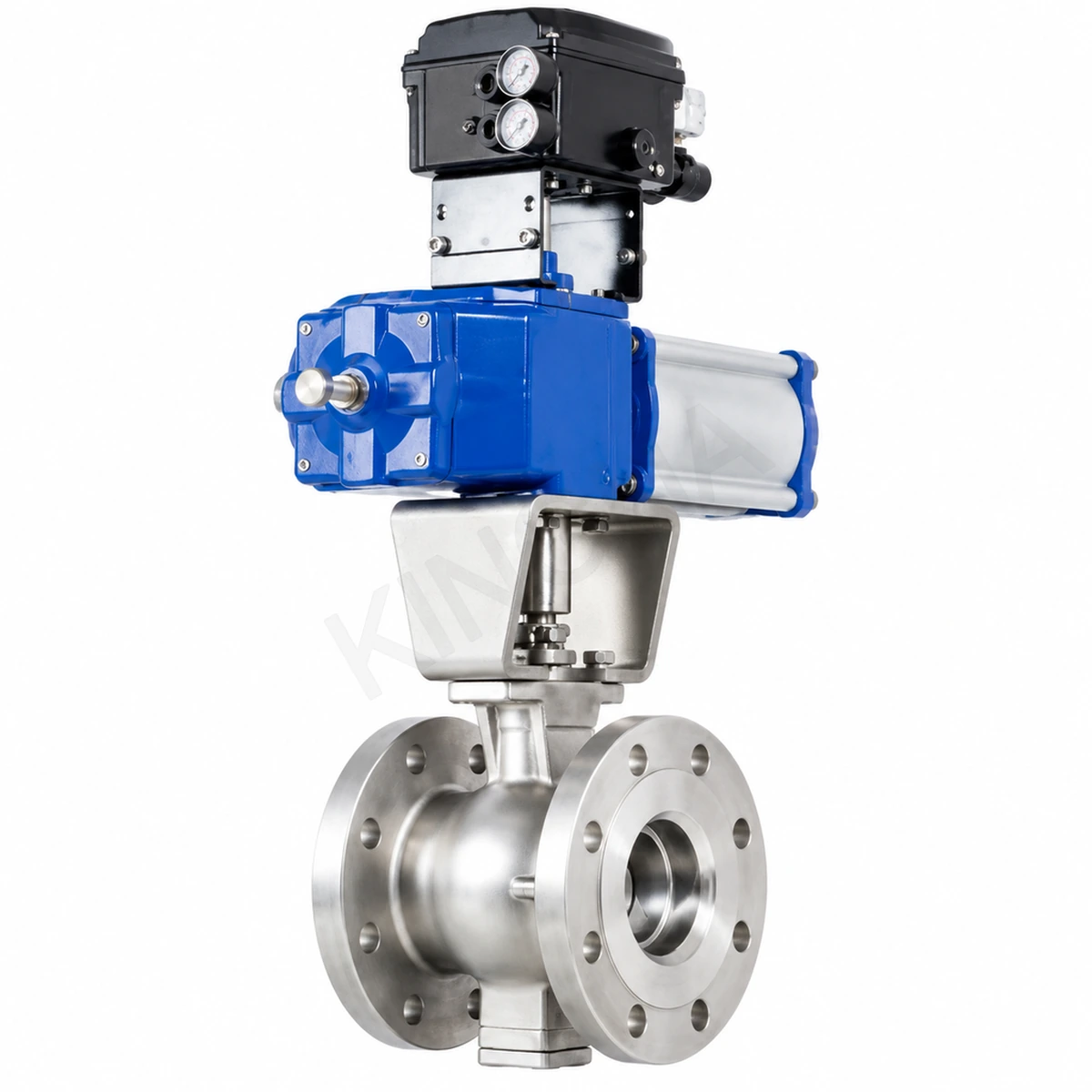
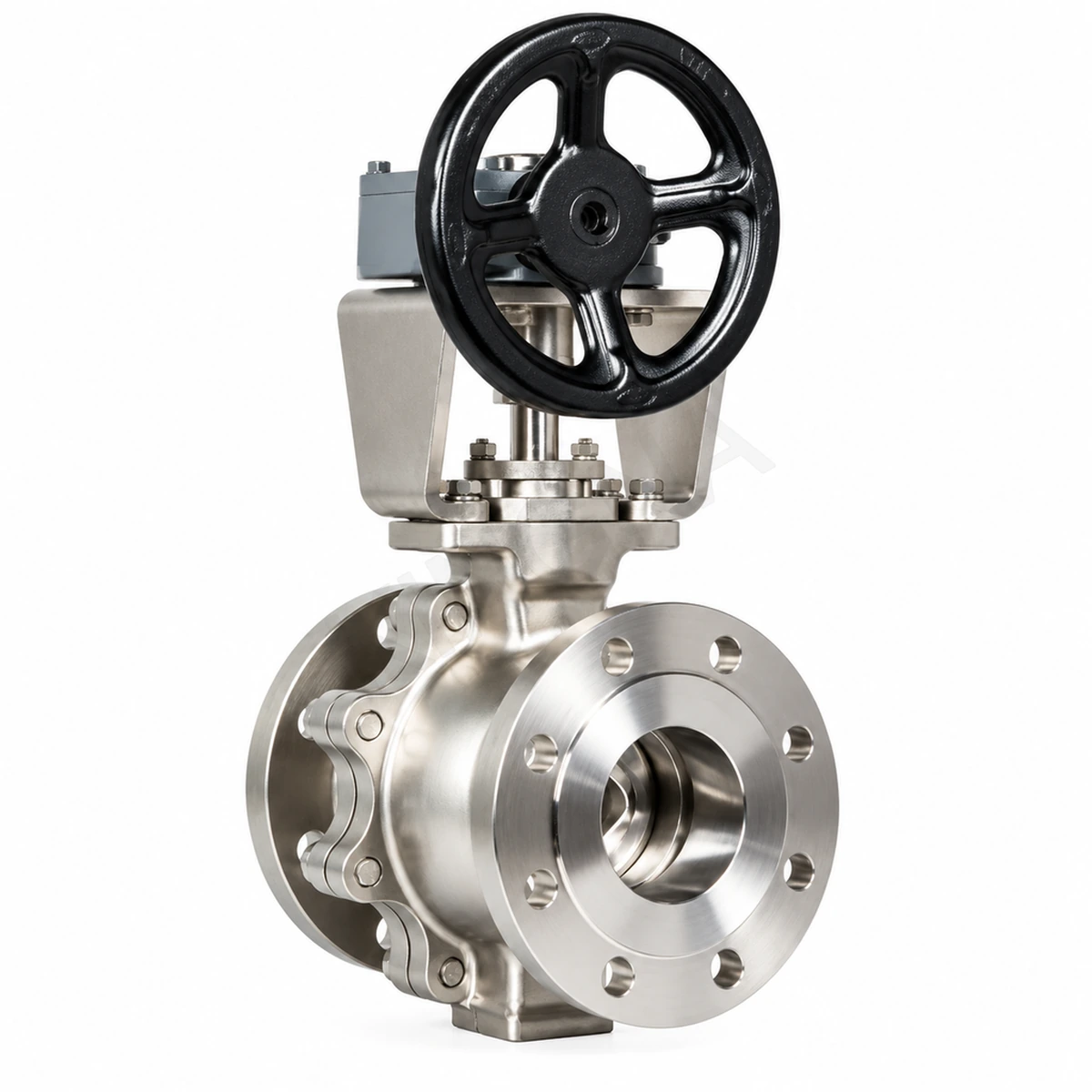
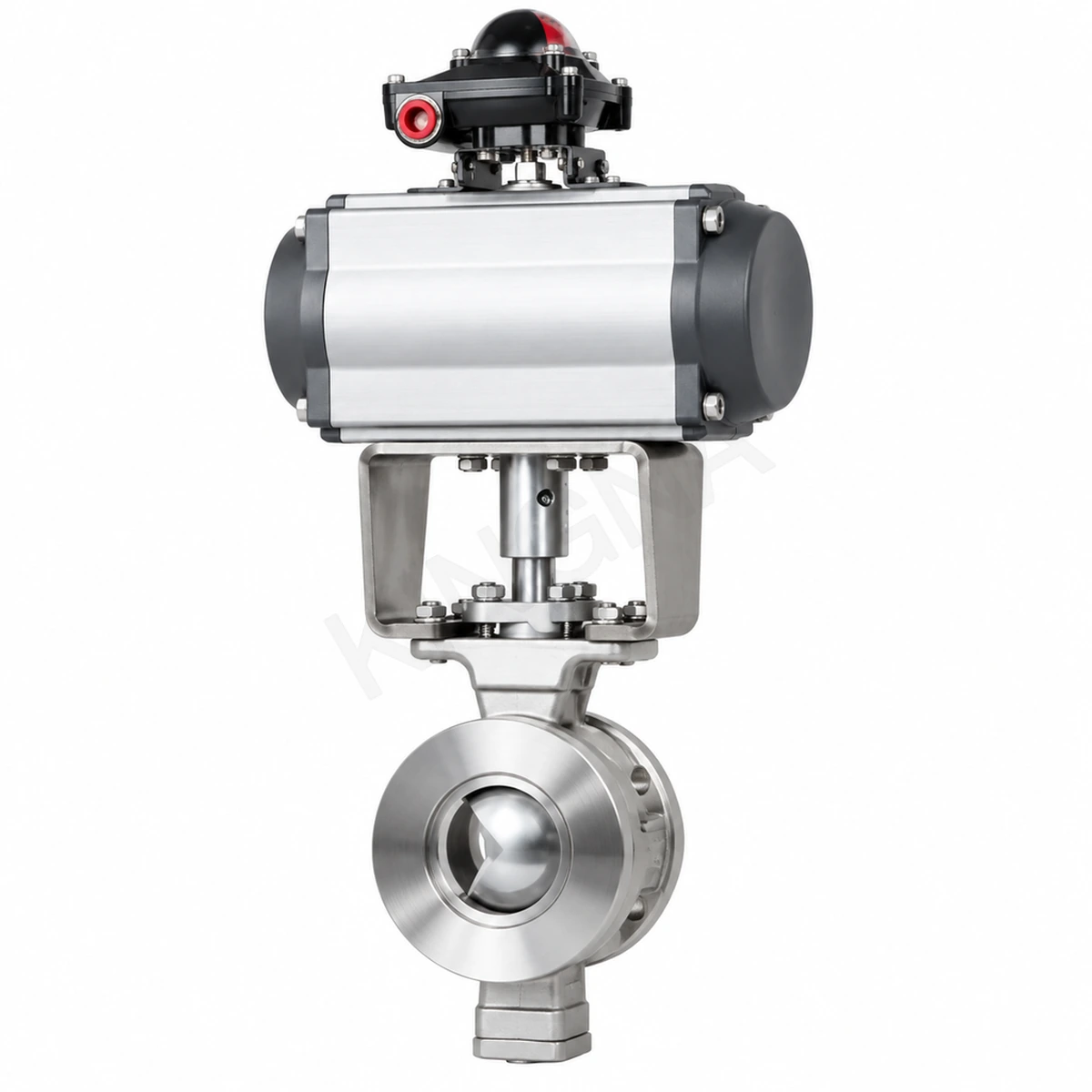
The one-piece full-bore design opens a passage close to the pipe bore, so capacity is gained without going up a line size; the body is cast in one piece with no body joint to leak. The V-notched segment ball still gives near-equal-percentage control and shears through fibre and solids, and the seat carrier, adjustable stem and square-shaft drive are shared with the rest of the V-port range. Sizes DN100–DN300; PN10 / PN16 / PN25 or 150LB; −29 to 350 °C, −29 to 700 °C on request; Class V / Class VI, uni- or bi-directional.
General Specifications
Size RangeDN100 – DN300
Pressure RatingPN10 / PN16 / PN25 · 150LB
Face-to-FacePer manufacturing partner's standard
Flange DrillingHG/T 20592 / GB/T 9113 / EN 1092 / ASME B16.5 / GOST 33259
Test StandardIEC 60534-4 / ANSI-FCI 70.2 / GB/T 4213
Flow ControlOn / off and modulating
Flow CharacteristicNear equal percentage
Sealing DirectionUni-directional or bi-directional
Leakage ClassClass V / Class VI
Temperature−29 to 350 °C · −29 to 700 °C on request
Mediaslurry / pulp / abrasive
Materials & Coating
BodyCarbon steel / stainless steel / duplex steel / special material — one-piece
BallV-notched segment ball, near full-bore passage
SeatReplaceable metal (hard) or soft seat
StemTwo-piece, adjustable from above; anti-blow-out design
OperationLever, worm gear, pneumatic, electric
Applications
Graphite reactor lines MVR evaporators Ore washing and filter presses High-capacity transfer lines
One body, no body joint to leak
The one-piece full-bore body has a passage close to the pipe bore and no split line, so there is no body joint that can leak to atmosphere. On a line where the medium is both abrasive and a leak risk, that is the reason to take this build over the two-piece.
The trade is maintenance: the ball and seat are reached from the pipe end, so the valve comes out of the line for a seat change.
What full bore is worth
Capacity is gained without going up a line size, and the pressure drop across the valve stays low. On a gravity or low-head line that is often the difference between making the flow and not.
More from this series
Related guides