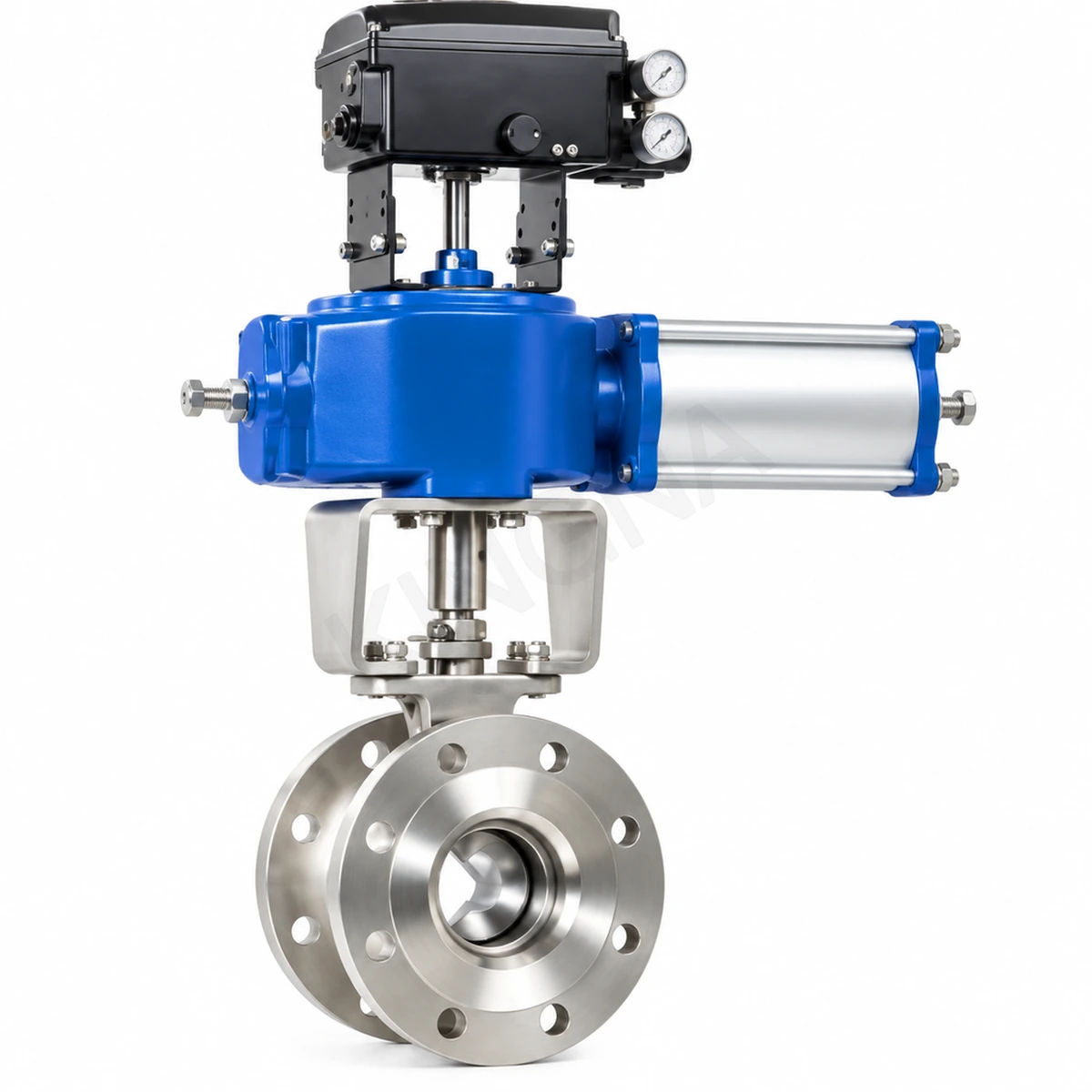
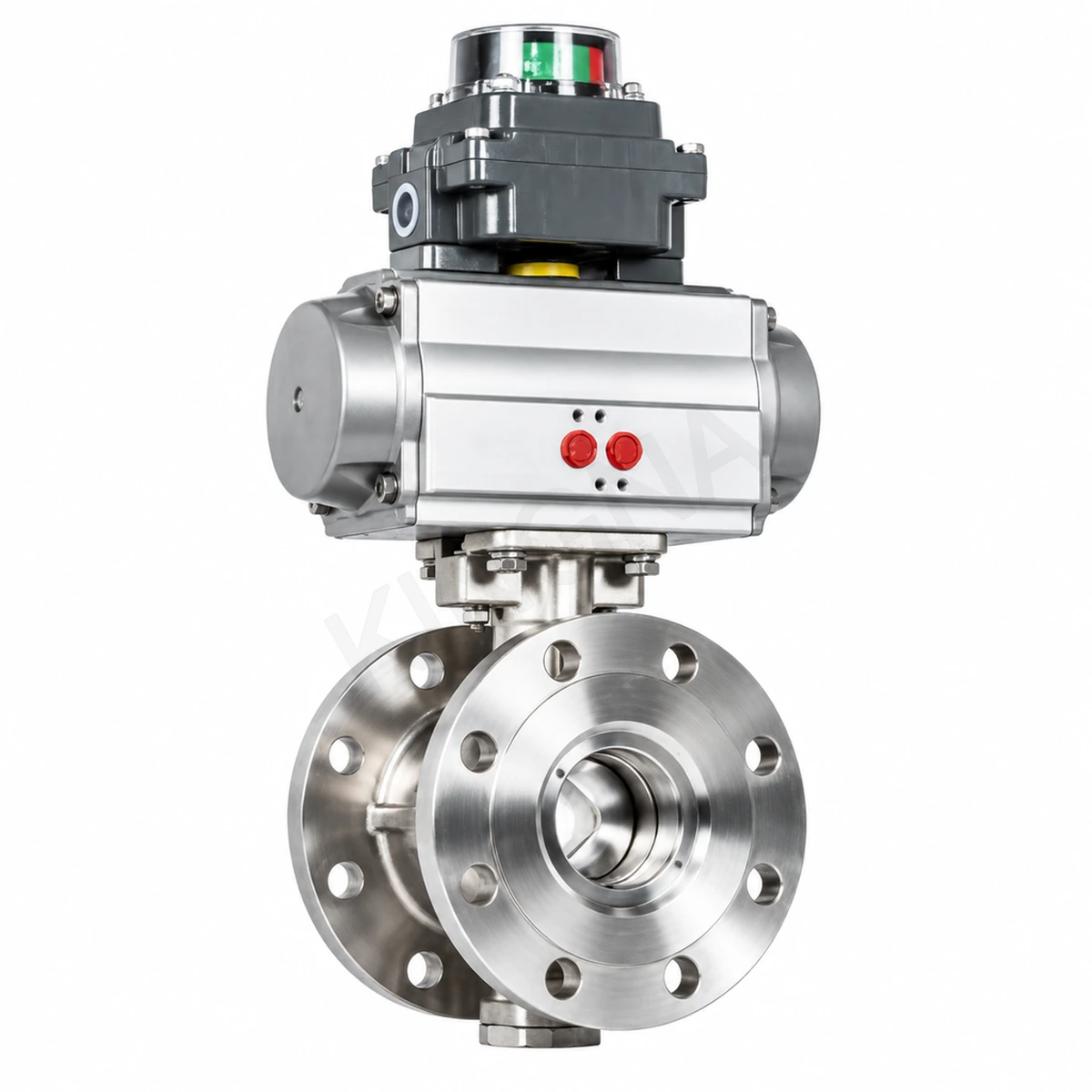
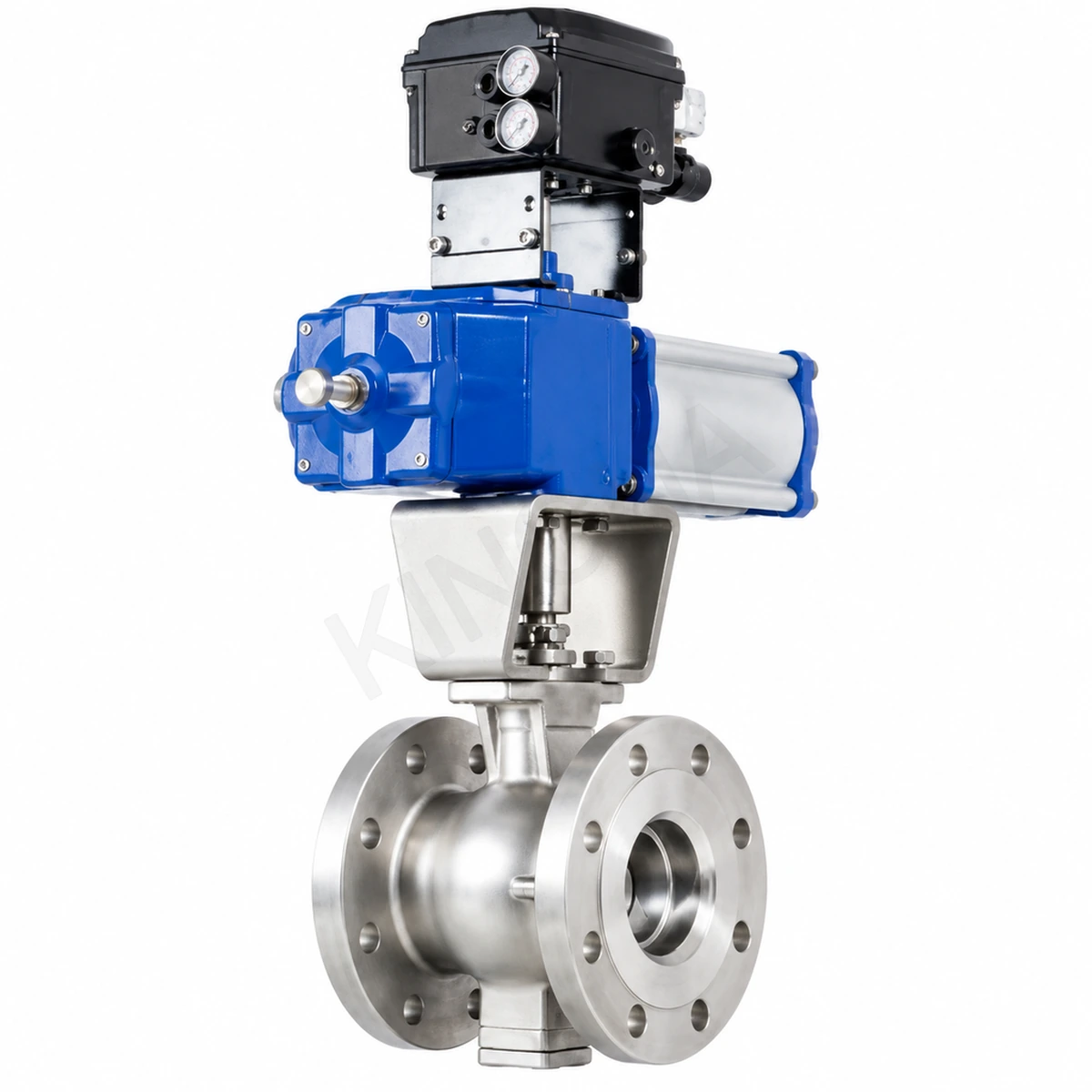
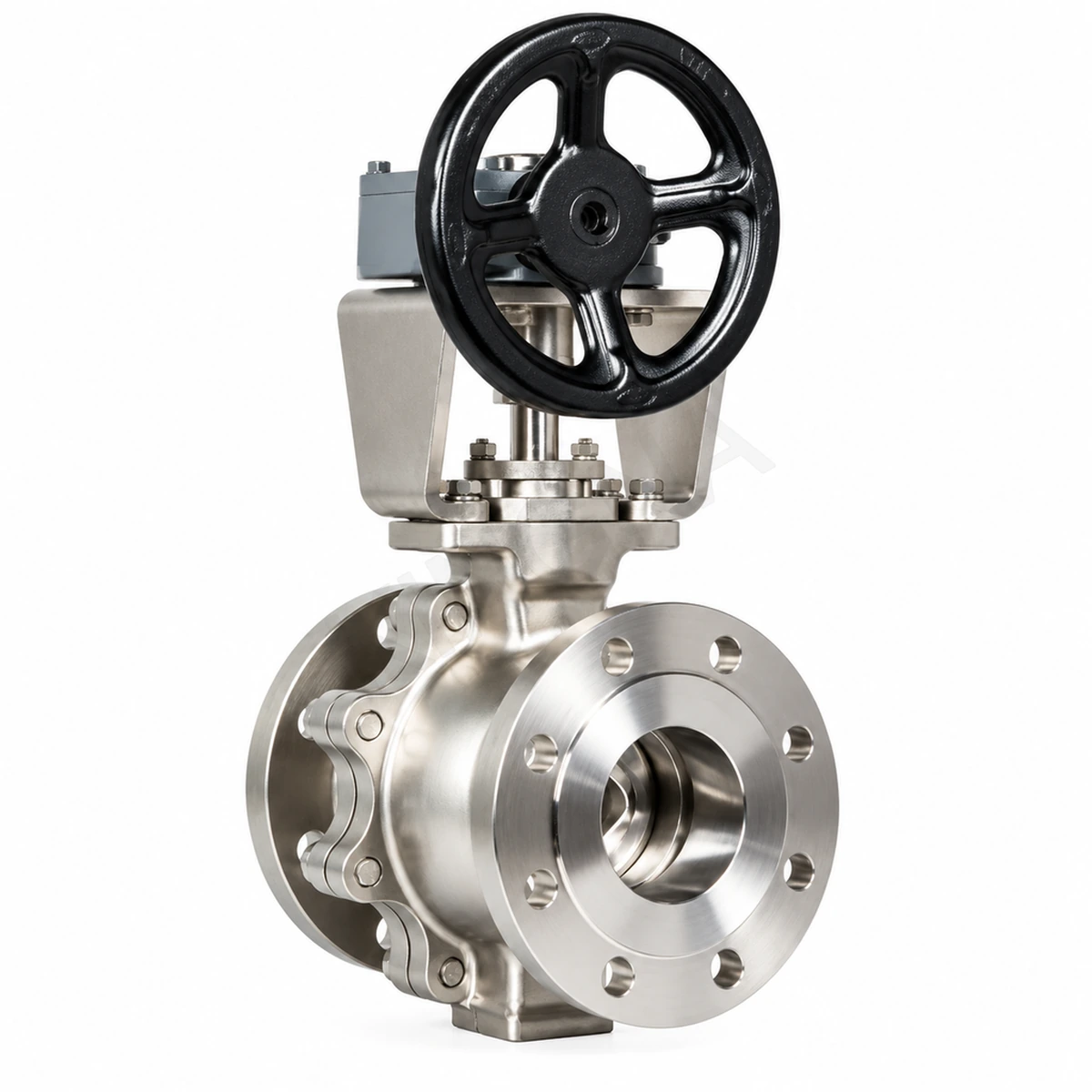
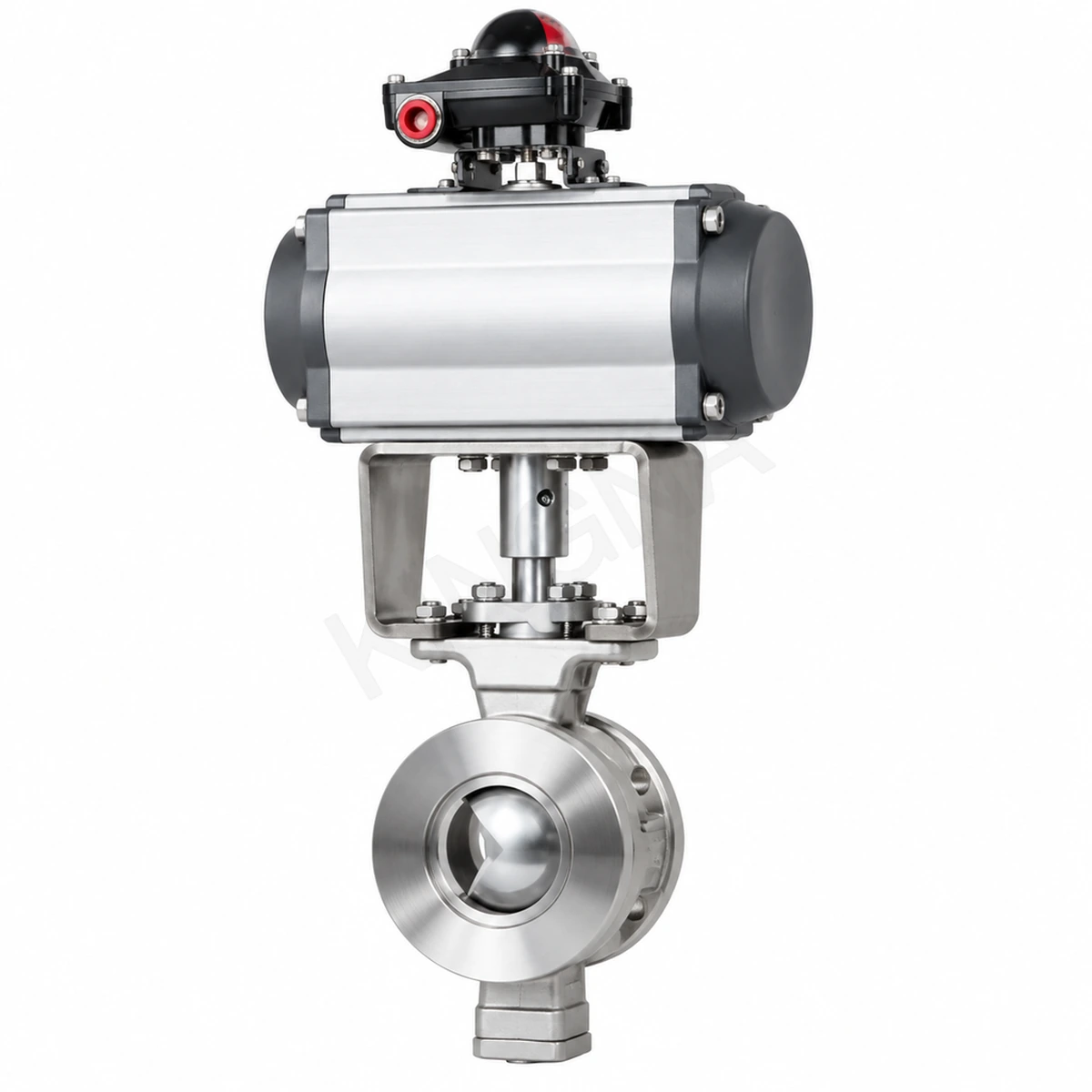
The wafer V-port valve is held between two pipe flanges by through-bolts, so it takes almost no face-to-face length and costs less than a flanged body. It uses the same V-notched segment ball, circlip-type seat carrier and adjustable stem as the flanged line, giving near-equal-percentage control and self-cleaning flow through fibrous and particle-laden media. This is the light-duty member of the range: unidirectional sealing, hard seat only, sizes DN25–DN250, PN10 / PN16 / PN25 or 150LB, −29 to 220 °C, Class V / Class VI.
General Specifications
Size RangeDN25 – DN250
Pressure RatingPN10 / PN16 / PN25 · 150LB
Face-to-FacePer manufacturing partner's standard (wafer)
Flange DrillingHG/T 20592 / GB/T 9113 / EN 1092 / ASME B16.5 / GOST 33259
Test StandardIEC 60534-4 / ANSI-FCI 70.2 / GB/T 4213
Flow ControlOn / off and modulating
Flow CharacteristicNear equal percentage
Sealing DirectionUni-directional
Leakage ClassClass V / Class VI
Temperature−29 to 220 °C
Mediaslurry / pulp / abrasive
Materials & Coating
BodyCarbon steel / stainless steel / duplex steel / special material — wafer
BallV-notched segment ball, square-shaft drive
SeatHard seat only, replaceable
StemTwo-piece, adjustable from above; anti-blow-out design
OperationLever, worm gear, pneumatic, electric
Applications
Paper machines Ore washing circuits Waste and recycling lines Tight installations
Clamped between flanges, so it takes almost no length
The wafer body is held between two pipe flanges by through-bolts. It takes almost no face-to-face length and costs less than a flanged body, which is why it is the usual choice where the line has room for a valve but not for a spool piece.
The hydraulic end is the same V-notch segment ball, so control behaviour does not change when the body style changes.
Where the wafer build is the right answer — and where it is not
It is the light-duty member of the range: unidirectional sealing, hard seat only, small to medium sizes, worm gear or lever operation. Where the line has to be dead-ended, or the valve has to be removed with the line full, the flanged or lugged body is the correct specification instead.
More from this series
Related guides