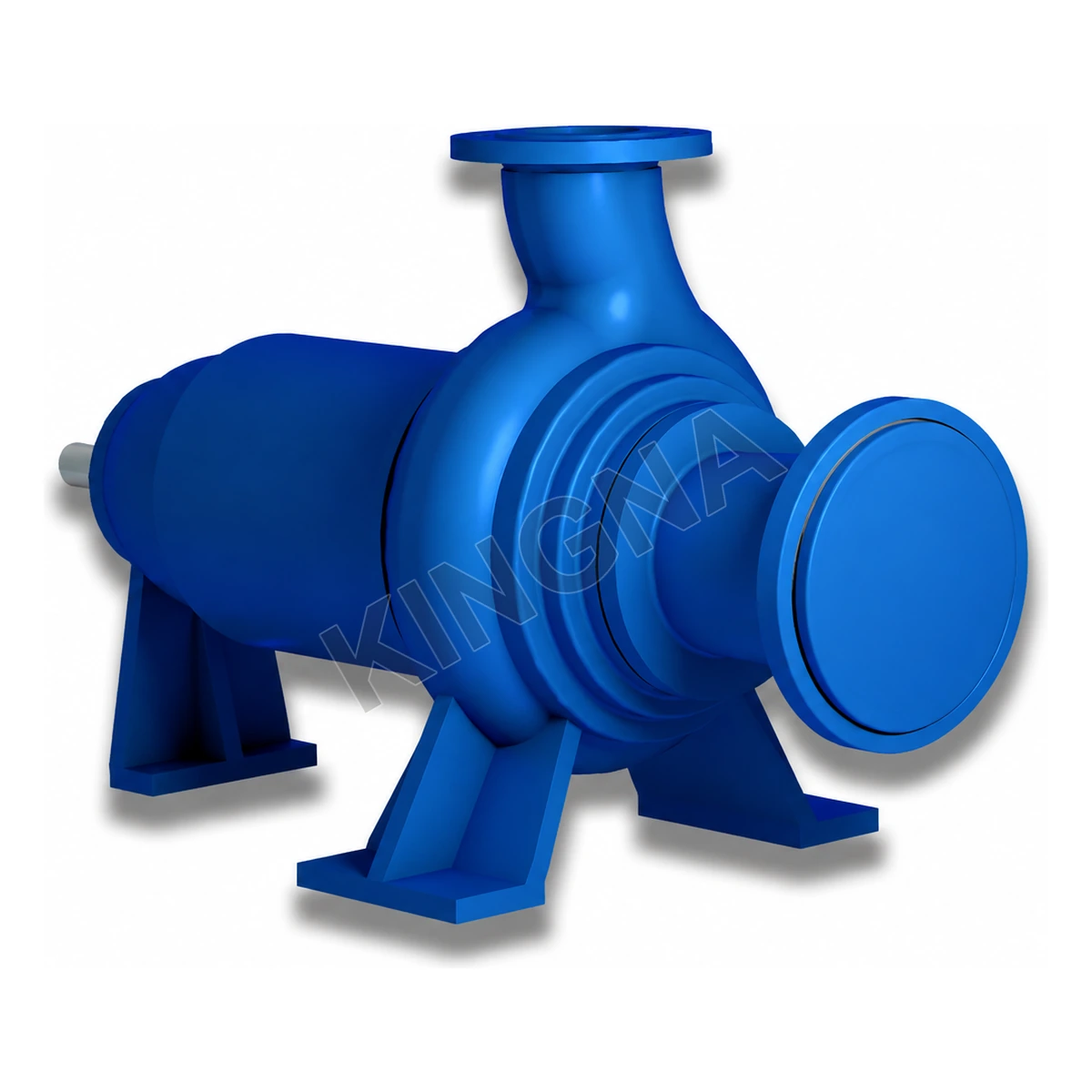
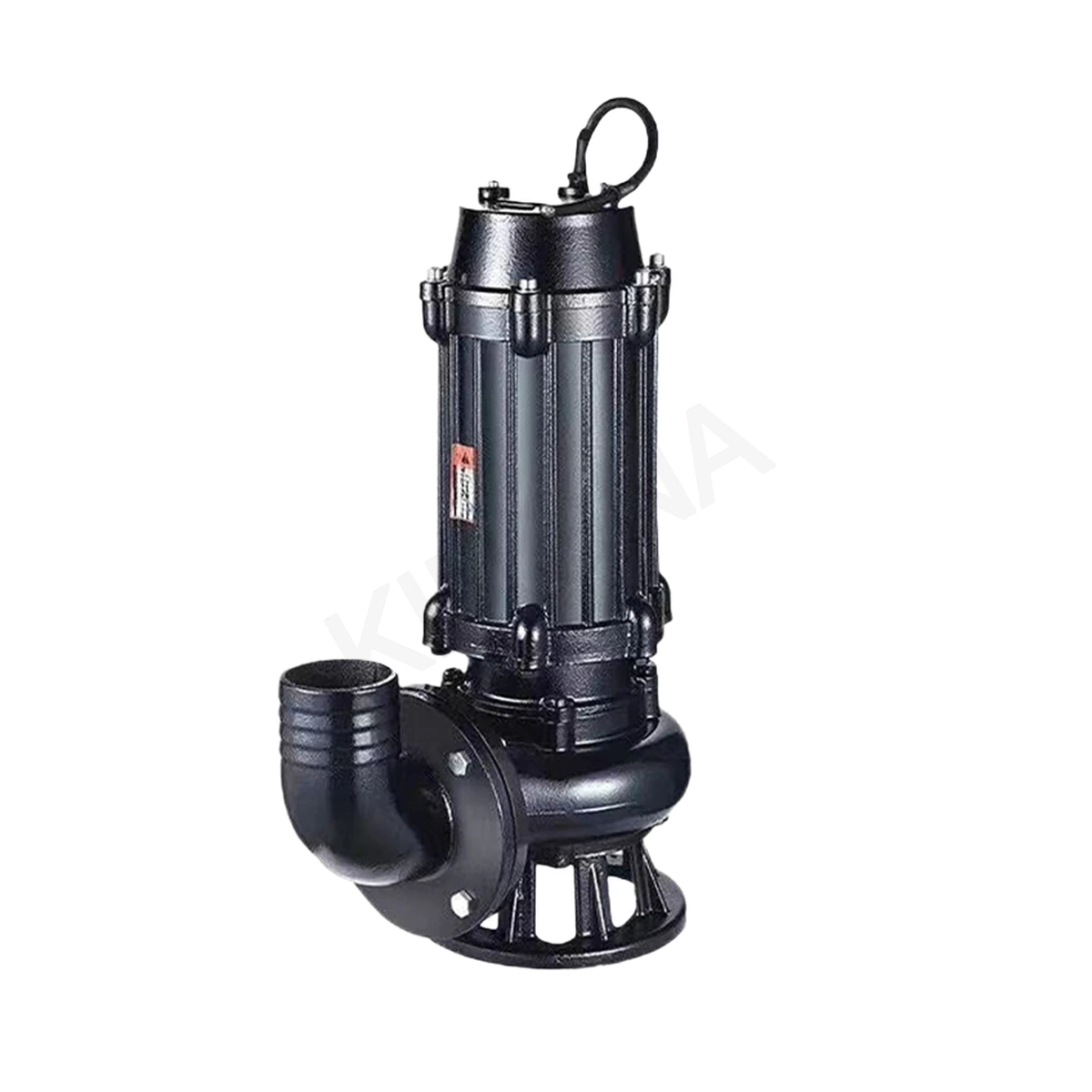
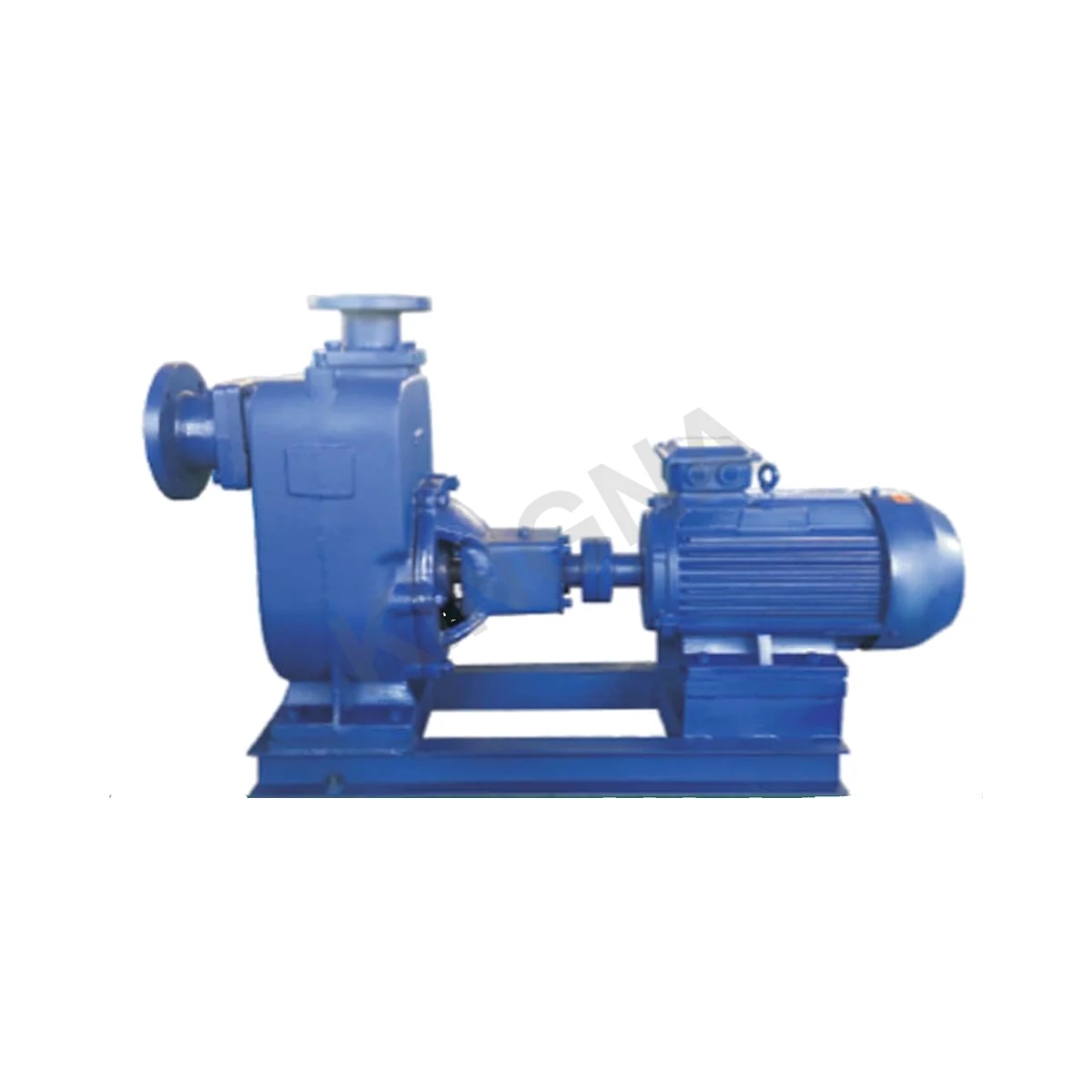
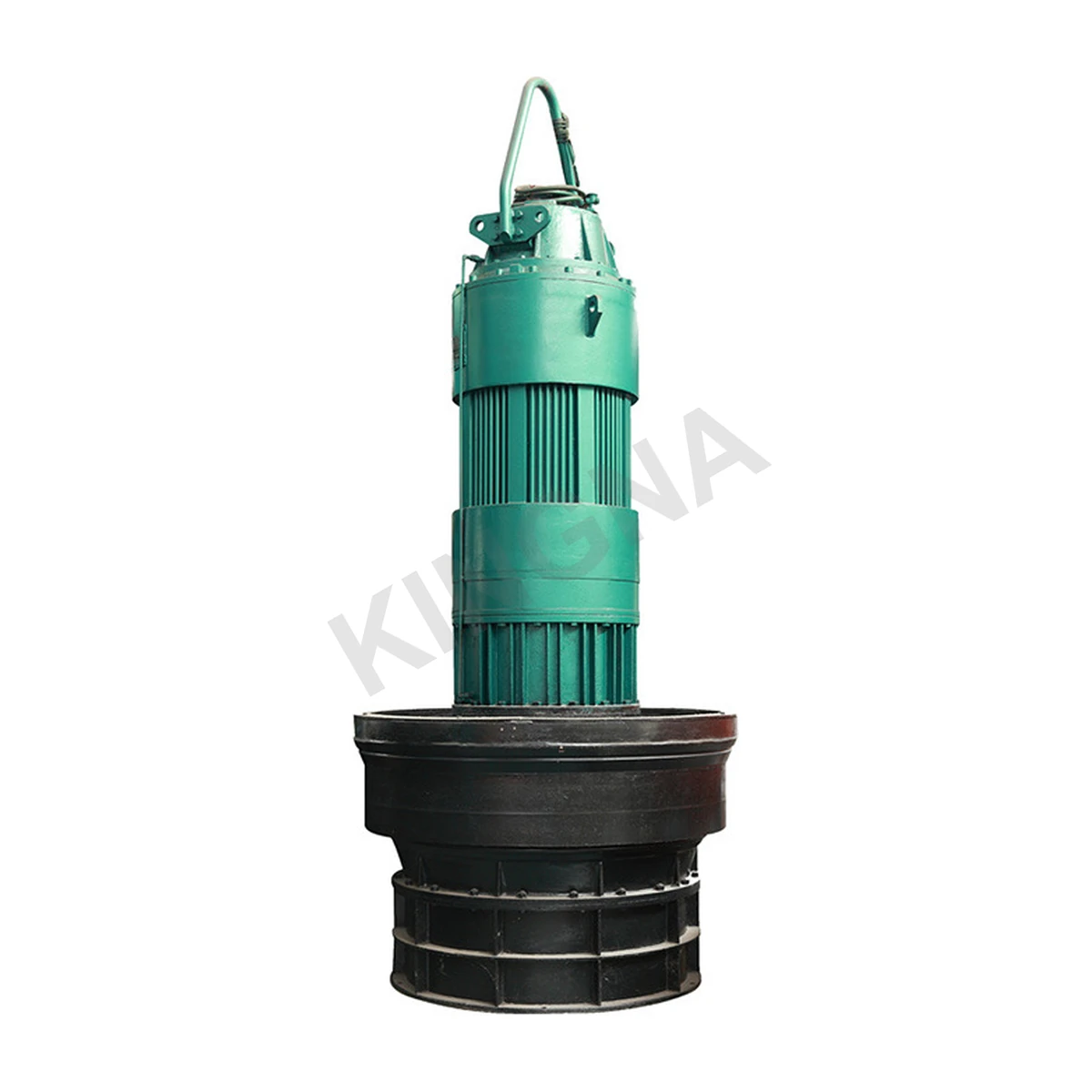
Self-priming sewage pump: the casing holds a charge of liquid and recirculates it on start-up until the suction line is full, so a sump needs no vacuum pump and no foot valve. Self-priming lift is 4.5 to 5.5 m on a suction line up to 10 m, solids pass at up to 60% of the bore and fibres up to five times the bore — those three figures decide whether a given sump can use this pump at all. Two-vane impeller, mechanical seal running in an oil chamber, 51 models from DN25 to DN300, long-coupled ZW or close-coupled ZWL.
General Specifications
TypeSelf-priming sewage pump, axial-return external mixing, two-vane impeller
Size RangeDN25 – DN300 (discharge)
Flow Rate8 – 800 m³/h
Head12 – 80 m
Motor Power1.5 – 75 kW
Speed1450 / 2900 r/min
Efficiency45 – 65%
NPSH2.0 – 6.0 m
Self-Priming Lift4.5 – 5.5 m; suction line up to 10 m
Priming Time2.5 – 3 min
BuildsZW long-coupled on a common base; ZWL close-coupled
Model Table51 models in total — one per size shown below (highest-head build of each); full table on request
Max. Working Temperature≤ 40 °C
Operating Limits
Medium TemperatureUp to 80 °C as standard; up to 200 °C to special order
Ambient TemperatureUp to 50 °C
pH Range6 – 9 cast iron · 2 – 13 stainless
Medium DensityUp to 1240 kg/m³
Solids PassageSuspended particles up to 60% of the bore
Fibre PassageFibres up to 5× the bore
Shaft SealMechanical seal running in an oil chamber
Model Range
25ZW(ZWL)8-158 m³/h · 15 m · 2900 r/min · 1.5 kW · η 45% · NPSH 2.0 m · lift 5.0 m · 3 min
32ZW(ZWL)10-2010 m³/h · 20 m · 2900 r/min · 2.2 kW · η 45% · NPSH 2.0 m · lift 5.0 m · 3 min
40ZW(ZWL)15-3015 m³/h · 30 m · 2900 r/min · 3 kW · η 48% · NPSH 2.5 m · lift 5.0 m · 3 min
50ZW(ZWL)20-5020 m³/h · 50 m · 2900 r/min · 11 kW · η 50% · NPSH 3.0 m · lift 5.0 m · 3 min
65ZW(ZWL)25-5025 m³/h · 50 m · 2900 r/min · 11 kW · η 52% · NPSH 3.0 m · lift 5.0 m · 3 min
80ZW(ZWL)50-6050 m³/h · 60 m · 2900 r/min · 22 kW · η 55% · NPSH 3.5 m · lift 5.0 m · 3 min
100ZW(ZWL)80-8080 m³/h · 80 m · 2900 r/min · 45 kW · η 55% · NPSH 4.5 m · lift 5.0 m · 3 min
125ZW(ZWL)120-20120 m³/h · 20 m · 1450 r/min · 15 kW · η 55% · NPSH 4.5 m · lift 5.0 m · 3 min
150ZW(ZWL)180-38180 m³/h · 38 m · 1450 r/min · 55 kW · η 45% · NPSH 5.0 m · lift 5.0 m · 3.5 min
200ZW(ZWL)280-28280 m³/h · 28 m · 1450 r/min · 55 kW · η 55% · NPSH 4.8 m · lift 5.0 m · 3 min
250ZW(ZWL)420-20420 m³/h · 20 m · 1450 r/min · 55 kW · η 61% · NPSH 6.0 m · lift 4.5 m · 2.5 min
300ZW(ZWL)800-20800 m³/h · 20 m · 1450 r/min · 75 kW · η 65% · NPSH 6.0 m · lift 5.0 m · 2.5 min
Materials & Coating
BodyCast iron HT200 / ductile iron QT450
Applications
Sewage and stormwater sumps without a pump house Plant drainage and basement sumps Slurry and fibrous effluent transfer Irrigation and raw-water transfer from open sources
What self-priming does, and where it stops
A self-priming pump keeps a charge of liquid inside the casing. On start-up the impeller recirculates that charge through an axial-return passage, drawing air out of the suction line until liquid arrives; after that the pump behaves like an ordinary end-suction machine. What this buys is the pump house: the unit can stand beside or above the sump with a suction run of up to 10 m, and no vacuum pump, ejector or foot valve is needed to start it.
What it does not buy is lift. The published self-priming height is 4.5 to 5.5 m, and that figure assumes a sealed suction line no longer than 10 m — a worn seal, a leaking flange or extra bends will consume part of it. Solids pass at up to 60% of the bore and fibres up to five times the bore; past those figures the pump blocks, and a pump that is still priming when it blocks will not clear itself.
The five answers that fix the model
Five items decide the model: the medium and what is in it (largest particle, fibre length, density), the duty flow and head, the suction lift and the length of the suction line including fittings, the build (ZW long-coupled on a common base, or ZWL close-coupled into a smaller footprint), and the casing and impeller material against the pH of the liquid.
Send those five and the model, the impeller trim and the priming height it will actually hold come back as one answer. Quoting from the range table alone is how a sump ends up with a pump that primes on the test bench and not on site.
More from this series
Related guides