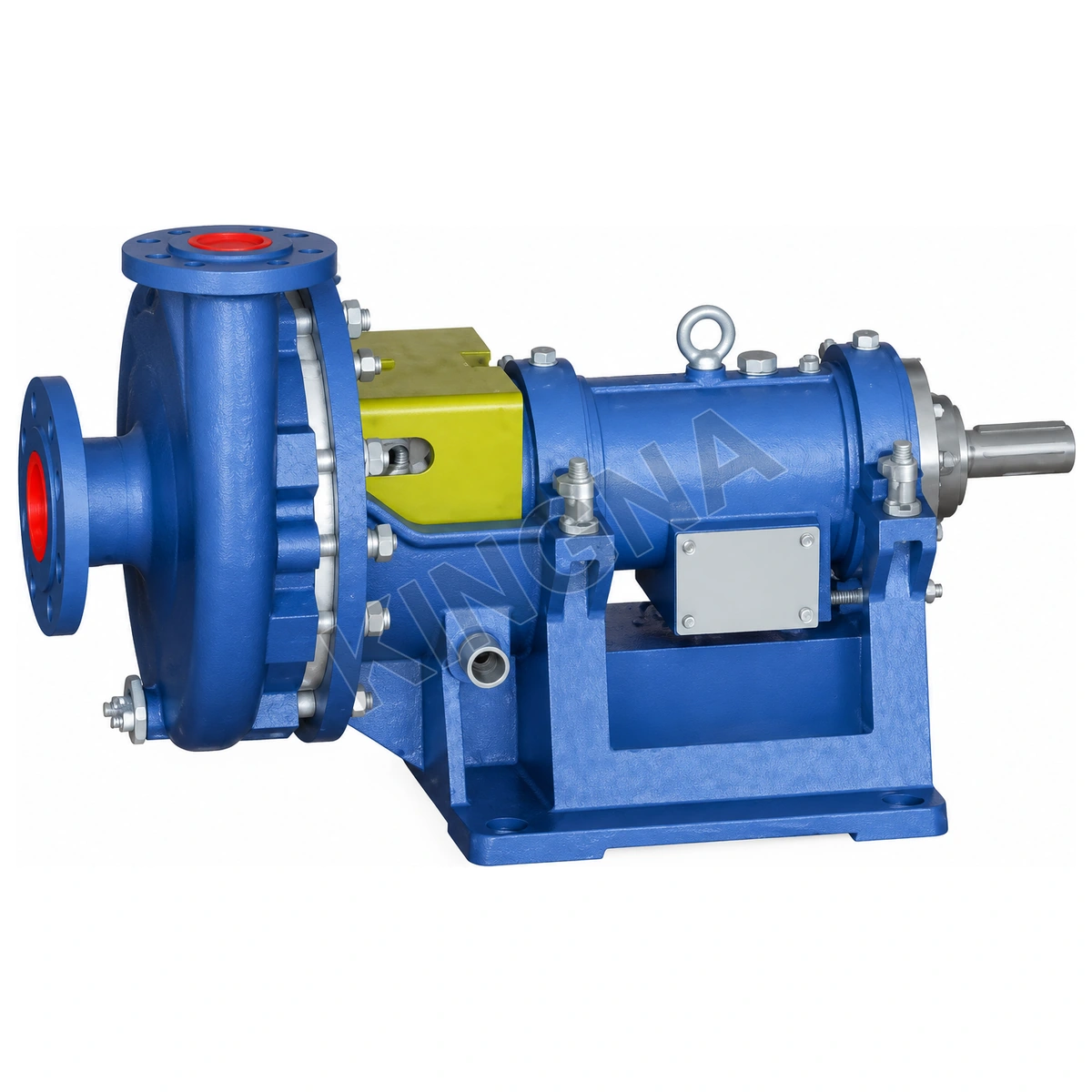
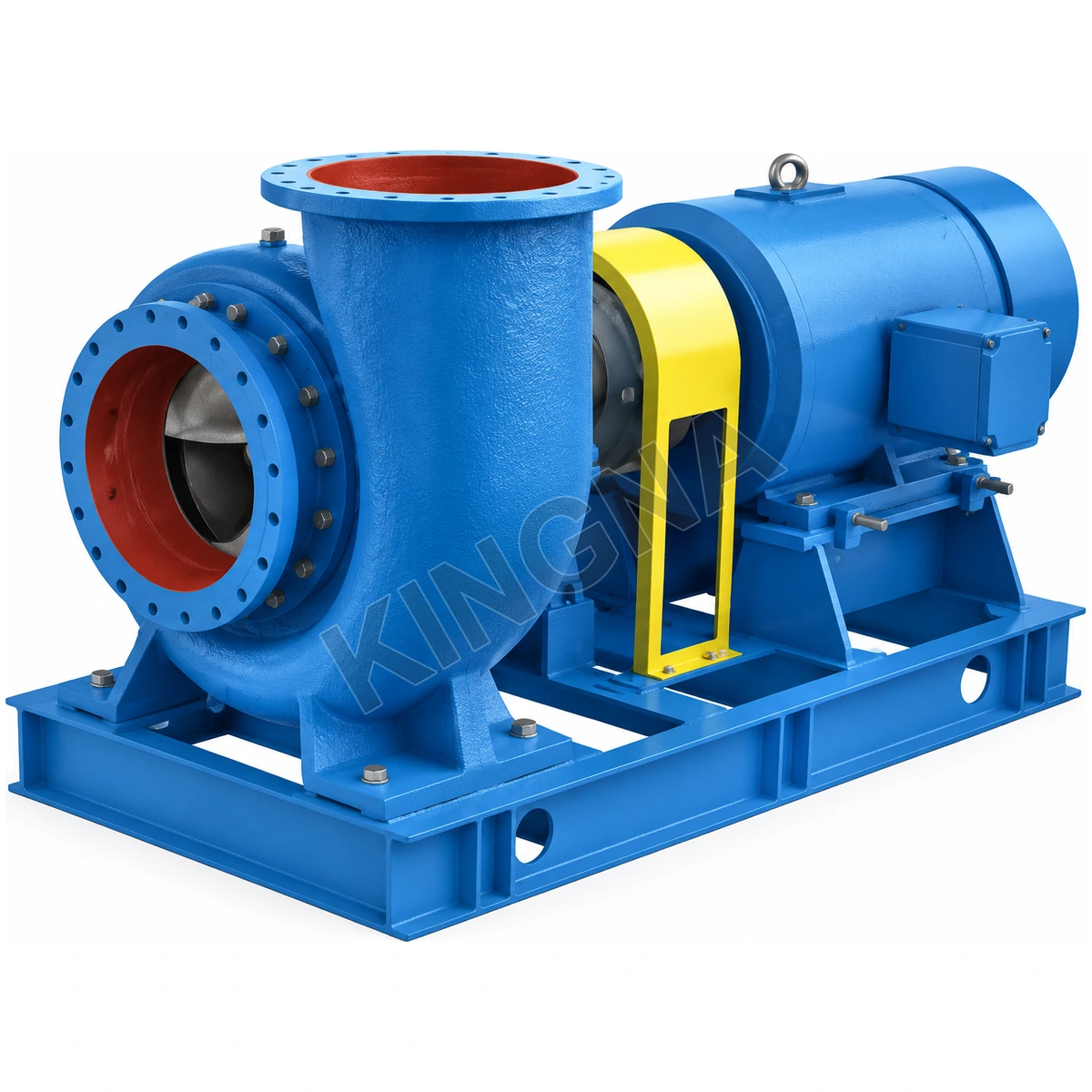
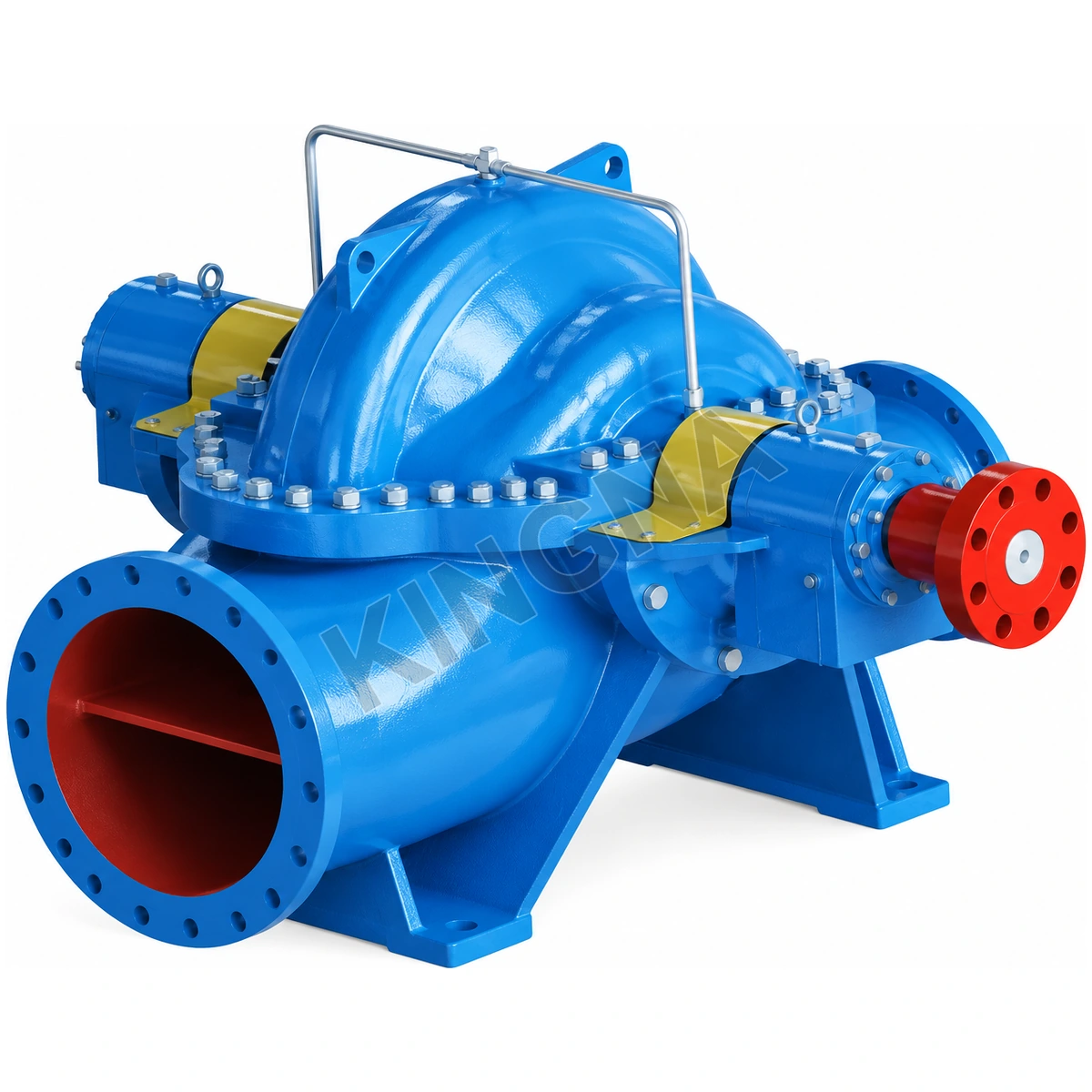
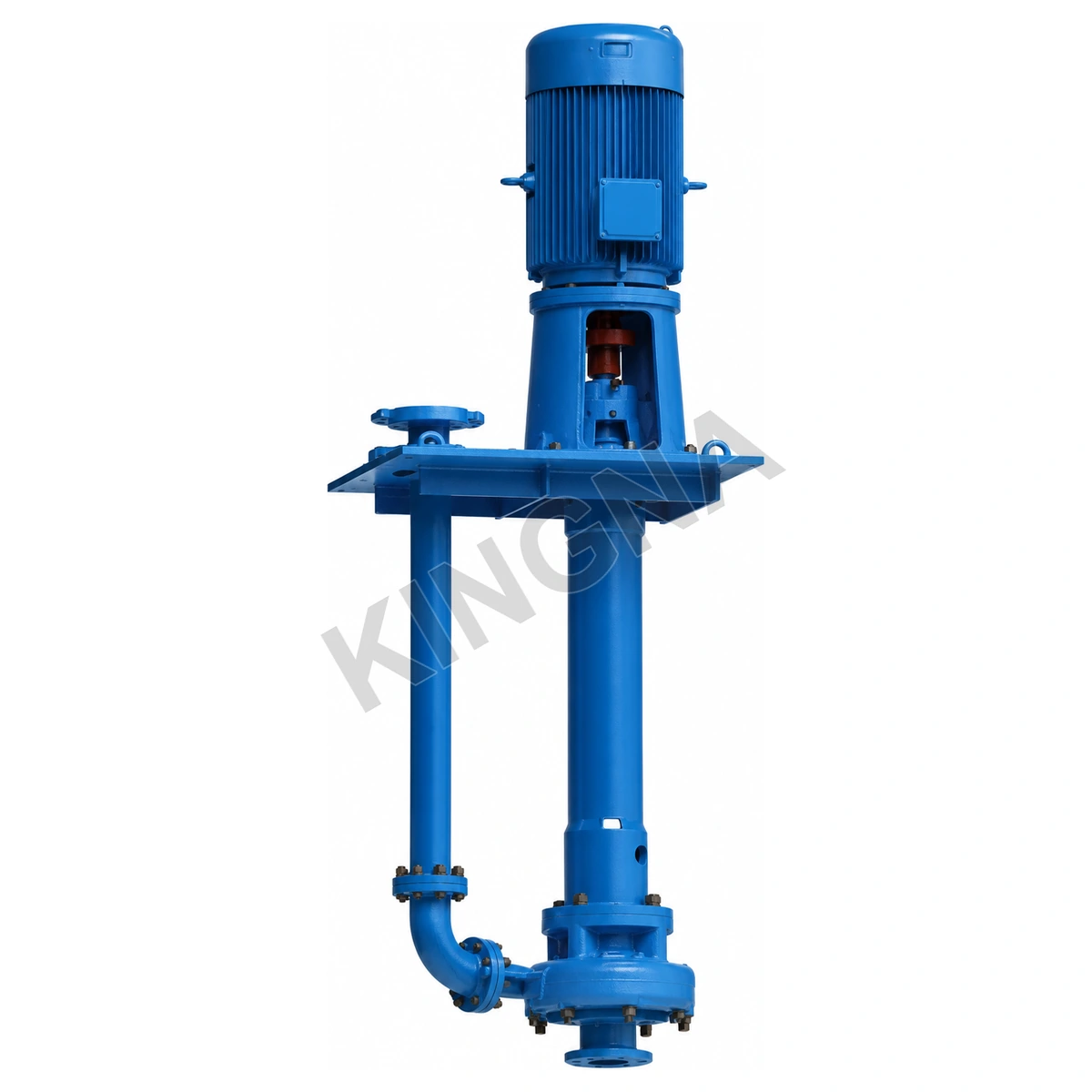
This pump exists for the duty where both problems arrive together: a clean chemical pump erodes as soon as solids are present, and a slurry pump corrodes as soon as acid is present. The LC-B keeps the LC hydraulic end but thickens the wetted parts and takes a seal arrangement that survives both. 5–1,000 m³/h, 5–170 m, 10 bar maximum outlet pressure, DN40–DN300. Typical duty is wet-process phosphoric acid, sulphuric and mixed acid, alumina and metallurgical slurry, FGD limestone. Send the acid, its concentration and temperature, and the solids loading.
General Specifications
Outlet SizeDN40 – DN300
Flow Rate5 – 1,000 m³/h
Head5 – 170 m
Max Outlet Pressure10 bar
StructureSingle-stage, single-suction, cantilevered horizontal centrifugal, hydraulically optimised LC-B build
DutyLiquid that is both corrosive and abrasive — acid carrying solids
SelectionModel and impeller trim are read from the printed performance chart at the duty point; the series ranges above are for preliminary selection.
Max. Working Temperature≤ 105 °C
Materials & Coating
Wetted PartsSelected for combined corrosion and abrasion; the grade is confirmed against the medium and its chloride content
CasingThick-section casing with replaceable wear resistance at the wetted end
SealShaft seal arrangement selected per medium and per flushing availability
Applications
Wet-process phosphoric acid and fertiliser circuits Sulphuric acid and mixed acid transfer Alumina and metallurgical slurry FGD limestone slurry
Acid and solids in the same line is the duty this pump is built for
A clean chemical pump is designed for a corrosive liquid and a slurry pump for an abrasive one. A phosphoric acid circuit is both: the slurry carries solids and the liquid attacks the metal. Selecting on either requirement alone is the usual reason a process pump in that service fails early — the wetted end erodes where the solids run, and the casing corrodes where the acid sits.
The LC-B build is the compromise made explicitly: a hydraulically optimised single-stage end-suction pump with a thick-section casing, a wetted end chosen against both corrosion and abrasion, and a shaft seal arrangement selected for the medium. It is not a slurry pump with a different nameplate, and it is not a chemical pump pressed into slurry duty.
What decides the model, and what to send
Flow, head, the acid and its concentration, the solids content and particle size, and the temperature decide the material; the duty point on the printed chart then decides the model and the impeller trim. On this duty the head is rarely the binding constraint — the material and the seal are.
Send those five items plus the chloride content if the medium carries one, and state whether flushing water is available at the seal. A seal plan chosen without that answer is the part that gets revised after the first shutdown.
More from this series