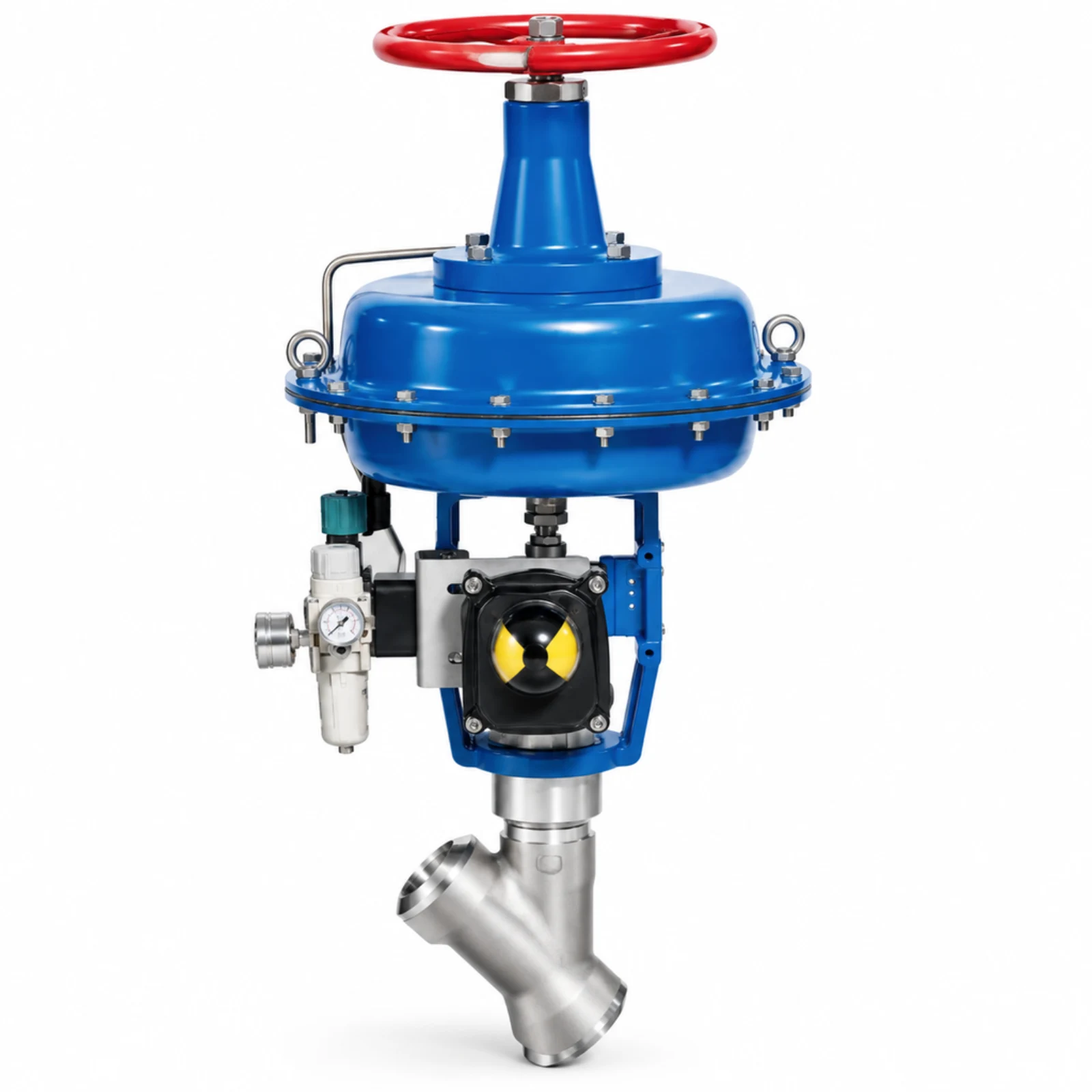
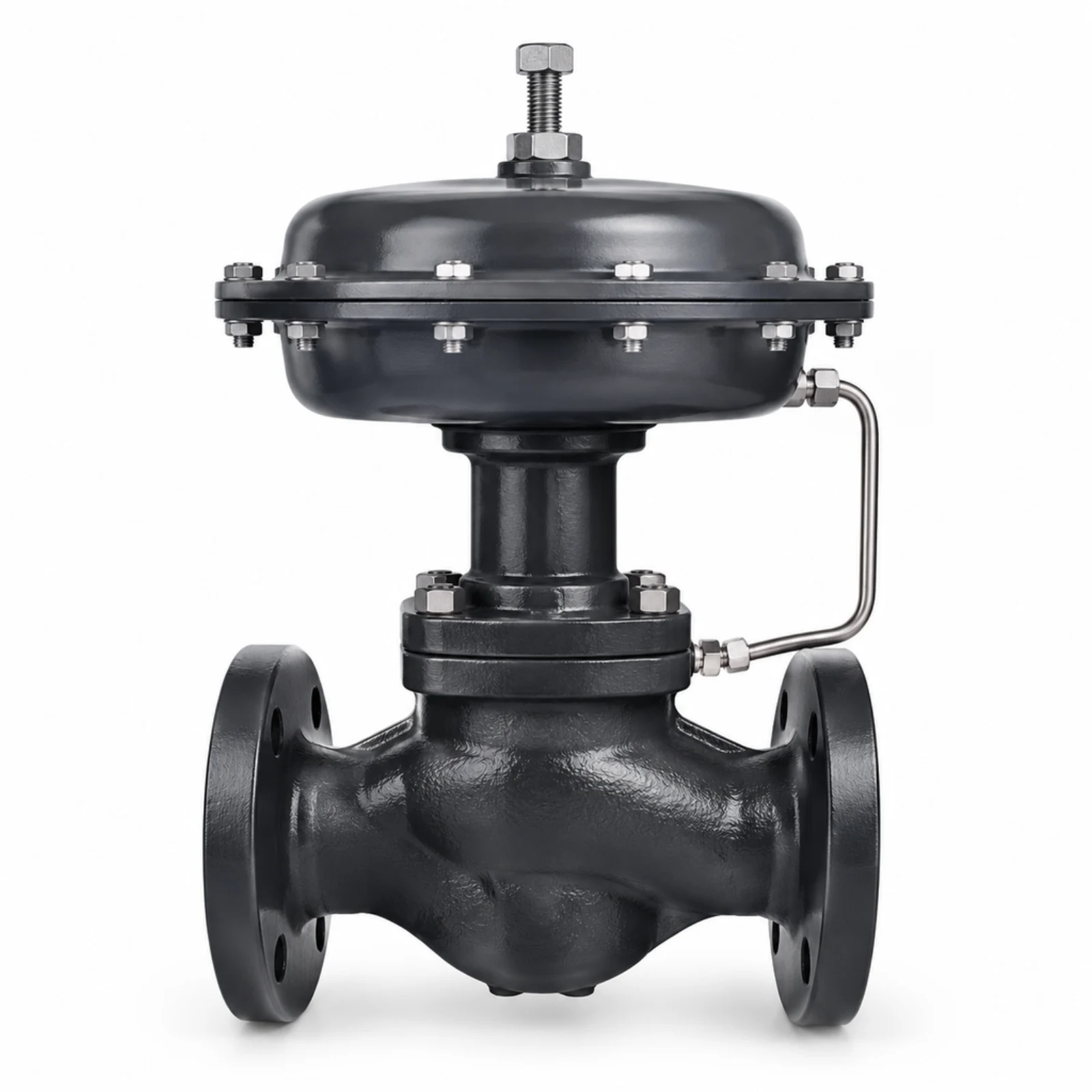
A steam trap is not a flow passage — it is the drain that lets condensate out and keeps steam in, which is why it is small-bore by design. What matters is how much condensate it passes for its size, and that is where the oblique Y-pattern earns its place: the stem and the flow path sit at an angle, so the medium travels close to a straight line and Kv is far higher than a right-angle valve of the same bore. The disc is guided top and bottom, which is what stops the chattering and seizing that high-pressure drains are prone to; the sealing face is hard-faced with carbide. Top-entry bonnet so the trim can be serviced in place without cutting the line. Forged body, butt-weld ends, self-guided quick-opening type, DN15 to DN100, up to 593 °C.
Size RangeDN15 – DN100 (1/2" – 4")
Pressure RatingPN16 – PN260 — ANSI 150 / 300 / 600 / 900 / 1500
Design StandardASME B16.34 / GB/T 12224
StructureY-pattern oblique body, self-guided quick-opening
Flow PathOblique — near-straight line, high Kv
GuidingTop and bottom double guiding (anti-seize, anti-chatter)
End ConnectionButt weld (ASME B16.25)
OperationPneumatic actuator (manual handwheel override shown) or manual
MediaSaturated and superheated steam, condensate, high-pressure drains
Max. Working Temperature593 °C
Leakage ClassANSI Class VI
BodyForged steel, integral die-forged
Trim / DiscHard-faced with carbide overlay
SeatCarbide hard-faced
BonnetTop-entry, serviceable in place without cutting the line
PackingGraphite, high temperature