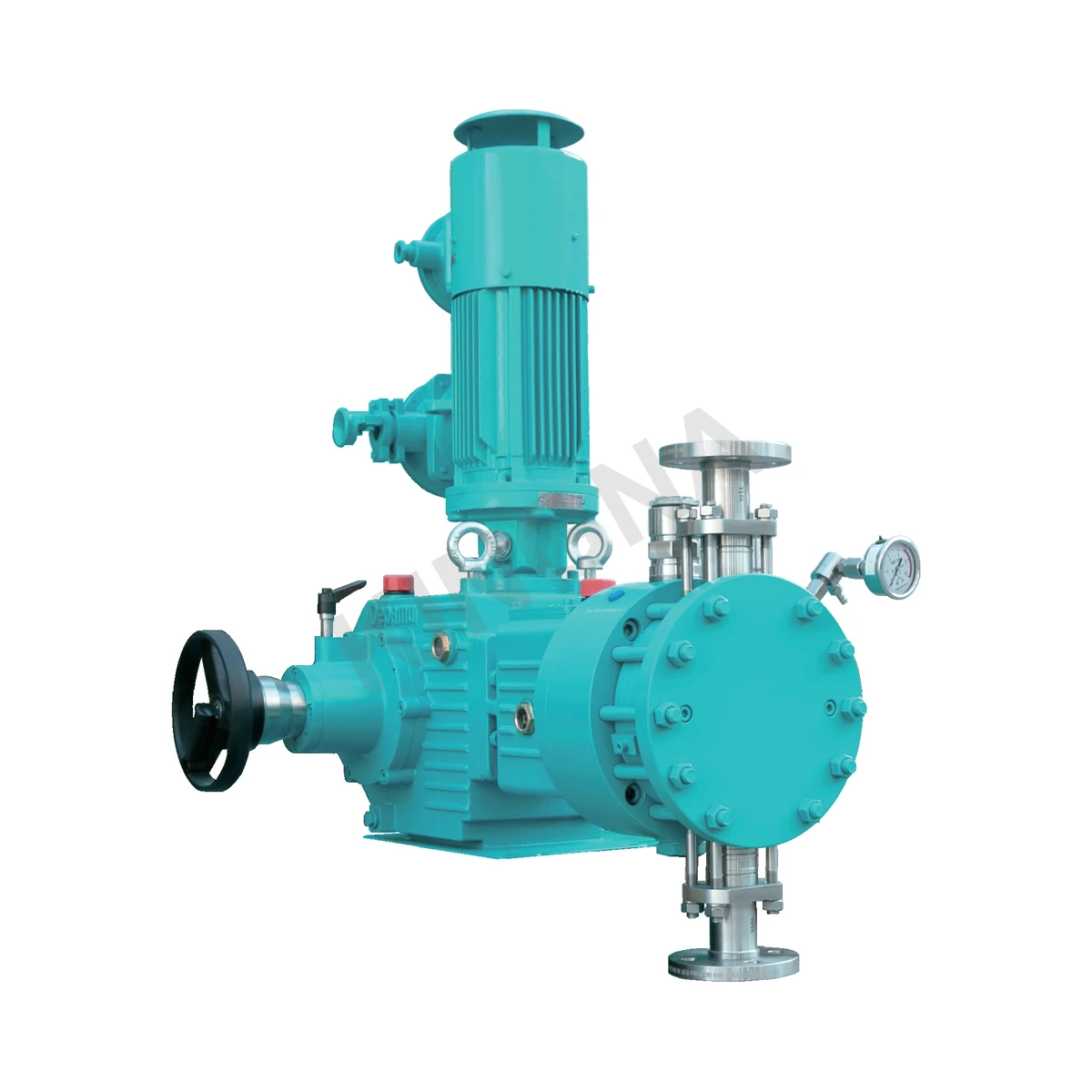
Hydraulic diaphragm metering pump: a plunger drives oil, the oil deflects the diaphragm, and the medium touches no moving seal — that is what holds ±0.5% accuracy when the line pressure moves, and why an abrasive or fuming reagent can be dosed without a packed plunger to leak. Internal relief and refill valves protect the head if the discharge is closed. 0.8 to 212 L/h per head at 0.9 to 61.7 MPa depending on plunger diameter, 10:1 turndown, handwheel, electric, pneumatic or variable-frequency adjustment, with two- and three-head builds on one frame.
General Specifications
TypeHydraulic diaphragm metering pump with plunger drive
Flow per Head0.8 – 212 L/h
Discharge Pressure0.9 – 61.7 MPa, depending on plunger diameter
Plunger Diameter8 – 50 mm
Motor Power0.37 kW
Flow Accuracy±0.5%
Turndown10 – 100%, stroke-length adjuster
AdjustmentHandwheel, electric actuator, pneumatic actuator or variable-frequency drive
HeadsSingle head; two-head and three-head builds on one frame
Head ProtectionInternal relief valve and automatic oil refill behind the diaphragm
Max. Working Temperature≤ 60 °C
Materials & Coating
BodyPVC / PTFE wetted, hydraulic diaphragm
Applications
Phosphoric and sulphuric acid dosing Flocculant and antiscalant injection Boiler and cooling-water treatment Chemical metering skids with pulsation dampers
Specified by the dose, not by the pipe
A metering pump is specified by the dose, not by the pipe. The line might be DN25, but the pump is chosen on litres per hour at a stated discharge pressure, and on the accuracy the process needs — a reagent dosed at ±2% is a different pump from one dosed at ±0.5%.
The hydraulic diaphragm is what makes that accuracy hold against a variable line pressure. The plunger works in oil, the oil pushes the diaphragm, and the diaphragm is the only part the medium sees: no packed plunger to leak, no seal running on the abrasive itself. An internal relief valve takes the flow when the discharge is closed, and the oil chamber refills itself, so the head survives being run against a shut valve.
The six answers that fix the model
Six answers fix the model: the dose in L/h and the injection pressure; the medium with its concentration, viscosity and whether it releases gas; the accuracy band and the turndown the process will actually use; the wetted-end material for that medium; the adjustment — manual, electric, pneumatic or VFD — and the signal available; and whether the skid needs a pulsation dampener, back-pressure valve, safety valve and calibration pot.
Send those and the model, the plunger diameter and the accessory list come back as one answer. Ordering by flow alone is how a dosing line ends up with a pump that cannot reach its pressure, or with a pulsation dampener sized for the wrong stroke rate.
More from this series