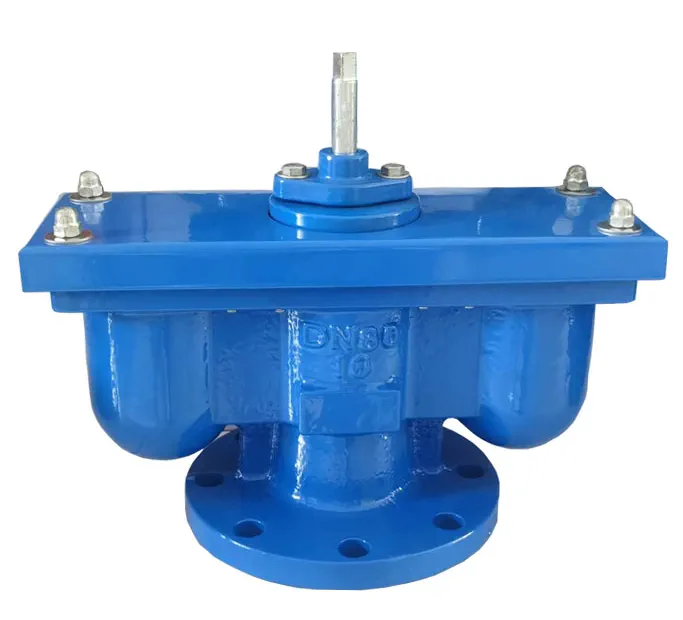
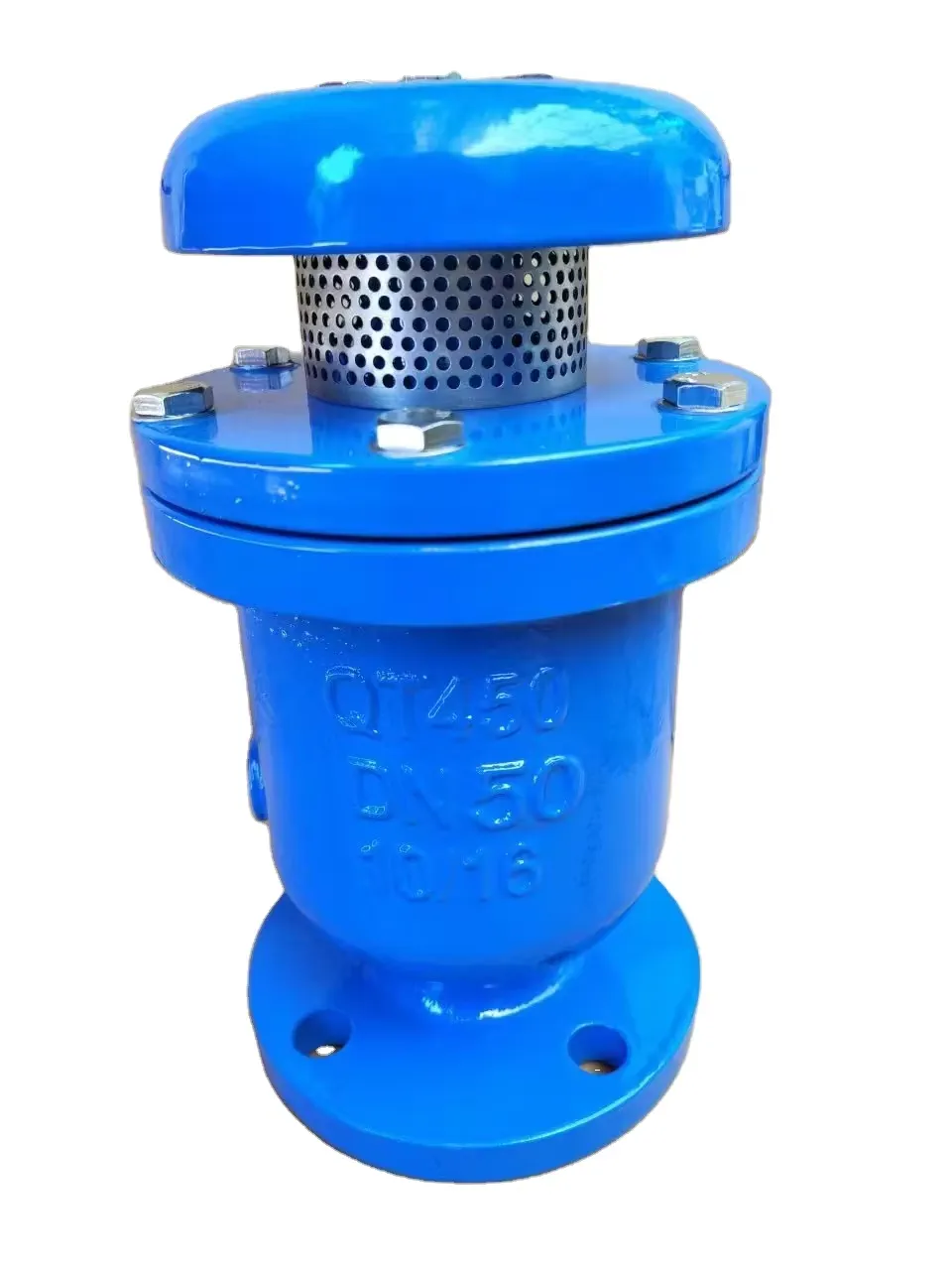
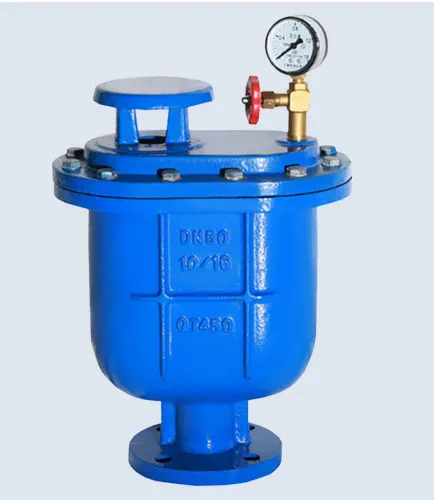
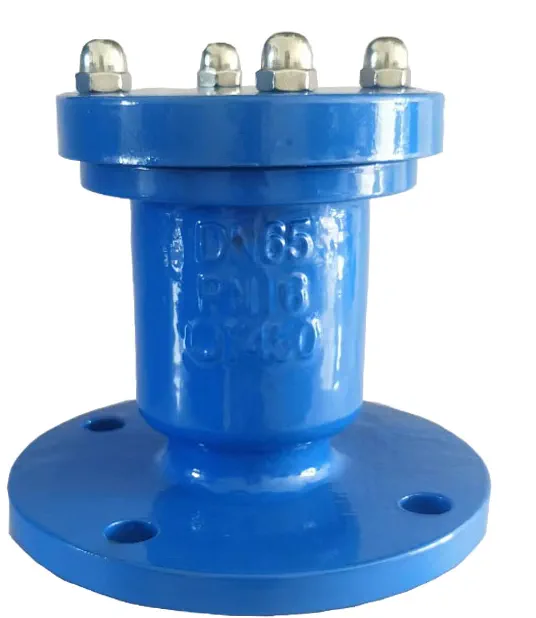
A single-orifice air valve does one job: it lets out the air that comes out of solution and collects at a high point, and closes as soon as water reaches the float. It does not fill a pipeline and does not let air back in — for those you need the double-orifice or the combination valve, and fitting a single-orifice valve at a filling point is the usual reason a main still air-locks. Sizes are small by design, DN15 to DN50, because the volume to be released is small. In dirty water the float chamber fouls, so a strainer or a different type belongs there.
General Specifications
Size RangeDN15 – DN50
OrificeSingle
Pressure RatingPN10 / PN16
End ConnectionThreaded (BSP / NPT)
FunctionContinuous air release
ServiceHVAC, plumbing, solar and heating systems
Max. Working Temperature70 °C standard (EPDM) — NBR for 80 °C, FKM for up to 150 °C on request
Materials & Coating
BodyDuctile iron / brass
FloatStainless steel (grade per order)
CoatingEpoxy coated (iron body)
Applications
Heating systems Air conditioning High-point venting Small lines
What a single-orifice valve does, and what it does not
This is the small-bore continuous air release valve — DN15 to DN50, threaded, used at the high points of heating, HVAC, solar and plumbing systems. Its job is to let out the air that accumulates in a closed loop, so that water fills the pipe and the circuit stops collecting a gas pocket at the top of a riser.
It is not the valve for filling or emptying a large line. Bulk venting and vacuum breaking need a large orifice and a different internal arrangement — that is the double-orifice and high-speed family. Fitting a single-orifice valve where the system is being drained simply means the drain takes far longer than it should.
The float is the whole mechanism
A float sits in the chamber and rises with the water. When the chamber is full of water the float closes the orifice; when air collects, the water level drops, the float falls and the orifice opens. There is no actuator, no signal and nothing to adjust — which is why the whole valve lives or dies on whether that seat stays clean.
This is also why the usual failure is a leak, not a no-function: debris holds the float off its seat, or wears the seating face, and the valve weeps. On a closed heating loop the debris is usually what came out of the pipework at commissioning or what the system continues to make.
Where it belongs in a heating or HVAC circuit
The air goes to the highest point, so the valve goes there: at the top of risers, at the highest point of each circuit, and downstream of equipment that releases dissolved air when the water is heated. On a multi-loop installation this usually means several small valves rather than one large one.
Orientation matters more than size. The valve has to be installed vertically with the outlet upwards, and it has to be reachable — a valve that cannot be reached for cleaning is a valve that will weep until the circuit is drained.
What to confirm on an air valve order
- Size — DN15–DN50 covers single-orifice service; larger points usually need a different family
- Thread: BSP or NPT, and which of the two the site actually uses
- Pressure rating: PN10 or PN16 for this pattern
- Temperature, because the elastomer sets the limit — EPDM to 70 °C standard, NBR to 80 °C, FKM to 150 °C on request
- Body material: ductile iron with epoxy coating, or brass, depending on the system
- Medium: heating water, chilled water, solar fluid or potable water, since the elastomer has to suit it
Frequently asked
Is this valve suitable for filling or draining a pipeline?
No. Single-orifice is continuous air release on a small system. Bulk venting and vacuum breaking need a large orifice — the double-orifice or high-speed pattern. Using the wrong family is the usual reason a drain or fill takes far longer than expected.
Why does the valve start leaking?
Almost always the seating face: debris holds the float off its seat, or the face has worn. On a closed heating loop, dirt from commissioning or from the system itself is the usual source. Cleaning the seat is often the whole repair.
Where should it be installed?
At the highest point of the circuit, or at the top of each riser, and after equipment that releases dissolved air when water is heated. Install it vertically with the outlet upwards, and make sure it stays reachable.
One valve per circuit, or one valve for the whole system?
Per circuit, as a rule. Air collects at each local high point, and a valve elsewhere in the system cannot vent a pocket that sits above it. On multi-loop installations that normally means several small valves rather than one large one.
What temperature range is available?
Set by the elastomer: EPDM to 70 °C as standard, NBR to 80 °C, FKM to 150 °C on request. Solar and heating circuits in particular should have the temperature stated rather than assumed.
BSP or NPT thread?
Both are available; state which one the site uses. Mixing the two on the same system is a common installation error and it is not something the valve can compensate for.
What body material should be chosen?
Ductile iron with an epoxy coating for heating and chilled-water systems, brass where the installation is small or corrosion demands it. The medium decides, so state it with the enquiry.
More from this series
Related guides